

How Technology Is Transforming the Future of Urban Living: Smart Cities in the Gulf
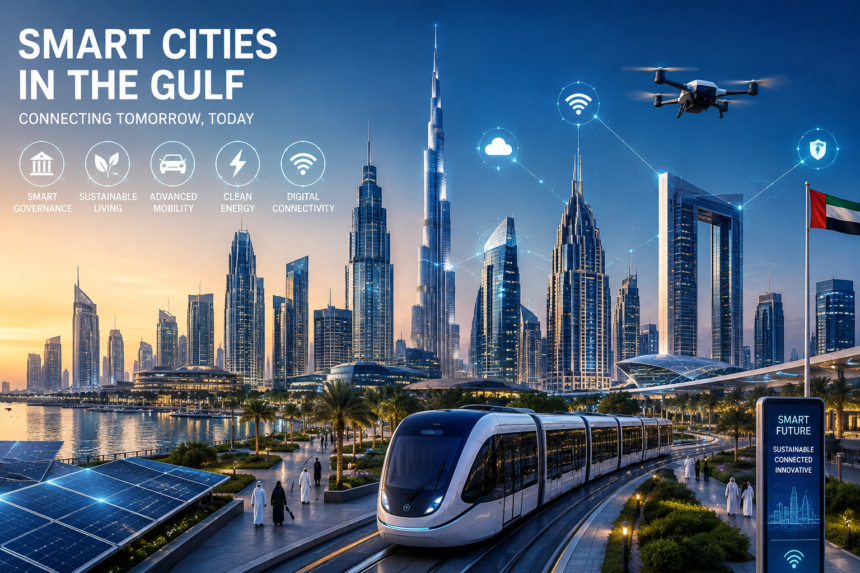
The smart cities in the Gulf are becoming some of the most technology-driven urban environments in the world. Across the Gulf Cooperation Council (GCC), governments are investing heavily in artificial intelligence (AI), the Internet of Things (IoT), smart mobility, renewable energy, digital government services, advanced infrastructure and data-driven urban planning. The objective is not simply to build futuristic skylines, but to create cities that are more connected, efficient, sustainable, secure and convenient for residents, businesses and visitors.
- What Are Smart Cities in the Gulf?
- Why Smart Cities Matter in the Gulf
- Dubai: A Leading Example of a Gulf Smart City
- Abu Dhabi and the UAE’s Digital Urban Future
- Riyadh and Saudi Arabia’s Smart City Ambitions
- Doha and Smart Qatar
- Bahrain’s Growing Smart City Ecosystem
- Kuwait and the Development of Smart Urban Infrastructure
- Oman and Smart, Sustainable Urban Development
- Artificial Intelligence in Gulf Smart Cities
- Internet of Things and Connected Infrastructure
- Smart Mobility and Transportation
- Renewable Energy and Smart Grids
- Smart Buildings and Sustainable Architecture
- Smart Healthcare
- Smart Governance and Digital Public Services
- Smart Water and Waste Management
- The Role of 5G and Digital Connectivity
- Benefits of Smart Cities in the Gulf
- Challenges Facing Gulf Smart Cities
- The Future of Smart Cities in the Gulf
- Smart Cities and Economic Diversification
- Smart Cities and Quality of Life
The Gulf region, which includes the United Arab Emirates, Saudi Arabia, Qatar, Kuwait, Bahrain and Oman, has several advantages when developing smart cities. Strong investment capacity, modern infrastructure, high rates of digital adoption and ambitious national development strategies are helping governments accelerate digital transformation.
Cities such as Dubai, Abu Dhabi, Riyadh and Doha are already implementing smart technologies in transportation, public services, energy management, healthcare, security and environmental monitoring. At the same time, ambitious developments and urban projects across the region are exploring new approaches to connected infrastructure and sustainable living.
The development of Gulf smart cities is therefore becoming an important part of the region’s economic diversification and long-term development plans.
What Are Smart Cities in the Gulf?
A smart city uses digital technologies, connected infrastructure and real-time data to improve how an urban area operates and how people experience it.
Instead of managing transportation, energy, water, waste, public services and infrastructure independently, smart cities connect different systems through digital platforms and sensors. Data collected from these systems can then help governments and service providers make faster and more informed decisions.
Important technologies used in smart cities in the Gulf include:
- Artificial intelligence and machine learning
- Internet of Things (IoT) sensors
- Cloud computing
- Big data analytics
- 5G and advanced connectivity
- Digital identity systems
- Smart transportation
- Renewable energy technology
- Electric and autonomous vehicles
- Smart buildings
- Intelligent surveillance and security systems
- Digital government platforms
- Automated waste and water management
The goal is to use technology to solve practical urban challenges while improving quality of life.
Why Smart Cities Matter in the Gulf
The Gulf has experienced rapid urbanization over recent decades. Large metropolitan areas have expanded quickly, creating demand for housing, transportation, energy, healthcare and public services.
Smart city technology provides an opportunity to manage this growth more efficiently.
For example, connected traffic systems can analyze congestion and help optimize traffic signals. Smart electricity grids can monitor demand and improve energy distribution. IoT sensors can detect environmental conditions, monitor infrastructure and support predictive maintenance.
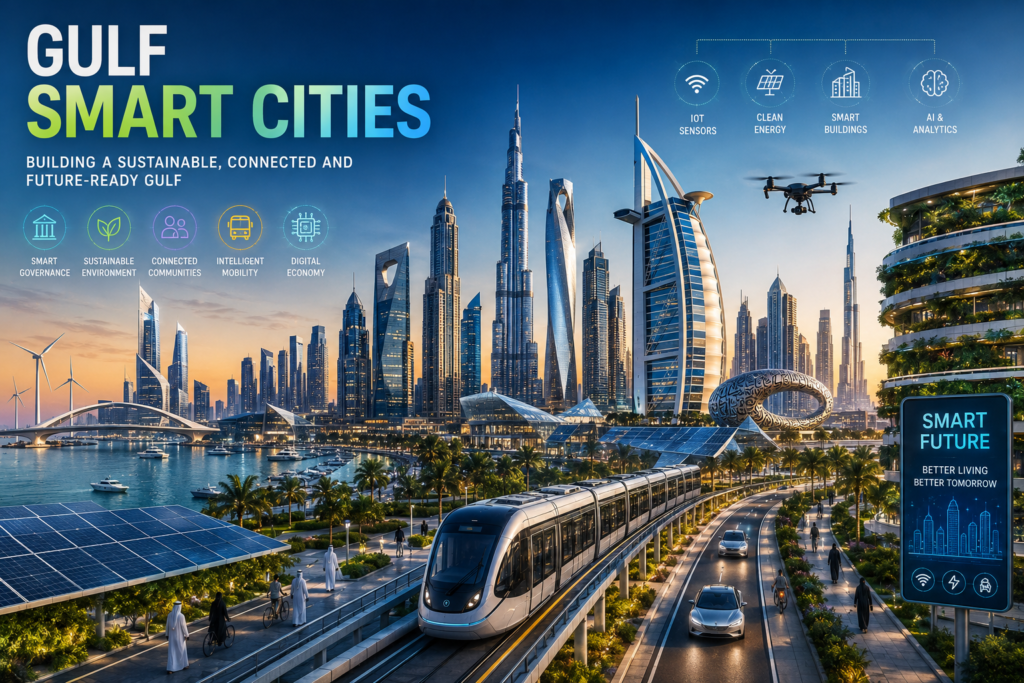
Smart cities can also support economic diversification. Instead of depending primarily on traditional energy industries, Gulf countries are developing technology, tourism, logistics, finance, healthcare and knowledge-based industries.
This makes smart city development more than an infrastructure project. It is also part of the Gulf’s broader effort to create competitive digital economies.
Dubai: A Leading Example of a Gulf Smart City
Dubai is widely recognized as one of the most advanced examples of smart urban development in the Gulf. The city has invested in digital government, smart transportation, artificial intelligence, connected infrastructure and sustainable energy.
Dubai’s official smart city initiatives include digital government services, smart police stations, smart metro stations, self-driving transportation initiatives, digital utility services, smart grids, electric vehicle charging infrastructure and renewable energy projects.
One of the major advantages of Dubai’s approach is the integration of technology into everyday services. Residents can access numerous government and municipal services digitally, reducing the need for physical paperwork and traditional administrative processes.
Smart transportation is another important area. Dubai has developed advanced public transportation infrastructure while exploring autonomous and connected mobility solutions.
The city’s energy infrastructure is also becoming increasingly digital. Smart grids, solar power and electric vehicle charging infrastructure are helping support Dubai’s sustainability objectives.
Dubai demonstrates how a smart city can combine technology with tourism, business, transportation and residential development.
Abu Dhabi and the UAE’s Digital Urban Future
Abu Dhabi is another important center for smart city development in the UAE. The emirate has focused on digital government, advanced infrastructure, artificial intelligence, sustainability and technology-driven economic development.
Across the UAE, smart city development is closely connected with national digital transformation and artificial intelligence strategies. Digital identity, online government services, smart transportation, energy efficiency and connected infrastructure are becoming increasingly important parts of the country’s urban landscape.
The UAE’s emphasis on technology also supports the development of innovation ecosystems, startups, research institutions and advanced industries.
As Gulf cities become more digitally connected, the UAE is positioning itself as an important regional hub for smart city technologies and digital services.
Riyadh and Saudi Arabia’s Smart City Ambitions
Saudi Arabia is undertaking one of the Gulf’s most ambitious urban transformation programs. Riyadh, the country’s capital, is investing in digital municipal services, smart infrastructure and technology-based urban management.
The Riyadh Municipality has developed smart city initiatives designed to use emerging technologies and innovation to improve municipal operations. One example is smart neighborhood monitoring, which uses artificial intelligence, deep learning and IoT technologies to analyze imagery and identify urban issues.
Saudi Arabia’s wider transformation agenda is also driving investment in technology, artificial intelligence, renewable energy, advanced infrastructure and new urban development.
Large-scale projects associated with the country’s development plans have brought global attention to the future of urban living in Saudi Arabia. While individual projects may evolve over time, the broader direction is clear: technology and digital infrastructure are expected to play a major role in the Kingdom’s future cities.
Riyadh is particularly important because of its population, economic role and position as a center for government and business.
Doha and Smart Qatar
Qatar has developed its own smart city strategy through TASMU Smart Qatar, a national program focused on digital transformation and innovation.
TASMU works across several priority sectors, including transportation, logistics, healthcare, environment and sports. The program is designed to use digital technologies and data to improve quality of life while supporting economic diversification.
The approach demonstrates that smart cities are not limited to buildings and transportation systems. They can also transform healthcare, environmental management, logistics and public services.
Examples of smart applications include:
- Digital healthcare and virtual consultations
- Smart transportation services
- Digital travel information
- Smart environmental systems
- Intelligent waste management
- Data-driven logistics
- Digital platforms for residents and visitors
Qatar’s smart city model emphasizes the development of digital infrastructure that can connect different services and stakeholders.
Bahrain’s Growing Smart City Ecosystem
Bahrain is also strengthening its smart city capabilities through digital transformation, infrastructure modernization and collaboration between government, business and academia.
The Bahrain Smart Cities Conference 2026 highlighted the importance of digital transformation, sustainable urban development, emerging technologies and regional partnerships. The event brought together government representatives, businesses, academics and experts from Bahrain, the GCC and other countries.
Bahrain’s relatively compact geography can provide opportunities for testing and deploying connected urban services. Smart government platforms, digital payments, intelligent infrastructure and data-driven services can contribute to more efficient urban management.
The country’s location also makes digital connectivity and smart logistics particularly relevant to its economic development strategy.
Kuwait and the Development of Smart Urban Infrastructure
Kuwait is also exploring digital transformation and smart infrastructure as part of its long-term economic and urban development goals.
Smart city technologies can help Kuwait address areas such as traffic management, public services, energy efficiency, environmental monitoring and infrastructure maintenance.
As cities become more connected, Kuwait has opportunities to integrate IoT sensors, AI-based analytics, cloud platforms and digital government services into existing urban infrastructure.
The transition from conventional infrastructure to smart infrastructure is likely to be gradual, with individual smart services and connected systems forming the foundation for broader urban transformation.
Oman and Smart, Sustainable Urban Development
Oman is developing its own approach to smart urbanization, with an emphasis on sustainability, economic diversification and modern infrastructure.
Smart technology can help Omani cities manage resources more efficiently while supporting tourism, logistics, healthcare and economic development.
For Oman, smart city planning is particularly relevant to emerging urban and economic areas. Connected infrastructure can improve transportation, utilities, environmental monitoring and public services without requiring every system to operate independently.
The country’s emphasis on sustainability also creates opportunities for renewable energy, intelligent water management and environmentally responsible urban planning.
Artificial Intelligence in Gulf Smart Cities
Artificial intelligence is one of the most important technologies shaping smart cities in the Gulf.
AI can process enormous quantities of urban data and identify patterns that may not be visible through traditional analysis. Governments and businesses can use AI to improve transportation, security, healthcare, energy management and public services.
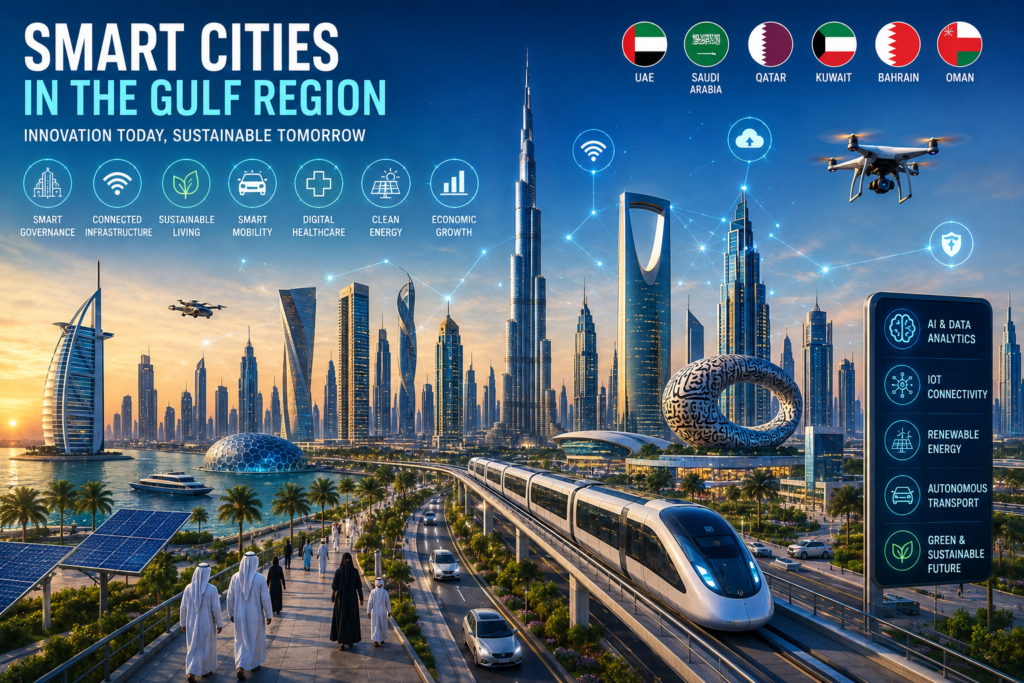
Examples of AI applications in smart cities in the Gulf include:
- Predicting traffic congestion
- Optimizing traffic lights
- Detecting infrastructure problems
- Forecasting energy demand
- Monitoring public spaces
- Supporting emergency response
- Improving healthcare services
- Automating government processes
- Analyzing environmental conditions
- Supporting predictive maintenance
AI can also help cities move from reactive management to predictive management. Instead of waiting for infrastructure to fail, city authorities can use data to identify potential problems before they become major disruptions.
This could reduce maintenance costs and improve the reliability of essential services.
Internet of Things and Connected Infrastructure
The Internet of Things is another fundamental technology behind Gulf smart cities.
IoT devices can collect information from roads, buildings, vehicles, utility networks, public spaces and environmental systems.
For example, sensors can measure:
- Traffic volume
- Air quality
- Temperature
- Energy consumption
- Water usage
- Parking availability
- Waste-bin capacity
- Building performance
- Street lighting conditions
This information can be transmitted to centralized platforms where it can be analyzed and used to improve decision-making.
Smart waste management is a practical example. Qatar’s TASMU program describes smart bins that can detect fill levels and support more efficient collection routes, while data can help identify waste patterns across districts and neighborhoods.
Smart Mobility and Transportation
Transportation is one of the most visible areas of smart city development.
Gulf cities are investing in metro systems, intelligent traffic management, electric vehicles, digital mobility platforms and autonomous transportation technologies.
Smart mobility can include:
- Intelligent traffic signals
- Real-time public transport information
- Electric buses and vehicles
- EV charging stations
- Autonomous vehicles
- Smart parking
- Connected road infrastructure
- Mobility applications
- Integrated public transportation systems
- Data-driven traffic management
The objective is to make transportation faster, safer and more environmentally sustainable.
In densely populated cities, intelligent transportation systems can also help reduce congestion and improve the overall efficiency of urban mobility.
Renewable Energy and Smart Grids
Energy is particularly important in the Gulf because of the region’s hot climate and high demand for cooling.
Smart grids can help electricity providers understand consumption patterns and balance supply with demand. Digital monitoring can also identify inefficiencies and improve infrastructure management.
Solar energy is especially promising because of the Gulf’s abundant sunlight.
Dubai, for example, has incorporated renewable energy and smart utility infrastructure into its smart city initiatives, including the Mohammed bin Rashid Al Maktoum Solar Park and DEWA’s smart grid projects.
The combination of solar power, energy storage, smart grids and energy-efficient buildings could significantly influence the future development of Gulf cities.
Smart Buildings and Sustainable Architecture
Buildings are responsible for a significant share of urban energy consumption, making smart buildings an important component of sustainable city planning.
Smart buildings can automatically adjust lighting, cooling and ventilation according to occupancy and environmental conditions.
Technologies can also monitor equipment and identify maintenance requirements.
Key features of smart buildings include:
- Automated lighting
- Smart air-conditioning systems
- Energy monitoring
- Water management
- Building automation
- Occupancy sensors
- Predictive maintenance
- Digital security systems
- Renewable energy integration
In the Gulf’s climate, efficient cooling systems are particularly important. Smart building technology can help reduce energy consumption while maintaining comfortable indoor environments.
Smart Healthcare
Healthcare is another area where smart city technology can create significant benefits.
Connected healthcare systems can allow patients to access medical services digitally, while telemedicine can make consultations more accessible.
Smart healthcare can involve:
- Virtual medical consultations
- Electronic health records
- Remote patient monitoring
- AI-assisted diagnostics
- Digital appointment systems
- Connected medical devices
- Health data analytics
Qatar’s TASMU program, for example, includes virtual consultation as a smart healthcare application designed to improve access to healthcare services.
As Gulf populations grow and healthcare demand increases, digital technology can help healthcare providers deliver services more efficiently.
Smart Governance and Digital Public Services
A successful smart city needs more than advanced buildings and transportation systems. Government services must also become digitally connected.
Digital government platforms allow residents and businesses to complete tasks online, reducing paperwork, queues and administrative delays.
Smart governance can include:
- Digital identity
- Online government services
- Digital payments
- Automated permits
- Smart licensing
- Online municipal services
- Digital public consultations
- AI-assisted government services
Dubai’s smart government ecosystem demonstrates how digital services can become integrated into everyday urban life.
The future of smart governance will increasingly involve AI, automation and predictive analytics, although privacy, cybersecurity and responsible data use will remain essential.
Smart Water and Waste Management
Water is one of the Gulf’s most valuable resources. Smart water systems can help monitor consumption, identify leaks and improve distribution.
Sensors can provide real-time information about water networks and infrastructure, allowing authorities to respond more quickly to problems.
Waste management can also become more efficient through smart technology.
Connected waste bins, optimized collection routes and data analytics can help reduce unnecessary journeys, operating costs and environmental impacts.
These technologies are particularly valuable in rapidly growing Gulf cities where waste and resource consumption can increase alongside population growth.
The Role of 5G and Digital Connectivity
Fast and reliable connectivity is the foundation of smart city infrastructure.
5G networks can support large numbers of connected devices while enabling low-latency communication. This is important for applications such as autonomous transportation, remote monitoring, smart infrastructure and real-time data analysis.
As Gulf cities deploy more IoT devices and digital services, reliable connectivity will become increasingly important.
Future smart city networks are likely to combine 5G, cloud computing, edge computing and advanced cybersecurity systems to create resilient digital infrastructure.
Benefits of Smart Cities in the Gulf
The development of smart cities can provide economic, environmental and social benefits.
Major benefits include:
- Better public services
- Reduced traffic congestion
- More efficient energy consumption
- Improved waste management
- Greater use of renewable energy
- Faster government services
- Improved public safety
- Better healthcare access
- More efficient infrastructure maintenance
- New technology and employment opportunities
- Increased investment
- Improved business competitiveness
- Better quality of life
Smart city development can also help Gulf countries attract international companies, technology startups and skilled professionals.
Challenges Facing Gulf Smart Cities
Despite their potential, smart cities face several challenges.
One major challenge is cybersecurity. As more systems become connected, the potential impact of cyberattacks increases. Governments must protect sensitive data, infrastructure and public services.
Data privacy is another important issue. Smart cities collect large amounts of information, and residents need confidence that their personal data is handled responsibly.
Other challenges include:
- High infrastructure costs
- Shortage of specialized technology talent
- Integration of old and new infrastructure
- Cybersecurity threats
- Data privacy concerns
- Interoperability between different systems
- Dependence on reliable digital networks
- Ensuring accessibility for all residents
- Managing rapid technological change
Smart city development should therefore focus not only on technology but also on governance, transparency, skills and public trust.
The Future of Smart Cities in the Gulf
The next phase of smart city development in the Gulf is likely to focus on deeper integration between different systems.
Rather than having separate smart transportation, smart energy and smart government platforms, cities are increasingly expected to connect these services.
For example, transportation data could be combined with weather, energy and population data to improve city planning.
AI could then analyze this information and help authorities predict future demand.
Future Gulf cities may increasingly feature:
- Autonomous transportation
- AI-powered urban management
- Fully digital government services
- Smart energy networks
- Carbon-efficient buildings
- Advanced robotics
- Connected healthcare
- Intelligent water systems
- Automated waste collection
- Digital twins of cities
- Drone-based infrastructure monitoring
- Personalized digital public services
The concept of the smart city is therefore evolving from individual technological projects toward an integrated digital urban ecosystem.
Smart Cities and Economic Diversification
Smart city investment can support the Gulf’s transition toward knowledge-based economies.
Technology companies, software developers, AI researchers, cybersecurity specialists, data scientists and engineering firms can all benefit from the expansion of smart infrastructure.
Smart cities can also create opportunities in sectors such as:
- Artificial intelligence
- Cloud computing
- Cybersecurity
- Renewable energy
- Electric mobility
- Robotics
- Construction technology
- Healthcare technology
- Financial technology
- Urban analytics
- Telecommunications
This creates a wider economic ecosystem around smart city development.
For Gulf governments, the value of smart cities is therefore not limited to better infrastructure. They can also become platforms for innovation, entrepreneurship and economic diversification.
Smart Cities and Quality of Life
Ultimately, the success of a smart city should be measured by how technology improves people’s everyday lives.
A city is not truly smart simply because it has connected buildings or futuristic transportation. It becomes smart when technology helps residents live more conveniently, safely and sustainably.
A successful Gulf smart city should make it easier to:
- Travel around the city
- Access government services
- Receive healthcare
- Manage household energy
- Find parking
- Use public transportation
- Access information
- Communicate with authorities
- Enjoy public spaces
- Reduce environmental impact
Human-centered design will therefore remain an important part of smart city development.
Conclusion
Smart cities in the Gulf are rapidly changing the region’s urban landscape. From Dubai’s digital government and smart transportation systems to Riyadh’s AI-enabled municipal initiatives and Qatar’s TASMU Smart Qatar program, Gulf countries are using technology to create more connected and efficient cities.
The future will be shaped by artificial intelligence, IoT, renewable energy, smart mobility, digital government, connected buildings and advanced data analytics. At the same time, cybersecurity, privacy, sustainability and digital inclusion will be critical to ensuring that smart city development delivers lasting public value.
The Gulf’s smart city journey is ultimately about more than technology. It represents a broader transformation in how cities are planned, managed and experienced. As the GCC continues investing in digital infrastructure and economic diversification, its cities are likely to become important global examples of technology-driven urban development.
For residents, businesses and investors, the rise of Gulf smart cities presents significant opportunities. For governments, it offers a pathway toward more sustainable, competitive and efficient urban economies. And for the region as a whole, smart city development could help define what urban life in the Gulf looks like for decades to come.
Do follow us on Instagram
Read More – How Gulf Lifestyle Trends Are Redefining Modern Living