



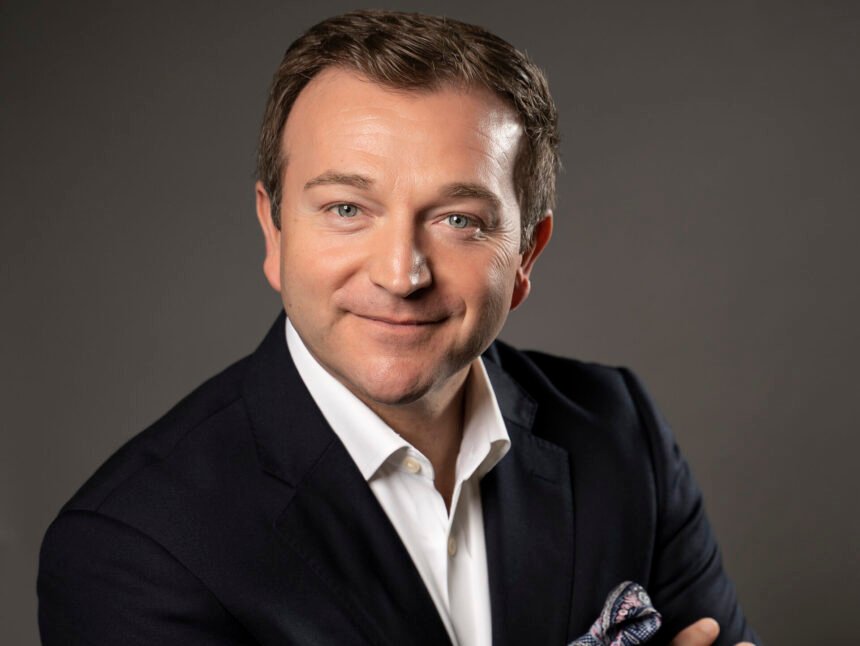
From the Hospitality Floor to Executive Leadership
Hospitality is often presented through polished hotel lobbies, exceptional restaurants and unforgettable guest experiences. Behind that visible world, however, is a demanding industry built on discipline, teamwork, resilience and thousands of decisions made every day.
- A Career Built From the Ground Up
- Learning to Turn Complexity Into Clarity
- Why People Still Matter in a Technology Driven Industry
- Success Means Developing Other Leaders
- Resilience Became One of His Greatest Teachers
- From Experience to a New Generation
- Execution Is Where Ideas Become Reality
- The Next Chapter of Thomas Sorcinelli
For Thomas Sorcinelli, understanding that reality began long before executive leadership.
His career has taken him from frontline hospitality operations to senior leadership positions across international luxury hotels, restaurants and hospitality businesses. That progression has given Thomas something increasingly valuable in modern business: the ability to understand both the commercial strategy behind an organisation and the human effort required to deliver it.
His journey has included experiences across renowned hospitality environments in London, the Caribbean, Europe and the Middle East. Along the way, he has worked with luxury hotels, fine dining businesses, international restaurant groups and complex hospitality operations.
But despite the scale of his experience, Thomas remains convinced that hospitality is ultimately about people.
A Career Built From the Ground Up
Thomas did not begin his career in a boardroom.
His early experiences in hospitality exposed him to the realities of service, standards and operational discipline. Working close to guests and teams taught him lessons that would later become central to his leadership philosophy.
The progression from operational roles into management and eventually executive leadership allowed Thomas to see organisations from multiple perspectives. He learned how decisions made at senior levels could affect the people responsible for implementing them and how seemingly small operational choices could influence the guest experience.
His international career later brought opportunities in some of the most respected names in hospitality. His professional journey included time at The Ritz London, where his work in wine and beverage leadership strengthened his commercial and operational expertise. He also went on to lead at Savoy Grill within Gordon Ramsay Restaurants, gaining experience in one of London’s most recognised fine dining environments.
Other chapters included his work with Heckfield Place and Sandy Lane in Barbados, followed by senior corporate responsibilities with Fundamental Hospitality in Dubai.
Each experience added another layer to his understanding of hospitality.
Instead of seeing his career as a series of job titles, Thomas views it as a continuous education in people, business and leadership.
Learning to Turn Complexity Into Clarity
One of the strongest ideas shaping Thomas’s current work is surprisingly simple.
Businesses do not always become better when they become more complicated.
As hospitality companies grow, additional structures, processes and layers of management can sometimes create the opposite of what they were designed to achieve. Decisions become slower, accountability becomes less clear and teams can lose sight of what matters most.
Thomas believes effective leadership should simplify rather than complicate.
His current professional focus is centred on helping hospitality organisations identify inefficiencies, make better decisions and translate strategy into measurable performance. His approach combines analytical thinking with practical operational experience.
For Thomas, clarity is not about reducing ambition. It is about removing unnecessary obstacles between an idea and its execution.
That philosophy has become particularly relevant as hospitality businesses face rising costs, changing guest expectations, workforce challenges and rapid technological development.
Why People Still Matter in a Technology Driven Industry
Technology is transforming hospitality at a remarkable pace.
Artificial intelligence, data analytics, automation and digital platforms are increasingly influencing everything from pricing and staffing to customer engagement and operational planning.
Thomas believes these tools can make hospitality businesses smarter, but he does not see technology as a replacement for human leadership.
Instead, he sees technology as an opportunity to improve the decisions people make.
Data can identify patterns. Artificial intelligence can highlight inefficiencies. Digital systems can accelerate processes. But a successful hospitality experience still depends on people who understand guests, respond to unexpected situations and create genuine connections.
This balance between innovation and humanity has become central to Thomas’s thinking.
His message is particularly relevant to an industry where the guest may remember the technology they used, but often remembers the person who made them feel welcome.
Success Means Developing Other Leaders
For many executives, success is measured through revenue, growth, expansion or prestigious positions.
Thomas has a different measure.
He is proud of the businesses he has helped develop and the results achieved during his career, but some of his most meaningful professional moments have come from seeing former colleagues become leaders themselves.
That belief reflects a broader understanding of leadership.
A strong leader does not simply produce results personally. A strong leader creates an environment where other people can perform, develop and eventually lead.
When someone Thomas once mentored goes on to develop another generation of professionals, the impact continues beyond his direct involvement.
That is the kind of legacy he values.
It also explains why people development remains such an important part of his philosophy.
Resilience Became One of His Greatest Teachers
Behind a successful international career are inevitably moments that do not go according to plan.
Thomas does not describe setbacks as interruptions to success. Instead, he sees them as part of the process.
Hospitality is particularly demanding because it combines people, financial pressure, customer expectations, changing markets and unpredictable circumstances. Leaders are frequently required to make decisions without having perfect information.
For Thomas, resilience means more than surviving difficult periods.
It means remaining curious enough to understand what went wrong, being willing to challenge previous assumptions and having the courage to move forward differently.
That perspective has influenced the way he approaches both business and personal growth.
Success can confirm what works. Failure can reveal what needs to change.
Sometimes, the most difficult chapters become the ones that ultimately define a person’s character.
From Experience to a New Generation
Thomas is also increasingly focused on sharing the lessons accumulated throughout his career.
His book, Hospitality 101: Unveiling the Hospitality Frontier, Tales of Passion and Resilience, brings together experiences and reflections from his journey through the industry.
The book represents another stage in his professional evolution. Instead of simply managing businesses, Thomas is now using his experience to educate, challenge and inspire others entering the hospitality world.
That transition from practitioner to author and industry advocate reflects a broader shift in his career.
He is no longer only focused on what happens inside a business. He is also interested in what the next generation of hospitality professionals can learn from the realities behind the industry.
For young professionals, his message is straightforward: stay curious, keep learning and do not allow one setback to determine the direction of an entire career.
Execution Is Where Ideas Become Reality
Perhaps the simplest principle behind Thomas’s leadership philosophy is his belief in execution.
Hospitality is full of concepts, strategies and ambitious plans. But a strategy has little value if nobody can execute it effectively.
Thomas believes people do not always need a perfect plan before taking action. They need the courage to begin, the discipline to continue and the humility to make adjustments when circumstances change.
That approach reflects his own career.
His journey was not built through one carefully planned route from beginning to end. It developed through opportunities, challenges, international moves, leadership responsibilities and moments that required reinvention.
The common thread was the willingness to keep moving.
The Next Chapter of Thomas Sorcinelli
Today, Thomas stands at an interesting point in his career.
With decades of operational and executive experience behind him, he is increasingly focused on helping hospitality businesses become more agile, commercially stronger and easier to navigate.
His work sits at the intersection of strategy, operations, technology and people.
But the human element remains the foundation.
For Thomas, the future of hospitality is not about choosing between innovation and human connection. It is about using innovation intelligently while protecting the qualities that made hospitality meaningful in the first place.
His story demonstrates that successful leadership is rarely about reaching a final destination.
It is about continuing to learn, adapting when circumstances change, developing people and having the discipline to turn ideas into action.
From the hospitality floor to international executive leadership, Thomas Sorcinelli has built a career around one enduring lesson: businesses may depend on strategy and execution, but extraordinary hospitality begins and ends with people.
Connect Thomas Sorcinelli on Linkedin
Read More – UAE Sets Minimum Social Media Use Age at 15