


10 Incredible UNESCO Sites Added to the World Heritage List
The world’s most important heritage places are not limited to famous landmarks such as the Taj Mahal, Great Wall of China or ancient ruins of Rome. Every year, UNESCO considers new cultural and natural places whose stories, landscapes or biodiversity are considered important to humanity as a whole.
- What Exactly Is a UNESCO World Heritage Site?
- 1. Ancient Buddhist Site of Sarnath, India
- 2. Wadi Wurayah, United Arab Emirates
- 3. Beaches of the D-Day Landings, Normandy, France
- 4. Aalto Works, Finland
- 5. Aqaba Marine Reserve, Jordan
- 6. Boma-Badingilo Migratory Landscape, South Sudan
- 7. Mount Olympus, Greece
- 8. Medinas of the Historic Sultanates of the Comoros
- 9. Amazonia Theaters, Brazil
- 10. Jingdezhen Porcelain Industry Sites, China
- Other Important UNESCO Sites Added in 2026
- Three Countries Joined the World Heritage List for the First Time
- Why UNESCO Status Matters
- UNESCO Status Does Not Mean a Site Is Safe Forever
- Climate Change Is Becoming a Major Heritage Challenge
- Tourism Can Protect Heritage or Damage It
- New UNESCO Sites of 2026 at a Glance
- How Does a Place Become a UNESCO World Heritage Site?
- Cultural vs Natural UNESCO Sites
- Why UNESCO Sites Still Matter in 2026
- FAQs About UNESCO Sites
- Conclusion
That makes UNESCO Sites one of the most fascinating ways to understand our planet.
In July 2026, the UNESCO World Heritage Committee completed its 48th session in Busan, Republic of Korea, adding 25 new properties to the World Heritage List. The new inscriptions included 19 cultural sites, five natural sites and one mixed cultural-natural property.
The 2026 additions range from the sacred Buddhist landscape of Sarnath in India to the mountain ecosystem of Wadi Wurayah in the UAE, the D-Day beaches of Normandy and one of Africa’s greatest wildlife migration landscapes.
Three countries, Comoros, São Tomé and Príncipe, and South Sudan, also gained their first-ever UNESCO World Heritage properties during the 2026 session.
These developments show that World Heritage is not simply about protecting famous monuments.
It is about preserving human memory, extraordinary ecosystems and places whose importance extends far beyond national borders.
Here are 10 of the most remarkable UNESCO additions of 2026 and the stories that make them worth knowing.
What Exactly Is a UNESCO World Heritage Site?
A UNESCO World Heritage Site is a cultural or natural property recognized as having Outstanding Universal Value.
In simple terms, the place must be considered important not only to the country where it is located, but to humanity more broadly.
World Heritage properties can include:
- archaeological sites
- historic cities
- religious monuments
- cultural landscapes
- forests
- mountains
- wetlands
- coral reefs
- fossil sites
- and places connected with major historical events
UNESCO divides World Heritage properties into three main categories.
| Category | Meaning |
|---|---|
| Cultural | Places important for history, architecture, archaeology or culture |
| Natural | Landscapes or ecosystems with exceptional natural value |
| Mixed | Places possessing both major cultural and natural importance |
The 2026 World Heritage Committee session ran from 19 to 29 July in Busan, Republic of Korea.
Rather than simply producing another travel list, the new inscriptions provide a fascinating snapshot of what the international community currently considers worth protecting.
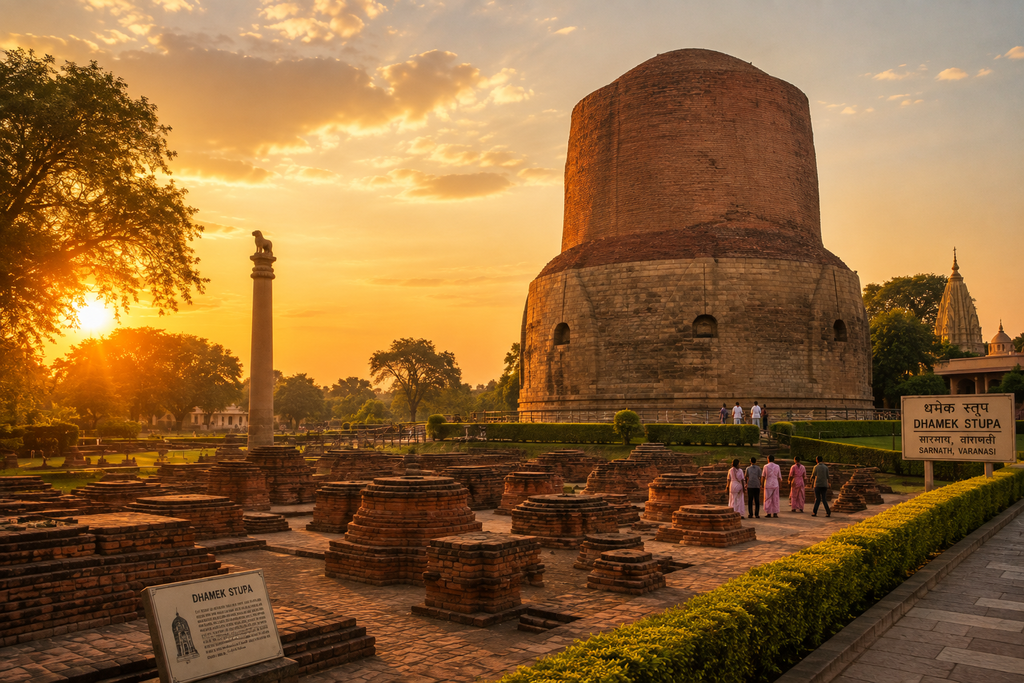
1. Ancient Buddhist Site of Sarnath, India
One of the biggest heritage developments for India in 2026 was the inscription of the Ancient Buddhist Site of Sarnath.
Located near Varanasi in Uttar Pradesh, Sarnath is among Buddhism’s most sacred places.
According to UNESCO, this is where the Buddha is believed to have delivered his first sermon in the 6th century BCE and where he met his earliest disciples.
Over the centuries, Sarnath became an important Buddhist centre supported by rulers, monks and followers.
The landscape developed numerous:
- stupas
- temples
- monasteries
- archaeological structures
- and religious spaces
The site later declined around the 12th century before being rediscovered centuries later.
Today, Sarnath remains both an archaeological destination and an active international pilgrimage centre.
Its 2026 recognition increased India’s World Heritage total to 45 properties.
Why it matters: Sarnath is connected directly with one of the defining moments in Buddhist history and remains spiritually significant to millions of people worldwide.
Suggested image placement: Dhamek Stupa surrounded by the archaeological landscape at Sarnath.
2. Wadi Wurayah, United Arab Emirates
One of the most significant new UNESCO Sites for the Gulf in 2026 is Wadi Wurayah.
Located entirely within the Hajar Mountains in Fujairah, the property represents a very different image of the UAE from Dubai’s skyscrapers or Abu Dhabi’s modern urban landscape.
UNESCO says Wadi Wurayah contains 1,099 recorded species, including 883 fauna species and 216 flora species. At least 10 globally threatened species are found there.
The protected mountain ecosystem contains:
- rocky landscapes
- freshwater environments
- mountain habitats
- rare plants
- mammals
- reptiles
- and other wildlife
UNESCO also notes that the area supports approximately half of the UAE’s recorded terrestrial mammal species and nearly half of its terrestrial reptile species.
Its recognition demonstrates that heritage in the UAE extends well beyond architecture and archaeological history.
Natural ecosystems can be equally important.
Why it matters: Wadi Wurayah protects one of the UAE’s most biologically significant mountain environments.
Suggested image placement: Rocky Hajar Mountain landscape with natural pools and vegetation in Wadi Wurayah.
3. Beaches of the D-Day Landings, Normandy, France
Some heritage sites are recognized not because of their architecture but because of what happened there.
The Beaches of the D-Day Landings, Normandy, 1944 were officially inscribed in 2026.
The UNESCO property stretches across approximately 80 kilometres of Normandy coastline and includes:
- Utah Beach
- Omaha Beach
- Gold Beach
- Juno Beach
- Sword Beach
- Pointe du Hoc
These places were at the centre of the Allied landings of 6 June 1944, which opened a major phase in the liberation of Western Europe from Nazi occupation during the Second World War.
Physical evidence of the conflict remains visible across the landscape.
Visitors can still encounter sections of the German Atlantic Wall, military fortifications, battlefield traces and memorial landscapes.
The property also includes places of remembrance such as the American Cemetery at Colleville-sur-Mer.
Why it matters: Normandy’s coastline represents one of the most consequential military operations of the twentieth century and has become an international landscape of memory.
4. Aalto Works, Finland
UNESCO heritage does not have to be ancient.
Finland’s Aalto Works demonstrates that twentieth-century architecture can carry global cultural significance.
The newly inscribed property consists of 13 buildings and architectural ensembles created between 1928 and 1988.
They are internationally associated with Finnish architect Alvar Aalto, while UNESCO emphasizes the collaborative contributions of Aino Marsio-Aalto, Elissa Aalto, the Aalto studio and other design partners.
The buildings represent a human-centred interpretation of modern architecture.
Rather than approaching modernism as one universal style, the designs responded to:
- local landscapes
- community needs
- Finnish traditions
- materials
- and individual sites
The collection includes civic, residential and community architecture across different parts of Finland.
Why it matters: Aalto Works demonstrates how modern architecture can combine international design movements with local identity and human needs.
5. Aqaba Marine Reserve, Jordan
One of 2026’s most extraordinary natural additions lies underwater.
Jordan’s Aqaba Marine Reserve, located at the northern end of the Red Sea, protects coral reefs, seagrass and deeper reef ecosystems.
UNESCO describes it as the world’s northernmost tropical coral reef system.
Its biodiversity is remarkable.
The reserve supports:
- more than 150 hard coral species
- over 500 fish species
- around 1,000 mollusc species
Its corals have also developed resilience to unusually challenging conditions, including high temperatures, salinity and marine heatwaves.
That could give the ecosystem growing scientific importance as oceans become warmer.
Coral reefs around the world face significant pressure from climate change.
Studying naturally resilient coral systems could help scientists better understand how some reefs respond to rising temperatures.
Why it matters: Aqaba combines extraordinary biodiversity with potentially important clues about coral survival in a warming world.
Suggested image placement: Colourful coral reef and tropical fish beneath the clear water of Aqaba.
6. Boma-Badingilo Migratory Landscape, South Sudan
One of the most important UNESCO developments of 2026 came from South Sudan.
The Boma-Badingilo Migratory Landscape became the country’s first property on the World Heritage List.
Its scale is enormous.
The protected landscape contains national parks, grasslands, wetlands, floodplains, woodland and savanna.
But its most extraordinary feature is wildlife migration.
UNESCO estimates that approximately six million White-eared Kob, Tiang and Mongalla Gazelle move through this landscape following changing seasonal conditions.
The region also supports animals including:
- elephants
- lions
- leopards
- African wild dogs
- cheetahs
- Nile lechwe
- and Beisa oryx
Local communities including Murle, Dinka, Nuer, Anyuak and Toposa peoples have also lived with and managed the landscape through herding, farming and fishing for generations.
Why it matters: The property safeguards one of Earth’s largest remaining terrestrial mammal migrations and gives South Sudan its first World Heritage recognition.
7. Mount Olympus, Greece
Few mountains carry as much cultural symbolism as Mount Olympus.
In 2026, UNESCO recognized the wider Mount Olympus area as a mixed World Heritage property, meaning its importance is both cultural and natural.
To the ancient Greeks, Olympus was associated with the home of the Twelve Olympian gods.
Zeus, the Muses and other figures from Greek mythology became permanently connected with the mountain through traditions and texts including works associated with Homer and Hesiod.
But mythology is only half of its significance.
Mount Olympus is also Greece’s highest mountain and contains remarkable biodiversity.
Its varied elevation and proximity to the sea create multiple ecological environments.
The landscape includes:
- limestone cliffs
- deep gorges
- mountain ridges
- karst formations
- forests
- and areas rich in endemic plant life
Why it matters: Mount Olympus is one of the clearest examples of a place where natural landscape and human imagination have become inseparable.
8. Medinas of the Historic Sultanates of the Comoros
The 2026 UNESCO session also created a major milestone for the Comoros.
The Medinas of the Historic Sultanates of the Comoros became the country’s first World Heritage property.
The site is composed of six historic towns.
UNESCO explains that their urban origins date back to at least the 11th century, with the settlements developing into city-states around the 14th and 15th centuries before becoming centres of island sultanates.
Their architecture and urban forms reflect centuries of cultural interaction.
Comoros sits within the Indian Ocean world, historically connecting people travelling between:
- Africa
- Arabia
- Persia
- South Asia
- and other Indian Ocean communities
These exchanges influenced religion, architecture, social organization and commerce.
Why it matters: The property tells an important story about Indian Ocean trade and cultural exchange that has often received less global attention than Mediterranean or European maritime history.
9. Amazonia Theaters, Brazil
Amazonia is usually associated with rainforest.
Brazil’s newly recognized Amazonia Theaters tell a different story.
The UNESCO property connects major theatre complexes in Belém and Manaus that developed during the Amazon rubber boom between 1879 and 1912.
The property includes:
- Theatro da Paz and Praça da República in Belém
- Teatro Amazonas and Largo de São Sebastião in Manaus
Their European-inspired architecture reflected the enormous wealth generated during the Rubber Cycle.
At the same time, decorative elements incorporated influences connected to the Amazon.
These theatres demonstrate how a global commodity could transform cities located deep within one of the world’s largest tropical regions.
They also reveal the contradictions of the period: cultural ambition and architectural grandeur emerged from a global economic system built around resource extraction.
Why it matters: The theatres provide architectural evidence of the Amazon’s powerful connection to global trade during the late nineteenth century.
10. Jingdezhen Porcelain Industry Sites, China
A porcelain bowl can seem like an ordinary object.
But for centuries, Chinese porcelain was one of the world’s most desirable global commodities.
The newly inscribed Jingdezhen Handicraft Porcelain Industry Sites reveal the manufacturing system behind that history.
UNESCO says the property demonstrates the evolution of porcelain production from the 10th to the 19th centuries.
The five component areas illustrate the complete production network, including:
- extraction of raw materials
- transportation
- kiln technology
- manufacturing
- workshops
- guilds
- trade
- and Imperial production
Jingdezhen became particularly famous for blue-and-white porcelain.
Its products travelled internationally and influenced art, design and consumer culture far beyond China.
This is why UNESCO heritage can sometimes tell a global story through an industry rather than through a palace or monument.
Why it matters: Jingdezhen demonstrates how technology, craftsmanship and international trade turned porcelain into one of China’s most influential cultural products.
Other Important UNESCO Sites Added in 2026
The World Heritage Committee added 25 new properties in total, so the 10 above represent only part of the 2026 story.
Other new inscriptions include:
- Alamūt Castle and Related Fortifications in Iran
- Ancient Capitals of Asuka and Fujiwara in Japan
- Gdynia Modernist City Centre in Poland
- Mount Amel Castles in Lebanon
- Rock Mosques of Mangystau in Kazakhstan
- Royal Capetian Fortresses of Languedoc in France
- Sebastia in Palestine
- Tashkent Modernist Architecture in Uzbekistan
- Cemetery Complexes of the Xiongnu Nobility in Mongolia
- Roças of São Tomé and Príncipe
- Sidi Bou Saïd in Tunisia
- Wat Phra Mahathat Woramahawihan in Thailand
- Okefenokee National Wildlife Refuge in the United States
- Western Limfjord fossil sites in Denmark
The extraordinary range demonstrates just how broad the idea of World Heritage has become.
A twentieth-century city centre can stand beside a Buddhist pilgrimage site.
A coral reef can share the list with medieval fortifications.
A wildlife migration corridor can be recognized alongside historic theatres.
Three Countries Joined the World Heritage List for the First Time
Perhaps the most significant story from the 2026 session is not a single monument.
It is representation.
Comoros, São Tomé and Príncipe, and South Sudan each received their first World Heritage inscription.
For UNESCO, this represents progress toward making the list more representative of global cultural and natural diversity.
Historically, some parts of the world have had significantly more World Heritage properties than others.
Preparing a successful nomination can require years of:
- research
- documentation
- mapping
- conservation planning
- international evaluation
- local cooperation
Countries with fewer technical and financial resources can therefore face disadvantages.
Expanding representation matters because World Heritage should tell a genuinely global story.
Why UNESCO Status Matters
Being placed on the World Heritage List does not simply create a prestigious tourism label.
It comes with responsibilities.
Countries are expected to protect the qualities that justified inscription.
That can involve:
- conservation
- legal protection
- environmental management
- monitoring
- visitor management
- restoration
- research
- and community involvement
Recognition can also raise international awareness.
A previously little-known archaeological site or natural reserve may suddenly attract global attention.
That creates both opportunity and risk.
Tourism can generate income and employment.
Too much tourism can damage the same place people travelled to see.
World Heritage therefore requires careful management.
UNESCO Status Does Not Mean a Site Is Safe Forever
A World Heritage designation is not a guarantee that a place will remain protected.
UNESCO also maintains a List of World Heritage in Danger for properties facing serious threats.
Threats can include:
- armed conflict
- climate change
- uncontrolled construction
- pollution
- deforestation
- natural disasters
- overtourism
- poor management
- and infrastructure development
This is one of the most important aspects of the World Heritage system.
It is not simply a list celebrating beautiful places.
It is also a global conservation mechanism.
The 2026 World Heritage Committee reviewed the state of conservation of numerous existing properties alongside new nominations.
Climate Change Is Becoming a Major Heritage Challenge
Climate change creates a particularly difficult problem because cultural and natural heritage cannot simply be moved somewhere safer.
Coral reefs face warmer oceans.
Historic coastal settlements face rising seas.
Glaciers retreat.
Wildfires threaten natural and cultural landscapes.
Extreme rainfall can damage archaeological structures.
The inscription of Aqaba Marine Reserve is especially interesting in this context because its coral communities have demonstrated unusually strong thermal resilience.
Protecting heritage increasingly requires climate adaptation alongside traditional conservation.
That may become one of UNESCO’s biggest challenges over the next several decades.
Tourism Can Protect Heritage or Damage It
UNESCO recognition often makes destinations more attractive to travellers.
That can be economically valuable.
Entrance fees, hotels, restaurants, guides and transportation can create local employment.
But popularity can become dangerous.
Millions of visitors walking through fragile monuments or natural environments can cause physical damage.
Tourism development can also push up property prices or change historic neighbourhoods.
Responsible tourism therefore matters.
Visitors should:
- Follow official routes and restrictions.
- Avoid touching archaeological structures.
- Never remove stones, coral or artifacts.
- Respect wildlife.
- Support local guides and businesses where appropriate.
- Avoid leaving rubbish.
- Respect religious and cultural customs.
A World Heritage Site is not simply a background for photographs.
It is something being preserved for people who have not visited yet.
New UNESCO Sites of 2026 at a Glance
| UNESCO Site | Country | Type | Why It Stands Out |
| Ancient Buddhist Site of Sarnath | India | Cultural | Buddha’s first sermon |
| Wadi Wurayah | UAE | Natural | Hajar Mountain biodiversity |
| D-Day Landing Beaches | France | Cultural | Major WWII history |
| Aalto Works | Finland | Cultural | Human-centred modern architecture |
| Aqaba Marine Reserve | Jordan | Natural | Resilient tropical coral reefs |
| Boma-Badingilo | South Sudan | Natural | Massive wildlife migration |
| Mount Olympus | Greece | Mixed | Mythology and biodiversity |
| Historic Medinas | Comoros | Cultural | Indian Ocean trading heritage |
| Amazonia Theaters | Brazil | Cultural | Architecture of the rubber era |
| Jingdezhen Porcelain Sites | China | Cultural | Centuries of porcelain production |
Together, these properties show that there is no single definition of an important heritage place.
How Does a Place Become a UNESCO World Heritage Site?
A property does not simply apply and receive approval immediately.
The process can take years.
Countries first identify potential places for their Tentative Lists.
UNESCO’s 2026 World Heritage Committee documentation included updated Tentative Lists submitted by States Parties as of April 15, 2026.
A formal nomination then requires extensive evidence showing why the property has Outstanding Universal Value.
Independent advisory bodies evaluate nominations.
The World Heritage Committee can then decide to:
- inscribe the property
- refer the nomination back
- defer a decision
- or decline inscription
At the 2026 session, 33 nominations or related proposals were prepared for examination, while 25 new properties ultimately entered the World Heritage List.
The process is deliberately demanding because World Heritage recognition is intended to be exceptional.
Cultural vs Natural UNESCO Sites
Cultural sites often receive the most public attention because famous monuments are easy to recognize.
But natural sites are equally important.
A natural World Heritage property may protect:
- unique geological formations
- rare ecosystems
- endangered species
- major evolutionary evidence
- or extraordinary landscapes
Wadi Wurayah and Aqaba Marine Reserve demonstrate how different natural properties can be.
One protects a mountain ecosystem in the UAE.
The other protects underwater coral communities in Jordan.
Boma-Badingilo protects an enormous terrestrial migration system.
This diversity is one of the greatest strengths of the World Heritage programme.
Why UNESCO Sites Still Matter in 2026
The world is becoming increasingly digital, urbanized and interconnected.
That makes heritage more important, not less.
Globalization can make cities look more similar.
Historical places preserve difference.
Climate change threatens ecosystems that took thousands of years to develop.
Protected natural sites preserve biological memory.
Conflicts can destroy monuments in days that survived for centuries.
World Heritage recognition reminds governments and visitors that some places have value beyond immediate economic development.
The 2026 inscriptions demonstrate this clearly.
Sarnath protects spiritual history.
Normandy preserves the memory of war.
Jingdezhen tells the story of international trade and craftsmanship.
Wadi Wurayah protects biodiversity.
Mount Olympus connects mythology with landscape.
Boma-Badingilo protects wildlife migration on a planetary scale.
Different places.
Different stories.
The same principle: some heritage belongs to everyone.
FAQs About UNESCO Sites
What are UNESCO Sites?
UNESCO World Heritage Sites are cultural, natural or mixed properties considered to possess Outstanding Universal Value to humanity under the World Heritage Convention.
How many new UNESCO Sites were added in 2026?
The World Heritage Committee added 25 new properties during its 48th session in Busan in July 2026. These included 19 cultural sites, five natural sites and one mixed property.
What new UNESCO Site was added in India in 2026?
The Ancient Buddhist Site of Sarnath was inscribed in 2026. UNESCO recognizes it as the sacred place where the Buddha is believed to have delivered his first sermon.
Did the UAE get a new UNESCO Site in 2026?
Yes. Wadi Wurayah in Fujairah was inscribed as a natural World Heritage property. It contains significant biodiversity within the Hajar Mountains.
Which countries received their first UNESCO World Heritage Site in 2026?
Comoros, São Tomé and Príncipe, and South Sudan received their first inscriptions during the 2026 World Heritage Committee session.
Is Mount Olympus a UNESCO World Heritage Site?
Yes. The wider Mount Olympus area in Greece was added in 2026 as a mixed property recognized for both its cultural associations with Greek mythology and its natural biodiversity.
Why are UNESCO Sites important?
They help identify, protect and raise international awareness of cultural and natural places considered important to humanity. World Heritage status also creates responsibilities for long-term conservation.
Can UNESCO remove a World Heritage Site?
Yes. A property can eventually be delisted if the characteristics that justified its inscription are irreversibly lost. UNESCO also maintains a separate List of World Heritage in Danger for threatened properties.
Conclusion
The latest UNESCO Sites prove that World Heritage is constantly evolving.
At its July 2026 meeting in Busan, the World Heritage Committee added 25 new properties representing architecture, archaeology, religion, war history, biodiversity, geology and living cultural traditions.
India’s Sarnath brings one of Buddhism’s most sacred landscapes onto the list.
The UAE’s Wadi Wurayah demonstrates the extraordinary biodiversity hidden within the Hajar Mountains.
Normandy’s D-Day coastline transforms places associated with one of the twentieth century’s defining conflicts into internationally recognized heritage.
Jordan’s Aqaba Marine Reserve brings attention to coral reefs that may become increasingly important in a warming ocean.
South Sudan’s Boma-Badingilo landscape protects one of the planet’s greatest wildlife migrations while giving the country its first World Heritage property.
Comoros and São Tomé and Príncipe also joined the World Heritage List for the first time, broadening the geographic representation of humanity’s shared heritage.
These places could hardly be more different.
One is a Buddhist pilgrimage centre.
Another is a mountain wadi.
Another is a battlefield coastline.
Another exists beneath the Red Sea.
Another contains millions of migrating animals.
That diversity is precisely why UNESCO World Heritage matters.
The programme is not designed to identify the world’s most famous tourist attractions.
Its deeper purpose is to recognize places whose history, culture, science or natural importance deserves to survive beyond the generation living today.
And in a world where development, conflict, climate change and mass tourism can transform places remarkably quickly, protecting that inheritance has rarely been more important.
follow us on Instagram
Read More – The Future of International Relations: 10 Powerful Global Changes