

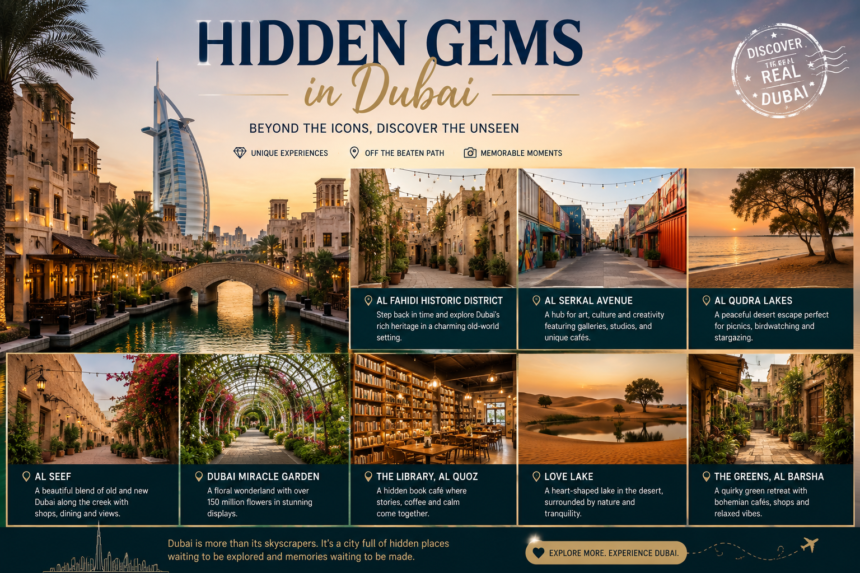
Think You Know Dubai? These 10 Hidden Gems May Surprise You
Dubai has no shortage of world-famous attractions. Burj Khalifa, Palm Jumeirah, Dubai Mall and the Museum of the Future dominate travel itineraries, social media posts and tourism advertisements. But some of the city’s most memorable experiences happen far away from those headline landmarks.
- Why Explore Hidden Gems in Dubai?
- 1. Ras Al Khor Wildlife Sanctuary
- 2. Love Lake at Al Qudra
- 3. Alserkal Avenue
- 4. Coffee Museum in Al Fahidi
- 5. Jameel Arts Centre
- 6. Hatta Heritage Village
- 7. Hatta Honeybee Garden
- 8. Waterfront Market in Deira
- 9. 2nd December Street and Satwa
- 10. Dubai Creek Harbour at Sunset
- Hidden Gems in Dubai at a Glance
- Hidden Dubai Is Often About Neighbourhoods, Not Attractions
- Best Hidden Gems for Nature Lovers
- Best Hidden Gems for Culture Lovers
- Best Hidden Gems for Couples
- Best Hidden Gems for Families
- Best Hidden Gems for Food Lovers
- Why Alserkal Avenue Deserves More Than a Quick Visit
- A Perfect One-Day Hidden Dubai Itinerary
- A Perfect Hidden Old Dubai Day
- A Perfect Hidden Desert Day
- Best Time to Explore Dubai’s Hidden Gems
- Hidden Does Not Always Mean Free
- How to Find Your Own Hidden Gems
- Avoid Turning Hidden Gems Into a Checklist
- FAQs About Hidden Gems in Dubai
- Conclusion
The best Hidden Gems in Dubai reveal a quieter and more surprising side of the emirate. You can watch flamingos only a short distance from skyscrapers, explore contemporary art inside former industrial warehouses, discover the history of coffee in a traditional house, photograph heart-shaped lakes in the desert or drive into the Hajar Mountains to experience a completely different landscape.
Dubai’s own tourism authority continues to highlight unconventional neighbourhoods, independent cultural spaces and locally loved experiences alongside its major attractions. Alserkal Avenue, for example, has evolved from an industrial warehouse district into one of the city’s leading creative hubs, while Ras Al Khor Wildlife Sanctuary remains a protected wetland where migratory birds live surprisingly close to central Dubai.
If you have already seen the famous side of Dubai or simply want something different, these hidden and underrated places deserve space in your itinerary.
Why Explore Hidden Gems in Dubai?
Famous attractions are famous for a reason.
Seeing Burj Khalifa for the first time can be extraordinary. Dubai Mall is enormous. The Palm is one of the world’s most recognizable urban developments.
But travelling only between headline attractions can create a narrow picture of the city.
Dubai also contains:
- working neighbourhoods,
- desert ecosystems,
- wetlands,
- independent art spaces,
- small museums,
- traditional markets,
- mountain communities,
- waterfront districts,
- and local restaurants.
Exploring these places gives visitors a better sense of how Dubai actually functions beyond luxury tourism.
It can also make a trip feel more personal.
Instead of reproducing the same photographs millions of visitors already have, you discover places that create different stories.
1. Ras Al Khor Wildlife Sanctuary
Few places demonstrate Dubai’s contrasts better than Ras Al Khor Wildlife Sanctuary.
One moment you are surrounded by highways and high-rise development.
Minutes later, you can be watching flamingos feeding in protected wetlands.
Visit Dubai describes Ras Al Khor as a paradise for bird lovers and one of the city’s major protected nature areas.
The sanctuary attracts migratory birds and is particularly famous for its flamingos.
Depending on the season, visitors may also encounter:
- herons,
- egrets,
- shorebirds,
- raptors,
- and other wetland species.
The experience is unusual precisely because of the setting.
You do not need to drive hours into remote countryside.
The birds exist remarkably close to one of the world’s most modern urban environments.
Best for: Wildlife lovers, photographers, families and travellers looking for a free or low-key experience.
Why it feels hidden: Many visitors pass nearby on major roads without realizing a protected wetland exists beside the city.
Suggested image placement: Flamingos in shallow water with Dubai’s skyline appearing behind them.
2. Love Lake at Al Qudra
Dubai’s desert is full of surprises, and Love Lake is one of the most unusual.
The man-made lakes are shaped like interlocking hearts and sit within the wider Al Qudra and Al Marmoom desert landscape.
Visit Dubai promotes Love Lake as a place to enjoy sunsets and observe desert wildlife.
The attraction is especially impressive from above, where the heart shapes become obvious.
From ground level, the experience is quieter.
Visitors come for:
- desert walks,
- photography,
- picnics,
- sunsets,
- birdwatching,
- and relaxed evenings away from the city.
Nearby Al Qudra Lakes provide an even larger desert oasis environment and are also promoted by Visit Dubai for nature and relaxation.
There are no skyscraper observation decks or giant shopping centres here.
That is precisely the appeal.
Best for: Couples, photographers, sunset trips and peaceful outdoor time.
Why it feels hidden: The destination sits far enough into the desert to feel completely separate from central Dubai.
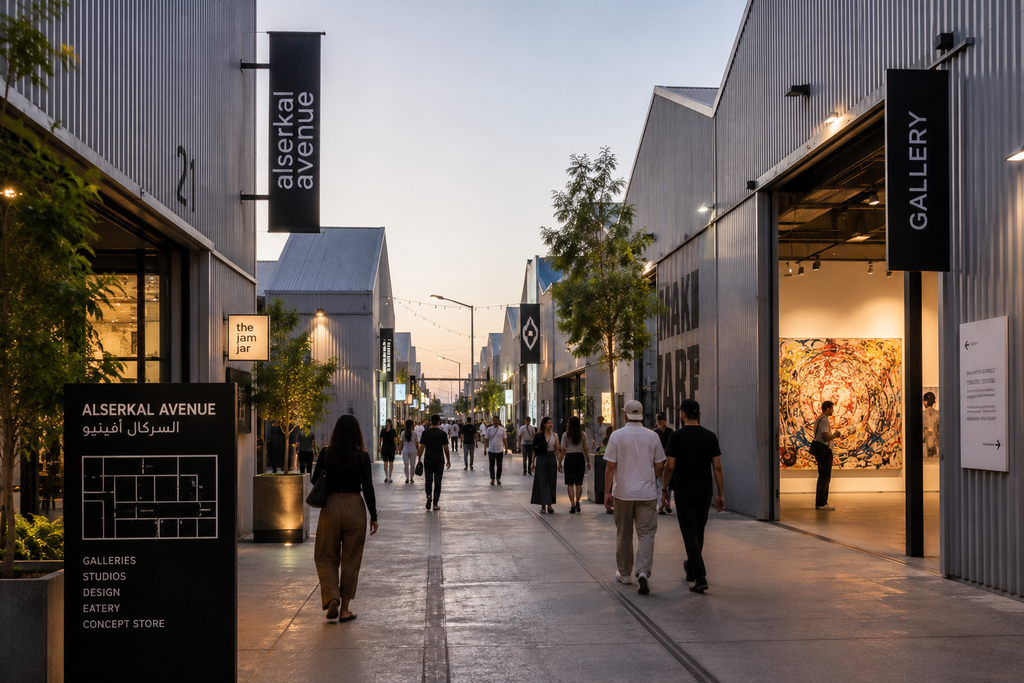
3. Alserkal Avenue
Alserkal Avenue is one of the strongest answers to anyone who thinks Dubai’s culture is limited to luxury galleries and large museums.
Located in Al Quoz, the district developed from a cluster of industrial warehouses into a major centre for contemporary art, design, performance and independent culture.
Visit Dubai describes it as one of the city’s most dynamic creative hubs and notes that the former industrial district now contains galleries, cafés and cultural spaces.
Visitors can encounter:
- contemporary exhibitions,
- photography,
- installations,
- independent films,
- design studios,
- cafés,
- workshops,
- and cultural events.
Dubai’s 2026 city guide also highlights Cinema Akil, independent cafés and innovative artists within the district.
The atmosphere is very different from Dubai Mall.
Instead of polished retail corridors, visitors walk through converted warehouse spaces filled with experimental art and local creative businesses.
Best for: Art lovers, photographers, creative travellers and repeat Dubai visitors.
Why it feels hidden: It sits inside an industrial area that many first-time tourists never explore.
4. Coffee Museum in Al Fahidi
Dubai’s Coffee Museum is small compared with the city’s blockbuster attractions, but that is part of its charm.
Located within the historic Al Fahidi area, the museum explores coffee culture, preparation techniques and the history of one of the world’s most influential drinks.
Visit Dubai promotes the museum as a place to discover the history and culture of coffee while sampling fresh brews.
Inside, visitors can see objects connected with different coffee traditions and learn how coffee moved between regions and cultures.
This is particularly relevant in the Middle East, where coffee is deeply connected with hospitality and social interaction.
The museum works best when combined with a larger Old Dubai walking itinerary.
Visit:
- Al Fahidi,
- the Coffee Museum,
- Dubai Creek,
- an abra crossing,
- and the souks
in the same day.
Best for: Coffee lovers, cultural travellers and anyone exploring Old Dubai.
Why it feels hidden: It is easy to walk past while exploring Al Fahidi without realizing what is inside.
5. Jameel Arts Centre
Jameel Arts Centre is another cultural destination that remains quieter than Dubai’s major headline museums.
Located at Jaddaf Waterfront, it focuses on contemporary art and exhibitions.
Visit Dubai describes it as an institution dedicated to contemporary works, while its cultural guides highlight the neighbouring open-air art and sculpture park.
The location itself is part of the experience.
Instead of being inside a busy shopping or tourist district, visitors encounter a calmer waterfront environment.
The centre is particularly good for people who enjoy:
- contemporary Middle Eastern art,
- exhibitions,
- architecture,
- design,
- libraries,
- and quiet cultural spaces.
It also provides a useful alternative to highly commercial attractions.
You can spend time slowly rather than constantly moving between rides, shops and crowds.
Best for: Art enthusiasts, solo travellers and visitors seeking quieter cultural experiences.
Why it feels hidden: Jaddaf Waterfront receives much less international tourist attention than Downtown or Marina.
6. Hatta Heritage Village
Hatta is becoming increasingly known for kayaking and adventure activities, but its heritage side still receives less attention.
Hatta Heritage Village introduces visitors to an older form of life in Dubai’s mountain communities.
Visit Dubai’s current Hatta heritage guide highlights forts, towers and historical structures that reveal the area’s earlier character.
Dubai’s Hatta visitor material explains that the heritage village presents local social customs, traditional life, wedding rituals, folklore and crafts.
This makes it a good counterpart to Hatta’s modern adventure tourism.
A complete trip could combine:
Morning: Hatta Dam or kayaking
Afternoon: Heritage Village
Evening: Mountain viewpoints
The surrounding Hajar Mountains make the entire area feel dramatically different from central Dubai.
Best for: Culture, families, road trips and mountain scenery.
Why it feels hidden: Many visitors come to Hatta for adventure and overlook its historical attractions.
7. Hatta Honeybee Garden
One of Dubai’s more unusual outdoor attractions can also be found in Hatta.
The Hatta Honeybee Garden and Discovery Center introduces visitors to beekeeping, honey production and the environmental importance of bees.
Dubai’s official Hatta guide describes a 16,000sqm sanctuary containing around 3,000 hives, alongside educational experiences and locally produced honey.
That makes it far more than a simple shop.
Visitors can learn about:
- beekeeping,
- pollination,
- hive environments,
- honey production,
- and the role bees play in ecosystems.
Visit Dubai also includes the garden on organized Hatta experiences alongside Hatta Dam and Heritage Village.
This is particularly useful for families looking for something educational that feels different from a theme park.
Best for: Families, nature lovers and educational outings.
Why it feels hidden: Very few first-time visitors associate Dubai with beekeeping or mountain agriculture.
8. Waterfront Market in Deira
The Waterfront Market is not hidden because nobody knows it exists.
It is hidden because most international visitors simply do not think of visiting a working food market while in Dubai.
That is exactly why it can be interesting.
Dubai’s 2026 city guide describes the market as a lively place filled with fresh seafood, fruits, vegetables and spices.
Instead of a tourist attraction designed primarily for sightseeing, this is a functioning commercial environment.
Visitors can experience:
- seafood displays,
- fresh produce,
- spices,
- local buying habits,
- and everyday Dubai commerce.
It provides an excellent contrast with luxury supermarkets and shopping malls.
Markets are often among the best places to understand the everyday life of a city.
The smells, noise, negotiation and movement reveal things museums cannot.
Best for: Food lovers, photographers and travellers interested in local life.
Why it feels hidden: It is a working market rather than a conventional tourist attraction.
9. 2nd December Street and Satwa
Dubai’s multicultural character becomes particularly obvious when you move away from luxury districts and explore neighbourhoods where residents actually eat, shop and work.
2nd December Street and surrounding Satwa offer one such experience.
Dubai’s 2026 tourism guide highlights 2nd December Street for its vibrant atmosphere and affordable food.
The area is useful for travellers interested in:
- casual restaurants,
- multicultural food,
- independent shops,
- everyday street life,
- and affordable dining.
You are likely to find food influenced by communities from across South Asia, the Middle East and elsewhere.
This is a very different Dubai from a five-star hotel buffet.
Neither experience is more “real” than the other, but together they show how socially diverse the city has become.
Best for: Food travellers and visitors wanting a more local neighbourhood atmosphere.
Why it feels hidden: Tourist itineraries often move directly between Downtown, Marina and Palm Jumeirah, bypassing places such as Satwa.
10. Dubai Creek Harbour at Sunset
Dubai Creek Harbour is not exactly secret, but it remains considerably calmer than some of Dubai’s most established waterfront tourist areas.
Visit Dubai’s relaxation guide highlights the district for sunshine, views and proximity to Ras Al Khor Wildlife Sanctuary.
The location offers a particularly interesting perspective.
Look in one direction and you can see modern urban development.
Nearby lies protected wildlife habitat.
Across the water, Dubai’s skyline creates striking sunset views.
The result is a space where visitors can enjoy:
- waterfront walks,
- photography,
- cafés,
- skyline views,
- and relaxed evenings.
It works particularly well at sunset.
Compared with areas around Dubai Mall or JBR, the experience can feel noticeably less intense.
Best for: Couples, evening walks, photography and quieter waterfront sightseeing.
Why it feels hidden: It offers major skyline views without the crowds of Dubai’s most famous viewing locations.
Hidden Gems in Dubai at a Glance
| Hidden Gem | Best For | Experience |
|---|---|---|
| Ras Al Khor Wildlife Sanctuary | Nature | Flamingos and birdwatching |
| Love Lake | Couples | Desert sunset |
| Alserkal Avenue | Art | Independent creative culture |
| Coffee Museum | Heritage | Coffee history |
| Jameel Arts Centre | Art | Contemporary exhibitions |
| Hatta Heritage Village | Culture | Mountain heritage |
| Hatta Honeybee Garden | Families | Nature and education |
| Waterfront Market | Food | Local market experience |
| 2nd December Street | Food | Affordable multicultural dining |
| Dubai Creek Harbour | Relaxation | Waterfront skyline views |
These places reveal how different Dubai can feel once you move beyond the traditional sightseeing route.
Hidden Dubai Is Often About Neighbourhoods, Not Attractions
One of the best ways to discover Dubai is to stop thinking entirely in terms of individual attractions.
Neighbourhoods often tell better stories.
Consider Al Quoz.
A visitor looking only for conventional tourism attractions may see an industrial area.
Someone who knows where to look discovers Alserkal Avenue, creative studios, independent cafés and contemporary cultural activity.
The same principle applies to Deira.
It is not simply the location of the Gold Souk.
It contains working markets, small restaurants, trading businesses and streets shaped by decades of migration and commerce.
Satwa similarly reveals a different layer of everyday Dubai.
Exploring neighbourhoods allows the city to unfold gradually rather than through a checklist.
Best Hidden Gems for Nature Lovers
Dubai is often described as a desert city, but its natural environments are more diverse than many visitors expect.
Ras Al Khor Wildlife Sanctuary
Best for wetlands and migratory birds.
Love Lake and Al Qudra
Best for desert landscapes and sunset.
Hatta
Best for mountain scenery, outdoor activities and a complete change of environment. Visit Dubai’s recent Hatta guide highlights kayaking, hiking and mountain biking among its major activities.
This creates an interesting natural triangle:
Wetland + Desert + Mountains
all within the same emirate.
Best Hidden Gems for Culture Lovers
Travellers interested in culture should prioritize a different group.
Start with Alserkal Avenue for contemporary creativity.
Visit the Coffee Museum for traditional culture and the history of a globally important drink.
Continue to Jameel Arts Centre for contemporary exhibitions.
Then take a road trip to Hatta Heritage Village for insight into mountain life and traditional architecture.
This creates a more complete picture of Dubai culture.
It includes:
heritage + contemporary art + traditional customs + modern creativity
rather than treating culture as something belonging only to the past.
Best Hidden Gems for Couples
Couples looking for something more memorable than another mall or restaurant can build a quieter itinerary.
Love Lake at sunset
The heart-shaped lakes make the romantic connection obvious, but the surrounding desert atmosphere is the real attraction.
Dubai Creek Harbour
Good for a slower waterfront evening.
Hatta
Works particularly well as an overnight mountain escape.
Alserkal Avenue
Ideal for couples interested in art, independent cinema and cafés.
Not every romantic experience needs to involve an expensive rooftop dinner.
Sometimes simply having space away from crowds can feel more special.
Best Hidden Gems for Families
Families should look for places that provide enough activity without requiring an entire theme-park day.
Good choices include:
- Ras Al Khor Wildlife Sanctuary
- Hatta Honeybee Garden
- Hatta Heritage Village
- Love Lake
- Coffee Museum
The Honeybee Garden is particularly unusual because it combines education and nature in a format children may not expect from Dubai.
Ras Al Khor can also introduce children to the idea that wildlife continues to exist beside a major global city.
Best Hidden Gems for Food Lovers
Dubai’s food scene becomes far more interesting once you leave luxury restaurants behind.
Visit Dubai has even created a dedicated hidden-food-gems itinerary covering affordable and unconventional restaurants across the city.
Neighbourhoods and markets are often the best places to begin.
Explore:
- 2nd December Street
- Deira
- Bur Dubai
- Karama
- Waterfront Market
The city’s expatriate population has created an enormous range of affordable cuisines.
You can move between South Asian, Arab, Iranian, Filipino, African and other food traditions without leaving Dubai.
For travellers who experience cities through food, these everyday dining areas may become more memorable than famous restaurants.
Why Alserkal Avenue Deserves More Than a Quick Visit
Alserkal is often added to hidden-gem lists as though it were one single attraction.
It is better understood as a district.
Visit Dubai notes that it has evolved into a dynamic creative hub incorporating art, design, performance and culture.
That means visitors should avoid rushing.
Check current exhibitions.
See whether Cinema Akil has a screening.
Explore independent shops.
Stop for coffee.
The district changes depending on the season and cultural programme.
Repeat visitors can therefore have different experiences each time.
That is unusual in a city where some tourist attractions remain relatively fixed.
A Perfect One-Day Hidden Dubai Itinerary
You can combine several lesser-known places without spending the entire day in a car.
Morning
Start at Ras Al Khor Wildlife Sanctuary.
Spend time birdwatching and photographing the wetlands.
Late morning
Continue toward Jaddaf Waterfront and visit Jameel Arts Centre.
Lunch
Head toward Satwa or another local neighbourhood for an affordable meal.
Afternoon
Explore Alserkal Avenue.
Visit galleries and independent creative spaces.
Evening
Finish at Dubai Creek Harbour for sunset.
This itinerary combines:
Nature + Art + Local Food + Skyline
without visiting the city’s biggest conventional attractions.
A Perfect Hidden Old Dubai Day
For a heritage-focused alternative:
Morning: Al Fahidi and Coffee Museum
Late morning: Walk toward Dubai Creek
Midday: Take a traditional abra
Lunch: Eat in Deira
Afternoon: Explore Waterfront Market or traditional commercial areas
Evening: Walk around the Creek
The result feels completely different from a Downtown Dubai sightseeing day.
It also tends to be considerably cheaper.
A Perfect Hidden Desert Day
Travellers with a car can create another itinerary.
Morning: Leave Dubai for Hatta
Late morning: Hatta Heritage Village
Midday: Honeybee Garden
Afternoon: Mountain scenery or Hatta Dam
Return toward Dubai
Sunset: Stop around Al Qudra or Love Lake if timing and route make sense
This is a much longer day, but it reveals how dramatically the emirate changes outside its urban centre.
Best Time to Explore Dubai’s Hidden Gems
The cooler months generally make outdoor exploration easier.
From roughly October through April, visitors can spend more time:
- walking through neighbourhoods,
- exploring Hatta,
- sitting beside desert lakes,
- visiting outdoor markets,
- and watching wildlife.
Ras Al Khor becomes particularly attractive during cooler periods when migratory birds are present, and Visit Dubai notes that flamingos are a major winter highlight.
Summer requires a different strategy.
Focus on:
- museums,
- galleries,
- cafés,
- indoor cultural spaces,
- and evening waterfront visits.
Alserkal Avenue, Coffee Museum and Jameel Arts Centre are useful options when daytime heat makes long outdoor exploration less comfortable.
Hidden Does Not Always Mean Free
It is easy to assume hidden gems should cost nothing.
That is not necessarily true.
Some hidden attractions are free or low cost.
Others involve:
- private tours,
- activity charges,
- transport,
- exhibitions,
- food,
- or accommodation.
The real difference is not price.
A hidden gem is better understood as a place that sits outside the standard first-time visitor circuit.
For example, a Hatta experience may cost more than walking around Downtown.
But it provides a completely different side of Dubai.
How to Find Your Own Hidden Gems
The best hidden places are not always found through rankings.
Try these strategies:
- Explore neighbourhoods rather than only attractions.
- Ask residents where they eat or spend weekends.
- Look at cultural calendars before travelling.
- Check areas around markets and waterfronts.
- Visit creative districts during events.
- Use public transport and walk where practical.
- Return to the same neighbourhood at different times of day.
Cities become more interesting when exploration leaves room for surprise.
Avoid Turning Hidden Gems Into a Checklist
There is an irony in searching for hidden places.
Once everyone arrives at the same time, they stop feeling hidden.
Do not approach these destinations like a competition.
You do not need to photograph all ten locations.
Choose the places that match your interests.
Art lovers may spend half a day at Alserkal.
Nature lovers may prefer Ras Al Khor and Al Qudra.
Families may find Hatta more rewarding.
Food travellers may spend most of their time in neighbourhoods and markets.
The purpose of hidden-gem travel is to experience the city differently, not simply build another checklist.
FAQs About Hidden Gems in Dubai
What are the best Hidden Gems in Dubai?
Ras Al Khor Wildlife Sanctuary, Love Lake, Alserkal Avenue, Coffee Museum, Jameel Arts Centre, Hatta Heritage Village and Hatta Honeybee Garden are among the strongest lesser-known experiences.
Are there hidden nature places in Dubai?
Yes. Ras Al Khor provides protected wetland habitat, while Love Lake and Al Qudra offer desert scenery. Hatta provides mountain landscapes within the emirate.
What are some non-touristy places in Dubai?
Working neighbourhoods such as Satwa and parts of Deira can feel less tourist-oriented than Downtown or Marina. Waterfront Market is another place where visitors can experience everyday commercial life. Dubai’s 2026 tourism guide highlights both 2nd December Street and Waterfront Market for local food and market experiences.
Is Alserkal Avenue worth visiting?
Yes, especially for contemporary art, independent cinema, design and creative culture. Visit Dubai describes the former warehouse district as one of the city’s leading creative hubs.
Is Love Lake free to visit?
Love Lake is an outdoor desert destination rather than a traditional ticketed attraction. Visitors should still check current access information and prepare properly for the desert environment.
Where can I see flamingos in Dubai?
Ras Al Khor Wildlife Sanctuary is Dubai’s best-known place for flamingo viewing, particularly during the cooler season.
What hidden places are good for families?
Ras Al Khor, Hatta Heritage Village, Hatta Honeybee Garden, Coffee Museum and Love Lake can all work well depending on children’s ages and weather.
Are Dubai’s hidden gems accessible without a car?
Some are. Alserkal Avenue, Coffee Museum, Jameel Arts Centre and neighbourhood destinations can be reached using combinations of public transport and taxis. Desert and Hatta destinations are generally easier with a car or organized transport.
Conclusion
The best Hidden Gems in Dubai prove that the city is far more diverse than its famous skyline suggests.
At Ras Al Khor Wildlife Sanctuary, flamingos and migratory birds live within sight of modern urban development.
At Love Lake and Al Qudra, Dubai becomes a quiet desert landscape where sunset matters more than skyscrapers.
Alserkal Avenue transforms old industrial warehouses into contemporary galleries, cafés and independent cultural spaces, while Jameel Arts Centre provides another quieter window into the city’s creative scene.
The Coffee Museum reveals the cultural story behind an everyday drink.
Hatta Heritage Village shows how people lived in Dubai’s mountain communities before modern development, while the Honeybee Garden introduces visitors to agriculture and environmental life many tourists never associate with the emirate.
Even ordinary neighbourhoods and markets can become discoveries when you stop travelling only between famous landmarks.
That is what makes hidden-gem travel worthwhile.
It is not necessarily about finding places nobody else has ever visited.
It is about discovering a version of Dubai that many visitors never take the time to see.
follow us on Instagram
Read More – UNESCO Sites: 10 Amazing World Heritage Places to Explore in 2026