


Turning Experience Into Powerful Kitchen Leadership
Great chefs are often remembered for the dishes they create, but the strongest culinary leaders leave something much bigger behind. They build teams, systems, standards and kitchens that continue performing long after a single service ends.
- El Mustafa Chehibi Built His Career Through Decades of Experience
- Royal Service Added a Different Level of Responsibility
- El Mustafa Chehibi Learned to Lead Large Scale Operations
- The Red Sea Project Became Another Major Career Chapter
- Food Safety Became Central to His Leadership Style
- El Mustafa Chehibi Combines Culinary Skill With Process Improvement
- Menu Engineering Became Part of the Business Strategy
- Recognition Followed Years of Consistent Work
- Continuous Learning Has Remained a Career Priority
- El Mustafa Chehibi Looks Toward the Next Leadership Chapter
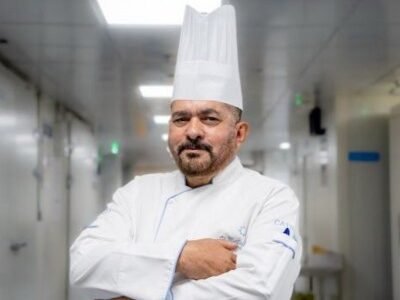
That wider definition of leadership has shaped the career of El Mustafa Chehibi, a Senior Head Chef with more than three decades of experience across some of the most recognised hospitality and catering environments in Saudi Arabia.
His journey has taken him through international hotel groups, large scale catering operations, royal service and major hospitality projects. Along the way, he has worked within brands connected with Marriott, IHG, Accor and Best Western, served as a Personal Executive Chef for members of the Al Saud Royal Family, and contributed to major operational openings, including work connected with the Red Sea Project.
For El Mustafa, cooking has never been only about preparing food. It has also been about discipline, consistency, safety, people and the ability to deliver quality under pressure.
El Mustafa Chehibi Built His Career Through Decades of Experience
Thirty years in hospitality can teach lessons that no classroom can fully reproduce.
Professional kitchens are demanding environments. Long hours, strict timing, high guest expectations and constant operational pressure can quickly expose weaknesses in organisation and leadership.
El Mustafa’s career grew through these realities.
His progression across hotel kitchens and catering operations gave him exposure to different styles of service, teams and customer expectations.
Working within major hospitality groups also meant adapting to international standards while understanding the local market.
Over time, those experiences transformed technical cooking ability into broader leadership.
A senior chef is no longer responsible only for what happens at one station.
They are responsible for the performance of the whole kitchen.
Royal Service Added a Different Level of Responsibility
One of the most distinctive chapters in El Mustafa’s journey came when he served as Personal Executive Chef for the Al Saud Royal Family between 2013 and 2014.
Private royal service brings expectations that are very different from a conventional hotel environment.
The work requires confidentiality, consistency, flexibility and an extremely high level of attention to detail.
Menus may need to change according to personal preferences, schedules or special occasions.
There is little room for inconsistency.
The chef must understand not only technique but also trust.
Experiences like these can reshape the way a culinary professional approaches hospitality.
Luxury is not simply about expensive ingredients.
It is about understanding the guest well enough to create an experience that feels personal.
El Mustafa Chehibi Learned to Lead Large Scale Operations
High end private dining represents one side of the culinary world.
Large scale food production represents another.
El Mustafa has also developed significant experience in high volume catering and central production environments.
These operations require a very different type of precision.
Producing food for large numbers of people requires:
- Accurate forecasting
- Standardised recipes
- Strong food safety controls
- Efficient production systems
- Consistent quality
- Clear team communication
His experience includes working with industrial cook chill systems such as large capacity DC Norris equipment.
In this environment, creativity remains important, but systems become equally important.
A great dish means very little if a kitchen cannot reproduce it safely and consistently at scale.
The Red Sea Project Became Another Major Career Chapter
Saudi Arabia’s hospitality sector has been transforming rapidly, particularly through new tourism developments and destination projects.
El Mustafa was part of the core team involved in opening a central production unit connected with the Red Sea Project.
Pre opening work is one of the most demanding areas of hospitality.
Before guests arrive, teams need to build almost everything from the ground up.
That can involve:
kitchen systems
staffing
supplier coordination
food safety procedures
menu development
production planning
equipment testing
The pressure is significant because the operation needs to function smoothly from the first day.
For experienced culinary leaders, pre opening projects become a test of both knowledge and problem solving.
Food Safety Became Central to His Leadership Style
Modern kitchens cannot depend only on taste.
Food safety is equally important.
El Mustafa’s professional development includes training connected with HACCP, ISO 45001 and TÜV food safety standards.
These qualifications reflect a wider understanding of culinary leadership.
Guests see the final plate.
They do not see the systems protecting them before that plate reaches the table.
Temperature control, storage, cleaning, cross contamination prevention and staff hygiene all play critical roles.
A senior chef therefore needs to create a culture where food safety becomes part of everyday behaviour rather than something remembered only during inspections.
That mindset becomes especially important in large kitchens where hundreds or thousands of meals may be produced.
El Mustafa Chehibi Combines Culinary Skill With Process Improvement
Another interesting part of El Mustafa’s professional background is his Six Sigma training.
He has progressed through Yellow, Green and Black Belt levels.
Six Sigma is generally associated with process improvement rather than cooking, but the principles can be valuable in hospitality.
Kitchen operations involve repeated processes.
Waste can occur through:
poor forecasting
inefficient preparation
incorrect portioning
inventory problems
production delays
Applying structured process thinking can help reduce these issues.
For a senior chef, this creates a bridge between culinary creativity and operational efficiency.
The goal is not simply to produce excellent food.
It is to produce it consistently, efficiently and sustainably.
Menu Engineering Became Part of the Business Strategy
A restaurant menu is not only a collection of dishes.
It is also a business tool.
El Mustafa’s experience includes menu engineering across Mediterranean, Continental and Oriental cuisines.
That requires understanding several factors.
A dish needs to taste good.
It needs to fit the concept.
The ingredients need to be available.
The cost needs to make commercial sense.
The kitchen needs to execute it consistently.
This balance is where experienced chefs become valuable to hospitality businesses.
Creativity without cost control can damage profitability.
Cost control without creativity can make the dining experience forgettable.
The strongest menus find a balance between both.
Recognition Followed Years of Consistent Work
El Mustafa’s career has also included professional recognition beyond kitchen operations.
In 2019, he received a Best Marketing Idea award connected with Marriott Saudi Arabia.
He has also appeared through Saudi media, including television, radio and newspaper coverage.
These experiences reflect another important change in the modern culinary profession.
Chefs increasingly become public representatives of hospitality brands.
They communicate with guests, media and wider audiences.
That requires confidence beyond the kitchen.
The modern executive chef is often expected to understand presentation, storytelling and brand identity alongside food.
Continuous Learning Has Remained a Career Priority
After more than three decades in hospitality, it would be easy to rely only on experience.
El Mustafa has continued developing professionally.
His credentials include a Diploma in Culinary Arts with Merit from Morocco, Rouxbe Culinary Foundations training and more than one hundred professional development programmes.
He also works across Arabic, French and English.
This commitment to learning matters because hospitality keeps changing.
New technologies enter kitchens.
Food safety standards evolve.
Guest preferences shift.
Sustainability becomes more important.
A chef who stops learning can quickly become disconnected from the industry.
Experience becomes most valuable when it continues evolving.
El Mustafa Chehibi Looks Toward the Next Leadership Chapter
Saudi Arabia’s hospitality sector is entering one of the most ambitious periods in its history.
Tourism destinations, hotels, resorts and large scale food operations continue expanding.
That creates demand for professionals who understand both luxury and operational complexity.
El Mustafa Chehibi’s career places him in that space.
More than thirty years across hotels, royal service, major catering operations and opening teams have given him experience that extends far beyond preparing meals.
He understands kitchens as systems.
He understands food as both a creative product and a business responsibility.
And he understands that strong leadership is measured not only by what the chef can personally produce, but by what the entire team can deliver together.
As he remains open to Executive Chef, Cluster Chef and Food and Beverage leadership opportunities across Saudi Arabia and the wider GCC, his journey offers a useful lesson for younger hospitality professionals.
Culinary success is rarely built through one famous dish.
It is built through years of discipline, learning, pressure, teamwork and the willingness to improve every part of the operation.
For El Mustafa Chehibi, that foundation has already been built across decades.
The next chapter is about using that experience to help shape the future of hospitality at an even greater scale.
Connect El Mustafa Chehibi on Linkedin
Read More – Weekend Trips From Riyadh: Best Escapes for Every Traveler