



A Personal Experience Became A Professional Mission
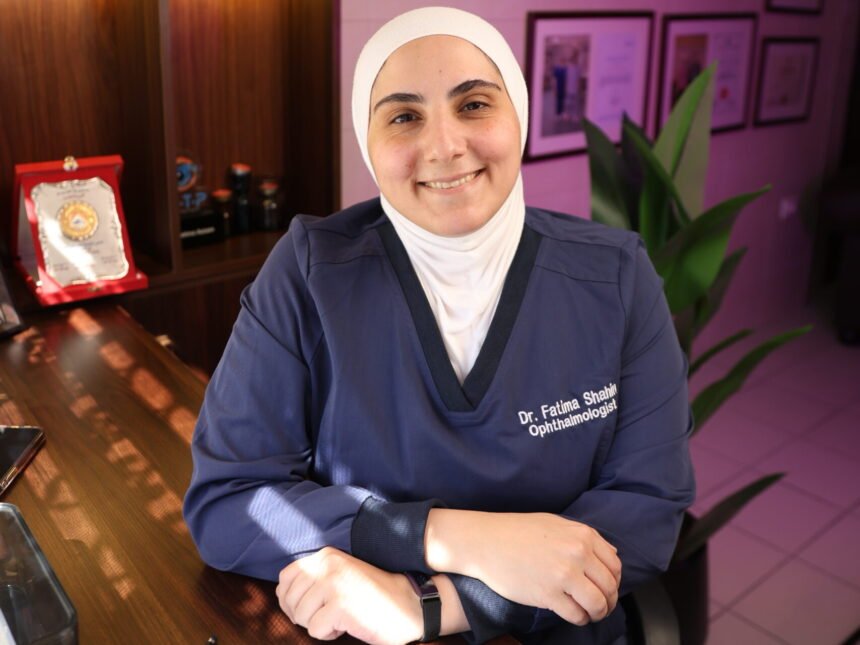
For many people, dry eye begins as an occasional irritation that can be managed with eye drops. For Dr. Fatima Shahin, however, the condition became much more personal. Her own experience with dry eye disease and blepharitis gave her an early understanding of how frustrating ocular surface problems can be, especially when symptoms continue without a clear explanation.
That experience would eventually influence the direction of her career.
With medicine already part of her family environment through her father, who is an ophthalmologist, Fatima knew from an early stage that she wanted to pursue ophthalmology. During her medical education and clinical training, she developed a deeper appreciation for the complexity of eye disease. Although she initially explored oculoplastics, her growing interest in dry eye and ocular surface disease gradually became impossible to ignore.
Instead of seeing dry eye as a routine complaint, she began asking a different question. What if patients needed more than temporary relief? What if the real problem was that their condition was not being properly understood in the first place?
That question became the foundation of her professional journey.
From Ophthalmology To A Specialized Focus
Fatima’s shift toward ocular surface disease was not an overnight decision. It developed through clinical experience, personal understanding and a growing desire to learn more.
She began attending international conferences, following developments in dry eye diagnosis and treatment, studying emerging technologies and connecting with specialists working in the field. Her goal was not simply to collect knowledge, but to understand how that knowledge could translate into better patient care.
Her professional profile reflects that commitment. She has developed a particular focus on dry eye disease and ocular surface disorders, while continuing to engage with research, education and international ophthalmology communities. Her work has also included emerging approaches such as intense pulsed light and thermal treatments associated with meibomian gland dysfunction, one of the important contributors to dry eye disease.
The more Fatima learned, the clearer the gap became. Dry eye can have different underlying causes, and effective management may require identifying those causes rather than treating every patient in exactly the same way.
For Fatima, this was more than a medical observation. It was an opportunity to rethink how patients were being heard and treated.
Building A Dedicated Dry Eye Space In Jordan
In 2024, Fatima took a significant step by establishing a dedicated dry eye suite in Jordan.
What began with a single specialized technology developed into a more comprehensive setup featuring five specialized technologies. The purpose was to create an environment where patients could undergo detailed evaluation and receive care based on their individual ocular surface condition.
Her clinic describes the space as a dedicated dry eye treatment room equipped with advanced technology, designed around personalized evaluation and treatment.
The importance of this development goes beyond the equipment itself.
For Fatima, technology is valuable because it can help doctors see and understand problems that patients may struggle to explain. Dry eye symptoms can be uncomfortable, persistent and difficult for others to see. Advanced imaging and diagnostic tools can help make aspects of the condition more visible, allowing both doctor and patient to better understand what is happening.
That patient understanding has become an important part of Fatima’s philosophy.
She believes that diagnosis should be followed by explanation, education and a treatment plan that makes sense to the individual patient.
Dr. Fatima Shahin Changing The Conversation Around Dry Eye
One of Fatima’s biggest challenges has been changing the way people think about dry eye.
The condition is often treated as a minor inconvenience. For patients experiencing persistent burning, irritation, fluctuating vision or discomfort, however, the reality can be very different.
Fatima wants patients to understand that persistent symptoms deserve proper evaluation.
Her approach has therefore extended beyond the clinic. Through educational content on social media, she has worked to explain dry eye in accessible language and help people recognize when they may need professional assessment.
Her online presence has allowed her to communicate with people beyond Jordan, including patients searching internationally for information about symptoms they have struggled with for years.
That digital connection has become an unexpected but meaningful part of her work. A single educational video can reach someone who may have never understood why their eyes continued to feel uncomfortable.
For Fatima, that is one of the most powerful aspects of medical education. Information can become the first step toward someone finding an answer.
Technology With A Human Purpose
As dry eye care continues to develop, Fatima’s philosophy combines advanced diagnostics with something much more traditional: listening.
Her experience as a patient has influenced the way she approaches people who come to her with persistent symptoms. She understands that patients can become frustrated when they repeatedly seek help without feeling that the underlying issue has been properly identified.
This perspective has also shaped the way she uses technology.
Rather than treating diagnostic equipment as an end in itself, Fatima sees it as a tool for improving understanding and guiding personalized care. Her work with advanced dry eye technologies has been recognized within the industry, with technology providers highlighting her use of integrated diagnostic and treatment systems in Amman.
Her continuing involvement in international scientific meetings further reflects this commitment to learning. Recent professional activity has included participation in international dry eye and ophthalmology meetings, research presentations and collaboration with colleagues in the field.
For Fatima, continuous learning is not an achievement that has an endpoint. It is part of the responsibility that comes with treating patients.
From Jordan To A Wider Vision
Fatima’s ambitions now extend beyond establishing specialized services in Jordan.
Her long term vision is to make advanced dry eye care more accessible to patients in different parts of the world. She hopes to develop dedicated centers that combine diagnosis, personalized treatment, education and ongoing professional learning.
The idea is simple but ambitious. Instead of creating centers that focus only on treating symptoms, she wants to build environments where patients can be properly evaluated, educated about their condition and guided through an individualized approach to care.
That vision reflects how far her journey has already come.
What began with her own experience of dry eye has developed into a broader professional mission. Her work now sits at the intersection of clinical medicine, technology, education, research and digital communication.
The next stage is about expanding that model.
Education Is Becoming Part Of Her Legacy
For Fatima, success cannot be measured only by the number of technologies in a clinic or the number of patients seen.
One of the achievements she values most is reaching people who may previously have felt overlooked or misunderstood.
That is why education remains central to her plans.
Through social media, clinical conversations, research and international collaboration, she wants to continue making dry eye easier to understand. Her aim is to encourage people to take persistent symptoms seriously and to recognize that proper diagnosis can be an important part of finding the right treatment strategy.
Her recent professional participation in international meetings and research activity shows that this educational ambition is also connected to the wider ophthalmology community.
The result is a career that is becoming larger than a single clinical specialty. Fatima is working toward changing expectations around what specialized dry eye care can look like.
A Future Built Around Better Answers
Fatima Shahin’s journey is ultimately a story about recognizing a problem and refusing to accept that it cannot be improved.
She experienced dry eye herself. She saw how confusing and frustrating the condition could be. Instead of allowing that experience to remain personal, she turned it into motivation to learn, specialize and create something that could help others.
The dedicated dry eye suite she established in Jordan represents one milestone in that journey. The educational work she shares online represents another. Her involvement in international conferences, research and professional collaboration points toward what she hopes to build next.
For Fatima, the future of dry eye care is not simply about having better machines or more treatment options. It is about creating a more complete standard of care in which patients are listened to, properly evaluated, educated about their condition and given treatment designed around their individual needs.
Her journey is still developing, but the direction is clear. She wants to make specialized dry eye care more accessible, more understood and more patient focused, first from Jordan and eventually far beyond it.
Follow Fatima Shahin on Instagram
Read More – Dubai Announces 4 Day Work Week and Reduced Working Hours for Summer 2026