


Kuwait Travel Guide: Best Places, Attractions and Travel Tips for 2026
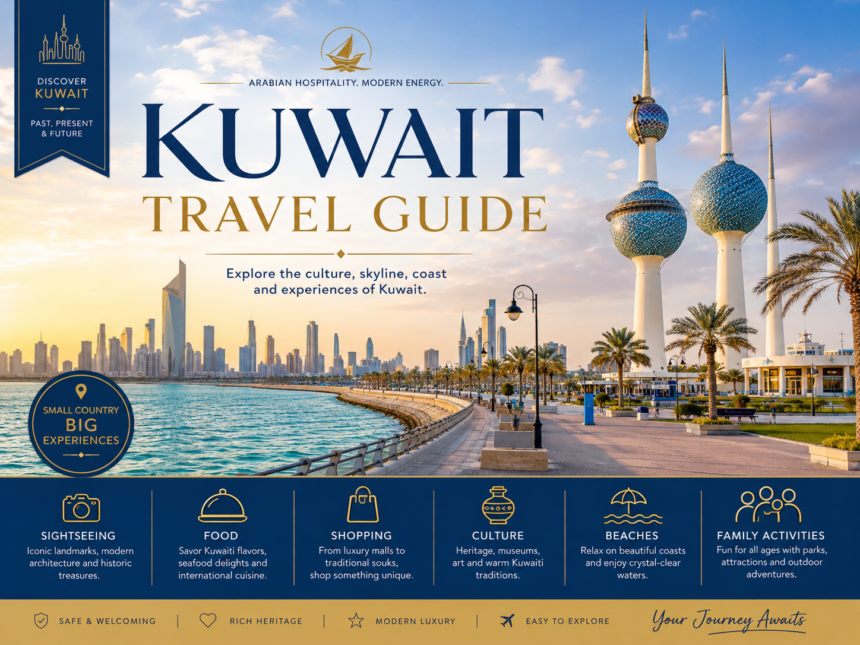
A Kuwait Travel Guide can help visitors discover a Gulf destination that is often overlooked beside Dubai, Doha and Riyadh. Kuwait combines modern architecture, traditional markets, waterfront attractions, museums, desert landscapes and a strong food culture in a compact country that is relatively easy to explore.
- Kuwait Travel Guide: Best Places, Attractions and Travel Tips for 2026
- 1. Visit the Kuwait Towers
- 2. Explore Souq Al-Mubarakiya
- 3. See the Grand Mosque of Kuwait
- 4. Relax at Al Shaheed Park
- 5. Walk Along the Kuwait Corniche
- 6. Visit Failaka Island
- 7. Discover Kuwait’s Museums
- 8. Experience Sadu House
- 9. Visit Sheikh Jaber Al-Ahmad Cultural Centre
- 10. Explore The Avenues
- 11. Spend Time in Salmiya
- 12. Visit The Scientific Center
- 13. Try Traditional Kuwaiti Food
- 14. Experience Kuwait’s Desert
- 15. Enjoy Kuwait’s Beaches and Gulf Coast
- Best Time to Visit Kuwait
- Kuwait Visa and Entry Requirements
- Getting to Kuwait
- Getting Around Kuwait
- Where to Stay in Kuwait
- How Many Days Do You Need in Kuwait?
- Suggested 3-Day Kuwait Itinerary
- What to Wear in Kuwait
- Travel During Ramadan
- Currency in Kuwait
- Is Kuwait Expensive for Tourists?
- Safety Tips for Travellers
- Important Local Rules
- Kuwait Travel Guide for Indian Tourists
- Why Visit Kuwait in 2026?
- Final Thoughts on the Kuwait Travel Guide
Kuwait City is the main destination for most international travellers. It is home to the iconic Kuwait Towers, Souq Al-Mubarakiya, the Grand Mosque, Al Shaheed Park, cultural centres, waterfront promenades and some of the country’s biggest shopping destinations.
Travellers can also explore Failaka Island, experience desert landscapes, enjoy Gulf beaches and discover Kuwait’s maritime and trading heritage.
For most tourists, the cooler months from roughly November to March provide the most comfortable conditions for sightseeing. Summers can be extremely hot, making outdoor exploration difficult during the daytime.
Kuwait also operates an official Ministry of Interior e-Visa service for eligible visitors. Visa eligibility and entry requirements depend on nationality, so travellers should confirm their status through the official Kuwait Government Online portal before booking.
Kuwait Travel Guide: Best Places, Attractions and Travel Tips for 2026
Kuwait is particularly suitable for travellers interested in Gulf culture, architecture, food and short city breaks.
Unlike destinations built primarily around international tourism, Kuwait can feel more connected to everyday Gulf life. Visitors will see modern commercial districts beside old marketplaces, waterfront towers beside traditional architecture and luxury malls alongside family-run restaurants.
A three- to four-day trip can cover many of the major highlights, while additional days make it easier to include Failaka Island, museums, desert experiences or more relaxed coastal activities.
1. Visit the Kuwait Towers
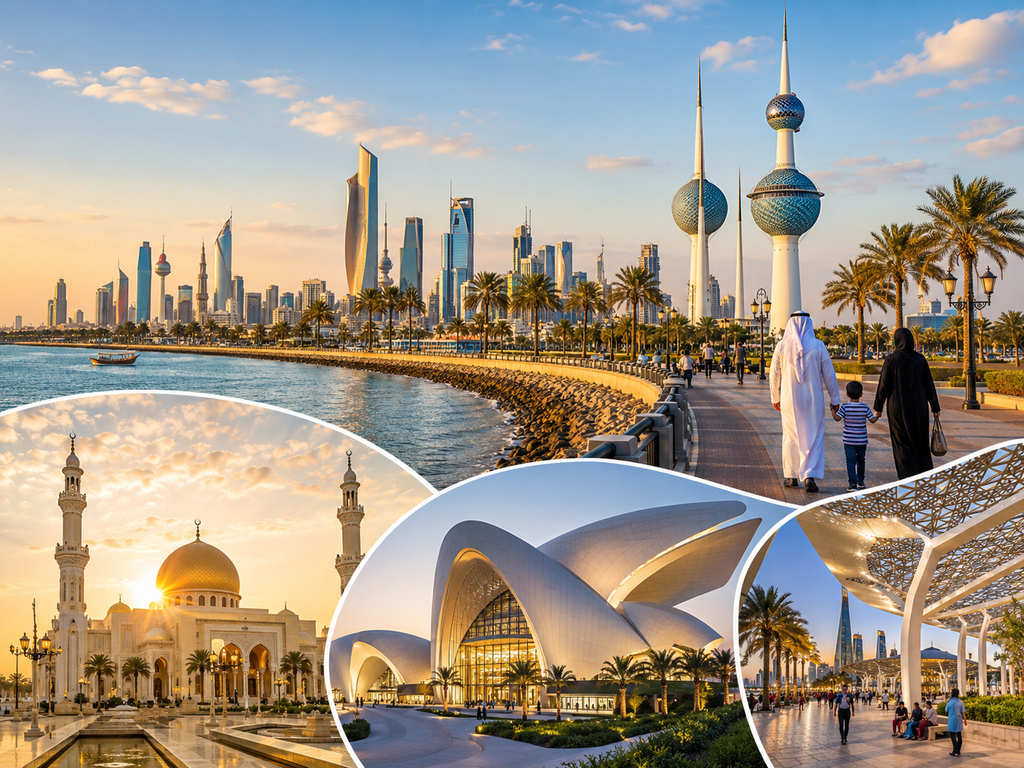
The Kuwait Towers are the country’s most recognisable landmark.
Standing along the Arabian Gulf waterfront, the towers have become an architectural symbol of modern Kuwait.
Visitors can enjoy panoramic views across Kuwait City and the Gulf from the main tower.
Sunset and evening are particularly attractive times to visit because the skyline changes as the city lights appear.
The surrounding waterfront also makes it easy to combine the towers with an evening walk along the Corniche.
For first-time travellers, this is one attraction that should almost certainly be included in the itinerary.
2. Explore Souq Al-Mubarakiya
For a completely different side of Kuwait, visit Souq Al-Mubarakiya.
The traditional market provides a connection with Kuwait’s trading history before modern shopping malls transformed the city’s retail environment.
Visitors can browse shops selling spices, perfumes, dates, clothing, traditional products and souvenirs.
Food is another major reason to visit.
The market and surrounding streets offer restaurants and cafés where visitors can experience local and regional flavours.
Evening is particularly atmospheric, when the temperature is cooler and restaurants become busier.
Souq Al-Mubarakiya is one of the best places for travellers who want something beyond modern skyscrapers and shopping centres.
3. See the Grand Mosque of Kuwait
The Grand Mosque is one of Kuwait City’s most important religious and architectural landmarks.
Visitors interested in Islamic architecture and Kuwaiti culture should consider including it in their itinerary.
As with any mosque visit, respectful clothing and behaviour are important.
Visitors should also check current visiting times because access can vary around prayer periods, religious events and official arrangements.
A visit can be combined with the nearby historic and waterfront areas of Kuwait City.
4. Relax at Al Shaheed Park
Al Shaheed Park offers a greener side of Kuwait City.
The landscaped public space includes walking paths, gardens, cultural areas and views of the surrounding skyline.
It works particularly well during the cooler months when outdoor walking is comfortable.
Families, photographers and travellers looking for a quieter break from malls and busy roads may find it especially enjoyable.
It can also be an attractive evening destination.
Independent 2026 destination guides continue to list Al Shaheed Park among the key starting points for understanding Kuwait City’s contemporary public life.
5. Walk Along the Kuwait Corniche
Kuwait’s long waterfront is one of the easiest places to experience the city without following a formal tourist itinerary.
The Corniche runs alongside sections of the Arabian Gulf and connects different beaches, parks and waterfront districts.
During cooler months, mornings and evenings can be pleasant for walking.
Visitors can combine the waterfront with Kuwait Towers, restaurants and other nearby attractions.
Summer requires a very different strategy.
When temperatures become extreme, outdoor activities should be shifted toward early morning or after sunset.
6. Visit Failaka Island
Failaka Island offers one of Kuwait’s most interesting day trips.
The island has archaeological significance and reflects several periods of Gulf history.
Ancient settlements discovered there show its importance within historic regional trade networks, while later historical periods have also left visible traces.
It can provide a very different experience from Kuwait City’s modern skyline.
Visitors interested in archaeology, history and island landscapes should investigate current ferry schedules and tour availability before travelling.
Guided trips may be particularly useful because transport and access arrangements can change.
7. Discover Kuwait’s Museums
Travellers interested in history should make time for Kuwait’s museums and cultural institutions.
Potential stops include the Kuwait National Museum, Tareq Rajab Museum and Sadu House.
These places can help visitors understand traditional crafts, Islamic art, archaeology and Kuwait’s history.
Museums are also especially useful during hot weather because they provide indoor cultural activities when outdoor sightseeing becomes uncomfortable.
Opening hours should always be checked before visiting, particularly around Fridays, public holidays and Ramadan.
8. Experience Sadu House
Sadu House focuses on traditional weaving and cultural heritage.
Sadu weaving has deep connections with Bedouin culture across the Arabian Peninsula.
For visitors interested in craftsmanship, textile design and heritage preservation, the site can add depth to a Kuwait itinerary.
Rather than seeing Kuwait only through towers and malls, cultural institutions such as Sadu House show how traditional artistic practices continue to form part of the country’s identity.
9. Visit Sheikh Jaber Al-Ahmad Cultural Centre
The Sheikh Jaber Al-Ahmad Cultural Centre is one of Kuwait’s major modern cultural institutions.
The complex hosts performances, cultural programmes and events.
Its architecture alone can make it interesting for visitors.
Travellers planning a trip should check the current programme because concerts, theatrical performances and cultural events can change throughout the year.
Even if there is no performance during your visit, the surrounding area can still be worth exploring.
10. Explore The Avenues
Shopping malls play a major role in everyday life across Kuwait, particularly during the hottest months.
The Avenues is among the country’s most prominent retail and entertainment destinations.
It combines international brands, restaurants, cafés and leisure spaces.
Visitors who do not normally include malls in travel itineraries may still find them useful in Kuwait.
During summer, malls effectively become indoor social spaces where people can shop, dine and spend time away from extreme temperatures.
The Avenues is therefore both a retail destination and a glimpse into contemporary Kuwaiti urban life.
11. Spend Time in Salmiya
Salmiya is one of Kuwait’s best-known urban districts.
It offers restaurants, shopping, waterfront spaces and residential neighbourhoods.
Travellers may choose to stay there instead of central Kuwait City, especially if they want easier access to coastal attractions and dining.
The area is also convenient for evening activities.
Salmiya can provide a more relaxed urban atmosphere than the central commercial areas.
12. Visit The Scientific Center
Families travelling with children may want to include The Scientific Center.
Its attractions have included an aquarium and educational experiences related to marine environments and science.
It offers an indoor option during periods of extreme heat.
Because attraction schedules, admission policies and exhibitions can change, visitors should verify current information before arriving.
Family travellers can combine The Scientific Center with other attractions around Salmiya and the waterfront.
13. Try Traditional Kuwaiti Food
Food should be an important part of any Kuwait Travel Guide.
Kuwaiti cuisine reflects Gulf, Arabian, Persian and Indian Ocean trading influences.
One of the best-known dishes is machboos, typically consisting of spiced rice served with meat, chicken or fish.
Visitors may also encounter grilled seafood, rice dishes, breads, dates, Arabic coffee and regional desserts.
Souq Al-Mubarakiya is a good place to begin exploring traditional food.
Kuwait also has a large expatriate population, so travellers can easily find Indian, Lebanese, Turkish, Iranian, Pakistani, Filipino and international cuisine.
14. Experience Kuwait’s Desert
The city may dominate most itineraries, but Kuwait also has extensive desert landscapes.
During cooler months, desert outings and camps become more appealing.
Visitors may find organised experiences involving desert drives, camps, meals or seasonal activities.
Travellers unfamiliar with desert conditions should use reputable operators rather than driving into remote areas independently.
Weather conditions, vehicle preparation and navigation all matter.
The best desert experiences are usually seasonal because Kuwait’s summer temperatures can make daytime trips uncomfortable.
15. Enjoy Kuwait’s Beaches and Gulf Coast
Kuwait’s coastline provides another option for leisure.
Beaches and waterfront resorts can be enjoyable during cooler months.
Some visitors may prefer simple evening walks along the Gulf, while others may choose private beach clubs or resort facilities.
Water temperatures and weather conditions vary throughout the year.
Beach activities are particularly attractive during spring and autumn, when temperatures can be more moderate.
Best Time to Visit Kuwait
For most leisure travellers, November through March is the most comfortable period.
Temperatures are generally far more suitable for walking, markets, waterfront visits and desert activities.
Spring can also be pleasant, although temperatures gradually rise.
Summer requires much more planning.
From late spring through early autumn, daytime heat can become intense, and summer temperatures can exceed 40°C.
Visitors travelling during these months should rely heavily on air-conditioned attractions, taxis and evening activities.
Kuwait Visa and Entry Requirements
Entry requirements depend on nationality.
Kuwait’s Ministry of Interior currently operates an official electronic visa service through Kuwait Government Online. Eligible visitors can apply for a visiting e-Visa using the government system.
Do not assume that rules applying to one passport apply to another.
Before flying, verify:
Passport validity
Visa requirement
Permitted length of stay
Purpose of visit
Entry approval
Return or onward travel requirements
Current airline requirements
The government also states that airlines must ensure arriving passengers hold the required entry visa or valid residence permission.
Getting to Kuwait
Most international visitors arrive through Kuwait International Airport.
The airport connects Kuwait with major destinations across the Gulf, Middle East, South Asia, Europe and other regions.
Kuwait Airways and Jazeera Airways operate from the country, alongside international airlines serving Kuwait.
Airport-to-city travel is usually handled by taxis, private transfers, rental cars or ride-hailing services.
Getting Around Kuwait
Kuwait is strongly car-oriented.
For short-term visitors, taxis and ride-hailing services are often the easiest choices.
Rental cars may make sense for travellers planning several trips outside central Kuwait City.
Public buses exist, but they are not always the most convenient option for tourists trying to visit multiple attractions quickly.
Kuwait does not currently have an operational metro system, so travellers should not plan their itinerary around rail transport.
Where to Stay in Kuwait
Choosing accommodation depends on your itinerary.
Kuwait City is convenient for business travellers and visitors wanting access to major cultural attractions.
Sharq can work well for the waterfront and Kuwait Towers.
Salmiya is popular for restaurants, shopping and coastal living.
Travellers wanting premium resort experiences may prefer coastal hotels outside the most central districts.
When comparing hotels, consider transport rather than distance alone.
Two places may appear close on a map but require more driving than expected because Kuwait’s urban environment is spread out.
How Many Days Do You Need in Kuwait?
For a first visit, three or four days is a practical amount of time.
A shorter two-day trip can still cover Kuwait Towers, Souq Al-Mubarakiya, the Corniche and one or two museums.
With three or four days, travellers can add cultural centres, Salmiya and more relaxed dining.
Five days or longer allows more time for Failaka Island, desert experiences and slower exploration.
Kuwait also works well as part of a wider Gulf itinerary.
Suggested 3-Day Kuwait Itinerary
On the first day, begin with Kuwait Towers and the waterfront before exploring Al Shaheed Park. Spend the evening around Souq Al-Mubarakiya and try traditional Kuwaiti food.
Use the second day for the Grand Mosque, museums, Sadu House and central Kuwait City. Later, visit one of the major shopping and dining areas.
On day three, take a day trip to Failaka Island or explore Salmiya, The Scientific Center and the coast.
The itinerary should remain flexible because opening hours, ferry schedules and weather conditions can affect plans.
What to Wear in Kuwait
Kuwait is a conservative Gulf country.
Visitors do not generally need traditional clothing, but modest dress is appropriate in public spaces.
Lightweight clothes are useful because of the climate.
For religious sites, more conservative clothing may be required.
Travellers should avoid assuming that dress expectations are identical to those in major tourist areas of Dubai.
Respectful clothing helps visitors move comfortably between shopping centres, souqs, museums and cultural sites.
Travel During Ramadan
Ramadan can offer an interesting cultural experience, but travel routines change.
Business hours and restaurant schedules may differ.
Daytime food options can be more limited, while evenings become considerably more active after iftar.
Visitors should behave respectfully around people who are fasting and follow current local regulations regarding eating and drinking in public.
Hotels usually provide information about their Ramadan services.
Currency in Kuwait
Kuwait uses the Kuwaiti dinar, abbreviated KWD or KD.
Cards are widely accepted in hotels, malls, restaurants and many shops.
However, having some cash can be useful for traditional markets, smaller restaurants and minor purchases.
Travellers should check exchange rates before converting large amounts of money and use established exchange providers or banks.
Is Kuwait Expensive for Tourists?
Kuwait can accommodate different travel budgets, but it is not typically considered a backpacker destination in the same way as parts of Asia or Europe.
Accommodation often forms one of the largest expenses.
Food can range from inexpensive local restaurants to premium hotel dining.
Transportation is relatively manageable if visitors use taxis strategically or share trips.
Shopping and luxury dining can increase the cost very quickly.
A carefully planned short visit can therefore be relatively manageable.
Safety Tips for Travellers
Kuwait is generally easy for travellers to navigate, but standard precautions remain sensible.
Keep valuables secure.
Use recognised transportation.
Avoid isolated areas late at night.
Follow local laws.
Carry identification where appropriate.
Respect religious and cultural practices.
During extreme weather, prioritise hydration and air-conditioned spaces.
Visitors should also check current government travel advisories before departure because regional conditions can change.
Important Local Rules
Travellers should understand that Kuwait has stricter social and legal rules than some major tourism destinations.
Alcohol is prohibited.
Visitors should not attempt to bring alcoholic drinks into the country.
Public behaviour should remain respectful.
Photography should also be approached carefully around government, military and other sensitive sites.
When uncertain, ask before photographing people or official facilities.
Kuwait Travel Guide for Indian Tourists
Kuwait is well connected with India, and Indian travellers will find a large Indian expatriate community.
Indian restaurants, grocery products and cultural familiarity are widely available.
However, Indian passport holders should not rely on informal information about visa eligibility.
Always check the current Kuwait Ministry of Interior visa system before booking travel because eligibility and documentation requirements can change.
Why Visit Kuwait in 2026?
Kuwait offers something different from heavily marketed Gulf tourism destinations.
Visitors can experience iconic modern architecture without enormous tourist crowds.
They can spend an evening inside a traditional souq.
They can visit museums explaining Gulf heritage.
They can explore the Arabian Gulf coastline and experience desert culture.
They can also enjoy one of the region’s most diverse restaurant scenes.
Kuwait may not have the same number of major tourist attractions as Dubai, but that can be part of its appeal.
It works especially well for travellers who prefer culture, food and everyday urban life over large-scale theme parks and resort tourism.
Final Thoughts on the Kuwait Travel Guide
A well-planned Kuwait Travel Guide for 2026 should combine Kuwait City’s modern skyline with the country’s traditional culture.
Begin with Kuwait Towers.
Explore Souq Al-Mubarakiya.
Visit the Grand Mosque and museums.
Walk along the Gulf during the cooler evening hours.
Spend time in Al Shaheed Park and Salmiya.
Try Kuwaiti cuisine.
If your schedule allows, add Failaka Island or a desert experience.
The cooler months from November through March are generally the most comfortable for sightseeing, while summer travel requires a more indoor-focused itinerary.
Most importantly, verify visa eligibility before travelling. Kuwait’s Ministry of Interior currently provides an official electronic visa service, but entry requirements vary by nationality and circumstances.
For travellers looking for a less conventional Gulf destination with a combination of modern architecture, traditional markets, excellent food and coastal culture, Kuwait can make an interesting addition to a Middle East itinerary.
Follow us on Instagram
Read More – Business Opportunities in Kuwait: 15 Powerful Ideas for 2026