



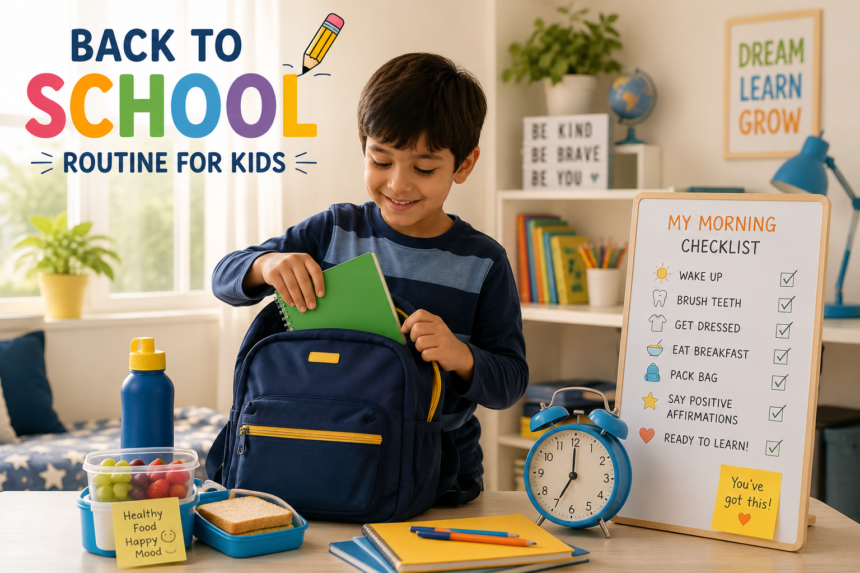
Back to School Routine for Kids: Simple Daily Habits for a Successful School Year
A good Back to School Routine for Kids can make the transition from holidays to classrooms much easier for the entire family.
- Back to School Routine for Kids Should Start Before the First Day
- 1. Reset the Sleep Schedule
- 2. Keep Wake-Up Time Consistent
- 3. Prepare School Clothes the Night Before
- 4. Pack the School Bag at Night
- 5. Create a Simple Morning Checklist
- 6. Make Breakfast Part of the Routine
- 7. Create a Dedicated Homework Time
- 8. Create a Homework-Friendly Space
- 9. Control Screen Time During School Days
- 10. Build Physical Activity Into the Day
- 11. Create an After-School Reset Routine
- 12. Keep Extracurricular Activities Manageable
- 13. Establish a Family Dinner Routine
- 14. Create a Calm Bedtime Routine
- 15. Prepare for Tomorrow Before Going to Bed
- Sample Back to School Routine for Kids
- Back to School Morning Routine Checklist
- Back to School Evening Routine Checklist
- Back to School Routine for Younger Kids
- Back to School Routine for Older Kids
- How to Fix a Summer Sleep Schedule
- How to Reduce First-Day School Stress
- Common Back to School Routine Mistakes
- How Parents Can Make the Routine Easier
- Final Thoughts on Back to School Routine for Kids
During school holidays, routines often become relaxed.
Children may sleep later, wake up later, spend more time on screens and eat meals at different times. Homework disappears and mornings no longer revolve around uniforms, school bags and buses.
Then school begins.
Suddenly, children are expected to wake up early, get dressed, eat breakfast, arrive at school on time, concentrate for several hours, complete homework and go to bed early enough to repeat everything the following day.
Changing everything overnight can be difficult.
The better approach is to gradually rebuild structure before school begins.
A successful routine does not need to make every minute of a child’s day rigid. It should simply create predictable times for the things that matter most.
These include:
- Sleep
- Wake-up time
- Breakfast
- School preparation
- Homework
- Physical activity
- Screen time
- Family time
- Dinner
- Bedtime
Here are 15 practical ways parents can build a healthier and more manageable school routine.
Back to School Routine for Kids Should Start Before the First Day
Do not wait until the night before school starts.
Children who have spent weeks staying awake late may struggle to suddenly fall asleep several hours earlier.
Start adjusting the routine around one or two weeks before school begins where possible.
Gradually move:
- Bedtime earlier
- Wake-up time earlier
- Breakfast earlier
- Lunch closer to school timing
- Evening activities earlier
Small changes can feel much easier than one dramatic adjustment.
Parents can also begin reducing late-night screen use during this period.
The goal is simple.
By the first school morning, the routine should already feel familiar.
1. Reset the Sleep Schedule
Sleep should be one of the first priorities.
Children who are tired may find it harder to wake up, concentrate and manage the demands of the school day.
General sleep recommendations include:
Children aged 6 to 12
- Around 9 to 12 hours of sleep per 24 hours
Teenagers aged 13 to 18
- Around 8 to 10 hours
Instead of suddenly changing bedtime, move it gradually.
For example:
- Day 1: Bed 15 minutes earlier
- Day 2: Another 15 minutes earlier
- Day 3: Continue adjusting
- Repeat until the target school bedtime is reached
Wake-up time should also gradually move earlier.
This helps the child’s body adjust before the alarm starts ringing on school mornings.
2. Keep Wake-Up Time Consistent
A predictable morning begins with a predictable wake-up time.
Try to keep school-day wake-up times consistent.
If your child needs to leave home at 7:30 AM, work backwards.
They may need time for:
- Getting out of bed
- Bathroom
- Getting dressed
- Breakfast
- Brushing teeth
- Hair
- Packing final items
- Putting on shoes
- Travelling to school
If all of this takes one hour, waking at 7:10 AM will obviously create stress.
Build in a small buffer.
Ten extra minutes can make a major difference when a shoe disappears or someone forgets a notebook.
3. Prepare School Clothes the Night Before
One of the easiest ways to improve mornings is to move decisions into the previous evening.
Prepare:
- School uniform
- Socks
- Shoes
- Belt
- Hair accessories
- Sports uniform
- Jacket if needed
Older children can take responsibility for this themselves.
Create a simple rule:
Before bedtime, tomorrow’s clothes must be ready.
This removes one common source of morning arguments.
It also teaches children to plan ahead.
4. Pack the School Bag at Night
The school bag should ideally be ready before the child goes to sleep.
Check:
- Books
- Notebooks
- Homework
- Pencil case
- School diary
- ID card
- Water bottle
- Sports equipment
- Art materials
- Projects
- Permission slips
Use the school timetable to decide what needs to go into the bag.
Younger children may need parental help.
Older children should gradually become responsible for checking their own timetable.
A simple checklist near the study desk can help.
5. Create a Simple Morning Checklist
Children often know what they need to do but become distracted between tasks.
A visual checklist can help.
For younger children, use something like:
Morning Routine
- Wake up
- Use bathroom
- Get dressed
- Eat breakfast
- Brush teeth
- Comb hair
- Fill water bottle
- Check school bag
- Put on shoes
- Leave for school
Put the checklist somewhere visible.
Good locations include:
- Bedroom door
- Bathroom mirror
- Refrigerator
- Near the front door
Children can eventually complete the routine without constant reminders.
6. Make Breakfast Part of the Routine
School mornings can become rushed, but breakfast deserves a place in the schedule.
Keep weekday breakfasts simple.
Possible options include:
- Eggs and toast
- Oatmeal
- Yoghurt and fruit
- Whole-grain cereal with milk
- Peanut or nut butter toast where appropriate
- Fruit with yoghurt
- Simple sandwiches
- Idli or poha
- Paratha with yoghurt
- Other balanced family favourites
Preparation can begin the night before.
Wash fruit.
Set out bowls.
Prepare ingredients.
Decide what breakfast will be.
Avoid turning every weekday breakfast into a complicated cooking project.
The objective is a practical meal that fits the family’s morning routine.
7. Create a Dedicated Homework Time
Homework becomes easier when children know when it happens.
Some children work best shortly after arriving home.
Others need time to decompress.
A possible routine could be:
3:30 PM: Arrive home
3:45 PM: Snack
4:00 PM: Relax
4:30 PM: Homework
5:30 PM: Outdoor play or activity
The exact timing will depend on:
- School finishing time
- Commute
- Child’s age
- Homework load
- Extracurricular activities
- Family schedule
The important part is consistency.
Homework should not become a nightly negotiation.
8. Create a Homework-Friendly Space
Children do not necessarily need an expensive study room.
They need somewhere that supports concentration.
A good homework space should ideally have:
- Comfortable chair
- Suitable desk or table
- Good lighting
- School supplies
- Minimal noise
- Limited distractions
Keep common supplies nearby.
For example:
- Pens
- Pencils
- Erasers
- Ruler
- Sharpener
- Paper
- Calculator
- Colouring materials
This prevents children from spending 15 minutes searching the house for a pencil before beginning a five-minute assignment.
Keep entertainment screens away during focused homework whenever possible.
9. Control Screen Time During School Days
Phones, tablets, television and gaming can easily disrupt a school routine.
The solution does not necessarily need to be banning screens completely.
Create clear boundaries.
For example:
No entertainment screens during:
- Breakfast
- Homework
- Family meals
- Morning preparation
- The period before bedtime
Children should understand when recreational screen time is available.
A possible rule might be:
Homework and responsibilities first, entertainment screens afterwards.
Avoid constantly changing the rule.
Consistency makes boundaries easier for children to understand.
10. Build Physical Activity Into the Day
Children spend many hours sitting during school.
Their routine should include opportunities to move.
This could include:
- Outdoor play
- Cycling
- Football
- Swimming
- Walking
- Dancing
- Playground time
- Organized sports
Physical activity does not always need to be a formal class.
Running around outside with friends counts as movement too.
The goal is to make movement a normal part of everyday life rather than something children only do during school PE lessons.
For families with busy schedules, even a walk after dinner can provide movement and family time together.
11. Create an After-School Reset Routine
Children often arrive home tired, hungry and mentally overloaded.
Do not expect every child to immediately sit down and start another hour of academic work.
Create a short reset period.
A simple routine might be:
- Come home.
- Put shoes away.
- Empty lunchbox.
- Wash hands.
- Change clothes.
- Have a snack.
- Relax briefly.
- Begin homework.
This creates a clear transition between school and home.
However, avoid allowing the break to become an entire evening of gaming or television.
Set a clear time when homework begins.
12. Keep Extracurricular Activities Manageable
Football, swimming, music, dance, art and other activities can provide enormous benefits.
But too many activities can create another problem.
A child’s weekday might become:
School.
Sports.
Tutoring.
Music.
Homework.
Dinner.
Bed.
Repeat.
There should still be time for:
- Rest
- Free play
- Family
- Reading
- Sleep
Watch your child’s energy level.
If every evening feels rushed and your child is constantly tired, the schedule may be overloaded.
Not every free hour needs to become an organized activity.
13. Establish a Family Dinner Routine
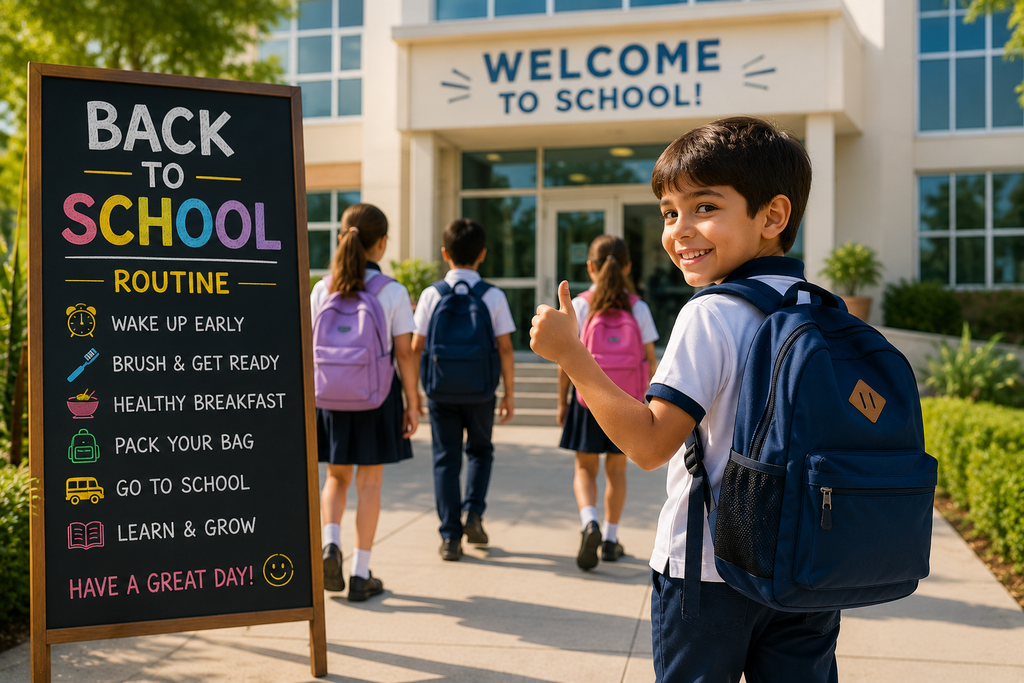
Where schedules allow, family meals can become an important daily checkpoint.
Use dinner to talk about the day.
Instead of asking only:
“How was school?”
Try more specific questions.
Ask:
- What was the funniest thing today?
- What did you learn?
- Who did you sit with?
- Was anything difficult?
- What are you looking forward to tomorrow?
- Did anything worry you today?
Children do not always explain problems immediately.
Regular conversations create opportunities for them to speak when they are ready.
Try to keep phones away from the dinner table.
14. Create a Calm Bedtime Routine
Bedtime should not begin with someone suddenly shouting:
“Go to sleep!”
Children need time to transition from an active day into sleep.
A simple bedtime routine can include:
- Put away devices.
- Prepare tomorrow’s school items.
- Take a bath or shower.
- Brush teeth.
- Put on pyjamas.
- Read quietly.
- Dim lights.
- Go to bed.
The routine does not need to be complicated.
Predictability is more important.
Screens should ideally be put away before bedtime rather than used until the child falls asleep.
Keep bedrooms comfortable, quiet and dark enough for sleep.
15. Prepare for Tomorrow Before Going to Bed
The final part of the school routine happens before sleep.
Create a quick evening checklist.
School Bag
- Homework packed
- Books packed
- Pencil case ready
- School diary checked
Clothes
- Uniform ready
- Socks ready
- Shoes ready
- Sports clothes ready if required
Food
- Lunch planned
- Snack prepared
- Water bottle ready
Schedule
- Check tomorrow’s timetable
- Check activities
- Check school notices
- Set alarm
Five or ten minutes of preparation at night can save much more time the following morning.
Sample Back to School Routine for Kids
Every family will need different timings, but a basic school-day schedule might look like this.
6:30 AM
Wake up.
6:35 AM
Bathroom and get dressed.
6:50 AM
Breakfast.
7:10 AM
Brush teeth, hair and final preparation.
7:20 AM
Check bag and water bottle.
7:30 AM
Leave for school.
3:30 PM
Return home and change clothes.
3:45 PM
Snack and short break.
4:15 PM
Homework and study.
5:15 PM
Outdoor play, sport or free time.
6:30 PM
Shower and family time.
7:00 PM
Dinner.
7:30 PM
Prepare bag and uniform.
8:00 PM
Quiet activity or reading.
8:30 PM
Begin bedtime routine.
9:00 PM
Lights out.
These times are only an example.
Bedtime should be adjusted according to the child’s age, required wake-up time and individual sleep needs.
Back to School Morning Routine Checklist
Parents can print or recreate this checklist.
Every Morning
- Wake up on time
- Make bed
- Use bathroom
- Get dressed
- Eat breakfast
- Brush teeth
- Comb hair
- Take lunch
- Fill water bottle
- Check school bag
- Put on shoes
- Leave on time
For younger children, pictures can replace words.
For example, use simple images of a toothbrush, shirt, breakfast bowl, school bag and shoes.
Back to School Evening Routine Checklist
A successful morning usually begins the night before.
Every Evening
- Finish homework
- Check school timetable
- Pack books
- Pack homework
- Prepare uniform
- Prepare sports kit
- Plan lunch
- Fill or prepare water bottle
- Put devices away
- Brush teeth
- Read
- Go to bed on time
Place the checklist somewhere children can see it every evening.
Back to School Routine for Younger Kids
Young children need more parental guidance.
Keep routines short and visual.
Instead of saying:
“Get ready for school.”
Break it into small tasks.
For example:
- Get dressed.
- Eat breakfast.
- Brush teeth.
- Get your bag.
- Put on shoes.
Praise independence when children complete tasks themselves.
Avoid expecting perfection immediately.
The objective is gradually teaching the routine until the child needs less help.
Back to School Routine for Older Kids
Older children should have more responsibility.
They can manage:
- Alarm clocks
- Uniform preparation
- School bags
- Homework deadlines
- Sports equipment
- Study schedules
- Personal hygiene
- Lunch preparation
Parents can supervise without completing every task for them.
A weekly planner can be particularly helpful.
Include:
- Tests
- Assignments
- Sports
- Clubs
- Projects
- Family commitments
This teaches planning skills that become increasingly important as academic workloads increase.
How to Fix a Summer Sleep Schedule
Summer holidays can completely change sleep patterns.
If your child has been going to sleep very late, start adjusting before school begins.
Try:
- Moving bedtime earlier gradually
- Moving wake-up time earlier
- Getting natural morning light
- Avoiding long late-afternoon naps
- Reducing evening screen exposure
- Keeping the bedroom calm
- Following the same bedtime routine
Do not expect the body clock to change instantly.
Consistency over several days can make the transition easier.
How to Reduce First-Day School Stress
Some children are excited about returning to school.
Others are anxious.
Talk about school before the first day.
Discuss:
- New teacher
- Friends
- Classroom
- School bus
- Lunch
- New subjects
- Activities
For younger children, practise the morning routine before school starts.
You can even do a trial morning.
Wake up.
Get dressed.
Eat breakfast.
Pack the bag.
Leave the house around the expected time.
This can identify problems before the real first day.
Common Back to School Routine Mistakes
One common mistake is trying to change everything in one day.
Another is creating a schedule that is impossible to maintain.
Avoid:
- Bedtimes that constantly change
- Rushed breakfasts
- Packing bags in the morning
- Homework with television running
- Unlimited late-night screens
- Too many extracurricular activities
- Leaving projects until the final evening
- Weekend sleep schedules that are dramatically different
- Doing everything for older children
The best routine is not the strictest one.
It is the one your family can actually follow.
How Parents Can Make the Routine Easier
Children learn routines partly by watching adults.
Parents can help by being organized themselves.
Prepare important things early.
Keep rules predictable.
Avoid changing expectations every night.
Give children age-appropriate responsibilities.
Use checklists rather than repeatedly shouting reminders.
Most importantly, leave some flexibility.
There will be mornings when someone wakes late.
There will be forgotten homework.
There will be evenings when the schedule changes.
One difficult day does not mean the entire routine has failed.
Return to the normal schedule the following day.
Final Thoughts on Back to School Routine for Kids
A successful Back to School Routine for Kids is built around consistency rather than perfection.
Start adjusting sleep before school begins.
Create predictable morning and evening routines.
Prepare uniforms and school bags at night.
Make time for breakfast.
Give children a dedicated place and time for homework.
Set sensible boundaries around screens.
Include physical activity, family conversations and free time.
And protect bedtime.
When children know what happens next, mornings can become less stressful and evenings more organized.
The goal is not to control every minute of the day.
It is to create enough structure that children can arrive at school rested, prepared and ready to learn while still having time to relax, play and enjoy being kids.
Follow us on Instagram
Read More – Premier League Sports Bars in Dubai: 15 Amazing Places to Watch Football