



When Creativity Becomes a Journey of Self Discovery
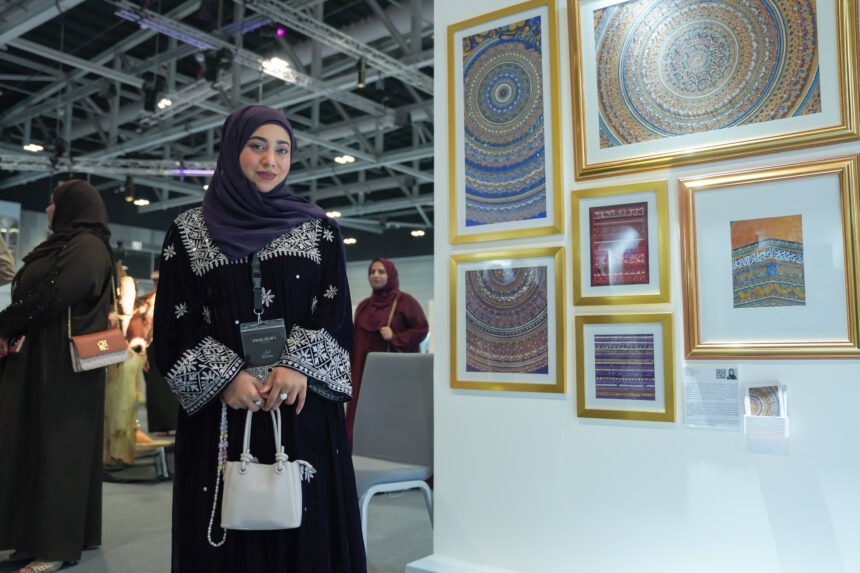
Art often begins quietly. It can start with curiosity, a fascination with patterns, or simply the desire to create something beautiful with your own hands. For Firdaus Shafi, that simple attraction to creativity gradually became a deeper artistic journey through Mandala art, a form that demands patience, concentration, precision, and an appreciation for every small detail.
- From Simple Patterns to a Passion for Mandala Art
- The Patience Behind Every Detailed Creation
- Finding Meaning Inside Patterns and Symmetry
- Turning Imperfections Into Opportunities
- Building an Artistic Identity in Oman
- A Future Filled With Creativity and New Possibilities
- The Next Chapter of Firdaus Shafi’s Artistic Journey
Today, Firdaus continues to develop herself as a Mandala artist while exploring new patterns, techniques, styles, and forms of creative expression. Her journey is not only about producing visually detailed artwork. It is also about discovering what patience can teach, understanding the value of consistency, and creating pieces that can communicate calmness, harmony, and positive energy.
For Firdaus, Mandala art has become much more than drawing. It has become a personal language through which she can express emotions, ideas, and a sense of inner balance.
Her story reflects an important reality about creativity. A meaningful artistic career does not always begin with a perfect plan. Sometimes, it begins with one small interest that continues to grow because the artist is willing to keep learning.
From Simple Patterns to a Passion for Mandala Art
Firdaus was naturally drawn to creativity, detailed designs, shapes, symmetry, and repetition. These elements eventually led her toward Mandala art, where countless small patterns come together to create a larger and balanced composition.
What initially appeared to be a creative activity soon revealed a different level of commitment. Mandala art requires the artist to remain focused on details that may take hours to complete. A single line can affect an entire pattern, while a small mistake can require patience and creative thinking to overcome.
That process changed the way Firdaus looked at art.
With every new Mandala, she began experimenting with different compositions, shapes, patterns, and levels of detail. Each artwork became an opportunity to understand the medium better and challenge herself creatively.
The journey was built gradually through practice. There were no shortcuts. There were only lines, patterns, mistakes, corrections, completed pieces, and lessons.
This approach helped transform an interest into a genuine artistic identity.
The Patience Behind Every Detailed Creation
The beauty of Mandala art is often visible immediately, but the patience behind it is not always obvious to the viewer.
For Firdaus, every completed piece represents time, concentration, discipline, and creative thought. The artwork may look effortless when finished, but the process demands the artist to remain present with every detail.
This has also influenced the way she approaches life.
One of the most important lessons Firdaus has learned is that small efforts can eventually create something much larger. A single line may not appear important by itself, but hundreds of lines can become a complete artwork. In much the same way, small acts of discipline and consistency can gradually shape a person’s future.
She has also learned that comparison can distract artists from their own progress. Every creative journey has a different pace. Every artist has a different background, style, and way of seeing the world.
For Firdaus, the more important question is not whether her journey looks like someone else’s. It is whether she is continuing to grow.
Finding Meaning Inside Patterns and Symmetry
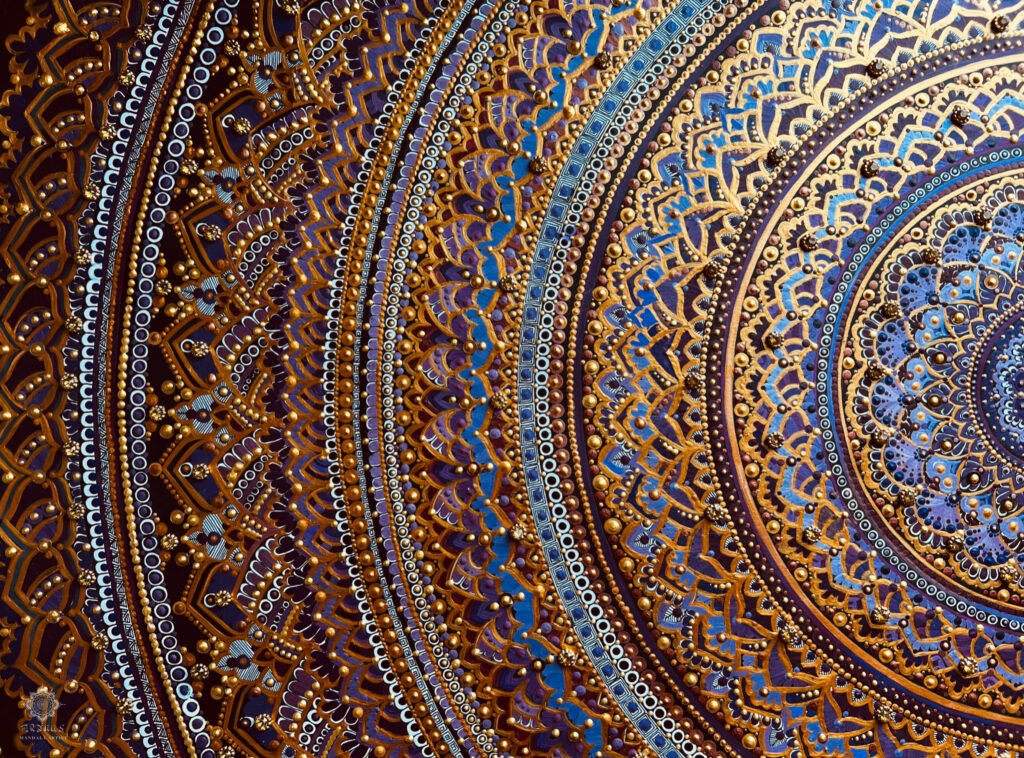
Mandala art carries a special significance for Firdaus because it allows beauty and meaning to exist together.
She sees the art form as an expression of balance, harmony, patience, and self expression. Her intention is not simply to create something attractive. She wants her work to communicate an emotion and leave viewers with a sense of peace and positive energy.
This philosophy gives her artwork a deeper purpose.
A Mandala can invite the viewer to slow down and observe details that might otherwise be missed. In a world where people often move quickly from one task to another, detailed artwork can create a moment of stillness.
That is one of the qualities Firdaus values most about her craft.
She wants her creations to encourage people to pause, appreciate detail, and perhaps discover their own sense of calm through art.
As Firdaus puts it, “Every new artwork gives me an opportunity to improve, experiment, and discover something new about myself as an artist.”
That belief captures the heart of her journey. Each piece is both an artwork and a lesson.
Turning Imperfections Into Opportunities
One of the most relatable parts of Firdaus’s artistic philosophy is her understanding of mistakes.
In detailed artwork, perfection can feel like the ultimate goal. Yet Firdaus has learned that unexpected lines, imperfect patterns, and creative changes do not necessarily ruin an artwork. Sometimes, they can lead the artist toward an entirely new idea.
This perspective has helped her become more comfortable with experimentation.
Rather than seeing mistakes only as failures, she sees them as part of the creative process. This mindset has allowed her to continue learning without being afraid of making something different.
It also reflects a broader lesson that applies beyond art. Progress is rarely completely straight. People make mistakes, change direction, learn from experience, and discover abilities they did not know they had.
For Firdaus, Mandala art has provided a space where those lessons can be experienced through every drawing.
Building an Artistic Identity in Oman
Firdaus’s artistic journey has also developed within Oman’s creative community, giving her an opportunity to connect her personal passion with a wider cultural environment.
Her growth as a Mandala artist has strengthened her confidence in presenting her work and engaging with people who appreciate creativity. Over time, the focus has expanded from simply creating artwork to thinking about how that artwork can reach more people.
This is an important stage in any artist’s journey.
Creating something privately is one experience. Having the confidence to present it publicly is another. Firdaus continues to work toward becoming more comfortable with sharing her creativity with a broader audience and building an identity that people can recognize.
Her ambition is not based only on recognition. She wants her work to carry a feeling and a message that audiences can connect with.
That makes the journey personal rather than purely professional.
A Future Filled With Creativity and New Possibilities
Firdaus’s vision for the future is built around continuous learning.
She wants to explore larger Mandala collections, new artistic mediums, different techniques, and more ambitious creative projects. She also hopes to participate in exhibitions, art fairs, cultural events, workshops, and collaborations where she can meet other artists and connect with art lovers.
Another important part of her future vision is education.
Firdaus would like to introduce more people to Mandala art through workshops and creative sessions. She believes that drawing can help people develop patience, confidence, concentration, and a stronger connection with their own creativity.
For children and young artists especially, such experiences can become a meaningful introduction to the creative world.
Her ambition is therefore not limited to building a personal portfolio. She wants to create opportunities for others to discover the joy of making art.
The Next Chapter of Firdaus Shafi’s Artistic Journey
There is something powerful about an artist who understands that the journey is never truly finished.
Firdaus Shafi has already turned a passion for patterns and detailed designs into a meaningful artistic path. Yet she does not view her achievements as the final destination. Instead, every completed Mandala represents another beginning.
Her story demonstrates how patience can become a creative strength and how consistency can transform a small interest into something much more meaningful.
As she continues developing her artistic identity, exploring new techniques, and reaching toward wider audiences, Firdaus remains focused on one simple principle: never stop learning.
That philosophy may ultimately become one of the most important parts of her legacy.
Her Mandala art is about patterns, but her journey is about much more than patterns. It is about finding balance through creativity, accepting imperfections, trusting the process, and continuing to create even when progress feels slow.
For those who encounter her work, the finished artwork may first attract attention through its detail and beauty. But behind every line is a story of patience, dedication, discovery, and personal growth.
And for Firdaus, there are still many more lines to draw, ideas to explore, and chapters of creativity waiting to be created.
Follow Firdaus Shafi on Instagram
Read More – Zahran Builds Global Legal Bridges Through Vision and Precision