


The Natural Environment Around Yellow Lake
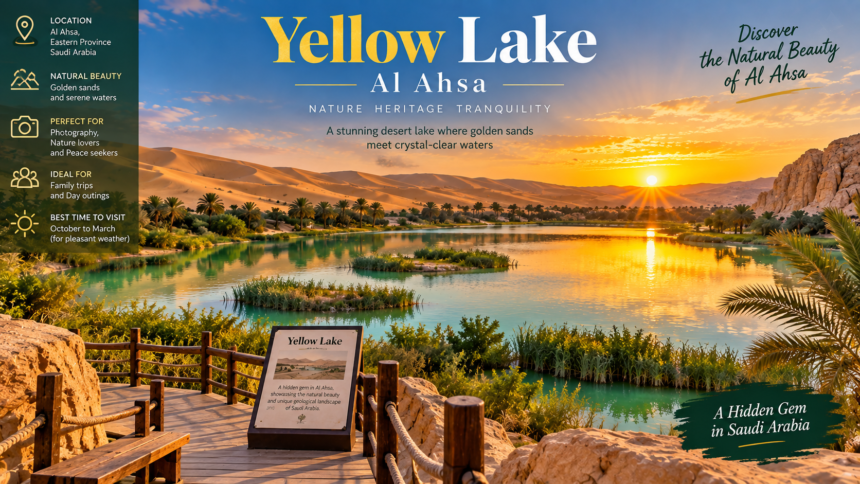
The Yellow Lake Al Ahsa is one of the most unusual natural landscapes in eastern Saudi Arabia. Surrounded by desert terrain, the lake creates a striking contrast between golden sand, vegetation and water, making it a fascinating destination for visitors interested in nature and lesser known attractions.
- Yellow Lake Al Ahsa and Its Unique Landscape
- Where Is Yellow Lake Al Ahsa
- Why Is Yellow Lake Yellow
- The Natural Environment Around Yellow Lake
- What Makes Al Ahsa Special
- Wildlife Around the Lake
- Best Time to Visit Yellow Lake Al Ahsa
- What Can Visitors Do Around the Lake
- Yellow Lake Al Ahsa Travel Tips
- How Yellow Lake Connects With Al Ahsa Oasis
- Why Al Ahsa Is Important to Saudi Tourism
- Yellow Lake Al Ahsa and Sustainable Tourism
- Quick Facts About Yellow Lake
- Yellow Lake Al Ahsa Visitor Checklist
- Final Thoughts on Yellow Lake Al Ahsa
Located in the Al Ahsa region of Saudi Arabia, the lake forms part of a much larger landscape shaped by water, desert and oasis life. The wider Al Ahsa area is famous for its enormous palm groves, natural springs, archaeological sites and distinctive relationship between agriculture and the surrounding desert.
For travellers who normally associate Saudi Arabia with dramatic cities, vast deserts and ancient heritage sites, Yellow Lake offers something different. Its unusual setting shows how water can transform an otherwise dry landscape and create an environment where plants and wildlife can thrive.
Yellow Lake Al Ahsa and Its Unique Landscape
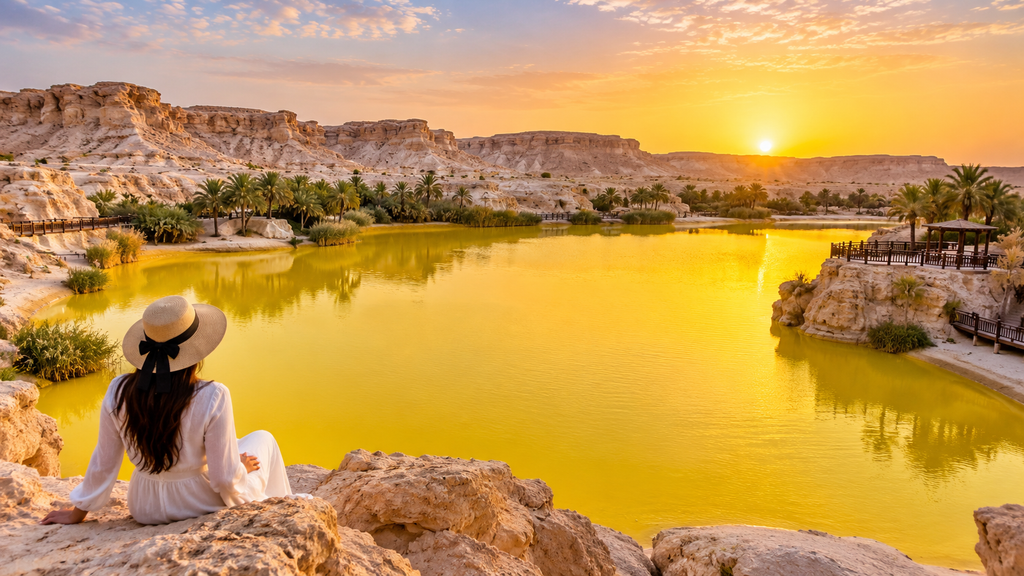
Yellow Lake gets its name from the colours surrounding its waters.
The landscape combines shallow water with sandy and muddy areas, while the surrounding desert can take on golden and yellow tones under the strong eastern Saudi sunlight.
The result is a landscape that can look very different depending on the season, weather and time of day.
Early morning and late afternoon can be particularly interesting for photography because the lower sunlight creates stronger shadows across the dunes and water.
What makes the landscape distinctive?
- Desert surrounding a natural water body
- Golden and yellow sand formations
- Vegetation around areas of water
- Seasonal changes in the landscape
- A strong contrast between dry and wet environments
- Wide open views ideal for landscape photography
The lake is especially interesting because it does not look like a conventional resort destination.
There are no major urban skylines surrounding it. Instead, visitors encounter a more natural environment where the desert remains the dominant feature.
Where Is Yellow Lake Al Ahsa
Yellow Lake is located in the Al Ahsa region of Saudi Arabia in the Eastern Province.
Al Ahsa itself is one of the country’s most distinctive geographical areas because of its combination of desert surroundings, groundwater, agriculture and palm cultivation.
The region is located inland from the Arabian Gulf and has long been associated with oasis life.
For visitors, Yellow Lake can be considered as part of a wider Al Ahsa itinerary rather than an isolated attraction.
A trip to the area can combine nature with heritage, food and cultural experiences.
| Experience | What Visitors Can Explore |
|---|---|
| Yellow Lake | Desert and water landscape |
| Al Ahsa Oasis | Palm groves and agriculture |
| Al Qarah Mountain | Rock formations and panoramic views |
| Historic Al Ahsa | Traditional architecture and heritage |
| Local markets | Dates, food and regional products |
| Springs | Natural water sources and oasis landscapes |
This combination gives Al Ahsa an advantage for travellers who want more than a single sightseeing stop.
Why Is Yellow Lake Yellow
The colour associated with Yellow Lake is closely connected with its surrounding environment.
The lake sits within a desert landscape where sand, sediment, vegetation and water meet. Depending on light conditions, the surrounding terrain can appear strongly yellow or golden.
The colour is therefore not necessarily the result of the water itself being bright yellow.
This is an important distinction for visitors.
The visual effect comes from the relationship between the lake and its surroundings.
Desert sand reflects sunlight differently throughout the day. During sunrise and sunset, warm light can make the landscape appear even more golden.
Wind can also reshape nearby sandy areas, meaning the appearance of the landscape can change over time.
The Natural Environment Around Yellow Lake
The lake provides an interesting contrast to the dry environment surrounding it.
Water in an arid region can create conditions where vegetation and wildlife become more likely to appear.
This makes the area useful for understanding the ecological diversity of eastern Saudi Arabia.
The landscape may include:
- Reeds and other water associated plants
- Desert vegetation
- Migratory or local birds
- Small aquatic organisms
- Insects
- Desert wildlife in surrounding areas
The presence of water does not mean that the environment should be treated like a conventional recreational lake.
Visitors should avoid disturbing animals, damaging vegetation or leaving rubbish behind.
In fragile desert environments, even seemingly small actions can have long term consequences.
What Makes Al Ahsa Special
Yellow Lake becomes even more interesting when viewed within the wider Al Ahsa landscape.
Al Ahsa Oasis is one of the world’s most significant oasis environments and has been recognised by UNESCO as a World Heritage Site.
The oasis covers a vast area containing millions of palm trees, agricultural land, traditional settlements and natural water sources.
Its existence in one of the world’s arid regions makes it particularly remarkable.
The basic story of Al Ahsa is about water.
Water allowed agriculture to develop.
Agriculture supported communities.
Communities created settlements and trade networks.
Over generations, the oasis became an important cultural and economic landscape.
Yellow Lake represents another expression of the relationship between water and the desert.
Wildlife Around the Lake
Water bodies can become important habitats in otherwise dry landscapes.
Birds are among the most interesting wildlife visitors may notice around wetland environments in the region.
Depending on season and conditions, water areas can provide feeding or resting opportunities for different species.
However, wildlife sightings are never guaranteed.
Visitors should avoid approaching birds too closely or attempting to feed animals.
Responsible wildlife viewing means:
- Keep a reasonable distance.
- Avoid loud noises.
- Do not chase animals for photographs.
- Never leave food or plastic behind.
- Avoid damaging vegetation.
- Follow local restrictions.
The best photographs are often taken patiently from a distance.
Best Time to Visit Yellow Lake Al Ahsa
Saudi Arabia’s Eastern Province can experience extremely high temperatures during summer.
For outdoor exploration, cooler months are generally more comfortable.
The period from late autumn through winter and into early spring can provide better conditions for spending extended time outdoors.
Seasonal Guide
| Period | Conditions |
|---|---|
| Summer | Very hot, especially during the middle of the day |
| Autumn | Temperatures begin becoming more comfortable |
| Winter | Generally better for outdoor exploration |
| Early Spring | Pleasant conditions before temperatures rise |
| Late Spring | Increasingly hot |
| Early Morning | Usually more comfortable than midday |
| Late Afternoon | Better light and cooler conditions |
Visitors should check the current weather forecast before travelling.
For photography, sunrise and sunset can also produce the most attractive light.
What Can Visitors Do Around the Lake
Yellow Lake is primarily interesting for its natural landscape rather than a long list of commercial activities.
That is part of its appeal.
Visitors can spend time:
Photography
The combination of water, sand and vegetation creates unusual landscape compositions.
Nature observation
The lake provides an opportunity to observe how wetland environments interact with desert ecosystems.
Scenic exploration
Visitors can appreciate the contrast between the lake and the surrounding landscape.
Al Ahsa sightseeing
The lake can be included in a larger trip covering the oasis, mountains, heritage locations and local markets.
Sunrise or sunset viewing
The warm desert light can dramatically change the appearance of the landscape.
Visitors should avoid assuming that every area around the lake is suitable for swimming, camping or driving.
Follow signs and local guidance.
Yellow Lake Al Ahsa Travel Tips
A visit to a remote natural attraction requires more preparation than a city sightseeing trip.
Before leaving, check:
- Weather conditions
- Road conditions
- Mobile coverage
- Fuel availability
- Vehicle suitability
- Current access restrictions
- Local guidance
What to Carry
A basic outdoor kit can include:
- Drinking water
- Sun protection
- Hat
- Comfortable shoes
- Phone with navigation
- Power bank
- Snacks
- Camera equipment if required
- Rubbish bags for personal waste
If travelling away from urban areas, avoid relying entirely on mobile navigation.
Download maps in advance where possible.
Visitors should also inform someone about their planned route when travelling into isolated areas.
How Yellow Lake Connects With Al Ahsa Oasis
The relationship between Yellow Lake and Al Ahsa’s wider environment is one of the most interesting aspects of the destination.
The oasis is famous for abundant groundwater and agriculture.
Palm cultivation has been central to the region for centuries.
Dates remain one of Al Ahsa’s best known agricultural products.
The wider landscape demonstrates how communities have adapted to life in an arid environment by using available water resources.
Yellow Lake adds another layer to that story.
Instead of seeing the desert and water as completely separate environments, visitors can see how closely they interact.
This makes the area interesting not only for tourism but also for geography, ecology and cultural history.
Why Al Ahsa Is Important to Saudi Tourism
Saudi Arabia has been expanding tourism beyond the country’s best known destinations.
Historic cities, archaeological sites, mountain landscapes, coastal destinations and natural attractions are increasingly being developed for visitors.
Al Ahsa fits naturally into this strategy because it combines several experiences in one region.
Visitors can explore:
- Nature
- Agriculture
- Heritage
- Food
- Architecture
- Traditional culture
- Desert landscapes
The region’s UNESCO recognition also gives it international cultural significance.
For travellers who want to explore a different side of Saudi Arabia, Al Ahsa offers an alternative to the country’s major metropolitan destinations.
Yellow Lake Al Ahsa and Sustainable Tourism
Natural attractions can become vulnerable when visitor numbers increase.
This is particularly true for desert and wetland environments.
Visitors can help protect the landscape by following a few basic principles.
Leave no waste
Take rubbish with you.
Stay on suitable routes
Avoid damaging vegetation or sensitive areas with vehicles.
Do not disturb wildlife
Watch animals from a distance.
Avoid unnecessary noise
Natural areas are not entertainment zones that require loud music.
Respect local communities
Follow access rules and private property boundaries.
Do not remove natural objects
Leave rocks, plants and other natural features where they are.
Sustainable tourism does not require complicated behaviour.
It often comes down to leaving a place in the same condition in which you found it.
Quick Facts About Yellow Lake
| Feature | Details |
|---|---|
| Destination | Yellow Lake |
| Region | Al Ahsa, Eastern Province, Saudi Arabia |
| Landscape | Desert and wetland environment |
| Main attraction | Contrast between water and golden desert |
| Nearby experience | Al Ahsa Oasis |
| Best activity | Nature viewing and photography |
| Best outdoor season | Cooler months |
| Best photography times | Sunrise and sunset |
| Recommended preparation | Water, navigation and sun protection |
The lake is particularly suitable for travellers who enjoy natural landscapes rather than heavily developed attractions.
Yellow Lake Al Ahsa Visitor Checklist
Before visiting, make sure you have considered the following:
- Check the weather.
- Confirm current access conditions.
- Plan your route.
- Fill the vehicle with enough fuel.
- Carry plenty of drinking water.
- Wear suitable outdoor clothing.
- Use sun protection.
- Keep your phone charged.
- Download maps where possible.
- Avoid driving into unsuitable terrain.
- Keep wildlife at a safe distance.
- Do not leave rubbish.
- Respect private property.
- Follow local instructions.
- Consider visiting other Al Ahsa attractions during the same trip.
A little preparation can make a remote nature trip much safer and more enjoyable.
Final Thoughts on Yellow Lake Al Ahsa
Yellow Lake Al Ahsa offers a different perspective on Saudi Arabia.
It is not simply about dramatic skyscrapers, luxury resorts or ancient architecture. The landscape demonstrates another side of the Kingdom, where water, desert and vegetation meet to create an unusual natural environment.
Its location within the wider Al Ahsa region makes the experience even more valuable.
Visitors can combine the lake with the famous Al Ahsa Oasis, local food, date farms, cultural attractions and surrounding natural landscapes.
The destination also highlights an important part of Saudi Arabia’s geography.
Water is precious in an arid environment.
Where water exists, life follows.
Over generations, people in Al Ahsa have built communities and agricultural traditions around this resource. Today, visitors can experience that relationship through the oasis and the region’s distinctive natural landscapes.
For photographers, the contrast between golden sand and water can provide striking images.
For nature lovers, the lake offers an opportunity to observe a wetland environment surrounded by desert.
For travellers exploring Saudi Arabia beyond the most famous destinations, it provides another reason to visit Al Ahsa.
The best way to experience the lake is with patience.
Come during a comfortable season.
Arrive with enough water and supplies.
Spend time observing the landscape rather than rushing through it.
And most importantly, protect the environment you came to see.
Yellow Lake Al Ahsa may not be one of Saudi Arabia’s most internationally famous attractions, but that is part of what makes it interesting.
It represents the quieter side of the Kingdom’s natural landscape and offers a reminder that some of the country’s most fascinating experiences can be found where desert and water unexpectedly meet.
Do follow us on Instagram
Read More – KAFD Mall Riyadh: Complete Guide to Shopping, Dining and Lifestyle