



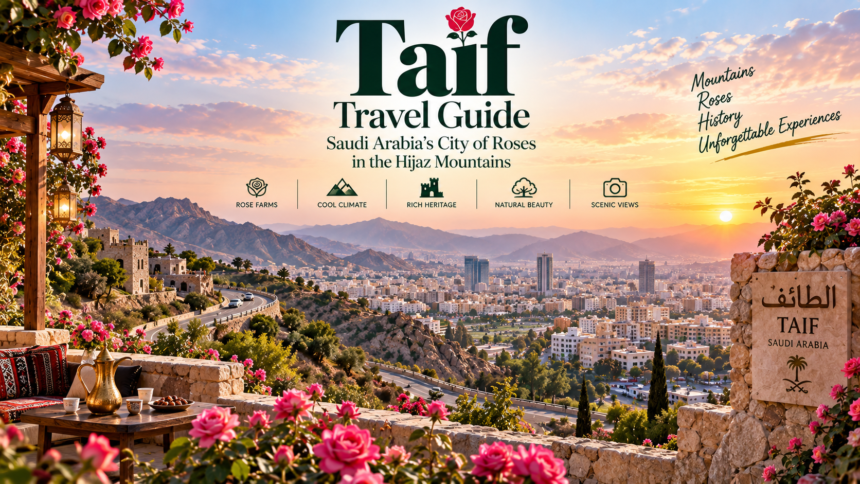
Taif Travel Guide showing rose farms and mountain scenery in Saudi Arabia
High above the hotter plains of western Saudi Arabia, Taif offers a side of the Kingdom that can surprise first-time visitors. Mountain roads twist between rocky slopes, rose farms perfume the countryside during spring, fruit orchards appear around the highlands, and cool evening air makes outdoor walks far more inviting than many people expect from a Saudi destination.
- Taif at a Glance
- Why Taif Is Known as Saudi Arabia’s City of Roses
- 1. Explore Al Hada for Mountain Views and Cool Air
- 2. Ride the Al Hada Cable Car Above the Mountains
- 3. Visit Al Shafa for a Higher Mountain Escape
- 4. Walk Through a Taif Rose Farm
- 5. Discover the History and Architecture of Shubra Palace
- 6. Explore Souq Okaz and Taif’s Literary Heritage
- 7. Spend an Evening at Arruddaf Park
- Taif’s Agricultural Culture Goes Beyond Roses
- Best Time to Visit Taif
- A Practical Two-Day Taif Itinerary
- What If You Only Have One Day in Taif?
- Is Taif Good for Families?
- Getting Around Taif
- What to Pack for a Taif Trip
- Why Taif Feels Different From Other Saudi Destinations
- Frequently Asked Questions About Taif
- Final Thoughts on This Taif Travel Guide
This Taif Travel Guide explores the city beyond its famous flowers. Taif sits at around 1,800 metres above sea level on the eastern slopes of the Sarawat Mountains in Makkah Province, giving it a milder climate than many lower-lying Saudi cities. Its position, history and agricultural landscape have made it a long-established summer destination as well as an important cultural stop in the Hijaz region.
Visitors can spend the morning riding a cable car above Al Hada, the afternoon exploring a historic palace, and the evening walking through a landscaped park. During rose season, the experience changes completely as farms and distilleries become part of the itinerary, while mountain destinations such as Al Shafa offer viewpoints, orchards and cooler temperatures.
Whether you are planning a weekend from Jeddah, adding Taif to a wider western Saudi Arabia itinerary or specifically visiting for the roses, this guide covers the essential places, seasons, cultural experiences and practical details you need.
Taif at a Glance
Taif is one of the most established mountain destinations in western Saudi Arabia. Its higher elevation has historically made it attractive during warmer months, while its location near Makkah and Jeddah also makes it relatively easy to combine with a broader western Saudi trip. Saudipedia describes tourism as an important part of the governorate’s economy and identifies Al Hada, Al Shafa and Arruddaf among its prominent tourist areas.
| Quick Fact | Taif |
|---|---|
| Region | Makkah Province |
| Elevation | Around 1,800 metres above sea level |
| Famous For | Roses, mountain scenery, fruit farms and heritage |
| Key Mountain Areas | Al Hada and Al Shafa |
| Famous Historic Site | Souq Okaz |
| Major Historic Palace | Shubra Palace |
| Best Rose Period | Mainly March and April |
| Best For | Families, nature, culture, road trips and photography |
| Recommended Stay | 2–3 days |
| Summer Appeal | Cooler highland atmosphere than many surrounding areas |
Taif’s attraction is not based on one landmark. It comes from the combination of its mountain geography, traditional agriculture, historical importance and relaxed outdoor lifestyle.
That mixture makes the city particularly suitable for travelers who want something different from the skyscrapers, beaches and desert resorts often associated with modern Saudi tourism.
Why Taif Is Known as Saudi Arabia’s City of Roses
Roses are not simply a tourism theme added to Taif. They are a working agricultural industry and one of the most recognisable symbols of the governorate.
Rose cultivation takes place particularly in elevated areas including Al Hada, Al Shafa, Wadi Muharram and surrounding valleys. Saudipedia says Taif produces hundreds of millions of roses annually, while dozens of factories and workshops process the harvest into rose water, perfume, oils and other products. The annual agricultural cycle begins months before visitors see the first flowers. Fields are prepared during winter, bushes are pruned, and the main harvest then arrives during spring. Visit Saudi recommends April for travelers hoping to experience the roses, while distillation activity can generally be seen from early March through the end of April.
What happens after the roses are picked? Harvested flowers are transported quickly to distilleries, where petals are processed to extract fragrant rose water and aromatic oils. Timing matters because the flowers need to retain as much fragrance as possible.
The industry has also become an important tourism experience. Visitors can see farms, learn about traditional harvesting and visit factories where large quantities of petals are distilled.
| Rose Experience | What You Can Expect |
|---|---|
| Rose farms | Fields of fragrant pink flowers |
| Morning harvesting | Traditional hand-picking during season |
| Distilleries | Rose-water and fragrance production |
| Local shops | Rose water, perfume, oils and soaps |
| Seasonal events | Floral displays and cultural programming |
| Photography | Some of Taif’s most distinctive spring scenery |
If roses are the main reason for your trip, do not plan only around a particular calendar date. Flowering varies with local weather and agricultural conditions, so checking seasonal updates shortly before travel is sensible.
1. Explore Al Hada for Mountain Views and Cool Air
Al Hada is one of the defining experiences in any Taif Travel Guide. Located roughly 20 kilometres west of Taif city, the mountain area rises to about 2,000 metres and is known for winding roads, dramatic escarpment views, resorts and recreation facilities.
The journey itself is part of the experience. Roads climb through rugged mountain scenery while viewpoints reveal the lower landscapes of western Saudi Arabia far below.
Fog and cloud can occasionally transform the atmosphere, while clear days provide broad views over the surrounding valleys. Because the temperature is often more comfortable than lower elevations, Al Hada becomes especially popular during the warmer months.
What should you do in Al Hada? Give yourself time rather than treating it only as a stop for photographs. Combine a scenic drive with viewpoints, coffee, a cable-car ride and a relaxed meal.
Roads around steep mountain areas require more attention than ordinary urban driving. Visibility can also change when fog develops, so drivers should follow local conditions rather than rushing to reach a viewpoint before sunset.
2. Ride the Al Hada Cable Car Above the Mountains
The Al Hada cable car provides one of Taif’s most memorable views. As of summer 2026, the system operates between the summit of Al Hada and Al-Kar tourist village, covering around 4.2 kilometres in each direction.
Saudi Press Agency reported in July 2026 that the journey takes approximately 17 minutes. The system has 52 cabins, each capable of carrying eight passengers, and offers views across the Sarawat Mountains, valleys and surrounding landscapes.
For first-time visitors, this is often more interesting than simply stopping at a roadside viewpoint because the perspective constantly changes as the cabin travels across the mountain.
| Cable Car Detail | Current Information |
|---|---|
| Route | Al Hada summit to Al-Kar |
| Distance | Around 4.2 km each way |
| Journey Time | Around 17 minutes |
| Cabins | 52 |
| Capacity | Eight passengers per cabin |
| Best For | Families, couples and photography |
| Experience | Mountain and valley panoramas |
Try to avoid building an extremely tight itinerary around the ride. Mountain weather and operational conditions can affect attractions, so checking current opening information before leaving your hotel is a good habit.
Late afternoon can produce beautiful light, although clear visibility earlier in the day may be better for travelers who primarily want panoramic photographs.
3. Visit Al Shafa for a Higher Mountain Escape
If Al Hada feels dramatic, Al Shafa often feels more rural. Located about 25 kilometres southwest of Taif, it rises to roughly 2,500 metres above sea level and looks over the western escarpment of the Sarawat Mountains.
The landscape supports agriculture that would feel unexpected to travelers who associate Saudi Arabia only with desert terrain. Roses, aromatic herbs, berries, figs and vegetables are cultivated in the area, while summer honey is another product associated with Al Shafa.
Restaurants, cafes, resorts and recreation areas make it possible to spend several hours here rather than treating the mountains as a drive-through attraction. During cooler or wetter weather, fog can add another layer to the scenery.
Al Hada or Al Shafa? You do not necessarily need to choose between them. They offer slightly different moods and work well across separate days.
| If You Want… | Choose |
|---|---|
| Cable car and dramatic mountain road | Al Hada |
| Higher elevation and rural scenery | Al Shafa |
| Rose and agricultural landscapes | Al Shafa |
| Easy first mountain excursion | Al Hada |
| Cafes and scenic evening | Either |
| Full Taif experience | Visit both |
Families may prefer an afternoon here when temperatures are comfortable enough to spend more time outdoors. Photographers should watch how the clouds interact with the escarpment, especially around changing weather.
4. Walk Through a Taif Rose Farm
For many visitors, rose farms are the experience that makes Taif genuinely different from other Saudi destinations.
The most atmospheric visits happen during harvest season, when fields contain blooming flowers and workers begin picking early in the day. Rose harvesting traditionally happens before the heat becomes stronger because cooler conditions help preserve fragrance.
Taif’s rose-growing areas are spread across several highland locations rather than concentrated into one giant tourist farm. That means visitors should identify a farm or visitor experience before driving into the countryside.
Once there, the interesting part is understanding the complete journey rather than photographing the flowers and leaving. Roses move from field to weighing and then distillation, eventually becoming rose water, fragrances, soaps and oils.
Best way to experience rose season: combine three elements in the same morning.
- Begin at a rose farm while temperatures are comfortable.
- Visit a distillery to understand how petals are processed.
- Finish at a local shop where you can compare rose water, perfumes and other products.
Visit Saudi specifically mentions Al Gadhi Rose Factory as a place where visitors can observe the distillation process during harvest season.
This is also one of the best opportunities to purchase something genuinely connected with the destination rather than a generic souvenir.
5. Discover the History and Architecture of Shubra Palace
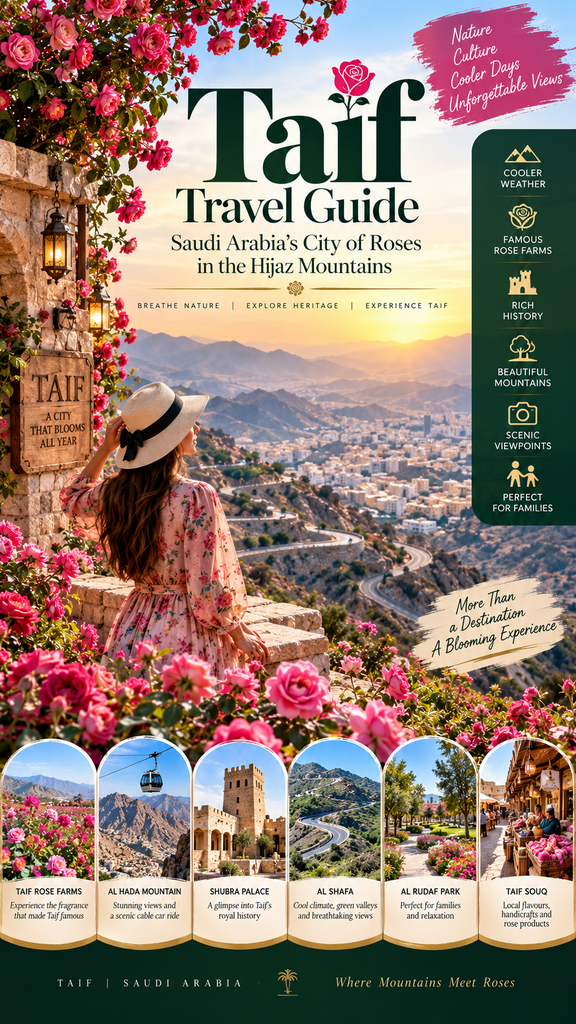
Taif is not only about mountains and agriculture. Shubra Palace introduces visitors to a more formal side of the city’s history and architecture.
Construction of the palace began in 1904 and took approximately two years. The structure contains around 150 rooms and blends Islamic, Roman-influenced and traditional Hijazi architectural elements.
Its most distinctive visual features include white exterior walls, columns, decorative woodwork and traditional rawasheen. Inside, an alabaster staircase and museum spaces reflect the building’s transformation from royal and administrative use into a cultural site.
King Abdulaziz used Shubra Palace as a summer residence for governance, and the building later served administrative functions including as the headquarters of the Ministry of Defense and Aviation. It was converted into a regional museum in 1995 and entered the National Urban Heritage Register in 2017.
| Shubra Palace Feature | Why It Is Interesting |
|---|---|
| Construction | Began in 1904 |
| Scale | Around 150 rooms |
| Architecture | Hijazi, Islamic and Roman influences |
| Historical role | Royal and administrative use |
| Museum conversion | 1995 |
| Heritage registration | 2017 |
| Best For | Architecture, history and photography |
Opening and visitor access can change during restoration, events or cultural programming, so confirm current access before building an entire day around the palace.
Even when your trip focuses mainly on nature, adding one significant heritage site creates a more complete understanding of Taif.
6. Explore Souq Okaz and Taif’s Literary Heritage
Long before modern tourism, Souq Okaz was one of the most important gathering places in the Arabian Peninsula. Located northeast of Taif, the historic market became associated with commerce, poetry, debate and interaction among Arab tribes.
Saudipedia dates the market’s beginnings to around 501 CE, approximately a century before the emergence of Islam. Its importance extended beyond buying and selling goods because poetry and public expression played a central role in gatherings.
Saudi Arabia revived the site through a modern annual festival beginning in 2007, reinforcing its place within the country’s cultural heritage. Event programming and accessibility can vary, so it is useful to distinguish between visiting the archaeological or cultural site and attending a seasonal festival.
Why include Souq Okaz? It provides historical depth to a trip that might otherwise focus mainly on landscapes. Taif’s identity is connected not only with roses but also with trade routes, pilgrimage movement, poetry and regional culture.
Visitors interested in archaeology may also appreciate the broader area because remnants and archaeological evidence around the historic market reflect centuries of settlement and activity.
7. Spend an Evening at Arruddaf Park
After mountain drives and historical attractions, Arruddaf Park provides a much easier activity for the evening.
Visit Saudi describes the park as a family-friendly outdoor space with landscaped areas, walking tracks, sports facilities, cafes and restaurants. Entry is currently listed as free, although operating hours and event arrangements can change.
The surrounding rock formations help distinguish it from a standard urban park. Green spaces sit against Taif’s rugged terrain, creating a setting that works well for leisurely walking, family gatherings and evening coffee.
During flower-related seasonal events, parts of the park may also be decorated with floral displays and stalls selling rose-derived products.
| Visitor Type | Why Arruddaf Works |
|---|---|
| Families | Open areas and recreation |
| Couples | Evening walking |
| Children | Space to move and play |
| Photographers | Rock formations and landscaped areas |
| Older travelers | Less demanding than mountain hikes |
| Short-stay visitors | Easy addition to an evening |
Rather than visiting in the middle of the day, consider coming after the main sightseeing period. Cooler temperatures and evening activity tend to make the experience more enjoyable.
Taif’s Agricultural Culture Goes Beyond Roses
The rose may be Taif’s international symbol, but the city’s agricultural identity extends much further.
Its mountain areas support seasonal fruits including berries, apricots and prickly pears. SPA also highlights the city’s agricultural production as an important element of its tourism appeal, alongside rose processing and mountain scenery.
Al Shafa is particularly associated with fruits, vegetables, herbs and honey. Roadside shops and markets can therefore become surprisingly interesting parts of a drive through the mountains.
Saudi coffee also fits naturally into a Taif trip, particularly when paired with local dates or sweets. Rose water may appear in drinks, desserts and fragrances, showing how agriculture enters both everyday food culture and traditional hospitality.
What should you look for while shopping?
- Authentic Taif rose water
- Rose perfume or concentrated fragrance
- Rose-based soaps and cosmetic products
- Seasonal figs and berries
- Local honey
- Regional sweets and coffee products
Shopping directly from agricultural or specialist outlets can also make the experience more meaningful because you understand where the product came from.
Best Time to Visit Taif
There is no single perfect month because the best time depends on why you are traveling.
Visit Saudi currently lists broad seasonal temperature ranges showing Taif’s mountain climate, with cooler winters and relatively moderate summer nights compared with many lower Saudi cities.
| Season | Typical Experience | Best For |
|---|---|---|
| March–April | Rose harvest and spring scenery | Rose farms and photography |
| May–August | Popular mountain escape | Al Hada, Al Shafa and family holidays |
| September–November | Pleasant transitional weather | Outdoor exploration |
| December–February | Cool days and cold nights | Heritage and winter atmosphere |
For roses: plan around March and April. Visit Saudi notes that April is particularly associated with the famous bloom, although the harvest window can begin in March.
For mountain weather: summer remains popular because Taif’s elevation provides relief from the hotter conditions found in many other areas. Saudipedia records the city at roughly 1,800 metres above sea level, with Al Hada around 2,000 metres and Al Shafa around 2,500 metres.
For fewer seasonal crowds: consider autumn or winter, understanding that mountain evenings can become much colder than visitors expect.
A Practical Two-Day Taif Itinerary
Two days gives first-time visitors enough time to combine mountains, roses and heritage without constantly checking the clock.
| Time | Day 1 | Day 2 |
|---|---|---|
| 8:00 AM | Breakfast in Taif | Rose farm or distillery |
| 9:30 AM | Drive toward Al Hada | Continue rose experience |
| 11:00 AM | Cable car and viewpoints | Shubra Palace |
| 1:00 PM | Lunch | Lunch in central Taif |
| 3:30 PM | Explore mountain area | Drive toward Al Shafa |
| 5:30 PM | Return toward city | Scenic stops and cafes |
| 7:00 PM | Arruddaf Park | Mountain sunset |
| Evening | Dinner | Dinner and local shopping |
During rose season, give the farms an early slot on the second morning because harvesting and agricultural activity are more interesting earlier in the day.
If roses are out of season, replace that section with Souq Okaz or additional heritage sightseeing.
What If You Only Have One Day in Taif?
A one-day trip requires more discipline because Al Hada, Al Shafa, heritage sites and rose farms are not all in the same small cluster.
Start with the attraction most important to you. During spring, that should probably be the roses. During summer, Al Hada may be the stronger first stop.
For a balanced first visit, consider Al Hada in the morning, Shubra Palace or central Taif in the afternoon, and Arruddaf Park in the evening.
Trying to add Al Shafa, Souq Okaz, multiple farms, museums and the cable car to the same day will turn a mountain escape into a driving schedule.
Is Taif Good for Families?
Taif works particularly well for families because its attractions are varied enough for different age groups.
Children may enjoy the cable car and parks more than heritage museums, while parents and grandparents can appreciate the scenic drives, cafes, rose farms and cooler evening climate.
| Family Member | Best Experience |
|---|---|
| Young children | Arruddaf Park |
| Older children | Al Hada cable car |
| Teenagers | Mountain viewpoints and photography |
| Parents | Rose farms and cafes |
| Grandparents | Scenic drives and heritage attractions |
| Whole family | Al Hada or Al Shafa day trip |
The main challenge is distance rather than attraction difficulty. Avoid keeping children in the car for the entire day by alternating long drives with outdoor stops.
Mountain temperatures can also change faster than in the city, so carry an extra layer for children during cooler months and evenings.
Getting Around Taif
A car is one of the easiest ways to experience Taif because several important attractions lie outside the central urban area.
Al Hada is approximately 20 kilometres west of the city, while Al Shafa lies around 25 kilometres southwest. These distances are not particularly long, but mountain roads and scenic stops mean journeys may take more time than a map suggests.
Driving also gives you flexibility when visiting farms, viewpoints and restaurants outside central districts. Taxis and ride-hailing services can work well within urban areas, although availability may be less predictable when exploring rural mountain locations.
Mountain driving deserves extra attention. Check weather conditions, keep enough fuel and avoid unnecessary speed on steep or winding roads.
If you are uncomfortable driving in mountain conditions, arranging transport through your accommodation may be a better option.
What to Pack for a Taif Trip
Packing for Taif requires slightly different thinking from a Red Sea or desert holiday.
The altitude means mornings and evenings can feel noticeably cooler, while afternoons can still be sunny and warm. Mountain weather may also change more quickly.
A useful packing checklist includes:
- Comfortable walking shoes for parks, farms and historic areas
- Light outer layer for mountain evenings
- Sunglasses and sunscreen
- Reusable water bottle
- Phone power bank
- Camera or zoom lens for mountain views
- Modest, comfortable clothing suitable for public places
- Small day bag for farm and mountain visits
- Warmer clothing during winter
- Medication for motion sickness if winding mountain roads affect you
During spring, travelers with strong pollen sensitivities should also plan accordingly before spending long periods around flowering farms.
Why Taif Feels Different From Other Saudi Destinations
Saudi Arabia now offers very different types of travel within one country. Riyadh delivers big-city energy, Jeddah combines history with the Red Sea, AlUla centres on archaeology and desert landscapes, while newer Red Sea destinations focus heavily on luxury coastal tourism.
Taif occupies a different category. Its identity is agricultural, mountainous and deeply connected with seasonal life.
The experience can feel surprisingly simple: coffee beside a mountain viewpoint, the smell of freshly harvested roses, fruit sold near an orchard, evening families walking through a park and clouds drifting across the escarpment.
That simplicity is also why visitors should resist overplanning. Taif rewards slower movement more than attraction collecting.
Frequently Asked Questions About Taif
Why is Taif called the City of Roses?
Taif is Saudi Arabia’s most famous rose-growing area and contains hundreds of farms across highland districts including Al Hada and Al Shafa. The roses are processed into perfumes, rose water, oils and other products, making the flower both an agricultural crop and a cultural symbol of the city.
When is rose season in Taif?
The main harvest generally takes place during spring, particularly from March into April. Visit Saudi specifically highlights April as the key month for experiencing Taif’s roses and notes that distillation can be seen during the harvest period.
Is Taif cooler than Jeddah and Makkah?
Taif’s elevation gives it a milder highland climate. The city is around 1,800 metres above sea level, while nearby Al Hada rises to around 2,000 metres and Al Shafa to about 2,500 metres.
What are the most important places to visit in Taif?
Al Hada, Al Shafa, Taif’s rose farms, the Al Hada cable car, Shubra Palace, Souq Okaz and Arruddaf Park provide a good mix of nature, culture and family recreation. Visit Saudi also highlights the area’s markets, farms and natural parks as major parts of the Taif experience.
How long should I stay in Taif?
Two days works well for most first-time visitors. Three days is better during rose season because it allows time for a farm and distillery visit without sacrificing Al Hada, Al Shafa and cultural attractions.
Is the Al Hada cable car operating?
Saudi Press Agency reported the cable cars operating and attracting summer visitors in July 2026. The route covers roughly 4.2 kilometres between Al Hada summit and Al-Kar, but visitors should still check same-day operating conditions before traveling because weather and maintenance can affect service.
Is Arruddaf Park free?
Visit Saudi currently lists entry to Arruddaf Park as ticket-free. Operating times and event arrangements can change, particularly around seasonal activities, so current visitor information should be checked before arrival.
Is Taif suitable for a weekend trip?
Yes. A weekend provides enough time to explore one major mountain area, see central heritage attractions and enjoy parks or rose-related experiences. Travelers arriving specifically during the flower season may want an additional day.
Final Thoughts on This Taif Travel Guide
A trip to Taif reveals a side of Saudi Arabia that is difficult to understand from photographs of deserts and modern cities alone. The landscape rises into the western highlands, temperatures become milder, agricultural fields appear between mountain communities and the scent of roses becomes part of the city’s identity during spring.
The strongest itinerary combines rather than concentrates. Ride the cable car above Al Hada, spend time among the higher landscapes of Al Shafa, learn how Taif roses move from field to distillery, and then explore a cultural landmark such as Shubra Palace or Souq Okaz. Finish with an uncomplicated evening walk instead of rushing toward another attraction.
Spring offers the city’s most distinctive experience because the famous rose harvest transforms farms and distilleries into active visitor stops. Summer has a different appeal, drawing travelers toward the cooler mountain areas and helping reinforce Taif’s long-standing reputation as a seasonal escape.
For families, Taif provides parks, scenic drives and accessible attractions. For photographers, the contrast between pink rose fields, rocky escarpments and cloudy mountain roads creates some of western Saudi Arabia’s most varied scenery. For culture-focused travelers, Shubra Palace and Souq Okaz connect the modern destination with much older layers of Hijazi history.
The best way to use this Taif Travel Guide is therefore not to treat it as a checklist. Give the mountains time, visit the roses when the season is right, stop for local produce and coffee, and leave enough space in the itinerary to simply enjoy the cooler air. That slower rhythm is what turns Taif from another stop on a Saudi road trip into one of the Kingdom’s most memorable highland destinations.
Do follow us on Instagram
Read More – Six Senses AMAALA Opens in Saudi Arabia, Bringing a New Era of Luxury Wellness Tourism