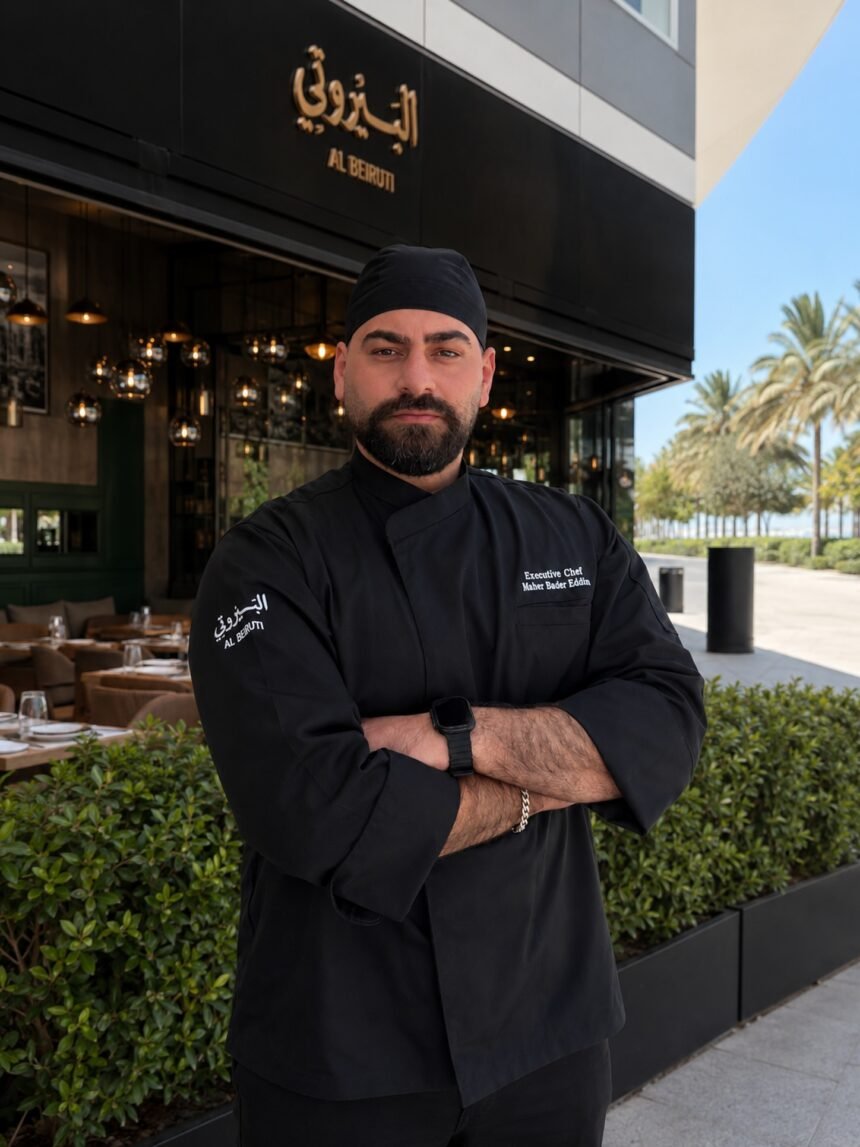
Redefining Lebanese Hospitality in Qatar
In the hospitality world, guests usually remember the final plate. They remember the flavour, presentation, atmosphere and feeling of being welcomed. What they rarely see is the discipline happening behind the kitchen doors. For Chef Maher, that unseen work has become an important part of a career built around food, leadership and the constant search for better standards.
Currently based in Qatar, Maher works as Executive Chef at Al Beiruti Qatar, where his responsibilities go far beyond preparing dishes. He leads kitchen operations, works with teams, protects consistency and helps turn a restaurant concept into an experience guests can recognise and remember.
His professional identity also reaches beyond one kitchen. With experience in international cuisine, banquet operations, food consulting and menu improvement, Maher has developed a career that combines creativity with the practical side of hospitality.
Building a Career Beyond the Chef Jacket
Becoming an executive chef is rarely about learning a collection of recipes and stopping there. The position demands leadership, timing, cost awareness, quality control, communication and the ability to remain calm when a kitchen becomes extremely busy.
Maher’s journey reflects that wider responsibility.
His work across international and banquet cooking has exposed him to a side of hospitality where consistency matters as much as creativity. Preparing food for a small table is one challenge. Delivering the same quality when serving large numbers of guests requires another level of organisation.
That environment teaches chefs to think ahead. Ingredients must be ready, teams must understand their responsibilities and every section of the kitchen must move together.
For Maher, these experiences appear to have helped shape a professional style based on structure rather than shortcuts.
A fitting principle for this kind of career is simple.
A strong kitchen is not built by one impressive plate. It is built by standards that remain strong every day.
That idea reflects the reality of professional cooking, where success depends on repeating quality even when the pressure changes.
Chef Maher Brings Lebanese Hospitality to Qatar
One of the most important chapters in Maher’s current journey is his role with Al Beiruti Qatar.
The restaurant concept places Lebanese food and hospitality at the centre of the dining experience. For an executive chef, that means protecting familiar flavours while also understanding what modern diners expect from presentation, service and consistency.
This balance is important because Lebanese cuisine carries strong emotional connections. A dish may remind one guest of family gatherings while another person may be experiencing Lebanese food for the first time.
The responsibility of the kitchen is therefore bigger than simply following recipes.
Maher must help his team create dishes that feel authentic while ensuring that the entire operation can meet professional restaurant standards. From preparation and plating to kitchen communication and service timing, every detail contributes to what eventually reaches the guest.
His position also places him at an interesting point in Qatar’s growing hospitality scene, where diners have access to cuisines and restaurant concepts from around the world.
For chefs, this creates both opportunity and pressure. Guests have more choices, which means restaurants must constantly earn their attention through quality and experience.
The Pressure Behind Culinary Leadership
The public often sees the creative side of being a chef. Beautiful dishes, restaurant openings and carefully presented plates naturally attract attention.
The difficult side receives much less visibility.
Professional kitchens involve long preparation cycles, unexpected problems, changing customer expectations and constant decision making. An executive chef may need to solve several problems before the first guest even sits down.
A supplier issue can affect ingredients. A busy reservation list can change preparation requirements. A new team member may need training. A dish that works creatively may still need adjustments before it can operate effectively on a commercial menu.
These are the moments where leadership becomes important.
For Maher, moving into executive responsibility means that his performance is connected to the performance of the entire kitchen. Success is no longer measured only by what he can personally cook. It is also measured by how successfully he can guide others to deliver the same standard.
That shift from individual skill to team leadership is one of the biggest changes in any chef’s career.
Menu Improvement Turns Creativity Into Strategy
Another important part of Maher’s professional profile is his work in consulting and menu improvement.
Creating a good menu requires more than adding attractive dishes. Every item has to make sense within the restaurant’s identity. Ingredients should work efficiently across the kitchen, preparation should remain manageable and flavours should fit what guests expect from the concept.
A successful menu also needs balance.
Some dishes create familiarity. Others give customers something new to discover. Signature items can help define a restaurant, while dependable favourites encourage guests to return.
This is where Maher’s combination of operational cooking and consulting becomes valuable. He can look at food from both sides, as a chef responsible for flavour and as a professional considering how a kitchen actually delivers that food every day.
Menu improvement is often about small changes rather than dramatic reinvention. A better preparation method, stronger presentation or clearer balance of flavours can completely change how a guest experiences a dish.
International Experience Creates a Wider Perspective
Maher also presents himself as an international and banquet chef, reflecting a professional approach that is not limited to a single style of cooking.
Exposure to different culinary environments can teach a chef to become more adaptable. Techniques, ingredients and presentation styles may change, but important standards remain familiar.
Food must be prepared properly. Teams must communicate. Guests must receive consistent quality.
International exposure can also help chefs understand how different audiences respond to food. What feels familiar in one market may feel completely new in another.
That perspective is particularly useful in Qatar, where hospitality serves a highly international audience.
Maher’s connection with Lebanese food gives him a strong cultural foundation, while his wider culinary experience allows him to approach hospitality with flexibility.
Leadership Starts With the Kitchen Team
Behind every successful restaurant is a group of people performing different jobs at the right moment.
For an executive chef, developing that team is one of the most important responsibilities.
Strong chefs do not simply give instructions. They create systems that allow other people to improve. Junior cooks need opportunities to learn. Experienced team members need clear expectations. Everyone must understand that consistency depends on the entire kitchen.
This is also where personal discipline becomes collective discipline.
When standards are clear, teams become more confident. When communication is strong, busy services become easier to manage. When people understand why a detail matters, they are more likely to protect it even when the kitchen becomes demanding.
Maher’s current position gives him the opportunity to influence not only dishes but also the professionals working alongside him.
That may ultimately become one of the more meaningful parts of his journey.
What Comes Next for Maher
Maher’s story is still developing.
His current chapter in Qatar brings together several parts of his professional identity, including executive leadership, Lebanese cuisine, international cooking, banquet experience, consulting and menu development.
Rather than presenting cooking only as creativity, his journey shows how much structure exists behind a successful food experience.
The beautiful plate remains important, but so do the hours of preparation before it arrives.
For aspiring chefs, that may be one of the most useful lessons from Maher’s career. Progress in hospitality does not always come through one dramatic moment. It is often created through thousands of smaller decisions made correctly, repeatedly and under pressure.
As Maher continues building his career in Qatar, his work represents a chef moving beyond the kitchen station and into a wider role as a leader, consultant and creator of dining experiences.
And in an industry where trends can change quickly, the strongest foundation may still be the simplest one: good food, disciplined teams and hospitality that makes people want to return.
Follow Chef Maher Badereddine on Instagram
Read More – Dr. Ahmad Hyasat Creates a Powerful Vision for Natural Aesthetic Care