


From Finance to Kuwait Food Industry Leader
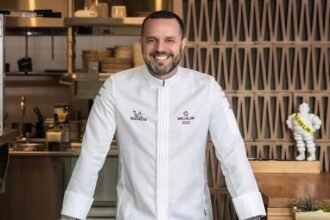
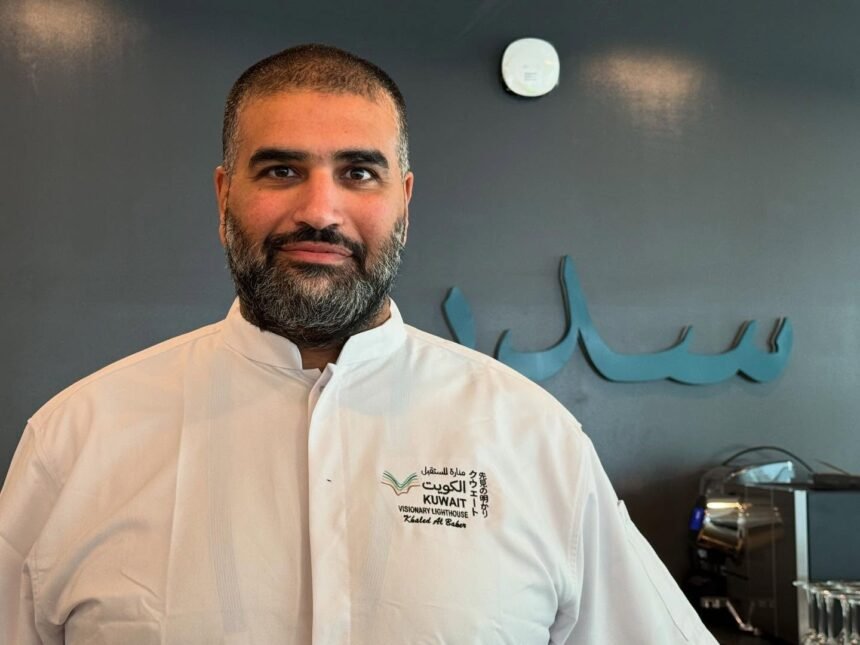
For many people, food is simply part of everyday life. For Khaled AlBaker, it became a language through which creativity, culture, business and hospitality could come together. Today, he is recognized as a chef, restaurant entrepreneur and co founder of Ventri Group, but his journey into the food industry did not begin in a professional kitchen.
- From Finance to Finding a Passion for Food
- Learning the Kitchen From the Ground Up
- Building a Name Before Building Brands
- The Rise of Ventri Group
- Understanding What Happens Behind the Restaurant
- Khaled AlBaker Representing Kuwaiti Food on a Global Stage
- A Career Built Around Curiosity and Reinvention
- Looking Ahead With a Bigger Vision
His story started in a very different world. With an academic background in accounting and finance and experience working in corporate environments, Khaled initially followed a conventional professional path. Over time, however, he realized that his strongest motivation came from building something of his own. That realization eventually pushed him toward culinary education, restaurant operations and entrepreneurship.
What makes his journey interesting is not simply the change from finance to food. It is the willingness to start again, learn from the ground up and develop the skills needed to turn an interest into a serious career.
From Finance to Finding a Passion for Food
Khaled spent years studying accounting and finance before entering the corporate world. His professional experience included working as an auditor and later moving into the petrochemical sector. While the experience gave him valuable knowledge about business, numbers and discipline, he gradually understood that a traditional corporate career was not where he wanted to spend his future.
At the same time, his relationship with food was changing.
He began exploring restaurants more seriously and became increasingly interested in the experiences behind great dishes. What started as curiosity slowly became a personal passion. Instead of simply eating at restaurants, he began studying how food was created, experimenting in the kitchen and thinking about what made certain dining experiences memorable.
That curiosity eventually led him to pursue culinary arts in Miami at Johnson and Wales University. The decision represented a major turning point because Khaled was no longer simply interested in food. He was willing to build professional expertise around it.
Learning the Kitchen From the Ground Up
Entering the culinary world meant starting from a very different position than many chefs. Khaled had business knowledge, but he still had to develop his culinary identity and understand professional kitchen culture.
His training exposed him to the discipline required in serious kitchens. Timing, consistency, preparation and attention to detail became important parts of his professional thinking.
His early relationship with cooking was also shaped by experimentation. What began with simple home cooking gradually developed into a deeper interest in ingredients, techniques and combinations of flavors.
One of the most important lessons from his journey is that changing careers does not mean abandoning previous experience. Khaled carried his understanding of finance and business into his culinary career, creating a combination that later became valuable when he moved from cooking into restaurant entrepreneurship.
As he puts it, “A restaurant is not just about food. It is about the experience, the people and the discipline behind every detail.”
Building a Name Before Building Brands
When Khaled returned to Kuwait, he understood that having an idea for a restaurant was not enough. He needed credibility, practical experience and a reputation within the industry.
His early work included developing menus and working with restaurant concepts, including Café Meem, where he became known for experimenting with modern interpretations of familiar flavors. His approach brought together Arabic influences and contemporary culinary ideas.
This period was important because it helped him understand what customers actually respond to. It also allowed him to move beyond the role of a chef and begin thinking like a restaurant operator.
His philosophy was increasingly focused on creating food that felt familiar while still offering something new. That balance became an important part of his identity as a culinary professional.
The Rise of Ventri Group
Khaled later became a co founder of Ventri Group, a hospitality company behind multiple food concepts in Kuwait. The group has been associated with brands including Young Po, Roto, Ruby’s and Dragon Bun, reflecting a broader approach to restaurant development.
Instead of depending on one restaurant concept, Khaled and his team have explored different cuisines, formats and customer experiences.
Young Po, for example, brought a Pan Asian dining concept to Kuwait, combining Chinese, Japanese and Korean influences. Ruby’s, meanwhile, has gone through menu and brand development, with Khaled contributing to its culinary direction.
The work demonstrates how his role has expanded. He is no longer only concerned with what appears on a plate. He is involved in the larger question of how a restaurant brand is created, operated and developed.
Understanding What Happens Behind the Restaurant
One of the less visible parts of Khaled’s career is the operational side of hospitality.
A restaurant may look simple to a customer sitting at a table, but behind that experience are purchasing decisions, staffing, kitchen systems, food costs, quality control, customer service and financial planning.
Khaled’s finance background has given him another perspective on these challenges. His experience has reinforced the importance of understanding cash flow, operational details and the economics of restaurants.
His recent conversations about entrepreneurship have also highlighted the difference between creating a restaurant that attracts attention and creating a business capable of surviving and growing.
For Khaled, expansion is not simply about opening more locations. It requires systems, people and processes that can support the customer experience consistently.
Khaled AlBaker Representing Kuwaiti Food on a Global Stage
Another significant chapter in Khaled’s journey came through his involvement with Kuwait’s Pavilion at Expo 2025 Osaka in Japan.
As head chef for the pavilion, he helped develop the menu for Sidra, the pavilion restaurant, which featured Kuwaiti dishes including machboos and mourabian. The opportunity placed Kuwaiti cuisine within an international setting and created a platform for sharing local food culture with visitors from around the world.
The project also presented practical challenges. Preparing Arabic cuisine in an international environment required careful sourcing, preparation and coordination, particularly when working with chefs who were not trained specifically in Arabic cuisine.
For Khaled, this was more than another professional assignment. It reflected a broader part of his culinary journey, bringing local food traditions into modern and international spaces.
A Career Built Around Curiosity and Reinvention
Khaled’s journey offers a different perspective on success in the hospitality industry. His career did not follow a straight line from culinary school to becoming a chef. It moved from finance to curiosity, from curiosity to culinary education, and from culinary experience to entrepreneurship.
That progression has allowed him to understand the industry from multiple perspectives.
He knows what it means to manage numbers, learn a kitchen, develop a menu, work with teams and build restaurant concepts. Each stage has added another layer to his understanding of hospitality.
His story also shows that expertise can come from being willing to begin again. A person does not necessarily need to have everything figured out at the beginning. Sometimes the most important step is recognizing that an existing path no longer feels right and having the courage to explore another one.
Looking Ahead With a Bigger Vision
Today, Khaled continues to operate at the intersection of food, business and hospitality. Through Ventri Group and his wider culinary work, his focus remains connected to developing restaurant experiences that can stand apart in an increasingly competitive market.
His growing public presence also gives him an opportunity to share the realities behind the hospitality industry. From restaurant operations and culinary creativity to leadership and entrepreneurship, his journey provides lessons that extend beyond food.
For aspiring chefs and entrepreneurs, perhaps the most valuable part of Khaled’s story is not any single restaurant or achievement. It is the willingness to learn.
He entered the food world without following the traditional route. He built culinary skills after beginning in finance, developed his reputation before seeking larger opportunities and gradually moved from being interested in food to building businesses around it.
Khaled AlBaker’s journey is ultimately about reinvention. It is about discovering that passion can emerge later, that business knowledge can strengthen creativity and that a successful career can be built by combining different experiences rather than choosing only one identity.
From corporate finance to professional kitchens, from menu development to restaurant entrepreneurship and from Kuwait to an international stage, Khaled continues to show how curiosity can become a career and how food can become much more than a profession. It can become a platform for culture, creativity, connection and lasting impact.
Follow Khaled AlBaker on Instagram
Read More – Dubai Property Trends Complete Market Analysis Guide