



Building the Future of Sports at 17
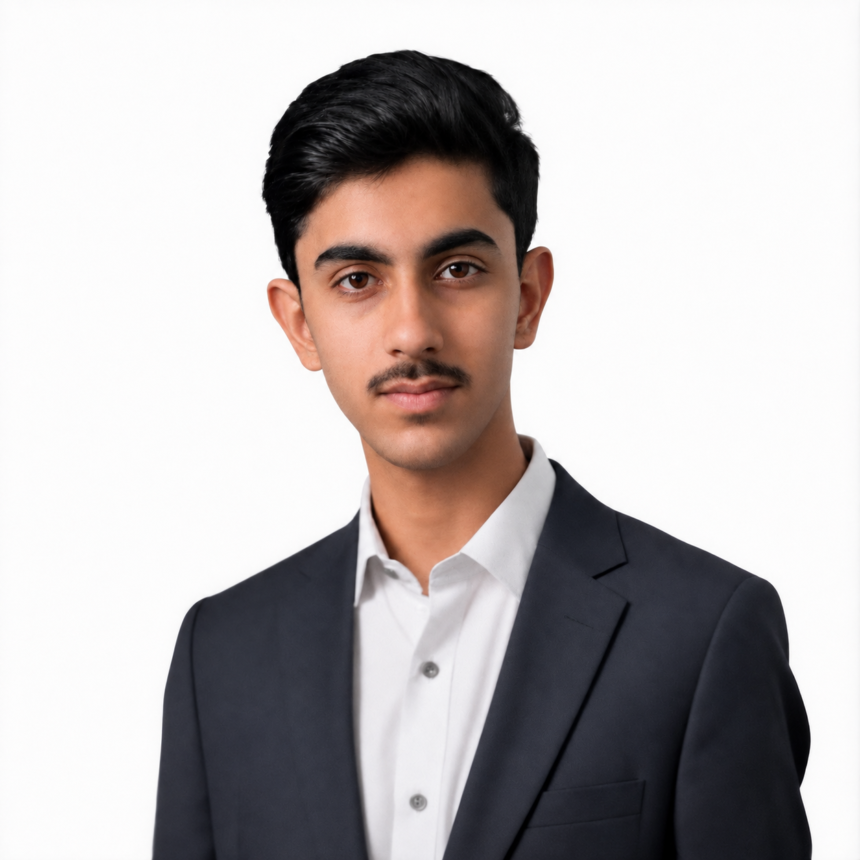
At just 17, Sagar Asnani is taking on a challenge that many entrepreneurs twice his age would find difficult. He is building Thrust, a sports technology platform designed to bring players, coaches and sports venues together in one connected ecosystem. What started as an idea at 15 has grown into a live platform with a growing community in Bahrain. For Sagar, the journey is not simply about building a company. It is about making sports easier to discover, organise and enjoy.
A Problem That Needed A Better Solution
Sagar’s entrepreneurial journey began with a simple observation. Sports were everywhere, but the experience of organising them was often surprisingly complicated. Players struggled to find people to play with, coaches had difficulty reaching new athletes, and sports venues had court availability that was not always easy for people to discover.
Instead of accepting this fragmentation, Sagar began thinking about how technology could connect the different parts of the sports ecosystem.
That thinking became the foundation for Thrust.
The platform aims to give players a simpler way to discover games, find suitable playing partners, connect with coaches and discover sports venues. At the same time, coaches can reach more athletes and venues can improve the use of available court space.
The idea may sound straightforward today, but creating it required Sagar to understand a complicated ecosystem from multiple perspectives.
His goal was never to build another isolated sports application. He wanted to create a place where the different people involved in sports could find value in the same ecosystem.
Starting At 15 And Learning The Hard Way
Building a technology platform at 15 was one challenge. Convincing people to believe in it was another.
Sagar quickly discovered that age could become an obstacle when approaching sports venue owners, managers and other professionals. He spent time visiting venues across Bahrain, introducing himself, explaining Thrust and asking people to listen to an idea that was still in its early stages.
Not every conversation ended positively.
Some people questioned whether a teenager could build a serious business. Others suggested that he should return when he was older. Rather than allowing those responses to stop him, Sagar treated them as lessons.
He continued showing up.
Every rejection helped him understand how to communicate better, how to explain the problem more clearly and how to approach different people. The experience gradually changed his understanding of entrepreneurship.
For Sagar, having a good idea was only the beginning. The real work was convincing people that the problem mattered and that he was committed to solving it.
His experience reflects a valuable lesson for young entrepreneurs. Credibility is not always given because of age or title. Sometimes it has to be earned through consistency.
“Keep showing up, keep learning and keep improving, even when the initial response isn’t what you hoped for.”
When 99 People Said No
One of the most revealing moments in Sagar’s journey came while he was trying to create the first Thrust trailer.
He reached out to almost 100 people.
Ninety nine said no.
One person said yes.
For many young founders, such a response could feel discouraging. For Sagar, that single yes became enough to move forward.
The experience changed how he looked at rejection. He realised that entrepreneurship does not always require everyone to believe in an idea at the beginning. Sometimes one person believing in the vision can create the momentum needed for the next step.
That mindset has become an important part of his approach to building Thrust.
Instead of viewing rejection as a final answer, Sagar sees it as information. It can reveal what needs to change, whether the message is unclear or whether the approach needs to be different.
This attitude has helped him continue developing Thrust while still balancing his education and other responsibilities.
Sagar Asnani Building Thrust In Bahrain
Today, Thrust is focused on strengthening its presence in Bahrain and growing its community before moving into wider Gulf markets.
The platform has already developed a community of hundreds of monthly active users, primarily in Bahrain. More importantly, Sagar has continued building relationships with coaches, academies, sports venues and players.
These relationships are central to the platform’s development because Thrust is designed around the real needs of people who participate in sports.
For players, the experience is intended to make finding games and facilities easier. For coaches, it creates an opportunity to connect with more athletes. For venues, it offers a way to make available court time more visible and useful.
The ambition is to create an ecosystem where these different groups benefit from being connected rather than operating separately.
Sagar believes that solving this problem properly in Bahrain will create the foundation for future expansion.
Beyond Technology, A More Active Community
Sagar’s vision for Thrust goes beyond building a successful sports technology company.
At the heart of the idea is a desire to make sports more accessible.
Many people want to become more active but face practical barriers. They may not know where to play, who to play with, which venues are available or how to find the right coach.
By bringing these elements together, Sagar hopes technology can remove some of the friction that keeps people away from sport.
His long term ambition is to build Thrust into a connected sports ecosystem across the Gulf and eventually the wider Middle East.
However, he does not see expansion simply as a matter of entering more countries. The immediate priority is to make the model strong enough in Bahrain that it can be adapted effectively to other markets.
That measured approach shows an understanding that sustainable growth requires more than ambition. It requires a strong foundation.
Excellence Beyond Entrepreneurship
Sagar’s achievements extend beyond Thrust.
While building the company, he has continued to perform strongly academically. He achieved 99 out of 100 in both Mathematics and Science in his Grade 10 CBSE Board Examinations.
His leadership journey has also developed through education. He served as Head Boy at New Millennium School and founded the school’s inaugural TED-Ed Club, creating opportunities for students to explore public speaking, storytelling and communication.
Public speaking and debating have played an important role in shaping his confidence. His participation in inter-school speaking and debating competitions eventually led to a first-place finish in the Med-Athlon GF Speech Competition.
He is also a published author, having co-authored The World Of Poems in 2022.
These experiences reveal another side of Sagar’s journey. His development has not been limited to entrepreneurship. Academic discipline, communication, leadership and creativity have all contributed to the person he is becoming.
A Young Founder With A Bigger Road Ahead
The recognition Thrust has received from regional business and media platforms has provided another milestone in Sagar’s journey. Yet he remains focused on what comes next.
At 17, he is still at the beginning of his entrepreneurial story.
That perspective is important because Sagar does not present his achievements as the conclusion of his journey. Instead, he sees them as proof that an idea can move forward when it is supported by persistence, learning and consistent action.
His story also offers a message to other young people who may have ambitious ideas but hesitate because of their age.
Being young can mean having less experience, but it can also mean having the freedom to question established systems and imagine better ways of doing things.
Sagar is using that perspective to rethink how people connect with sports.
The Next Chapter Of Thrust
The future of Thrust will depend on how effectively Sagar and his team can turn the early concept into a strong, scalable sports ecosystem.
The immediate focus remains clear. Strengthen Bahrain, grow the community, improve the product and understand the market deeply.
From there, the vision extends across the Gulf and eventually the wider Middle East.
If that journey succeeds, Thrust could become more than a platform for booking courts or finding players. It could become a digital meeting point for an entire sporting community.
For Sagar, the bigger opportunity lies in what technology can make possible when it removes unnecessary barriers.
His journey from a 15-year-old with an idea to a 17-year-old founder building a growing sports technology platform is already remarkable. But perhaps the most interesting part is that he does not see it as remarkable enough to stop.
The first chapter was about proving that the idea could work.
The next chapter is about discovering how far it can go.
Connect Sagar Asnani on LinkedIn
Read More – Is Renting or Buying in Dubai Better in 2026? 10 Smart Answers