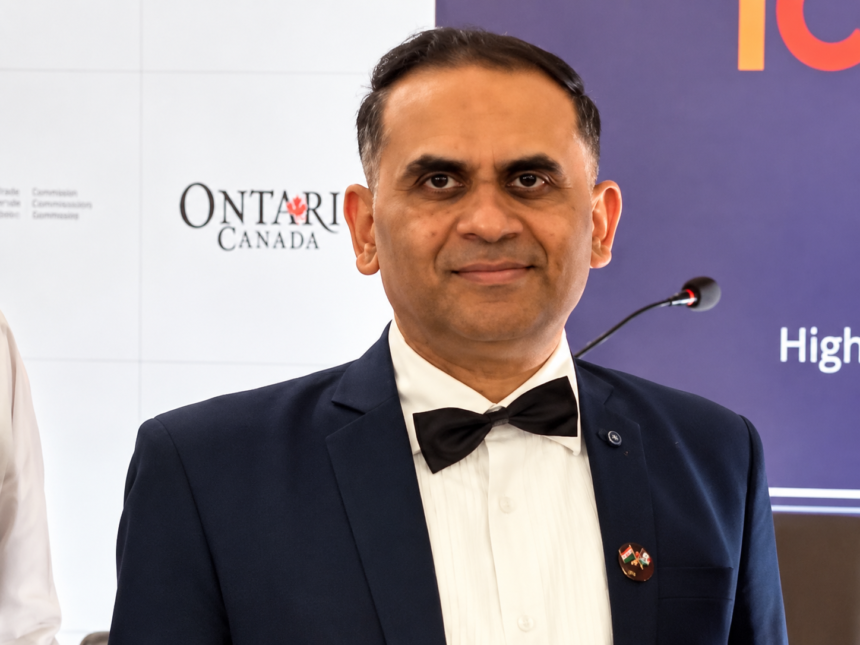
Leads a New Era of Ethical Superintelligence
The future of artificial intelligence is no longer just about machines completing tasks faster. It is about creating intelligent systems that could transform industries, influence major decisions and change how people interact with technology. As the world moves toward increasingly advanced AI, one question is becoming more important than ever. How can humanity develop powerful intelligence while protecting human values, privacy and trust?
- Building a Vision Beyond Traditional Artificial Intelligence
- The Entrepreneurial Mindset Behind Chiac ASI
- Why Data Sovereignty Matters in the AI Revolution
- A Significant Moment on the Global Speaking Stage
- Leadership That Connects Technology With Human Values
- The Challenges of Building for an Uncertain Future
- Chandra Nagaraju Inspiring the Next Generation of Technology Leaders
- Looking Ahead Toward Responsible Superintelligence
For Chandra Nagaraju, this question is central to his professional vision.
As the CEO and Founder of Chiac ASI, a London area venture focused on artificial superintelligence, Chandra is working toward an ambitious future where advanced technology and human responsibility develop together.
Positioning Chiac ASI as the world’s first superintelligence initiative, Chandra is pursuing a vision that combines frontier AI, responsible innovation, data sovereignty and ethical governance.
His journey reflects a growing belief that the next generation of technology leaders must think beyond innovation alone. They must also consider the people, communities and institutions their technologies will affect.
Building a Vision Beyond Traditional Artificial Intelligence
Artificial intelligence has already changed the way businesses operate, people communicate and organizations make decisions. However, artificial superintelligence represents a much more ambitious technological possibility.
While today’s AI systems can perform increasingly complex tasks, artificial superintelligence refers to a hypothetical future form of intelligence that could surpass human abilities across a wide range of intellectual activities.
For Chandra, exploring this frontier is not simply about creating more powerful systems. It is about understanding how advanced intelligence might be developed responsibly.
Through Chiac ASI, he aims to bring together technological ambition and a human centered approach to innovation.
His leadership vision recognizes that technological progress must be accompanied by thoughtful decisions about safety, accountability and public trust.
Rather than viewing ethics as something to consider after development, Chandra places responsible thinking within the wider conversation about future intelligent systems.
The Entrepreneurial Mindset Behind Chiac ASI
Building a company around an emerging technological frontier requires more than an exciting idea. It demands patience, strategic thinking, confidence and the ability to communicate a vision that may take years to develop.
Chandra’s role as Founder and CEO places him at the intersection of entrepreneurship, technology strategy and global conversations about artificial intelligence.
Leading an initiative focused on superintelligence involves addressing complex questions about governance, long term innovation and the relationship between technology and society.
It also requires engaging with stakeholders who may approach the future of AI from very different perspectives.
Chandra brings leadership, stakeholder engagement, organizational management and strategic planning into this mission.
Although the specific challenges behind his entrepreneurial journey have not been publicly detailed, the field itself presents substantial uncertainty. Technical complexity, evolving regulations and questions about safety create demanding conditions for anyone working toward advanced AI.
His approach reflects the importance of combining long term ambition with practical leadership.
Why Data Sovereignty Matters in the AI Revolution
One of the most important areas of Chandra’s professional advocacy is data sovereignty.
As artificial intelligence becomes more deeply connected to everyday life, enormous amounts of information are used to train, develop and operate intelligent systems.
This creates serious questions about who owns information, where it is stored, how it is processed and who has the authority to control it.
Data sovereignty focuses on the rights, laws and responsibilities surrounding information and its use.
For Chandra, these issues are closely connected to the future of advanced AI.
A technologically advanced world cannot depend only on intelligent machines. It also needs systems that respect privacy, support transparency and maintain public confidence.
His advocacy reflects a wider shift in the technology industry, where data protection is increasingly becoming a central part of responsible innovation.
A Significant Moment on the Global Speaking Stage
An important professional milestone for Chandra came through his participation in an event organized by the Indian Federation of Data Protection Professionals.
He was honored as Chief Guest and Keynote Speaker, with the opportunity to inaugurate the national event.
The occasion provided a platform to share his perspective on artificial intelligence governance, superintelligence and data ethics.
For a leader working at the intersection of emerging technology and responsible innovation, the engagement represented an opportunity to connect technical ambition with important policy discussions.
His participation also highlighted the growing relevance of conversations between entrepreneurs, data protection professionals, policymakers and technology experts.
As AI capabilities expand, these discussions are becoming essential to understanding how innovation can benefit society without compromising fundamental rights.
Leadership That Connects Technology With Human Values
Technology leadership is often associated with speed, innovation and competitive advantage. However, the development of increasingly capable AI systems introduces another responsibility.
Leaders must consider how their decisions could affect society over time.
Chandra’s professional direction emphasizes the importance of keeping human interests central to technological progress.
His work connects questions of innovation with governance, responsible data practices and long term strategy.
A guiding principle that captures this approach is:
“True intelligence is not measured only by what technology can achieve, but by how responsibly it serves humanity.”
This editorial reflection expresses the values associated with Chandra’s stated vision rather than a verified personal quotation.
For emerging technology entrepreneurs, this perspective offers an important lesson. Building something powerful is only one part of leadership. Creating something people can trust is equally important.
The Challenges of Building for an Uncertain Future
The journey toward artificial superintelligence remains filled with unanswered questions.
Researchers continue to debate when, whether and how such systems might become possible.
At the same time, governments and organizations are developing new approaches to AI regulation, safety testing and data protection.
For entrepreneurs like Chandra, this environment requires adaptability.
A long term vision must remain open to new scientific discoveries, changing public expectations and evolving governance standards.
It also requires the willingness to communicate complex ideas in ways that decision makers and everyday audiences can understand.
Chandra’s public speaking and advocacy help position him within these important conversations.
His story illustrates how leadership in emerging technology increasingly depends on collaboration between technical experts, business leaders and policy communities.
Chandra Nagaraju Inspiring the Next Generation of Technology Leaders
Chandra’s journey offers a broader message for aspiring entrepreneurs and innovators.
The most meaningful business opportunities do not always emerge from established markets. Sometimes they begin with difficult questions about what the future could become.
His ambition to build Chiac ASI around superintelligence reflects a willingness to explore a field still developing scientifically, commercially and ethically.
For young professionals interested in AI, his direction highlights the value of developing skills beyond programming and technical research.
Communication, strategic thinking, ethical judgment and stakeholder relationships can be just as important when navigating complex technological change.
His professional presence also demonstrates how global conversations can connect innovation with responsibility across different countries and industries.
Looking Ahead Toward Responsible Superintelligence
As artificial intelligence continues to evolve, Chandra remains focused on the possibilities and responsibilities surrounding superintelligent systems.
Through Chiac ASI and his advocacy for data sovereignty and AI ethics, he is contributing to conversations about how future technologies should be approached.
The ultimate development and commercial outcomes of superintelligence initiatives remain uncertain. Nevertheless, the questions Chandra is addressing are already relevant to governments, businesses and individuals.
His vision brings together entrepreneurship, emerging technology and the belief that human values must remain important as intelligent systems become more capable.
For Chandra, the future is not simply about pursuing extraordinary technological possibilities. It is about helping shape a world where intelligence, responsibility and human progress can move forward together.
Connect Chandra Nagaraju on LinkedIn
Read More – How to Find Authentic Emirati Food in Dubai: A Local Food Guide for Visitors