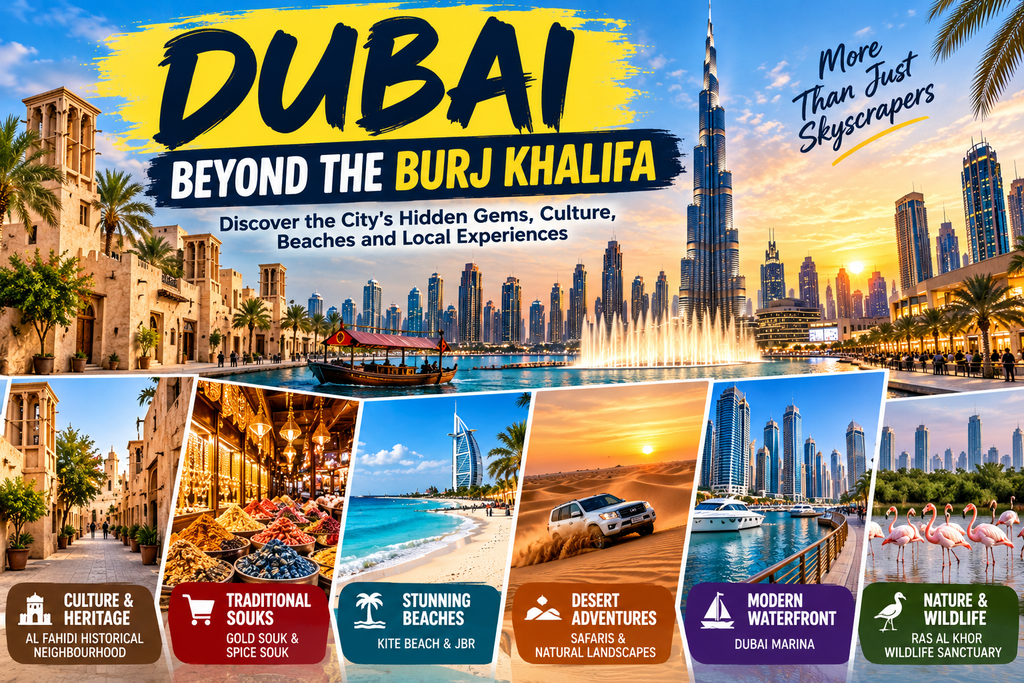
Dubai Beyond the Burj Khalifa: Discover the City’s Hidden Gems, Culture, Beaches and Local Experiences
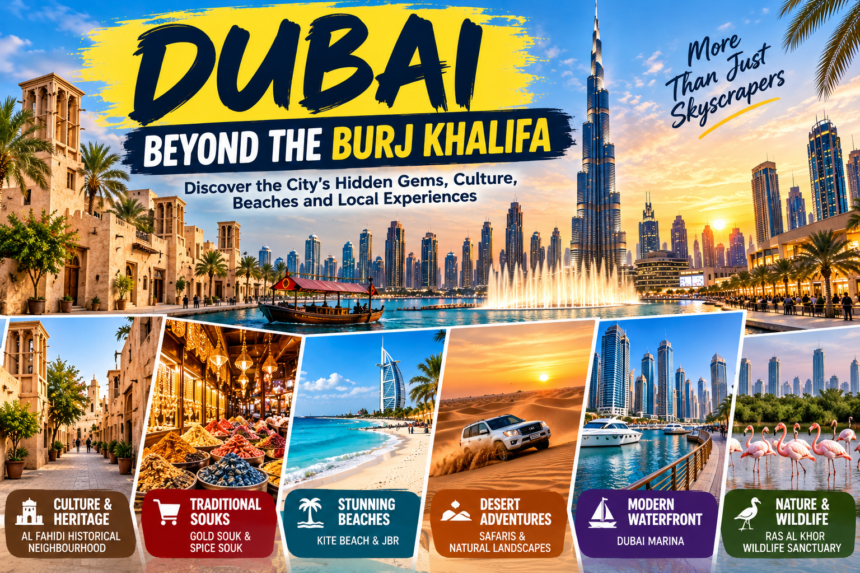
Dubai is a destination that often brings one iconic image to mind: the magnificent Burj Khalifa rising above a futuristic skyline. However, there is much more to discover beyond the world’s tallest building. From historic neighbourhoods and traditional Arabian markets to contemporary art galleries, peaceful beaches, desert landscapes and waterfront promenades, Dubai offers a diverse travel experience that goes far beyond its famous skyscrapers.
- 1. Explore the Historic Charm of Al Fahidi Historical Neighbourhood
- 2. Discover Old Dubai Around Dubai Creek
- 3. Experience the Traditional Gold Souk and Spice Souk
- 4. Visit Alserkal Avenue, Dubai’s Creative Art District
- 5. Relax at Kite Beach and Jumeirah’s Coastline
- 6. Explore Dubai Marina and Its Waterfront Lifestyle
- 7. Discover Dubai’s Local Food Scene
- 8. Visit Ras Al Khor Wildlife Sanctuary
- 9. Escape the City with a Trip to Hatta
- 10. Experience the Desert Beyond the City Skyline
- 11. Explore Al Seef and the Heritage-Inspired Waterfront
- 12. Discover More Art and Culture at Jameel Arts Centre
- 13. Explore the City’s Diverse Neighbourhoods
- 14. How to Plan a Dubai Trip Beyond the Burj Khalifa
- 15. Practical Travel Tips for Exploring Dubai
- Frequently Asked Questions About Dubai Beyond the Burj Khalifa
- Conclusion: Discover the Many Sides of Dubai
Exploring Dubai beyond the Burj Khalifa means discovering the city’s cultural roots, meeting its creative side, enjoying its natural landscapes and experiencing everyday life in one of the United Arab Emirates’ most dynamic destinations. Whether you are a first-time visitor, a returning traveller, a photography enthusiast, a couple planning a holiday or someone searching for unique things to do in Dubai, exploring beyond the usual tourist attractions can make your trip more memorable.
In this travel guide, we explore the best places to visit beyond the Burj Khalifa, including historic districts, artistic neighbourhoods, coastal destinations, wildlife areas and mountain escapes. You will also find practical travel tips, recommended experiences and itinerary ideas to help you experience a different side of Dubai.
Exploring Dubai Beyond the Burj Khalifa opens the door to a more authentic travel experience, where historic neighbourhoods, traditional souks, beautiful beaches, and creative districts reveal the city’s diverse character. Whether you are visiting for the first time or returning for another holiday, these lesser-known experiences help you discover a side of Dubai that goes far beyond its famous skyline.
For travellers interested in history and local traditions, Dubai Beyond the Burj Khalifa begins with the heritage-rich streets of Old Dubai. Here, traditional architecture, cultural spaces, and historic trading routes offer a fascinating contrast to the city’s modern landmarks.
1. Explore the Historic Charm of Al Fahidi Historical Neighbourhood
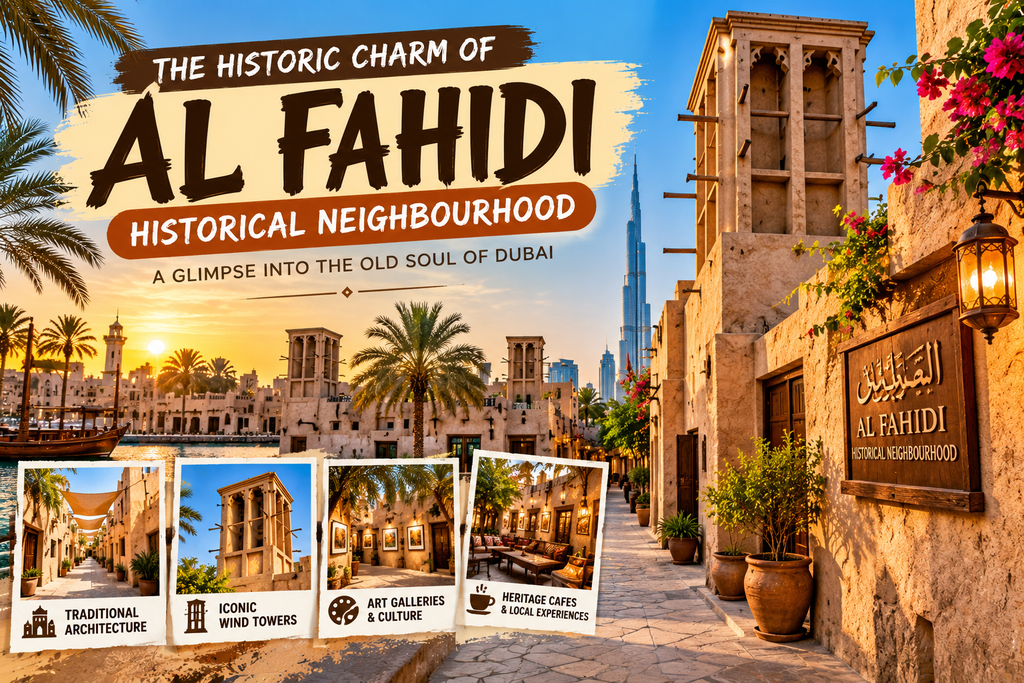
One of the best ways to discover Dubai beyond its modern skyline is to visit Al Fahidi Historical Neighbourhood. Located near Dubai Creek in Bur Dubai, this heritage district provides a glimpse into the city’s history before the development of its world-famous skyscrapers.
Unlike Downtown Dubai, which is known for modern architecture and luxury shopping, Al Fahidi features narrow lanes, traditional courtyards, historic buildings and distinctive wind towers. These architectural features reflect traditional approaches to building design and cooling in the region’s hot climate.
Walking through the neighbourhood allows visitors to appreciate the cultural heritage that remains an important part of Dubai’s identity. The area also features museums, art galleries, cultural spaces and opportunities to learn about Emirati traditions. The Sheikh Mohammed bin Rashid Al Maktoum Centre for Cultural Understanding offers cultural experiences that help visitors learn more about local customs and heritage.
Things to do in Al Fahidi:
- Explore traditional architecture and historic streets.
- Visit cultural centres and galleries that are open to the public.
- Learn about Emirati traditions and local history.
- Photograph the distinctive wind towers and courtyards.
- Enjoy traditional refreshments at a nearby cafe.
Al Fahidi is particularly appealing to history enthusiasts, culture lovers and photographers looking for an alternative to Dubai’s modern tourist attractions.
Discovering Dubai Beyond the Burj Khalifa also means understanding the importance of Dubai Creek, which helped shape the emirate’s trading history. Its waterfront, traditional boats, and nearby markets provide a glimpse into the city’s past.
2. Discover Old Dubai Around Dubai Creek
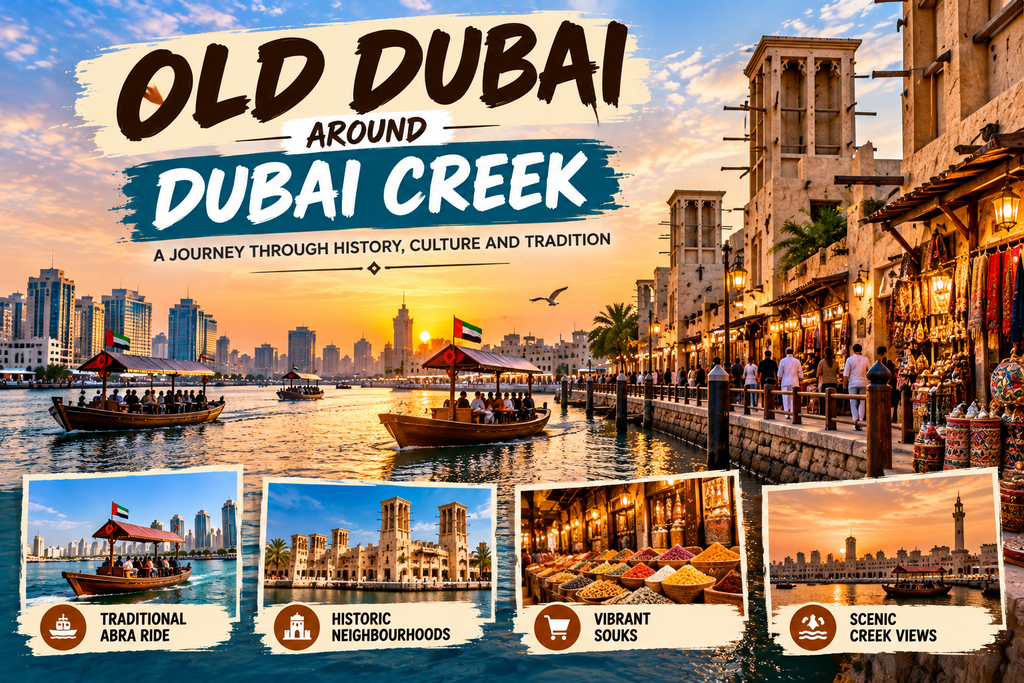
Dubai Creek is one of the most historically significant areas of the city. Before Dubai developed into an international tourism and business destination, the creek played a major role in fishing, pearl diving and maritime trade.
Today, the surrounding waterfront remains an excellent place to experience the city’s traditional atmosphere. Visitors can watch wooden trading boats, explore historic streets and discover the markets that have connected merchants and communities for generations.
A visit to Dubai Creek can easily be combined with a walking tour of Bur Dubai and Deira. The area offers a fascinating contrast between traditional trading activity and the modern skyline visible in the distance.
One of the classic experiences is crossing the creek on a traditional abra boat. The short journey offers an inexpensive way to travel between the historic waterfront areas while enjoying views of the water and surrounding architecture. Abra crossings are paid activities, so check current fares before travelling.
Highlights of Dubai Creek:
- Walk along accessible sections of the waterfront.
- Take a traditional abra crossing.
- Explore nearby historic neighbourhoods.
- Observe traditional boats and trading activity.
- Visit the surrounding souks and cultural attractions.
For travellers interested in the origins of Dubai, this historic waterway is an essential addition to an itinerary beyond the Burj Khalifa.
3. Experience the Traditional Gold Souk and Spice Souk
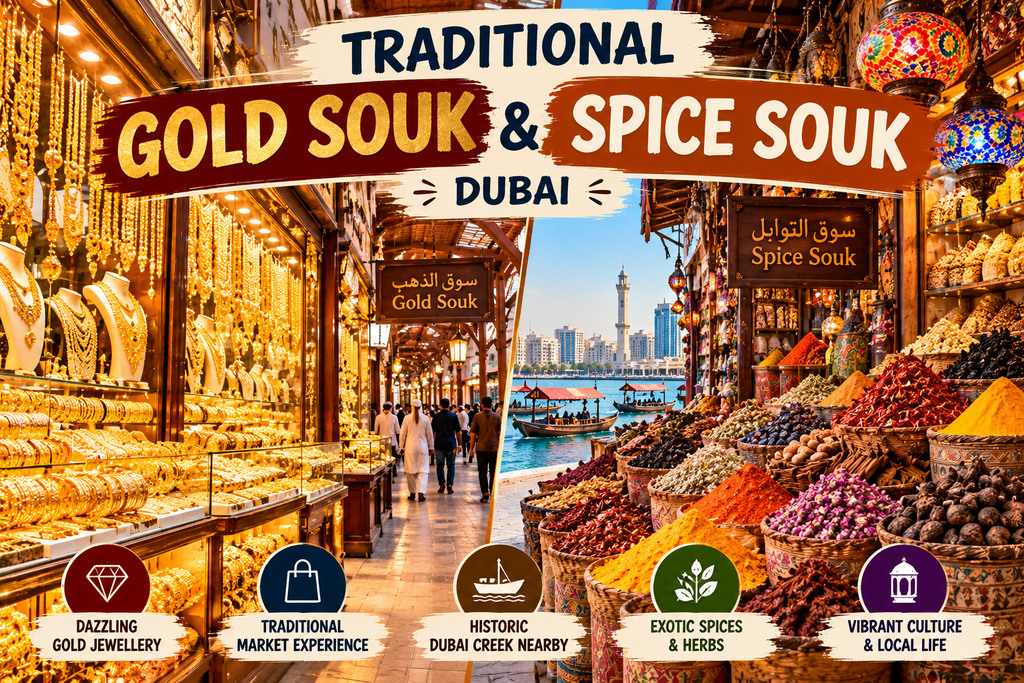
Dubai is internationally recognised for shopping, but its traditional markets offer a different experience from its luxury malls. The Gold Souk and Spice Souk in Deira are two of the most interesting places to explore for visitors who want to understand Dubai’s trading heritage.
The Gold Souk is famous for its jewellery shops and impressive displays of gold ornaments. Even if you are not planning to buy jewellery, walking through the market provides an opportunity to observe the lively commercial atmosphere and discover the variety of designs available.
Nearby, the Spice Souk offers a colourful sensory experience. Shops display spices, dried herbs, incense, teas and other ingredients associated with Middle Eastern and South Asian cooking. The aromas, colours and traditional market setting make it an attractive destination for travellers and food enthusiasts.
What to experience in the traditional souks:
- Browse jewellery displays at the Gold Souk.
- Discover spices, herbs and regional ingredients.
- Photograph traditional market streets where permitted.
- Learn about Dubai’s historic trading culture.
- Explore nearby shops and waterfront areas.
Shopping is optional, making these markets excellent additions to a sightseeing itinerary even if you are travelling on a limited budget.
4. Visit Alserkal Avenue, Dubai’s Creative Art District
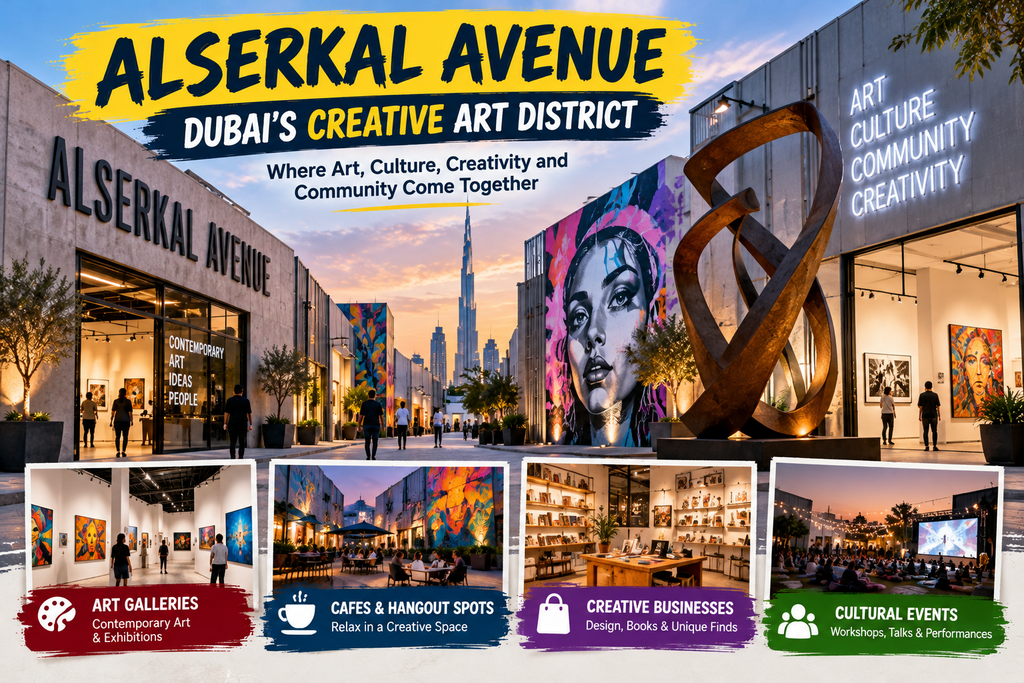
Dubai is not only a city of luxury shopping and impressive buildings; it also has a growing contemporary art and creative scene. Alserkal Avenue, located in the Al Quoz industrial district, is one of the best places to discover this artistic side of the city.
The area has transformed former industrial warehouses into creative spaces featuring art galleries, exhibition venues, studios and independent cultural businesses. Visitors can explore contemporary art, photography, design and other creative projects, depending on the exhibitions and events available.
Alserkal Avenue offers a different atmosphere from the traditional tourist districts. Instead of focusing on monumental architecture, the experience centres on artistic expression, independent creativity and cultural discovery.
Things to do at Alserkal Avenue:
- Visit galleries with free public admission.
- Explore contemporary art and photography exhibitions.
- Look for workshops, cultural events and performances.
- Discover independent creative businesses.
- Enjoy the district’s distinctive industrial architecture.
Some exhibitions, workshops and performances require tickets, so check the official event listings before visiting.
For travellers searching for unique things to do in Dubai, Alserkal Avenue is an excellent choice for an afternoon of art and culture.
If relaxation is part of your travel plan, Dubai Beyond the Burj Khalifa offers plenty of coastal experiences. From Kite Beach to JBR Beach, visitors can enjoy sea views, sunset walks, and outdoor activities away from the busy city centre.
5. Relax at Kite Beach and Jumeirah’s Coastline

Dubai’s beaches offer a refreshing alternative to shopping malls and skyscraper viewpoints. Kite Beach is particularly popular with visitors who enjoy outdoor activities, sea views and relaxed coastal scenery.
The beach provides opportunities to walk along the shoreline, enjoy the sunshine during cooler weather and watch kite surfers when conditions are suitable. Selected viewpoints also provide views of the Burj Al Arab, creating excellent photography opportunities.
Another option is JBR Beach, located beside the lively Jumeirah Beach Residence district. The surrounding promenade features shops, cafes and restaurants, while the beach provides space to relax beside the Arabian Gulf.
For a quieter coastal outing, consider accessible public areas around Umm Suqeim Beach, subject to current access arrangements.
Best beach experiences in Dubai:
- Take a peaceful walk along the shoreline.
- Watch the sunset over the Arabian Gulf.
- Photograph coastal landscapes and city views.
- Enjoy outdoor exercise during cooler hours.
- Explore the surrounding promenades.
Some facilities, beach clubs, rentals and water sports involve additional charges. Check local rules and swimming conditions before entering the water.
6. Explore Dubai Marina and Its Waterfront Lifestyle
Dubai Marina demonstrates another side of the city’s modern identity. The district is known for its impressive residential towers, luxury yachts, waterfront restaurants and pedestrian-friendly promenade.
Dubai Marina Walk is particularly enjoyable for visitors who want to explore the area at a relaxed pace. Walking beside the water allows you to appreciate the architecture, watch boats moving through the marina and observe the lively atmosphere.
The district becomes especially attractive after sunset, when the illuminated buildings create a striking urban landscape. Visitors can combine an evening stroll with a visit to nearby JBR Beach, although the two areas offer different experiences.
Why visit Dubai Marina?
- Enjoy a scenic waterfront walk.
- Photograph modern architecture and yachts.
- Experience Dubai’s contemporary lifestyle.
- Watch the sunset and evening city lights.
- Explore nearby public spaces and promenades.
You do not need to book a yacht cruise or dine at a luxury restaurant to appreciate the marina. Simply walking through its accessible public areas can be a rewarding sightseeing experience.
Food is another important part of Dubai Beyond the Burj Khalifa, bringing together Emirati traditions and flavours from communities around the world. Exploring local restaurants and neighbourhood cafeterias can make your trip more memorable.
7. Discover Dubai’s Local Food Scene
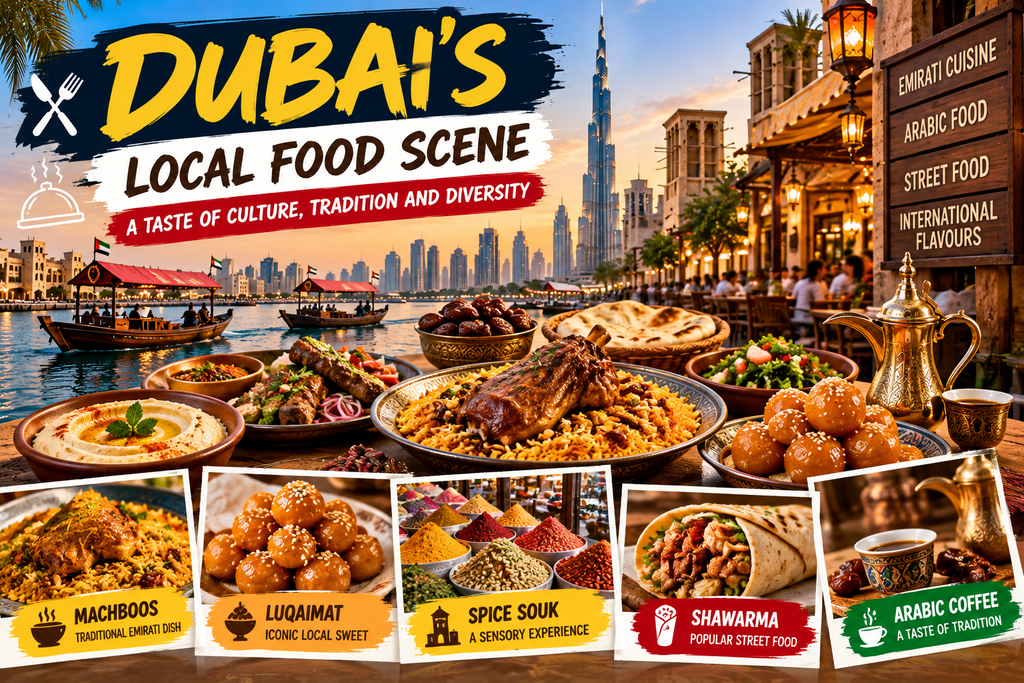
One of the most rewarding ways to experience Dubai beyond its famous landmarks is through food. The city’s culinary culture reflects its history as a trading centre and its diverse population, bringing together Emirati, Indian, Pakistani, Iranian, Levantine and many other culinary traditions.
Instead of limiting your meals to restaurants inside luxury hotels or shopping malls, explore traditional neighbourhoods such as Bur Dubai, Deira and Al Karama. These districts offer a wide variety of casual restaurants, bakeries, cafeterias and small eateries.
Travellers interested in Emirati cuisine can look for dishes such as machboos, a spiced rice dish commonly prepared with meat or seafood, and luqaimat, sweet dumplings often served with syrup. Other regional favourites and international dishes are widely available across the city.
Food experiences worth exploring:
- Try traditional Emirati dishes at a local restaurant.
- Visit neighbourhood bakeries and cafeterias.
- Sample regional sweets and Arabic coffee.
- Explore traditional markets for food-related discoveries.
- Compare cuisines from different communities.
Food prices vary considerably by neighbourhood and restaurant type, so reviewing menus before ordering can help you manage your travel budget.
8. Visit Ras Al Khor Wildlife Sanctuary
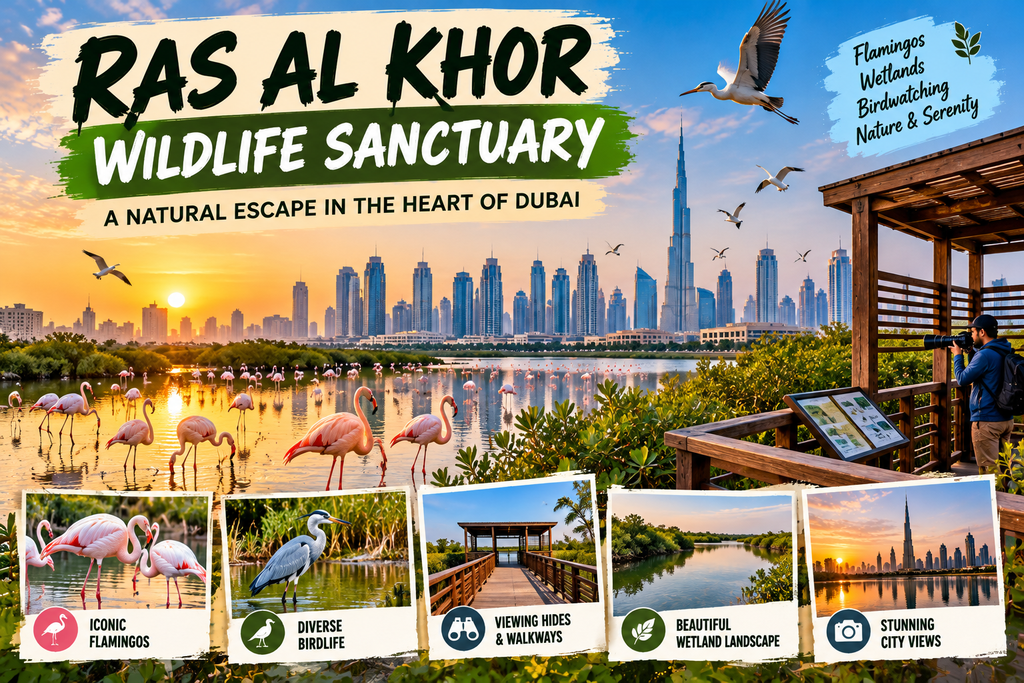
Nature lovers can discover a quieter side of Dubai at Ras Al Khor Wildlife Sanctuary, a protected wetland area located close to the city’s urban districts.
The sanctuary is particularly known for its flamingos and other birdlife. Its wetlands provide important habitats for birds and demonstrate that Dubai’s natural environment extends beyond beaches and desert landscapes.
Designated viewing areas allow visitors to observe wildlife without disturbing the habitat. Bird sightings depend on seasonal conditions and natural behaviour, so a particular species cannot be guaranteed during every visit.
What makes Ras Al Khor special?
- Observe birds in a protected wetland environment.
- Experience a quieter alternative to busy tourist attractions.
- Photograph wildlife from designated viewing points.
- Learn about wetland conservation and biodiversity.
- Discover the contrast between nature and Dubai’s skyline.
Check current opening hours and viewing-hide access before travelling. Bring binoculars if available and follow all conservation guidelines.
9. Escape the City with a Trip to Hatta

For travellers who want to explore beyond Dubai’s urban environment, Hatta offers a striking change of scenery. Located in the Hajar Mountains, this destination is known for rugged landscapes, mountain views and outdoor adventures.
Hatta is a good option for a day trip or a longer stay for visitors interested in nature and heritage. Depending on the season and available services, activities can include hiking on designated trails, kayaking, cycling and exploring traditional heritage sites.
The Hatta Heritage Village offers insight into the region’s traditional architecture and way of life. Outdoor enthusiasts may also explore the surrounding mountain environment and scenic viewpoints.
Things to consider when visiting Hatta:
- Enjoy mountain scenery and outdoor photography.
- Explore heritage sites with confirmed public access.
- Look for suitable hiking and cycling routes.
- Consider kayaking or other paid activities if interested.
- Plan transportation and return travel in advance.
Hatta lies outside central Dubai, so transportation can take time and add to the cost. Check activity availability, weather conditions and route requirements before departure.
10. Experience the Desert Beyond the City Skyline

Dubai’s desert landscape is one of the most distinctive parts of the emirate. Beyond the modern towers, the desert offers expansive dunes, open skies and a sense of space that contrasts with the city’s busy streets.
Visitors can explore the desert through organised excursions, nature experiences and selected outdoor activities. Depending on the location and tour provider, options may include dune drives, sandboarding, wildlife observation, traditional meals and overnight desert stays.
Travellers interested in a quieter experience can also research protected desert conservation areas and nature-focused tours rather than choosing only high-adrenaline activities.
Popular desert experiences include:
- Photographing sand dunes during sunrise or sunset.
- Learning about desert ecosystems and wildlife.
- Taking part in a guided desert safari.
- Experiencing traditional cultural activities.
- Enjoying the night sky away from brightly illuminated urban areas.
Most organised desert safaris are paid experiences. Always choose a reputable operator, follow safety instructions and avoid entering remote desert areas without appropriate preparation.
11. Explore Al Seef and the Heritage-Inspired Waterfront
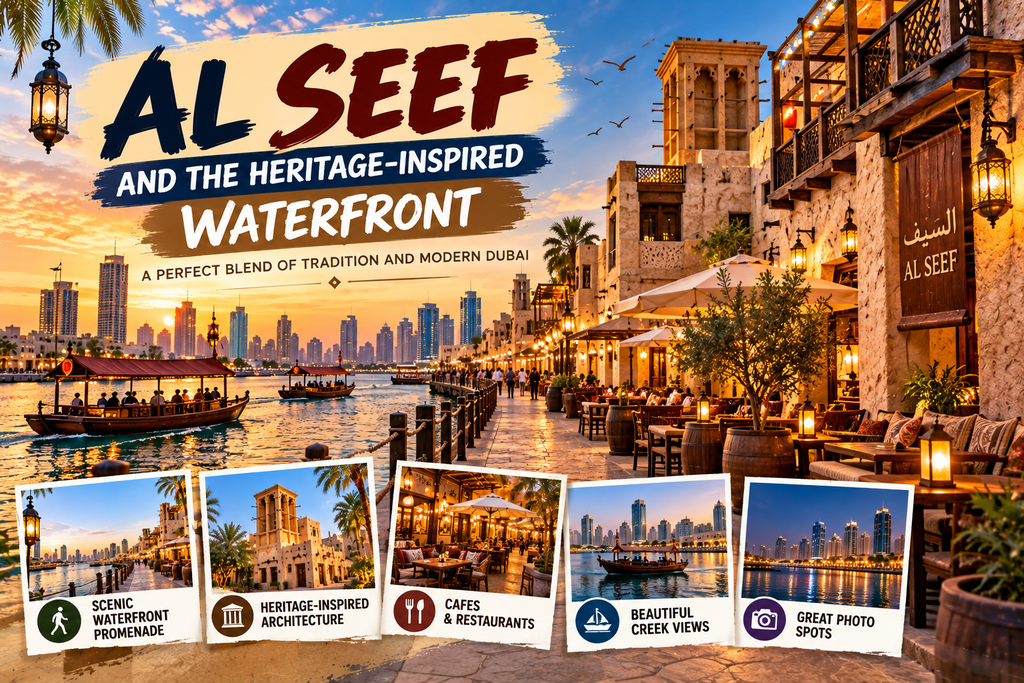
Al Seef is a waterfront destination along Dubai Creek that combines heritage-inspired architecture with contemporary dining, retail and leisure spaces. It provides a scenic setting for travellers who want to explore the historic side of Dubai while enjoying a comfortable modern promenade.
Walking through accessible areas of Al Seef allows visitors to photograph traditional-style buildings, admire the creek and enjoy the surrounding atmosphere. The district is particularly appealing in the late afternoon and evening, when the waterfront becomes a pleasant place for a leisurely stroll.
Al Seef can also be combined with Al Fahidi and Dubai Creek, making it a convenient stop on a wider Old Dubai itinerary.
Things to do at Al Seef:
- Walk along the waterfront promenade.
- Photograph heritage-inspired architecture.
- Enjoy views of Dubai Creek.
- Explore nearby cultural districts.
- Visit restaurants and cafes according to your budget.
Although the public promenade is useful for sightseeing, dining, shopping and certain experiences involve additional costs.
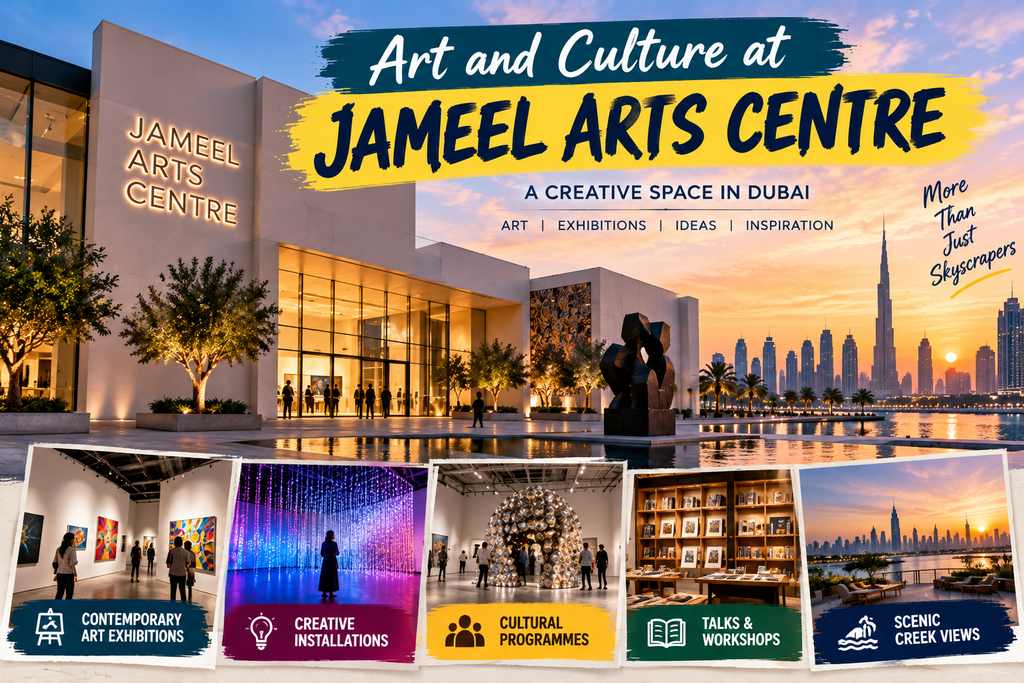
12. Discover More Art and Culture at Jameel Arts Centre
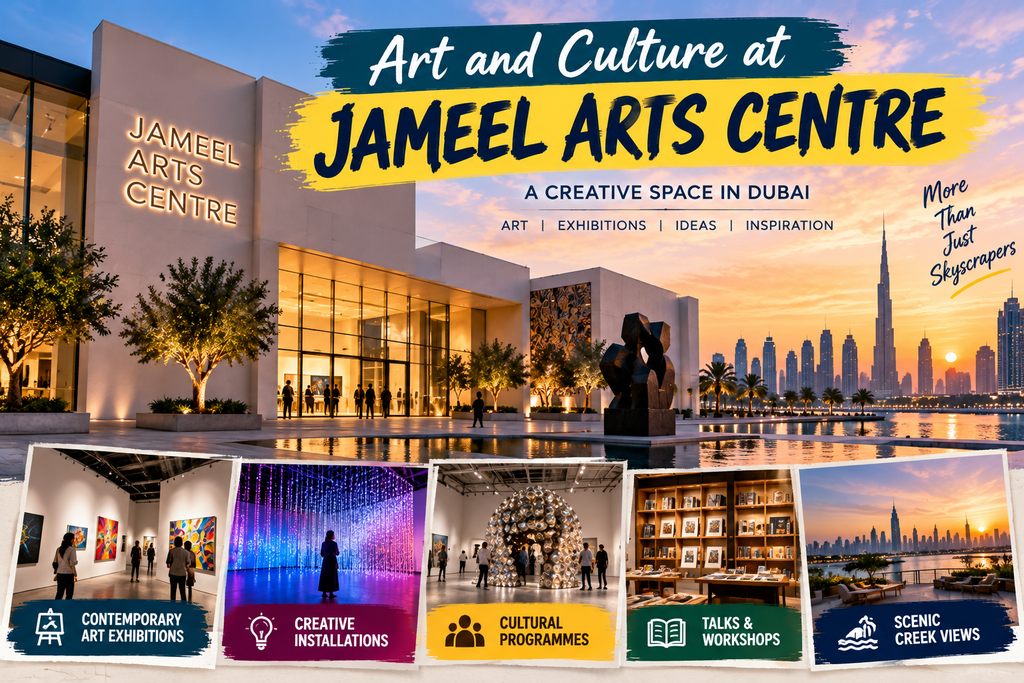
Jameel Arts Centre is another destination worth considering for travellers interested in contemporary art and cultural experiences. Located near Dubai Creek Harbour, the centre presents exhibitions and programmes that explore modern artistic practices and creative ideas.
Its location also offers an opportunity to explore a less conventional part of Dubai’s cultural landscape. Depending on the current programme, visitors may encounter exhibitions, installations, talks and other public activities.
Art centres are especially useful additions to a Dubai itinerary because they provide a different perspective on the city beyond architecture, shopping and entertainment.
Why include Jameel Arts Centre in your itinerary?
- Discover contemporary art and creative projects.
- Explore exhibitions and cultural programming.
- Learn about artists and their perspectives.
- Combine an art visit with nearby waterfront sightseeing.
Check current exhibitions, opening hours and admission arrangements before visiting, as individual programmes and access conditions may change.
13. Explore the City’s Diverse Neighbourhoods
One of the best ways to discover Dubai beyond the Burj Khalifa is to explore its neighbourhoods rather than concentrating entirely on major attractions.
Each district has its own character. Deira offers traditional markets and trading heritage, Bur Dubai provides access to historic streets and cultural sites, Al Quoz is associated with creative spaces, and Dubai Marina showcases modern waterfront living.
Walking through these neighbourhoods can reveal details that are easy to miss when travelling directly from one famous attraction to another.
Neighbourhoods to consider:
- Deira: Traditional souks, historic commercial streets and Dubai Creek.
- Bur Dubai: Heritage attractions, cultural sites and traditional dining.
- Al Quoz: Contemporary art galleries and creative spaces.
- Dubai Marina: Modern architecture and waterfront promenades.
- Jumeirah: Beaches, coastal scenery and residential streets.
Plan each outing around nearby locations to reduce unnecessary travel time and enjoy a more relaxed sightseeing experience.
14. How to Plan a Dubai Trip Beyond the Burj Khalifa
A well-planned itinerary helps you discover different sides of Dubai without spending too much time travelling between distant attractions.
Planning your journey around Dubai Beyond the Burj Khalifa is easier when you group nearby attractions together. Combine heritage districts, beaches, art galleries, and waterfront promenades to experience different sides of the city without rushing between destinations.
Rather than visiting every landmark in one day, organise your trip around themes such as heritage, beaches, art, food and nature.
Suggested three-day itinerary
Day 1: Old Dubai and cultural heritage
- Start at Al Fahidi Historical Neighbourhood.
- Explore nearby cultural sites and traditional streets.
- Walk along Dubai Creek.
- Visit the Spice Souk and Gold Souk.
- Consider an abra crossing between the historic waterfront districts.
Day 2: Art, beaches and waterfront views
- Visit Alserkal Avenue during gallery opening hours.
- Spend the afternoon at Kite Beach or another accessible public beach.
- Explore Dubai Marina Walk in the evening.
- Enjoy the waterfront atmosphere at a pace that suits your schedule.
Day 3: Nature and local experiences
- Visit Ras Al Khor Wildlife Sanctuary if viewing access is available.
- Explore Al Seef or another historic waterfront area.
- Enjoy a local meal in Bur Dubai or Deira.
- Alternatively, dedicate the day to a planned trip to Hatta or a desert experience.
This itinerary can be adjusted to suit your interests, available time, weather and budget.
15. Practical Travel Tips for Exploring Dubai
A few practical decisions can make your trip more comfortable and help you discover more than the usual tourist attractions.
- Choose the right season: Cooler months are generally more comfortable for walking, beach visits and outdoor sightseeing.
- Use public transportation: The Metro and buses can be convenient for many journeys, although some attractions require additional connections.
- Wear comfortable clothing: Choose suitable walking shoes and clothing appropriate for the weather and cultural setting.
- Stay hydrated: Carry drinking water, particularly during warm weather.
- Check opening hours: Museums, galleries, wildlife viewing areas and heritage attractions may have different schedules.
- Respect local customs: Follow photography rules, dress appropriately for cultural and religious sites, and respect other visitors’ privacy.
- Budget for transport and activities: An attraction may be free to enter while nearby activities, rentals or transportation cost extra.
- Allow enough time: Exploring one neighbourhood properly can be more rewarding than rushing between many distant destinations.
For the latest visitor information, consult the official Visit Dubai tourism guide, which provides information about neighbourhoods, heritage sites, beaches and cultural attractions.
Frequently Asked Questions About Dubai Beyond the Burj Khalifa
1. What are the best places to visit in Dubai beyond the Burj Khalifa?
Some excellent options include Al Fahidi Historical Neighbourhood, Dubai Creek, the Gold Souk, Spice Souk, Alserkal Avenue, Kite Beach, Dubai Marina Walk, Ras Al Khor Wildlife Sanctuary and Hatta. Each destination offers a different perspective on Dubai’s culture, nature or modern lifestyle.
2. Is there more to Dubai than luxury shopping and skyscrapers?
Yes. Dubai has historic districts, traditional markets, cultural institutions, art galleries, beaches, wetlands, desert landscapes and mountain destinations. Exploring these places provides a broader understanding of the city’s heritage and contemporary culture.
3. What can I do in Dubai if I have already visited the Burj Khalifa?
Consider exploring Old Dubai, visiting art galleries, relaxing at public beaches, discovering traditional markets or taking a trip to Hatta. A food-focused tour of Deira and Bur Dubai is another excellent way to experience the city differently.
4. Which areas of Dubai are best for cultural experiences?
Al Fahidi Historical Neighbourhood, Bur Dubai, Deira and Dubai Creek are particularly useful for exploring traditional architecture, markets and heritage. Alserkal Avenue and Jameel Arts Centre offer opportunities to discover contemporary art and culture.
5. Can I explore Dubai beyond the Burj Khalifa on a budget?
Yes. Walking through accessible heritage districts, browsing traditional markets, visiting public beaches and enjoying waterfront promenades can help keep sightseeing costs under control. However, transport, meals, paid exhibitions and organised excursions may add to your expenses.
6. What is the best time to explore Dubai’s outdoor attractions?
The cooler months are generally more comfortable for outdoor sightseeing. During hotter periods, plan walks for early morning or evening, carry water and check weather conditions before visiting beaches, wetlands or desert areas.
7. How many days do I need to explore Dubai beyond the Burj Khalifa?
Three days can provide a useful introduction to Old Dubai, cultural attractions, beaches and waterfront districts. If you want to explore Hatta, spend more time discovering museums and art spaces, or take a desert excursion, consider extending your stay.
Conclusion: Discover the Many Sides of Dubai
Dubai is much more than the Burj Khalifa and its famous modern skyline. Its historic neighbourhoods, traditional markets, creative districts, beautiful beaches, wildlife habitats and surrounding desert landscapes reveal a destination with many different stories to tell.
Exploring Dubai beyond the Burj Khalifa allows you to understand how the city combines its trading heritage with contemporary culture, international influences and ambitious urban development. From walking through the traditional lanes of Al Fahidi to watching the sunset at Kite Beach or discovering art at Alserkal Avenue, every experience adds another dimension to your journey.
Whether you are visiting Dubai for the first time or returning for another holiday, consider spending less time rushing between famous landmarks and more time discovering individual neighbourhoods. With thoughtful planning, you can experience a richer, more varied and memorable side of Dubai.
Ultimately, Dubai Beyond the Burj Khalifa is about discovering the city’s many identities, from its historic trading roots and vibrant food culture to its coastal scenery and contemporary creative spaces.
Do follow us on Instagram
Read More – Places to Visit in Dubai For Free