UAE Opens Summit for $1 Million AI Film Award 2027: What Does It Mean for the Future of Cinema?
The United Arab Emirates (UAE) is drawing attention to the future of filmmaking through the announcement of a summit associated with the $1 million AI Film Award 2027. The UAE AI Film Award 2027 initiative highlights the growing relationship between artificial intelligence (AI), creativity, digital storytelling, and the global entertainment industry. As filmmakers increasingly explore AI-powered tools, the UAE’s focus on this emerging field reflects a broader interest in innovation and the development of new creative opportunities.
- Why Is the UAE Investing Attention in AI-Powered Filmmaking?
- How Could a $1 Million AI Film Award Change the Film Industry?
- What Is Artificial Intelligence in Filmmaking?
- How Can Filmmakers Use AI to Create Original Films?
- Who Can Participate in the UAE AI Film Award 2027?
- What Makes an AI-Generated Film Stand Out?
- How Is AI Changing Traditional Film Production?
- What Challenges Could AI Filmmakers Face in 2027?
- Why Is Human Creativity Still Important in AI Cinema?
- Could the UAE Become a Global Centre for AI Filmmaking?
- How Can Young Filmmakers Prepare for AI Film Opportunities in 2027?
- What Should Filmmakers Know About the $1 Million Prize?
- What Does the UAE AI Film Award 2027 Mean for the Future of Cinema?
- Frequently Asked Questions About the UAE’s $1 Million AI Film Award 2027
The proposed award has the potential to attract filmmakers, technology specialists, independent creators, digital artists, and production companies interested in exploring how artificial intelligence can transform the filmmaking process. From developing original story ideas to creating visual effects and enhancing post-production, AI is introducing new possibilities for creators across the world. A major award connected to this technology could also encourage filmmakers to experiment with fresh storytelling techniques and reconsider how films are made.
The summit offers an opportunity to bring discussions about technology and cinema into the spotlight. However, prospective participants should consult the official event announcement for confirmed eligibility requirements, submission deadlines, judging criteria, and the precise terms of the $1 million prize.
Why Is the UAE Investing Attention in AI-Powered Filmmaking?
Why is the UAE becoming an important destination for conversations about artificial intelligence and creative industries? The country has increasingly positioned technological innovation, digital transformation, entrepreneurship, and cultural development as important areas of interest. AI-powered filmmaking connects these priorities by bringing together software development, visual storytelling, media production, and creative business opportunities.
Artificial intelligence is changing how filmmakers approach several stages of production. Tasks that once required substantial budgets, specialised equipment, and large production teams may now be supported by accessible digital tools. Although professional filmmaking still requires creative direction, technical expertise, and careful planning, AI can help creators explore ideas more efficiently.
A summit focused on an AI film award can also encourage collaboration between people who traditionally work in different industries. Directors can exchange ideas with AI developers, producers can explore emerging production models, and investors can discover new approaches to entertainment.
Potential benefits of this growing ecosystem include:
- Encouraging innovation in film production and digital storytelling.
- Creating opportunities for independent filmmakers and emerging talent.
- Connecting technology companies with creative professionals.
- Promoting discussions about responsible AI use in entertainment.
- Supporting international collaboration in digital media.
- Exploring new approaches to visual effects, animation, and filmmaking workflows.
By bringing these subjects together, the UAE can strengthen discussions about how technological progress may influence the next generation of cinema.
How Could a $1 Million AI Film Award Change the Film Industry?
Could a $1 million award influence the future of filmmaking? A prize of this scale could generate substantial interest among creators, particularly if the competition welcomes original concepts, experimental formats, and innovative uses of AI. Financial incentives can encourage filmmakers to invest time in ambitious projects, test unfamiliar techniques, and develop stories that might otherwise struggle to secure funding.
For independent filmmakers, access to resources remains one of the biggest challenges in bringing ambitious ideas to the screen. Production costs, equipment, locations, editing, visual effects, and distribution can place considerable pressure on smaller creative teams. AI tools may help reduce certain costs, although they do not eliminate the need for professional skills, reliable technology, and effective production management.
An award connected to AI filmmaking could encourage a wider range of creators to participate in the entertainment industry. Students, digital artists, writers, independent directors, and technology enthusiasts may find new ways to combine their abilities.
The potential impact could include:
- Greater creative experimentation: Filmmakers may explore new visual styles and narrative structures.
- More opportunities for emerging talent: New creators could gain exposure through an international competition.
- Technology-led collaboration: Developers and artists may work together on original productions.
- New investment opportunities: Successful projects could attract interest from studios, distributors, and production partners.
- Broader international participation: Digital filmmaking tools can help creators develop projects without relying entirely on traditional production infrastructure.
Nevertheless, the real impact will depend on the award’s confirmed structure, the quality of submitted films, the judging process, and the opportunities offered to winning participants.
What Is Artificial Intelligence in Filmmaking?
Artificial intelligence in filmmaking refers to the use of computational systems to assist with creative, technical, and administrative tasks involved in producing films. These systems can analyse information, generate or transform visual material, support editing decisions, and help creators develop content from written or visual instructions.
UAE AI film summit does not make every stage of filmmaking automatic. Instead, it provides additional tools that filmmakers can use according to their artistic goals. A director may use AI to explore visual concepts, while an editor may use automated transcription to organize dialogue. An animation team could experiment with AI-assisted workflows to develop backgrounds, character concepts, or preliminary storyboards.
Some of the major applications of AI filmmaking 2027 include:
- Script development: AI can help brainstorm story concepts, character backgrounds, and alternative plot directions.
- Storyboarding: Creators can generate preliminary visual references to communicate scenes and camera ideas.
- Visual effects: AI-assisted tools can support image processing, object removal, compositing, and other specialised tasks.
- Editing and sound: Automated transcription, audio cleanup, and scene analysis can support post-production.
- Animation: AI may assist with concept development, reference generation, and selected animation workflows.
- Translation and accessibility: Speech recognition, subtitles, and translation tools can help films reach wider audiences.
- Production planning: Digital assistants can support scheduling, research, and the organisation of production information.
The results still require human oversight. Creative judgement, cultural understanding, continuity, emotional authenticity, and technical quality remain central to producing compelling films.
How Can Filmmakers Use AI to Create Original Films?
How can filmmakers take advantage of AI while preserving their creative identity? The most effective approach is to treat artificial intelligence as a creative assistant rather than a replacement for human imagination. Filmmakers can use AI tools to test concepts, explore visual possibilities, organise production tasks, and refine their ideas before making final creative decisions.
For example, a filmmaker developing a science-fiction short film could use AI to explore futuristic environments, create preliminary storyboards, or generate visual references. A documentary creator might use AI-assisted transcription to organise interviews, while an independent animator could experiment with different character designs before committing to a final style.
However, successful AI filmmaking requires more than generating attractive images or realistic scenes. A strong film needs a meaningful story, convincing characters, emotional depth, consistent visual direction, and thoughtful editing.
Creators preparing projects for a major AI film competition should consider the following practices:
- Develop an original concept with a clear message or narrative purpose.
- Select AI tools that support the project’s specific creative requirements.
- Maintain consistency in character appearance, lighting, settings, and visual style.
- Review AI-generated material for inaccuracies and unwanted artefacts.
- Document the creative process and the tools used during production.
- Check the licensing conditions of AI-generated assets, music, voices, and other materials.
- Ensure that the final film demonstrates human creative judgement and intentional storytelling.
A thoughtful balance between technology and artistic direction can help filmmakers produce work that feels distinctive rather than generic.
Who Can Participate in the UAE AI Film Award 2027?
Who will be eligible to participate in the $1 million UAE AI Film Award 2027? The answer depends on the official competition rules. Until the organizers publish or confirm the complete eligibility criteria, filmmakers should avoid assuming that the award is open to every category of creator.
Potential participants in AI-focused film competitions may include independent filmmakers, established directors, students, animation artists, digital storytellers, production studios, and creative technology teams. Depending on the rules, the competition might also attract international participants interested in combining traditional filmmaking methods with generative AI.
For aspiring entrants, the first step is to establish whether the competition accepts individual creators, collaborative teams, companies, or educational institutions. It is equally important to determine whether there are restrictions involving nationality, age, film duration, production dates, language, or the use of particular AI systems.
Before preparing a submission, prospective participants should verify:
- Who is eligible to enter the competition.
- Whether submissions are accepted from international filmmakers.
- Which film genres and formats are permitted.
- Whether the film must be created primarily with AI.
- What disclosures about AI-generated content are required.
- Whether there are entry fees or additional submission conditions.
- The official opening date and final submission deadline.
- How the prize money will be awarded and whether additional benefits are available.
Checking these details early can help filmmakers plan their budgets, production schedules, and submission strategies more effectively.
What Makes an AI-Generated Film Stand Out?
What separates an outstanding artificial intelligence in cinema from an ordinary digital production? The answer is not simply the number of AI tools used or the realism of the generated images. A successful film combines technical execution with originality, a clear narrative, emotional engagement, and a distinctive artistic vision.
As AI tools become more accessible, the ability to generate images, video sequences, voices, and sound effects may become less of a competitive advantage on its own. The real challenge is using these capabilities to tell a memorable story.
For example, a short film about the relationship between an elderly person and an intelligent machine could explore loneliness, memory, and human connection. Another creator might use AI-generated environments to imagine a future shaped by climate change. Both projects could use advanced technology, but their impact would depend on the quality of their writing, direction, and execution.
Filmmakers can strengthen their projects by focusing on five important elements.
1. Original storytelling: The film should offer a distinctive idea, an engaging conflict, and a satisfying narrative experience.
2. Visual consistency: Characters, environments, camera perspectives, and lighting should remain coherent throughout the film.
3. Emotional connection: Viewers should have a reason to care about the characters, their decisions, and the consequences of their actions.
4. Technical quality: Editing, sound design, pacing, dialogue, and transitions should support the overall experience.
5. Responsible AI use: Creators should address copyright, consent, disclosure, and the authenticity of the material they present.
If the UAE’s 2027 competition rewards these qualities, it could help demonstrate that AI filmmaking is not merely a technological experiment but a developing form of creative expression.
How Is AI Changing Traditional Film Production?
How is artificial intelligence influencing the traditional filmmaking process? Its impact extends from the earliest stages of development to editing, post-production, and distribution. While the extent of adoption varies across productions, AI-assisted tools are becoming part of the broader conversation about efficiency and creative experimentation.
During pre-production, filmmakers can use AI to research ideas, organise scripts, develop concept art, and explore possible locations or production designs. These tools can help teams communicate a creative vision before committing to expensive physical resources.
During production, AI-enabled systems may support tasks such as shot planning, transcription, and selected camera or image workflows. Their practical value depends on the equipment, software, production requirements, and level of human supervision involved.
Post-production offers further possibilities. Editors may use automated transcription, speech enhancement, background removal, visual effects assistance, and image restoration. Translation tools can also help prepare films for audiences who speak different languages.
These developments could create several advantages:
- Shorter turnaround times for selected repetitive tasks.
- Faster exploration of visual concepts and creative alternatives.
- New possibilities for independent and low-budget productions.
- Improved accessibility through subtitles and language support.
- Greater flexibility in developing experimental film formats.
At the same time, traditional production skills remain important. AI-generated footage can contain visual inconsistencies, inaccurate details, unnatural movement, or unexpected changes between shots. Professional review and editing are necessary to ensure quality.
AI is therefore more accurately understood as an evolving part of the filmmaking toolkit than as a complete substitute for traditional production methods.
What Challenges Could AI Filmmakers Face in 2027?
What obstacles might filmmakers encounter as AI-generated cinema expands? Despite its creative potential, the technology raises questions about copyright, originality, employment, consent, transparency, and the reliability of generated content.
Copyright is one of the most important considerations. Filmmakers need to understand whether their AI tools permit commercial use of generated material and whether any third-party content has been incorporated into their projects. The legal treatment of AI-generated works can vary by jurisdiction and depends on the circumstances.
Another concern is the unauthorised use of a person’s face or voice. AI systems can create convincing representations of real people, making consent and disclosure especially important. Using a recognisable person’s likeness without appropriate permission may create legal, ethical, and reputational problems.
There are also technical limitations. Generated scenes may contain inconsistent details, unnatural movements, or visual errors that become noticeable when viewed closely. A film that relies too heavily on automated output without careful review may struggle to maintain quality.
Important challenges include:
- Copyright uncertainty: Creators must check applicable laws and the terms governing their AI tools.
- Consent and likeness rights: Real people’s faces and voices should not be used irresponsibly.
- Authenticity: Audiences may want clear information about how AI contributed to a film.
- Technical consistency: Generated sequences require careful review and post-production.
- Employment concerns: Greater automation may change certain creative and technical roles.
- Bias and representation: AI outputs can reproduce stereotypes or distort cultural details.
- Competition fairness: Organisers may need clear rules to ensure that entrants are judged consistently.
Addressing these concerns will be important for any international AI film competition seeking to establish credibility and encourage responsible innovation.
Why Is Human Creativity Still Important in AI Cinema?
Can artificial intelligence replace human creativity in filmmaking? AI can generate material, recognise patterns, and assist with complex tasks, but compelling cinema involves more than producing technically impressive images. Films communicate experiences, values, emotions, and cultural perspectives that audiences interpret through their own lives.
A human filmmaker brings personal experience, judgement, curiosity, and an understanding of the world to a project. These qualities influence how a story is told, which characters receive attention, and what the audience is invited to feel or question.
AI can suggest alternative dialogue or visual compositions, but a filmmaker must decide whether those suggestions serve the story. A generated scene may appear realistic yet fail to communicate the intended emotion. Similarly, an AI-generated character may look convincing but lack the development necessary to sustain an engaging narrative.
Human involvement also matters when a film explores sensitive subjects, cultural traditions, historical events, or social issues. Creators must evaluate accuracy, representation, and context instead of accepting generated outputs without scrutiny.
The most promising model for many filmmakers is collaboration between human creativity and AI-assisted production. Under this approach, technology supports experimentation and selected technical tasks while people remain responsible for the artistic direction, editorial decisions, and meaning of the finished work.
Could the UAE Become a Global Centre for AI Filmmaking?
Could the UAE strengthen its position in the international creative economy through AI filmmaking? An event built around a substantial prize could attract attention from filmmakers, software developers, investors, production companies, and cultural organisations. Its broader influence, however, would depend on the quality of the programme and the opportunities it creates beyond the award itself.
A successful creative technology ecosystem requires more than a headline prize. Filmmakers need access to production resources, professional networks, technical education, distribution channels, and opportunities to develop their careers. Collaboration between universities, studios, technology companies, and cultural institutions can help build these foundations.
The UAE’s international outlook could also provide opportunities for cross-cultural storytelling. Creators from different countries may bring diverse languages, traditions, artistic influences, and perspectives to AI-assisted productions.
A well-organised summit could potentially contribute to this environment through:
- Discussions involving filmmakers and AI specialists.
- Demonstrations of emerging creative technologies.
- Networking between independent creators and production companies.
- Workshops focused on practical AI filmmaking skills.
- Conversations about intellectual property and responsible innovation.
- Opportunities to showcase experimental films and new storytelling formats.
These are potential benefits of an AI filmmaking summit, rather than confirmed features of the 2027 event. The official programme will determine which activities, partnerships, and development opportunities are actually available.
How Can Young Filmmakers Prepare for AI Film Opportunities in 2027?
How can students and emerging creators prepare for opportunities associated with AI filmmaking? The most effective strategy is to build a combination of storytelling ability, technical understanding, and practical production experience.
Young filmmakers do not necessarily need expensive equipment to begin learning. A short, well-planned project can provide valuable experience in scripting, visual composition, sound, editing, and audience engagement. AI tools can support the process, but the objective should be to produce a coherent and original film.
A practical preparation plan could include the following steps:
- Learn storytelling fundamentals: Study character development, conflict, pacing, dialogue, and narrative structure.
- Experiment with AI tools: Explore image generation, video assistance, editing, sound, and transcription using tools whose terms permit the intended use.
- Create a short film: Start with a manageable concept and focus on completing the project.
- Develop a visual style: Establish consistent characters, environments, colour choices, and cinematic language.
- Review every scene: Correct errors and remove content that weakens the story.
- Keep production records: Document the tools, prompts, editing decisions, and sources used where appropriate.
- Build a portfolio: Present completed projects that demonstrate originality and technical skill.
- Check competition rules: Confirm the official eligibility criteria, submission requirements, and deadlines before entering.
This approach can help aspiring filmmakers prepare for a range of opportunities, whether or not they ultimately participate in the UAE AI Film Award 2027.
What Should Filmmakers Know About the $1 Million Prize?
What does the advertised $1 million prize mean for potential participants? The amount is a major point of interest, but the headline figure alone does not explain how the competition will operate or what the winner will receive.
Organisers may establish specific conditions relating to prize distribution, intellectual property, production rights, taxes, eligibility, and the use of winning films. These details can influence whether a competition is suitable for independent filmmakers, studios, or collaborative teams.
Entrants should pay particular attention to ownership provisions. A competition may allow creators to retain ownership while granting organizers certain screening or promotional rights, or it may impose other contractual conditions. Participants should read the actual rules rather than relying on assumptions based on the prize amount.
Before entering, filmmakers should seek clear answers to these questions:
- Is the full $1 million awarded to one winner or distributed among multiple recipients?
- Is the award paid as cash, production funding, or a combination of benefits?
- Who retains ownership of submitted and winning films?
- Can the organisers screen or distribute the winning entry?
- Are there restrictions on AI platforms, models, or third-party assets?
- What evaluation criteria will the judges use?
- Are there additional costs or contractual obligations for winners?
Until the organisers confirm these details, the $1 million figure should be treated as the announced headline prize, not as a complete description of the award’s terms.
What Does the UAE AI Film Award 2027 Mean for the Future of Cinema?
What could the UAE AI Film Award 2027 represent for the future of cinema? The initiative points towards a growing interest in the intersection of artificial intelligence, filmmaking, and creative entrepreneurship. As digital tools continue to develop, creators may find new ways to produce ambitious stories, explore unfamiliar visual styles, and reach audiences across borders.
The opportunity is not limited to established studios. Independent filmmakers, students, digital artists, and emerging production teams may also benefit from learning how to combine AI-assisted workflows with strong storytelling. At the same time, the industry must address copyright, consent, transparency, technical quality, and the changing relationship between technology and creative work.
The summit’s long-term importance will depend on the opportunities it creates, the standards it establishes, and the quality of the films it attracts. Clear eligibility rules, transparent judging, and responsible use of AI would help build confidence among participants and audiences.
For aspiring entrants, the most useful next step is to follow official announcements, develop an original film concept, experiment responsibly with AI tools, and prepare a strong creative portfolio.
If implemented effectively, the UAE’s $1 million AI Film Award 2027 could become a significant opportunity to explore how human imagination and artificial intelligence can work together to shape the next chapter of filmmaking.
Frequently Asked Questions About the UAE’s $1 Million AI Film Award 2027
Q1. What is the UAE’s $1 million AI Film Award 2027?
Ans: It is an announced AI filmmaking award associated with a summit in the UAE. The official organisers’ materials should be consulted for the confirmed competition format, rules, and prize conditions.
Q2. How much is the AI Film Award 2027 worth?
Ans: The award is described as having a $1 million prize. Participants should verify whether this amount goes to a single winner or is distributed under specific award conditions.
Q3. Who can enter the AI Film Award 2027?
Ans: Eligibility depends on the official rules, including any requirements involving age, nationality, professional status, team participation, and film format.
Q4. Do films need to be made entirely with AI?
Ans: That requirement should not be assumed. Entrants should check whether the competition requires fully AI-generated films, AI-assisted production, or another defined approach.
Q5. Can independent filmmakers participate?
Ans: Independent filmmakers may be potential participants, subject to the eligibility and submission requirements confirmed by the organisers.
Q6. Why is AI important for filmmaking?
Ans: AI can assist with story development, storyboarding, visual effects, editing, transcription, animation workflows, and accessibility. Human oversight remains essential for creative quality and responsible production.
Q7. How can filmmakers prepare for the 2027 award?
Ans: They can develop original scripts, experiment with suitable AI tools, produce short films, document their creative process, and monitor official announcements for deadlines and eligibility criteria.
Q8. Where can filmmakers find official application details?
Ans: Prospective entrants should use the official event website or verified announcements from the organisers to confirm registration details, submission deadlines, judging criteria, and prize terms.
Conclusion
The UAE’s $1 million AI Film Award 2027 highlights the growing intersection of artificial intelligence and cinema. By bringing attention to emerging filmmaking methods, the initiative could encourage experimentation, support new creative voices, and stimulate discussions about the future of digital storytelling. For filmmakers, the priority is to combine technological innovation with original ideas, responsible AI use, and compelling narratives while awaiting confirmed competition details.
Do follow us on Instagram
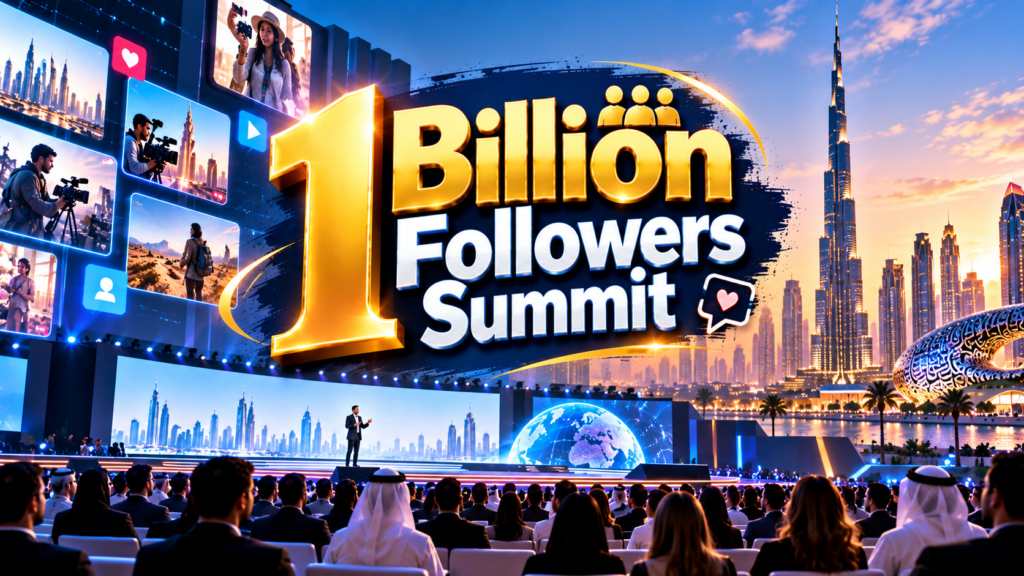
Read More – 1 Billion Followers Summit