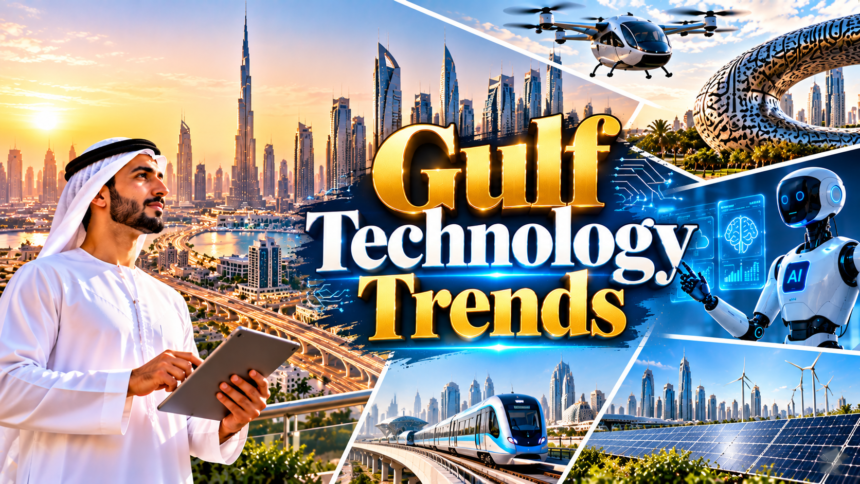
Gulf Technology Trends: How Is Innovation Transforming the Future of the Gulf Region?
The Gulf region is rapidly emerging as an important global centre for technology, innovation, and digital transformation. Countries such as the United Arab Emirates, Saudi Arabia, Qatar, Bahrain, Oman, and Kuwait are investing in advanced technologies to diversify their economies, modernise public services, improve business operations, and create new opportunities for future generations.
- 1. Why Is the Gulf Region Becoming a Global Technology Hub?
- 2. How Is Artificial Intelligence Transforming the Gulf Region?
- 3. What Role Are Smart Cities Playing in Gulf Technology Trends?
- 4. How Is Fintech Changing Banking and Financial Services in the Gulf?
- 5. Why Is Cybersecurity Becoming More Important in the Gulf?
- 6. How Are Cloud Computing and Data Centres Supporting Gulf Businesses?
- 7. How Is E-Commerce Changing Shopping Habits Across the Gulf?
- 8. What Impact Is Robotics Having on Gulf Industries?
- 9. How Is Renewable Energy Technology Supporting Gulf Sustainability?
- 10. How Is Health Technology Improving Healthcare in the Gulf?
- 11. How Is 5G Technology Transforming Connectivity Across the Gulf?
- 12. What Opportunities Do Gulf Technology Startups Offer Entrepreneurs?
- 13. How Is Digital Transformation Changing Government Services?
- 14. What Technology Skills Will Be in Demand in the Gulf?
- 15. What Challenges Could Slow Technology Adoption in the Gulf?
- 16. What Does the Future Hold for Gulf Technology Trends?
From artificial intelligence (AI) and smart cities to fintech, cloud computing, cybersecurity, robotics, and renewable energy technology, Gulf technology trends are transforming how people live, work, communicate, and conduct business. Governments, startups, universities, and private companies are increasingly adopting digital solutions to improve efficiency and support economic growth.
But what are the most important technology trends in the Gulf? How are these innovations influencing businesses and everyday life? And what opportunities could emerge as the region continues its digital transformation?
Understanding these developments helps readers, entrepreneurs, investors, professionals, and technology enthusiasts recognise the innovations shaping the future of the Gulf Cooperation Council (GCC) countries.
1. Why Is the Gulf Region Becoming a Global Technology Hub?
The Gulf region is attracting growing attention from international technology companies, entrepreneurs, and investors because of its ambitious development strategies, expanding digital infrastructure, and increasing demand for innovative solutions.
For decades, several Gulf economies relied heavily on oil and gas revenues. Today, economic diversification is encouraging investment in technology, tourism, healthcare, logistics, education, financial services, and advanced manufacturing.
Countries across the region are developing innovation ecosystems that connect government initiatives, private investment, research institutions, and emerging businesses.
Key factors contributing to Gulf technology growth include:
- Government investment in digital infrastructure and innovation.
- Increasing adoption of artificial intelligence and cloud computing.
- Expansion of technology startups and entrepreneurship programmes.
- Growing demand for digital banking and online services.
- Development of smart cities and sustainable infrastructure.
- Investment in education, research, and digital skills.
These developments are helping establish the Gulf as an increasingly important destination for technology development and digital business.
2. How Is Artificial Intelligence Transforming the Gulf Region?
Artificial intelligence is one of the most influential Gulf technology trends. AI systems can analyse large amounts of information, automate repetitive tasks, assist decision-making, and improve the efficiency of services across multiple industries.
Governments and businesses in the UAE, Saudi Arabia, Qatar, and other Gulf countries are exploring AI applications in administration, healthcare, education, transport, finance, energy, and customer service.
For example, AI-powered assistants can help answer customer questions, while predictive analytics can help companies identify operational problems before they become expensive disruptions. In healthcare, AI tools can support medical image analysis and administrative workflows when appropriately validated and supervised.
How could AI influence the Gulf’s future?
- Business: Automating routine processes and improving productivity.
- Healthcare: Supporting clinical workflows and medical research.
- Education: Enabling personalised learning and digital tutoring.
- Transport: Helping manage traffic and improve logistics.
- Government: Improving access to digital information and services.
- Energy: Supporting predictive maintenance and operational efficiency.
However, responsible AI adoption requires attention to data privacy, accuracy, transparency, cybersecurity, and human oversight. Organisations must also invest in workforce training to ensure that employees can use AI effectively.
As AI capabilities continue to evolve, the technology is likely to remain central to discussions about innovation and digital transformation across the Gulf.
3. What Role Are Smart Cities Playing in Gulf Technology Trends?
Smart cities are an important part of urban development across the Gulf. These projects use digital infrastructure, connected devices, data analytics, and automation to improve city management and residents’ quality of life.
The region’s rapidly developing urban centres are exploring technology-enabled solutions for transportation, utilities, public safety, waste management, and energy consumption.
Dubai has developed a wide range of digital public services, while Saudi Arabia’s NEOM project represents an ambitious approach to technology-oriented urban development. Other Gulf cities are also investing in connected infrastructure and digital services.
What makes a city smart?
- Connected traffic signals and intelligent transport systems.
- Smart electricity meters and energy management platforms.
- Digital government services and online applications.
- Sensors that monitor environmental conditions.
- Technology-supported waste collection and water management.
- Connected infrastructure designed to improve public services.
Smart city technologies can help reduce inefficiencies and improve how resources are managed. Nevertheless, successful implementation requires reliable infrastructure, strong data protection, careful planning, and accessible services for people with different digital skills.
As urban populations and economic activity grow, smart city technology will remain an important area of development throughout the Gulf.
4. How Is Fintech Changing Banking and Financial Services in the Gulf?
Financial technology, commonly known as fintech, is reshaping the way individuals and businesses manage money. Digital banking, mobile payment applications, electronic wallets, and online financial services are becoming increasingly important throughout the Gulf.
Consumers increasingly expect convenient ways to transfer money, pay bills, manage accounts, and complete purchases without visiting a physical branch. Businesses also benefit from faster digital payments and more efficient financial administration.
Which fintech developments are attracting attention?
- Mobile banking and digital-first financial services.
- Contactless payments and digital wallets.
- Digital payment solutions for small businesses.
- Online financial management and accounting tools.
- Financial technology for cross-border commerce.
- Regulated digital asset and blockchain applications.
The UAE, Bahrain, and Saudi Arabia have developed financial technology ecosystems supported by different regulatory initiatives and business environments. These ecosystems can help financial institutions and startups experiment with new services under appropriate regulatory frameworks.
However, digital finance also creates risks involving fraud, identity theft, data security, and financial misinformation. Consumers should use trusted providers, enable account security features, and verify financial requests before transferring money.
The continued growth of fintech could improve access to financial services, simplify commercial transactions, and support the Gulf’s expanding digital economy.
5. Why Is Cybersecurity Becoming More Important in the Gulf?
As Gulf governments and businesses digitise their operations, cybersecurity is becoming a critical priority. Greater dependence on connected systems creates opportunities for innovation but also increases exposure to cyberattacks, phishing, ransomware, data theft, and service disruption.
Industries such as banking, healthcare, energy, aviation, telecommunications, and government services rely on secure digital infrastructure. A serious cyber incident can disrupt operations, damage customer confidence, and expose sensitive information.
How can organisations improve cybersecurity?
- Use multifactor authentication for important accounts.
- Keep operating systems and applications updated.
- Conduct regular security assessments and employee training.
- Back up critical data and test recovery procedures.
- Restrict access to sensitive information.
- Monitor networks for suspicious activity.
- Develop incident response and business continuity plans.
Cybersecurity is not only a technical responsibility. It also requires effective governance, employee awareness, vendor management, and clear policies for handling information.
As digital services expand across the Gulf, demand for cybersecurity specialists, security software, compliance expertise, and managed security services may create opportunities for businesses and professionals.
6. How Are Cloud Computing and Data Centres Supporting Gulf Businesses?
Cloud computing allows organisations to access computing power, software, storage, and digital infrastructure through internet-connected services. Instead of maintaining every system on their own premises, businesses can use cloud platforms to support applications and manage information.
This approach can help organisations scale operations, collaborate across locations, and deploy digital products more quickly.
Cloud technology is particularly relevant to Gulf businesses expanding into e-commerce, financial services, healthcare, logistics, tourism, and online education.
What are the main advantages of cloud computing?
- Flexible computing resources as business needs change.
- Easier collaboration between geographically distributed teams.
- Reduced need to maintain some forms of physical IT infrastructure.
- Faster deployment of software and digital services.
- Improved opportunities for backup and disaster recovery.
- Access to analytics and AI services.
Data centres are also important because they provide the physical infrastructure needed to store and process digital information. Investment in cloud infrastructure and data centres can support regional digital economies, although electricity demand, cooling requirements, and water consumption must be managed carefully.
Organisations should also assess data residency rules, privacy requirements, contractual obligations, and security controls when choosing cloud providers.
7. How Is E-Commerce Changing Shopping Habits Across the Gulf?
E-commerce has become a significant part of the Gulf’s digital economy. Online marketplaces, brand websites, mobile shopping applications, and social commerce platforms give consumers more ways to discover and purchase products.
The region’s connected population, digital payment infrastructure, and established logistics networks support online retail. Businesses can also reach customers beyond their immediate geographical markets.
What technology trends are influencing Gulf e-commerce?
- Mobile-first shopping experiences.
- AI-powered product recommendations.
- Digital payments and electronic receipts.
- Real-time delivery tracking.
- Automated customer support.
- Personalised promotions and loyalty programmes.
- Data analytics for inventory and demand forecasting.
For small businesses, online selling can create opportunities to reach new audiences without operating numerous physical stores. However, success requires reliable delivery, clear return policies, secure payment systems, and effective customer service.
Retailers must also protect consumer information and use personalisation responsibly. Transparent pricing, genuine product descriptions, and dependable after-sales support remain essential.
As digital shopping develops, e-commerce technology is likely to remain an important part of Gulf business innovation.
8. What Impact Is Robotics Having on Gulf Industries?
Robotics and automation are changing how businesses perform repetitive, physically demanding, and precision-based tasks. Across the Gulf, these technologies have potential applications in manufacturing, logistics, healthcare, construction, agriculture, and energy.
Industrial robots can help improve consistency in production environments, while warehouse robots can assist with moving goods and managing inventory. Drones may support infrastructure inspections, surveying, and selected agricultural activities when permitted by local regulations.
How can robotics benefit Gulf industries?
- Improve productivity in manufacturing and warehousing.
- Support inspections in difficult-to-access environments.
- Assist healthcare professionals with selected procedures and tasks.
- Automate repetitive industrial processes.
- Improve inventory handling and logistics.
- Reduce some workplace exposures to hazardous conditions.
Nevertheless, robotics adoption requires investment in equipment, maintenance, employee training, and operational safety. Businesses must evaluate whether automation is suitable for their specific requirements rather than adopting it simply because it is technologically advanced.
Combining robotics with AI, sensors, and data analytics may create further opportunities for industrial modernisation throughout the region.
9. How Is Renewable Energy Technology Supporting Gulf Sustainability?
The Gulf region’s abundant sunlight creates favourable conditions for solar energy development. Countries are investing in renewable energy projects and exploring technologies that can improve energy efficiency, diversify electricity generation, and support long-term sustainability goals.
Solar panels, battery storage, smart grids, and advanced energy management systems are important elements of this transition.
What technologies are contributing to sustainable development?
- Large-scale solar power installations.
- Battery energy storage systems.
- Smart electricity grids and digital meters.
- Energy-efficient buildings and cooling systems.
- Electric vehicle charging infrastructure.
- Digital monitoring of industrial energy consumption.
- Research into hydrogen production and other low-carbon technologies.
Renewable energy technology can help diversify energy sources and reduce emissions associated with electricity generation, depending on the energy system it replaces. However, projects must address storage, grid integration, land use, costs, and the environmental impacts of equipment manufacturing.
Digital technologies can also improve the efficiency of conventional energy operations by identifying maintenance needs and reducing waste.
The combination of clean energy and digital innovation offers the Gulf opportunities to strengthen energy security while supporting more sustainable economic development.
10. How Is Health Technology Improving Healthcare in the Gulf?
Health technology is changing how patients access medical services and how healthcare organisations manage information. Digital appointments, electronic health records, remote consultations, connected monitoring devices, and AI-assisted administrative tools can help improve convenience and operational efficiency.
Telemedicine is especially useful for some follow-up appointments, routine consultations, and situations where travelling to a medical facility is difficult. Its suitability depends on the patient’s condition, local regulations, and whether an in-person examination is necessary.
What are the key healthcare technology developments?
- Telehealth and remote consultations.
- Electronic medical records.
- Digital appointment and prescription systems.
- AI-supported medical research and selected diagnostic workflows.
- Wearable devices that monitor certain health measurements.
- Data analytics for healthcare planning.
- Connected hospital equipment and inventory systems.
These technologies can support healthcare professionals, but they should not replace necessary medical evaluation or professional judgement.
Healthcare providers must protect sensitive patient information, validate clinical technologies, and ensure that digital services remain accessible to people who have limited internet access or digital literacy.
Continued investment in health technology could help Gulf healthcare systems improve coordination, patient experience, and service delivery.
11. How Is 5G Technology Transforming Connectivity Across the Gulf?
Fifth-generation mobile networks, known as 5G, offer capabilities that can support high-speed connectivity, responsive applications, and large numbers of connected devices. Their actual performance depends on network coverage, spectrum, infrastructure, and local conditions.
For Gulf economies investing in smart cities, industrial automation, digital entertainment, and connected transport, reliable connectivity is an important foundation.
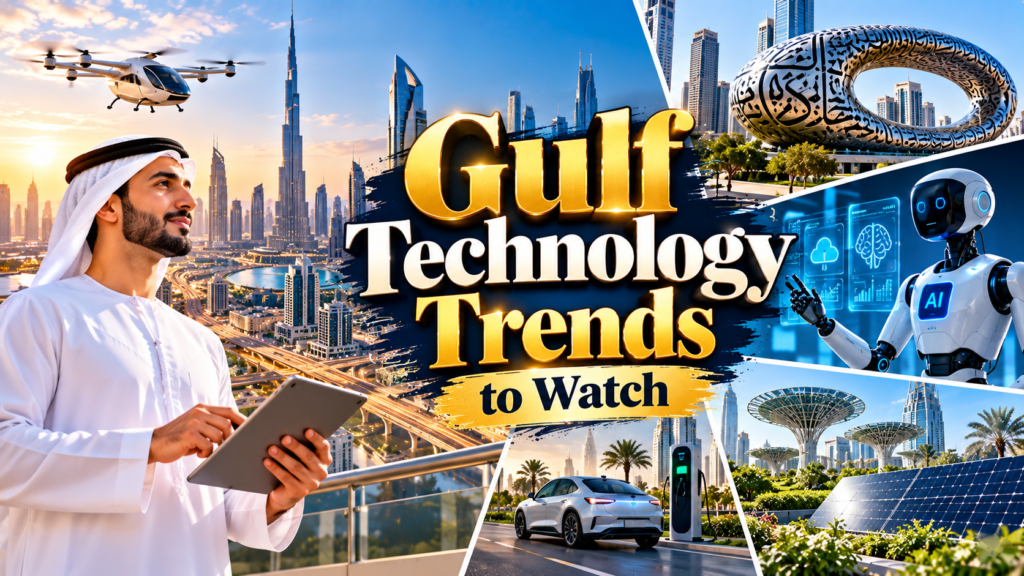
Where can 5G make a difference?
- Supporting connected devices and Internet of Things systems.
- Improving connectivity for mobile business applications.
- Enabling selected industrial automation solutions.
- Supporting high-bandwidth video and digital entertainment.
- Improving communication between connected infrastructure systems.
- Providing connectivity options for some remote operations.
The Internet of Things (IoT) refers to physical devices that collect or exchange data through networks. Examples include smart meters, industrial sensors, connected building controls, and equipment monitoring systems.
As 5G networks and connected devices develop, organisations must also consider device security, network reliability, and the long-term cost of maintaining connected systems.
12. What Opportunities Do Gulf Technology Startups Offer Entrepreneurs?
Technology startups are an important part of the Gulf’s expanding innovation ecosystem. Entrepreneurs are developing solutions for financial services, healthcare, education, logistics, retail, cybersecurity, climate technology, and enterprise software.
Business hubs, incubators, accelerators, funding programmes, and specialist events can help startups connect with customers, mentors, investors, and potential partners.
Which startup sectors offer promising areas for innovation?
- AI applications designed for specific industries.
- Arabic-language digital products and services.
- Financial technology and payment infrastructure.
- Cybersecurity and privacy solutions.
- Educational technology and workforce training.
- Logistics optimisation and supply-chain software.
- Sustainable energy and resource management.
- Digital healthcare services.
However, launching a technology startup requires more than an innovative idea. Entrepreneurs must identify a real customer problem, validate demand, understand local regulations, build a viable business model, and manage operating costs.
Businesses entering Gulf markets should also examine differences in licensing, taxation, data protection, ownership structures, and commercial requirements across individual countries.
Startups that solve practical problems and build trust with customers can contribute to the region’s growing technology economy.
13. How Is Digital Transformation Changing Government Services?
Digital transformation involves using technology to redesign services, improve processes, and make information more accessible. Across the Gulf, government organisations have expanded online services for applications, payments, licensing, documentation, and public information.
Digital government can reduce the need for some in-person visits and make selected administrative processes more convenient.
What are the benefits of digital government services?
- Faster access to eligible online applications.
- More convenient payment and document submission.
- Better coordination between selected public services.
- Improved access to official information.
- Opportunities to reduce paperwork and repetitive administration.
- Greater potential for transparent service tracking.
Successful digital government requires secure identity verification, reliable systems, accessible interfaces, and strong privacy safeguards.
Governments must also consider residents who face language barriers, disabilities, or limited digital skills. Maintaining suitable assistance and alternative access channels can help ensure that technological progress benefits a wider population.
As digital public services continue to develop, governments will need to balance convenience, security, accountability, and accessibility.
14. What Technology Skills Will Be in Demand in the Gulf?
The expansion of digital industries is increasing the importance of technology skills across different professions. Although demand varies by country and industry, organisations need people who can develop, implement, secure, and manage digital systems.
Which skills should aspiring technology professionals consider learning?
- Artificial intelligence and machine learning fundamentals.
- Data analytics and visualisation.
- Cloud computing and infrastructure management.
- Cybersecurity and risk management.
- Software development and application testing.
- Digital marketing and e-commerce management.
- Robotics and industrial automation.
- Project management and digital transformation.
- Responsible AI, data governance, and privacy practices.
Technical knowledge is valuable, but communication, problem-solving, teamwork, and adaptability are also important.
Students and professionals can begin by taking structured courses, building practical projects, earning relevant certifications where useful, and gaining experience through internships or entry-level roles.
Employers can support the transition by offering continuous training and helping existing employees develop new skills.
The ability to combine technical expertise with an understanding of regional business needs may help professionals pursue opportunities in the Gulf’s evolving digital economy.
15. What Challenges Could Slow Technology Adoption in the Gulf?
Despite the opportunities, technology adoption presents several challenges. Organisations need to ensure that digital investments produce meaningful results rather than adding unnecessary complexity or cost.
Common challenges include:
- Cybersecurity risks: More connected systems can create additional vulnerabilities.
- Privacy concerns: Organisations must handle personal information responsibly.
- Skills shortages: Advanced technology requires trained employees.
- Implementation costs: Infrastructure, software, and maintenance can require substantial investment.
- Legacy systems: Older platforms may be difficult to integrate with new solutions.
- Regulatory differences: Requirements vary between Gulf countries and industries.
- Digital accessibility: Not everyone has the same access to devices, connectivity, or training.
- Environmental impact: Data centres and computing infrastructure require energy and, in some cases, significant cooling resources.
Businesses can address these challenges through careful planning, employee training, risk assessments, transparent governance, and gradual implementation.
Evaluating measurable outcomes is also important. Organisations should assess whether new technology improves service quality, reduces costs, strengthens security, or creates genuine value for customers.
16. What Does the Future Hold for Gulf Technology Trends?
The future of Gulf technology will likely be shaped by the interaction of artificial intelligence, digital infrastructure, automation, sustainable energy, financial technology, and advanced data systems.
As governments and businesses continue investing in digital transformation, opportunities may emerge in sectors ranging from smart infrastructure and cybersecurity to healthcare innovation and industrial automation.
Several developments deserve attention:
- Wider use of AI assistants and industry-specific AI applications.
- Greater integration of connected devices with business operations.
- Expansion of digital payments and financial services.
- Continued investment in cloud infrastructure and data centres.
- Development of renewable energy and energy storage technologies.
- Growth in specialised technology startups.
- Increased emphasis on cybersecurity and responsible data management.
- Greater investment in digital education and workforce development.
The pace of adoption will differ across countries and industries. Economic conditions, regulation, infrastructure, access to talent, and commercial demand will all influence which technologies achieve widespread use.
Ultimately, the most successful innovations will be those that address real problems, improve people’s lives, strengthen business performance, and deliver measurable economic or social benefits.
Conclusion: Why Are Gulf Technology Trends Important for the Region’s Future?
Gulf technology trends represent an important part of the region’s economic transformation. Artificial intelligence, smart cities, fintech, cybersecurity, cloud computing, robotics, renewable energy, and digital healthcare are creating new possibilities for governments, businesses, entrepreneurs, and individuals.
These technologies can improve productivity, support better public services, encourage entrepreneurship, and help diversify regional economies. At the same time, successful adoption requires investment in skills, infrastructure, data protection, cybersecurity, and responsible innovation.
For technology enthusiasts, professionals, and business leaders, understanding these developments can help identify emerging opportunities and prepare for a changing digital landscape.
As the Gulf continues to develop its technology ecosystem, the region’s ability to combine innovation with practical implementation will play an important role in determining its long-term success.
Follow Gulf Prime Magazine for informative coverage of Gulf technology trends, digital transformation, emerging innovations, business developments, and the technologies shaping the region’s future.
Do follow us on Instagram
Read More – UAE Technology Trends Shaping the Gulf city