Introduction: The Role of Ports and Trade in the Growth of Gulf Cities
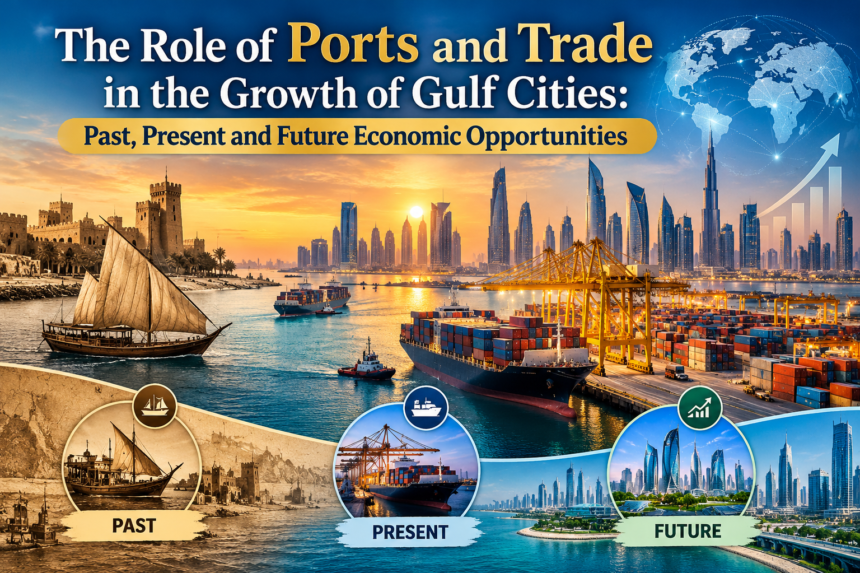
Ports and trade have played a major role in shaping the Gulf region. Long before modern skyscrapers, luxury shopping malls, and international airports appeared, coastal towns across the Arabian Gulf were important centres for fishing, pearl diving, sailing, and business. Merchants travelled across the sea to exchange goods, while local communities depended on the water for food, jobs, and income.
- 1. How Role of Ports and Trade Shaped the Early History of Gulf Cities
- 2. Dubai: From a Trading Settlement to a Global Business City
- 3. Abu Dhabi: Connecting Maritime Trade with Economic Growth
- 4. Qatar: The Role of Hamad Port in Modern Trade
- 5. Kuwait: How Maritime Trade Supports City Life
- 6. Bahrain: A History Built Around Trade and the Sea
- 7. Oman: Ports Linking the Gulf with Global Markets
- 8. How Ports Create Jobs and Support Local Businesses
- 9. Ports, Infrastructure, and Urban Development
- 10. How Trade Improves Everyday Life in Gulf Cities
- 11. The Connection Between Ports, Tourism, and Culture
- 12. Challenges Facing Gulf Ports and Trade
- 13. The Future of Ports and Trade in Gulf Cities
- Conclusion: Ports and Trade as Drivers of Gulf City Growth
- Frequently Asked Questions (FAQs)
Today, Gulf cities such as Dubai, Abu Dhabi, Doha, Kuwait City, Manama, and Muscat have grown into important centres for business, transport, tourism, and international trade. Modern ports connect these cities with markets around the world, helping goods move between Asia, Europe, Africa, and other regions.
Although oil and gas have contributed greatly to the region’s economic growth, ports and trade remain important parts of its development. They support jobs, attract investment, improve transport links, and create opportunities for businesses of different sizes.
This article explores the role of ports and trade in the growth of Gulf cities, from traditional sea trade and pearl diving to modern shipping, logistics, tourism, and economic development. It also explains how ports influence local communities and why they remain important for the future of the Gulf.
1. How Role of Ports and Trade Shaped the Early History of Gulf Cities
The history of Gulf cities is closely connected to the sea. Before oil became a major source of income, many coastal communities depended on fishing, pearl diving, boat building, and maritime trade. The sea provided food, supported local businesses, and connected people with markets in other countries.
For centuries, merchants and sailors travelled across the Gulf and the wider Indian Ocean. They carried goods between the Arabian Peninsula, India, Persia, East Africa, and other trading regions. These connections helped coastal settlements grow into busy commercial towns.
Pearls were among the most valuable products traded from the Gulf. Skilled divers collected natural pearls from the seabed, while merchants bought and sold them in regional and international markets. Pearl trading supported divers, boat owners, traders, craftsmen, and many other workers. Historical records show that pearl diving was a major source of income for communities along the Arabian coast before large-scale oil development.
Ports also helped merchants exchange everyday products such as dates, textiles, spices, food, timber, and other supplies. As trade increased, settlements needed markets, storage spaces, workshops, and places where sailors could rest and repair their boats.
Over time, these activities helped coastal towns develop stronger local economies. Many of today’s modern Gulf cities grew from communities whose lives were closely connected to maritime trade.
2. Dubai: From a Trading Settlement to a Global Business City
Dubai is one of the clearest examples of how ports and trade can change a city. Its early economy depended on fishing, pearl diving, boat building, and trade through Dubai Creek. Merchants used the creek as a natural harbour where boats could load and unload goods.
The creek helped Dubai develop as a commercial centre. Traders from different countries visited the city, bringing products, business ideas, and cultural influences. Traditional markets, known as souqs, grew around trading activities, creating places where people could buy, sell, and exchange goods.
As Dubai expanded, it invested in modern port facilities to handle larger ships and increasing volumes of cargo. One of its most important developments was Jebel Ali Port, which opened in 1979. The port later became a major international shipping hub and an important part of Dubai’s wider trade network.
Today, Jebel Ali connects Dubai with markets across Asia, Europe, Africa, and other regions. It handles container shipments and different types of cargo, helping businesses import raw materials, distribute products, and move goods between countries.
Dubai’s trade infrastructure also includes free zones, warehouses, roads, airports, and logistics facilities. These systems work together to help goods move efficiently between ships, trucks, aircraft, and storage centres. The Dubai Logistics Corridor connects important trade facilities, including Jebel Ali Port, Jebel Ali Free Zone, and Al Maktoum International Airport.
This combination has helped Dubai attract international companies, manufacturers, wholesalers, retailers, and logistics providers.
The story of Dubai shows that a successful port can do much more than handle cargo. It can support an entire business environment, create employment, attract investment, and help a city become an international commercial destination.
From Local Trading Settlements to Regional Hub (Mid-19th Century – 1970s)
- Dubai Creek Origins: In the mid-19th century, Dubai’s economy relied on a natural harbor along Dubai Creek, serving pearl diving, dhow trade, and small-scale barter between South Asia, Persia, and the Arabian Peninsula.
- Overcoming Scarcity: Lacking major oil reserves or large domestic markets, Dubai adopted an outward-looking merchant culture, keeping tariffs low, trade barriers minimal, and welcoming foreign traders.
- Expanding Infrastructure: The decline of the pearling industry pushed Dubai to scale up port capacity. The emirate built Port Rashid in the 1970s and the massive deep-water Jebel Ali Port (opened in 1979) to act as a commercial gateway
3. Abu Dhabi: Connecting Maritime Trade with Economic Growth
Abu Dhabi has developed into an important business and industrial centre in the United Arab Emirates. Although oil and gas have played a major role in its economic growth, maritime transport and trade are also important to its development.
The emirate has several ports that support different economic activities. Khalifa Port is a major deep-water port serving container shipping, general cargo, industrial operations, and other commercial needs. Zayed Port, located in Abu Dhabi city, also supports commercial activities and cruise tourism.
Ports help Abu Dhabi bring in machinery, construction materials, food products, industrial supplies, and other goods needed by businesses and households. They also provide routes for exporting products to international markets.
The relationship between ports and industrial areas is particularly important. Manufacturers need reliable access to raw materials, equipment, and shipping services. When these facilities are located close to one another, businesses can reduce transport difficulties and organise their operations more efficiently.
Port development also supports wider economic goals. By strengthening trade infrastructure and attracting companies from different industries, Abu Dhabi can develop business activities beyond the energy sector.
The city’s experience demonstrates how ports can support economic diversification. Rather than depending on one industry alone, a city can use its maritime connections to develop manufacturing, logistics, tourism, and other services.
Global & Regional Expansion:
- AD Ports Group Footprint: Evolving from a local port authority, operations now span 50 countries with a global fleet of 270 ships.
- Five Integrated Clusters: Organized across Ports, Economic Cities & Free Zones, Logistics, Maritime & Shipping, and Digital Services to deliver end-to-end supply chains.
- Key International Investments: Strategic corridors include major logistics investments in the Middle Corridor (Kazakhstan) and European operations via Noatum.
4. Qatar: The Role of Hamad Port in Modern Trade
Qatar has invested in port infrastructure to improve the movement of goods and strengthen its international trade connections. One of its most important facilities is Hamad Port, located south of Doha near Mesaieed.
The port was developed to improve Qatar’s ability to handle imports and exports. It includes facilities for containers, general cargo, vehicles, food grains, and other goods. Its development has also supported wider plans to improve logistics and encourage economic diversification.
Ports are especially important for countries that import many everyday products. Food, construction materials, vehicles, machinery, and consumer goods must reach businesses and households reliably. Efficient cargo handling helps reduce delays and supports the supply chains that keep the economy moving.
Hamad Port also helps connect shipping with industrial areas and economic zones. These links can encourage companies to establish warehouses, manufacturing facilities, and distribution centres near transport infrastructure.
For Doha, the benefits extend beyond the port itself. Trade activity creates demand for transport services, storage facilities, customs support, maintenance, technology, and other professional services.
Qatar’s investment in port infrastructure shows how modern maritime facilities can strengthen supply chains and create opportunities for businesses. Ports are not simply entry points for imported goods; they can also become part of a wider strategy to build a more diverse economy.
Global Recognition and Efficiency:
- Top-Tier Performance: Hamad Port has achieved high standing on the global stage, ranking 8th globally and 2nd in the Gulf region in the World Bank and S&P Global Market Intelligence Container Port Performance Index, evaluated primarily on fast vessel turnaround times and berth productivity.
- Digitalization: Operations are streamlined using smart and automated systems, including the Mwanina digital platform, ensuring 24/7 integrated monitoring and supply chain visibility
5. Kuwait: How Maritime Trade Supports City Life
Kuwait has a long history of connections with the sea. Before oil transformed its economy, fishing, pearl diving, boat building, and trading were important activities for coastal communities. Merchants and sailors helped connect Kuwait with other ports around the Gulf and the Indian Ocean.
Traditional maritime trade supported markets, workshops, boat owners, merchants, and families whose livelihoods depended on the sea. Although modern economic activities have changed considerably, the country’s relationship with maritime transport remains important.
Today, Kuwait relies on ports to handle goods needed by households, construction projects, industrial businesses, and commercial companies. Imported food, vehicles, machinery, raw materials, and consumer products are part of the everyday flow of goods through international supply chains.
Modern ports also support exports and regional trade. Their effectiveness depends on facilities such as cargo terminals, storage areas, road connections, customs services, and reliable shipping schedules.
Port infrastructure is particularly important for a growing city because development requires a steady supply of materials and equipment. New homes, roads, commercial buildings, and industrial facilities all depend on products that may arrive through maritime routes.
Kuwait’s history also shows how trade can influence culture. Contact with merchants from different regions helped introduce new products, ideas, foods, and traditions. The influence of maritime connections can still be seen in local markets, cuisine, and the country’s historical relationship with neighbouring societies.
Historical Foundation & Pre-Oil Economy:
- Regional Hub: Located on a sheltered bay of the Persian Gulf, Kuwait City grew as a vital trading and port town connecting Gulf ports with India, East Africa, and Mesopotamia.
- Goods & Commodities: Merchant dhows (such as traditional Boom and Bghala vessels) imported timber, spices, rice, textiles, and daily necessities, while exporting local dates and regional goods.
- Pearl Diving: Pearling formed the backbone of the commercial culture, linking divers, captains, financiers, and prominent merchant families (including the Al-Ghanem, Al-Saqer, Al-Kharafi, and Al-Sabah).
- Shipbuilding Craft: Local shipwrights (Qallafa) built renowned wooden dhows from imported teak, passing the specialized craft down through generations.
6. Bahrain: A History Built Around Trade and the Sea
Bahrain has been connected to maritime trade for thousands of years. Its location in the Gulf helped it develop links with other trading communities, and the ancient Dilmun civilisation played an important role in regional commerce.
Bahrain’s coastal position supported trade, fishing, and pearl diving. Pearls were especially important to the region’s economy before the decline of the traditional pearl industry. Merchants connected pearl-producing communities with buyers in international markets, while the industry supported many types of work.
As the economy changed, Bahrain continued developing its role in regional business and transport. Khalifa Bin Salman Port, which opened for business in 2009, was designed to handle container cargo, general goods, vehicles, and passenger-related activities. Its location and road connections help link maritime transport with regional distribution networks.
Modern port operations support importers, exporters, shipping companies, transport providers, and industrial businesses. They also create demand for services such as storage, cargo handling, maintenance, and customs processing.
Bahrain’s experience highlights how a long maritime history can continue to influence modern economic activity. The goods and technologies may have changed, but the sea remains an important link between the country and the wider world.
Oil Discovery and Modern Independence:
- First Gulf Oil: In 1932, Bahrain became the first country on the Arab side of the Persian Gulf to discover oil, fundamentally transforming its economy from pearl diving to modern petroleum production and infrastructure.
- Independence (1971): Bahrain ended its protectorate status and declared full independence on August 15, 1971.
- From Emirate to Kingdom: In 2002, under Sheikh Hamad bin Isa Al Khalifa, the country transitioned into a constitutional Kingdom of Bahrain.
7. Oman: Ports Linking the Gulf with Global Markets
Oman has a long maritime tradition shaped by its coastline and connections across the Indian Ocean. Omani sailors and merchants historically travelled to ports in East Africa, South Asia, and other parts of the region, exchanging goods and building commercial relationships.
Today, Oman continues to use its geographic position to support international shipping and trade. Ports such as Sohar, Salalah, and Suwaiq serve different cargo and commercial needs.
Oman’s Ministry of Foreign Affairs reported that maritime ports accounted for around 77% of the country’s total import and export trade in 2024, with a value of approximately OMR 16.5 billion. The same report stated that Omani ports handled more than 137 million tonnes of cargo during 2024.
These figures show how important maritime transport remains to the country’s economy.
Sohar Port supports industrial and cargo activities, while Salalah benefits from its location near major international shipping routes. Different ports provide opportunities for shipping, logistics, manufacturing, and related services.
Ports can also support economic diversification by helping businesses export products other than oil and gas. When companies have reliable access to international markets, they may find it easier to expand production and reach new customers.
Oman’s experience demonstrates how a country’s coastline can become an economic advantage when supported by investment, efficient transport systems, and strong links with international markets.
Key advantages include:
- Strategic location between Asia, Africa, and Europe
- Deep-water ports capable of handling mega vessels
- Modern container terminals and logistics parks
- Strong connectivity to GCC markets
- Competitive customs and free zone policies
- Growing transshipment and warehousing capabilities
8. How Ports Create Jobs and Support Local Businesses
One of the biggest benefits of ports is employment. A modern port requires a wide range of workers, from people who operate cranes and handle cargo to professionals who manage shipping schedules, customs documents, safety, and logistics.
However, the economic benefits extend well beyond the port gates.
When ships arrive, businesses need transport companies to move goods to warehouses, shops, factories, and distribution centres. Warehouses need workers, maintenance teams, security staff, and management services. Shipping companies need office staff, accountants, technology specialists, and customer service teams.
Ports also create opportunities for small and medium-sized businesses. Local companies may provide food, equipment, cleaning, repairs, transport, packaging, uniforms, and other services to port operators and logistics firms.
Some of the jobs and businesses supported by port activity include:
- Shipping and cargo handling.
- Trucking and freight transport.
- Warehousing and inventory management.
- Customs clearance and documentation.
- Ship repair and maritime maintenance.
- Packaging and distribution.
- Security and safety services.
- Information technology and logistics software.
- Catering, cleaning, and other support services.
These activities help spread the economic benefits of trade across different parts of a city. When businesses grow and workers earn income, they also spend money on housing, food, transport, education, and other local services.
Ports can therefore support employment both directly and indirectly, helping cities develop stronger and more diverse economies.
9. Ports, Infrastructure, and Urban Development
The growth of a major port often leads to investment in other types of infrastructure. Cargo must move efficiently between ships and inland destinations, so cities need suitable roads, bridges, rail links, warehouses, industrial areas, and distribution centres.
As port activity increases, businesses may choose to establish operations nearby. This can lead to the development of industrial zones, commercial buildings, storage facilities, and new employment areas.
Ports also influence where cities expand. Areas close to major transport routes may become attractive for logistics companies and manufacturers. Residential neighbourhoods and retail facilities may then grow around these employment centres.
However, port-led development needs careful planning. Heavy trucks can increase traffic, while industrial activity may create noise, air pollution, and pressure on roads. Cities need to balance commercial growth with the needs of residents.
Good urban planning can help manage these challenges by separating heavy industrial traffic from residential streets, improving public transport, and protecting sensitive coastal areas.
When port development is planned well, it can support both business growth and better city infrastructure. When planning is weak, congestion and environmental problems can reduce the benefits.
10. How Trade Improves Everyday Life in Gulf Cities
International trade affects more than large companies and shipping businesses. It also influences the daily lives of ordinary residents.
Many products used in homes, offices, schools, hospitals, and shops travel through international supply chains. These may include food, clothing, electronics, furniture, medicines, vehicles, building materials, and household equipment.
Ports help bring these products into the region and distribute them to businesses and consumers. Reliable cargo movement can improve product availability and help companies manage their stock.
Trade also supports construction and urban development. Materials used to build roads, schools, hospitals, offices, and homes may be imported from different countries. Efficient port operations can help construction companies receive supplies and maintain project schedules.
International trade also gives consumers access to a wider choice of products. Supermarkets and retailers can offer goods from different countries, while businesses can reach customers outside their local markets.
The benefits depend on factors such as shipping costs, global prices, transport networks, and supply chain reliability. Delays or disruptions can increase costs and affect the availability of goods.
For Gulf cities, efficient ports are therefore important not only for economic growth but also for keeping everyday services and commercial activities running smoothly.
11. The Connection Between Ports, Tourism, and Culture
Ports have also helped shape the cultural identity of Gulf cities. For centuries, sailors and merchants travelled between coastal communities, carrying goods, languages, skills, foods, and ideas.
These connections influenced local lifestyles. Trade introduced new products and created relationships between people from different backgrounds. Traditional markets developed around commercial activity, while coastal communities built strong connections with fishing, boat building, and seafaring.
Today, ports can also support tourism. Cruise ships bring visitors who may explore local landmarks, museums, restaurants, shopping areas, and heritage attractions. Some historic ports and waterfront districts have become popular places for walking, dining, and cultural activities.
Dubai’s Port Rashid, for example, is an important cruise destination, while port facilities across the UAE support different types of maritime activity.
Waterfront development can give residents and visitors places to enjoy the sea while helping cities protect and present their maritime heritage.
However, tourism and port operations need to be managed carefully. Cruise passengers, cargo ships, fishing boats, and recreational users may have different needs. Good planning helps these activities operate safely and supports a positive visitor experience.
Ports can therefore connect a city’s past with its present, preserving its relationship with the sea while creating new opportunities for tourism and cultural exchange.
12. Challenges Facing Gulf Ports and Trade
Although ports offer many benefits, they also face challenges. International shipping depends on global demand, fuel prices, political conditions, weather, shipping routes, and the reliability of supply chains.
A delay at a major shipping route can affect cargo schedules far beyond the port where the disruption begins. Businesses may experience late deliveries, higher transport costs, or difficulty obtaining essential materials.
Gulf ports must also keep pace with changing technology. Modern shipping requires efficient cargo handling, accurate information systems, strong cybersecurity, and effective customs procedures.
Environmental concerns are another important issue. Ships, trucks, and industrial facilities can contribute to emissions, while port construction and coastal development may affect marine habitats.
To address these challenges, port authorities and businesses can focus on:
- Improving cargo handling and digital systems.
- Strengthening safety and cybersecurity.
- Maintaining roads and other transport links.
- Reducing unnecessary delays and fuel use.
- Improving waste management and pollution control.
- Protecting marine environments and coastal habitats.
- Training workers in modern port and logistics skills.
- Developing plans for supply chain disruptions.
Preparing for these challenges can help Gulf cities maintain reliable trade connections and protect the long-term value of their port infrastructure.
13. The Future of Ports and Trade in Gulf Cities
The future of Gulf ports will depend on technology, sustainability, regional cooperation, and changing patterns of international trade.
Automation and digital systems are likely to play a larger role in cargo handling, inventory management, customs processing, and shipping coordination. These tools can help businesses track goods, reduce paperwork, and improve efficiency.
Ports are also likely to become more closely connected with airports, highways, railways, warehouses, and industrial zones. These connections can help companies move products between different forms of transport with fewer delays.
Economic diversification is another important priority. Gulf countries are investing in industries such as manufacturing, tourism, technology, renewable energy, and logistics. Strong port networks can support these sectors by providing access to imported equipment and international customers.
Sustainability will also matter. Ports can explore cleaner equipment, more efficient energy use, improved waste management, and better protection for coastal environments. The right approach will depend on local conditions, technology, investment, and regulation.
The future is not only about building bigger ports. It is about making existing facilities more efficient, reliable, connected, and environmentally responsible.
Cities that combine good infrastructure with skilled workers, clear business rules, and strong international connections will be better positioned to benefit from global trade.
Key advantages include:
- Alternative Coastlines: Ports located outside the Strait of Hormuz—such as Fujairah and Khorfakkan in the UAE—are expanding rapidly to mitigate geopolitical risks. Projects like the new multi-purpose port and container terminal in Fujairah allow cargo from the Indian Ocean to unload directly on the Gulf of Oman, bypassing the strait.
- Multimodal Rail and Land Corridors: Integration with rail networks like Etihad Rail and Saudi Arabia Railways connects eastern maritime hubs directly to inland logistics parks and cross-border land ports, ensuring continuous supply chains.
- Top Global Rankings: GCC ports rank among the world’s most efficient, with multiple terminals handling over 4 million containers annually and Dubai consistently placing among the top five global shipping hubs. Major nodes like Khalifa Port in Abu Dhabi and King Abdulaziz Port in Dammam continue to scale deep-water access and industrial zones.
- Smart Infrastructure: Operators are deploying automated stacking systems, AI-powered cargo tracking, and high-bay storage solutions to dramatically increase handling speeds and reduce turnaround times.
Conclusion: Ports and Trade as Drivers of Gulf City Growth
Ports and trade have helped shape Gulf cities for centuries. From the pearl-diving communities and traditional markets of the past to the modern shipping terminals of today, the sea has played a major role in the region’s economic and cultural development.
Dubai shows how port infrastructure can support an international business centre. Abu Dhabi connects maritime transport with industrial development, while Hamad Port strengthens Qatar’s supply chains. Kuwait and Bahrain continue to benefit from maritime connections, and Oman uses its ports to link the country with global markets.
The benefits reach far beyond shipping. Ports support jobs, local businesses, construction, tourism, manufacturing, and the movement of everyday goods. They also help Gulf cities maintain connections with countries around the world.
At the same time, successful port development requires planning, investment, environmental care, and the ability to respond to global changes.
As Gulf cities continue to grow, ports and trade will remain important parts of their economic future. By combining modern technology with efficient transport systems and responsible development, these cities can strengthen their international connections and create opportunities for future generations.
Frequently Asked Questions (FAQs)
1. Why are ports important for Gulf cities?
Ports allow Gulf cities to import goods, export products, connect with international markets, and support industries such as manufacturing, retail, logistics, and tourism. They also create direct and indirect employment.
2. How did ports help Gulf cities grow historically?
Traditional ports supported fishing, pearl diving, boat building, and trade. These activities attracted merchants, created local jobs, and helped coastal settlements develop into important commercial towns.
3. Which are the major ports in the Gulf region?
Major ports include Jebel Ali and Khalifa ports in the UAE, Hamad Port in Qatar, Khalifa Bin Salman Port in Bahrain, and Sohar and Salalah in Oman. Kuwait also has ports supporting its commercial and industrial needs.
4. How does Jebel Ali Port support Dubai’s economy?
Jebel Ali Port connects Dubai with international markets and supports container shipping, logistics, warehousing, trade, and distribution. Its links with free zones and other transport facilities help businesses move goods efficiently.
5. How do ports create jobs?
Ports employ workers in cargo handling, shipping, customs, transport, warehousing, security, maintenance, and management. They also support businesses that provide equipment, food, cleaning, repairs, and other services.
6. What role did pearl diving play in Gulf trade?
Pearl diving was a major source of income for many Gulf communities before large-scale oil development. Pearls were sold through regional and international trading networks, supporting divers, merchants, sailors, and related businesses.
7. How do ports affect everyday life?
Ports help bring food, medicines, electronics, clothing, construction materials, and other products into Gulf cities. Reliable shipping and distribution systems help businesses maintain supplies for households and industries.
8. How do ports support economic diversification?
Ports provide access to raw materials, equipment, and international customers. This can help countries develop manufacturing, logistics, tourism, and other industries alongside traditional energy sectors.
9. What challenges do Gulf ports face?
Common challenges include shipping disruptions, changing global demand, rising transport costs, cybersecurity risks, congestion, and environmental concerns. Technology, good planning, and sustainable practices can help address them.
10. What is the future of ports and trade in Gulf cities?
The future will likely involve more digital systems, improved connections between sea, road, rail, and air transport, stronger logistics networks, and greater attention to sustainability and supply chain reliability.
Do follow us on Instagram
Read More – 10 Stories Behind Famous Landmarks Across the Gulf