Why Sustainable Desalination in the Gulf Is Becoming Essential
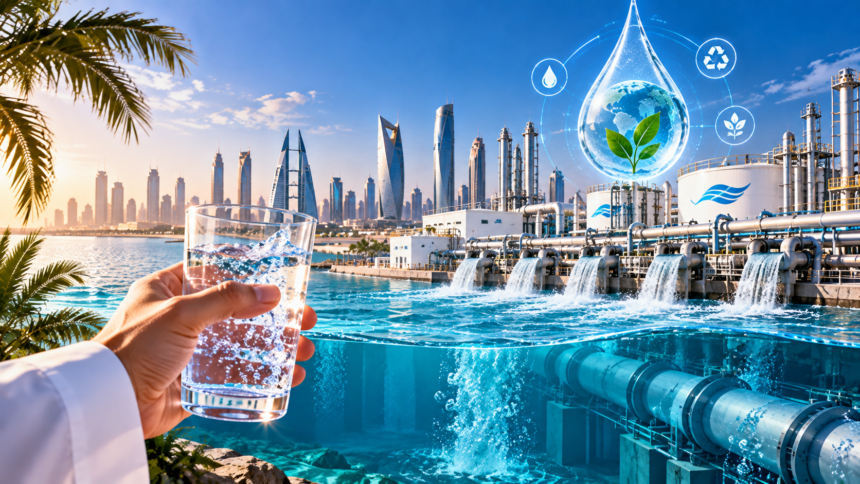
Every morning, millions of people across the Gulf turn on their taps without thinking about the complex infrastructure making freshwater available. Behind this everyday convenience are desalination plants, pumping stations, storage facilities and distribution networks working together to deliver water to homes, businesses and public services.
- Why Sustainable Desalination in the Gulf Is Becoming Essential
- How Desalination Works: Reverse Osmosis vs Traditional Thermal Technology
- 7 Innovations Making Desalination More Sustainable Across the Gulf
- UAE and Saudi Arabia Desalination Projects Leading the Transition
- Renewable Energy and Brine Management: The Environmental Challenges
- The Economics of Sustainable Desalination: Investment, Costs and Water Security
- The Future of Sustainable Desalination in the Gulf and Frequently Asked Questions
In a region where rainfall is limited and freshwater resources are under pressure, desalination is more than an industrial process. It is a foundation of modern urban life, supporting the growth of cities such as Dubai, Abu Dhabi, Riyadh, Doha and Kuwait City.
However, producing drinking water from seawater presents an important environmental challenge. Traditional desalination can require substantial energy, while the treatment process produces concentrated saline waste that must be managed responsibly.
This is why Sustainable Desalination in the Gulf is becoming an increasingly important subject for governments, utility companies, investors and environmental researchers.
The central question is no longer whether desalination is necessary. For many Gulf communities, it is an essential part of the water supply. The challenge is finding ways to produce reliable freshwater while reducing electricity consumption, greenhouse gas emissions and environmental impacts.
Recent developments suggest that the industry is changing.
According to the International Energy Agency’s 2025 report on electricity in the Middle East and North Africa, the region produced approximately 12 billion cubic metres of desalinated water in 2024. The agency projects that regional production could triple by 2035, with future expansion expected to depend heavily on more energy-efficient reverse osmosis technology.
Major Gulf utilities are already investing in this transition. Dubai Electricity and Water Authority is expanding the Hassyan seawater reverse osmosis complex, while Saudi Arabia is upgrading older desalination infrastructure and developing new production systems.
In January 2026, Dubai reported that the initial Hassyan project had reached approximately 90% construction completion. During the first half of the year, the utility commissioned an initial production block, bringing part of the facility into operation.
These projects illustrate how technology, infrastructure investment and long-term water planning are becoming interconnected.
Yet more efficient desalination does not automatically mean completely sustainable drinking water. Renewable electricity, marine protection, leakage reduction and responsible water consumption must also be considered.
The future of Gulf water security may therefore depend not on a single technological breakthrough, but on making the entire water system more efficient and environmentally responsible.
Why Sustainable Desalination in the Gulf Is Becoming Essential
Gulf countries face unusual water-resource conditions. Much of the region experiences an arid climate, limited renewable freshwater availability and high evaporation rates.
At the same time, growing cities, industrial facilities, tourism developments and residential communities require dependable water supplies throughout the year.
Desalination makes it possible to convert seawater into freshwater suitable for treatment and distribution, reducing dependence on naturally available freshwater sources.
Why the Gulf Depends on Desalination
Unlike regions with extensive rivers and predictable rainfall, many GCC countries cannot meet their urban water needs through conventional freshwater sources alone.
Groundwater provides an additional resource in some locations, but excessive extraction can create long-term sustainability problems.
Desalination offers a relatively reliable alternative because seawater is available along much of the region’s coastline.
However, the process still requires energy, infrastructure and environmental management.
Water Security vs Water Sustainability
Water security concerns whether communities can access sufficient, safe and reliable water.
Water sustainability examines whether supplying that water can continue without causing unacceptable environmental, financial or resource-related consequences.
Both objectives matter, but they are not identical.
| Factor | Water Security | Water Sustainability |
|---|---|---|
| Main Objective | Reliable water availability | Responsible long-term resource management |
| Infrastructure | Production, storage and distribution | Efficient production and reduced losses |
| Energy | Dependable power supply | Lower emissions and energy demand |
| Environment | Protection of water sources | Reduced ecological impacts |
| Planning | Meeting demand | Balancing demand with resource efficiency |
Why Demand Is Expected to Increase
Population growth, economic development and industrial expansion could increase demand for treated water across the region.
The International Energy Agency’s projection of substantially higher desalination production by 2035 reflects this wider pressure on water infrastructure.
However, projections describe possible future demand and supply under particular assumptions. They are not guaranteed outcomes for every country.
The challenge for Gulf governments is to expand water availability without automatically increasing environmental impacts at the same rate.
How Desalination Works: Reverse Osmosis vs Traditional Thermal Technology
Desalination removes dissolved salts and other unwanted substances from seawater or saline groundwater.
Several technologies can accomplish this, but the Gulf industry has historically relied heavily on thermal systems and is increasingly adopting membrane-based treatment.
Traditional Thermal Desalination
Thermal desalination uses heat to separate water from dissolved salts.
Multi-stage flash distillation and multi-effect distillation are two established methods.
These systems have often been integrated with electricity generation, allowing thermal energy from power stations to support freshwater production.
Although reliable, they can consume substantial energy compared with modern reverse osmosis facilities, depending on plant design and operating conditions.
Seawater Reverse Osmosis
Reverse osmosis uses pressure to move water through specialised membranes that reject most dissolved salts.
The process generally requires less energy than conventional thermal desalination because it avoids evaporating large quantities of seawater.
After membrane separation, additional treatment adjusts water quality to meet drinking-water requirements.
Energy Consumption Comparison
A January 2026 review published in npj Clean Water reported the following representative energy-consumption ranges for desalination technologies.
| Technology | Reported Energy Consumption | Main Process |
|---|---|---|
| Multi-Stage Flash | 18.3–28.5 kWh/m³ | Thermal evaporation |
| Multi-Effect Distillation | 14.2–21.6 kWh/m³ | Repeated evaporation |
| Seawater Reverse Osmosis | 4–6 kWh/m³ | Membrane separation |
The reported values are technology-level estimates and should be interpreted carefully. Thermal and electrical energy can be accounted for differently, and real plant performance depends on conditions, equipment and system boundaries.
Therefore, the table should not be treated as a guaranteed direct comparison for every operating facility.
Why Reverse Osmosis Is Expanding
Reverse osmosis offers opportunities to reduce energy demand and separate water production from the operation of conventional thermal power plants.
This flexibility can make it easier to integrate desalination with lower-carbon electricity.
However, membrane systems require suitable pretreatment, maintenance and management of concentrated saline discharge.
A successful transition must address these operational requirements alongside energy savings.
7 Innovations Making Desalination More Sustainable Across the Gulf
Improving desalination sustainability involves more than selecting one treatment method.
Researchers, utilities and engineering companies are developing technologies intended to reduce energy consumption, improve reliability and manage environmental impacts.
1. Advanced Reverse Osmosis Membranes
New membrane materials and improved system designs can help increase water recovery and reduce operating pressure.
Better membrane performance may lower energy requirements or reduce maintenance needs.
However, long-term durability, fouling and cleaning requirements still influence actual operating costs.
2. Energy Recovery Devices
Reverse osmosis plants operate under high pressure, and the concentrated reject stream retains significant pressure energy.
Energy recovery devices transfer part of this energy back into the treatment process.
Modern systems can substantially reduce the energy needed for seawater desalination compared with systems without efficient energy recovery.
3. Renewable Electricity Integration
Solar and wind electricity can reduce the carbon intensity of desalination operations.
The main challenge is aligning continuous water demand with electricity generation that changes throughout the day.
Grid connections, energy storage and water reservoirs can help manage this difference.
4. Artificial Intelligence and Predictive Maintenance
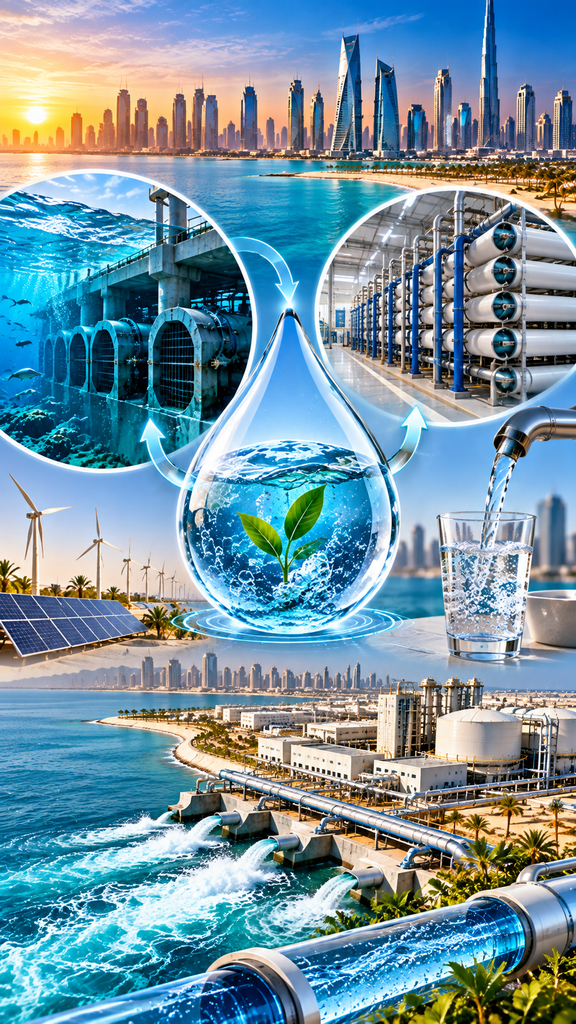
AI-based tools may support the analysis of equipment performance, membrane conditions and electricity consumption.
By identifying abnormal operating patterns, utilities may improve maintenance planning and reduce unnecessary downtime.
However, the benefits depend on reliable data, appropriately tested systems and experienced engineers.
5. Better Pretreatment Systems
Seawater contains particles, microorganisms and other substances that can affect membrane performance.
Appropriate pretreatment helps protect equipment and maintain stable operation.
Improved filtration and intake design can reduce cleaning requirements and protect valuable infrastructure.
6. Brine Management and Resource Recovery
Desalination produces a concentrated saline stream commonly called brine.
Researchers are investigating methods for reducing discharge impacts and recovering selected minerals or other resources.
However, many recovery processes remain commercially challenging because extraction costs can exceed the value of recovered materials.
7. Smarter Water Storage and Distribution
Even efficient desalination is less sustainable when substantial amounts of treated water are lost through distribution systems.
Monitoring networks, leak detection and suitable storage can reduce unnecessary production.
Water efficiency is therefore a system-wide issue extending beyond the desalination plant.
Seven Innovations Compared
| Innovation | Potential Benefit | Main Challenge |
|---|---|---|
| Advanced Membranes | More efficient separation | Fouling and replacement |
| Energy Recovery | Lower electricity use | Equipment performance |
| Renewable Power | Reduced operating emissions | Variable generation |
| AI Monitoring | Better maintenance | Data quality |
| Improved Pretreatment | Greater reliability | Additional infrastructure |
| Brine Resource Recovery | Reduced waste and new materials | Economic feasibility |
| Smart Distribution | Lower water losses | Network investment |
The strongest outcomes may come from combining several improvements rather than relying on one technological solution.
UAE and Saudi Arabia Desalination Projects Leading the Transition
The sustainability transition is already visible in major water infrastructure projects across the Gulf.
The UAE and Saudi Arabia provide particularly significant examples because both are investing in reverse osmosis capacity and upgrading existing systems.
Dubai’s Hassyan Desalination Project
Dubai Electricity and Water Authority is developing the Hassyan seawater reverse osmosis complex under an Independent Water Producer model.
The original 180 million imperial gallons per day project represents an investment of approximately AED 3.377 billion.
In January 2026, DEWA reported that construction had reached nearly 90%, with completion of the first project scheduled for the first quarter of 2027.
During the first half of 2026, an initial 60 MIGD production block was commissioned, representing an important step towards the facility’s full planned capacity.
The project is designed to increase Dubai’s freshwater production while supporting a transition away from more energy-intensive thermal technology.
On October 28, 2026, ACWA Power announced a separate long-term water purchase agreement for an additional Hassyan reverse osmosis development with a planned capacity of approximately 272,000 cubic metres per day.
This later agreement should be distinguished from the original 180 MIGD project. Its anticipated financial contribution is associated with future development rather than already operating capacity.
Saudi Arabia’s Eastern Region Expansion
Saudi Arabia is also increasing desalination production and transmission capacity.
In February 2026, the Saudi Water Authority reported that desalinated water production capacity in the Eastern Region had reached approximately three million cubic metres per day.
This followed the commissioning and development of production systems associated with Al-Khobar and Jubail.
The authority also reported expanded water transmission capacity, illustrating the importance of transporting treated water from coastal production facilities to the areas where it is needed.
Modernising Older Saudi Plants
In June 2025, the Saudi Water Authority announced financing arrangements involving the Asian Infrastructure Investment Bank and Saudi Arabia’s National Infrastructure Fund.
The approximately $650 million initiative supports improvements to the Jubail and Khobar desalination systems.
The Asian Infrastructure Investment Bank identified improved energy efficiency and lower greenhouse gas emissions among the project’s objectives.
Replacing ageing infrastructure may create environmental benefits, but results must be assessed through actual electricity consumption and operating performance.
Shuaiba’s Reverse Osmosis Transition
In September 2025, the Saudi Water Authority reported that the transition from thermal technology to reverse osmosis in the Shuaiba production system had generated a documented financial impact exceeding SAR 4.1 billion.
The figure was reported by the authority in connection with expenditure efficiency and system changes. It should not be interpreted as a recurring annual profit figure.
Selected Gulf Developments
| Project or Initiative | Location | Main Focus |
|---|---|---|
| Hassyan SWRO Project | Dubai, UAE | Expanding efficient desalination capacity |
| Additional Hassyan Development | Dubai, UAE | Future independent water production |
| Eastern Region Water Systems | Saudi Arabia | Production and transmission capacity |
| Jubail and Khobar Upgrades | Saudi Arabia | Modernisation and efficiency |
| Shuaiba Technology Transition | Saudi Arabia | Moving away from thermal production |
These developments demonstrate progress, but environmental performance will depend on how facilities operate over their full lifetimes.
Renewable Energy and Brine Management: The Environmental Challenges
Reverse osmosis can reduce energy consumption, but desalination still involves environmental pressures.
A sustainable water strategy must address the electricity used in production, the marine environment around desalination facilities and the wider impacts of water transport and consumption.
The Carbon Footprint of Desalination
Desalination plants require electricity for pumping, pretreatment, membrane separation and distribution.
Where that electricity comes from fossil-fuel-based generation, water production contributes to greenhouse gas emissions.
Using lower-carbon electricity can reduce operational emissions, although the overall environmental footprint also includes plant construction, equipment manufacture and maintenance.
Can Solar Energy Power Desalination?
Solar electricity is particularly relevant to Gulf countries because of the region’s solar resources.
Reverse osmosis plants can operate using electricity generated from solar power, either through direct arrangements or the wider electricity grid.
However, water demand continues after sunset, while solar production changes throughout the day.
Utilities therefore need appropriate grid integration, energy storage, water storage or other operational arrangements to maintain reliable supply.
Why Brine Disposal Matters
The seawater remaining after desalination contains a higher concentration of salts than the original intake water.
Depending on the process, it may also contain residual treatment chemicals or other constituents.
Discharging concentrated brine into coastal environments can affect local marine conditions, particularly where water exchange is limited.
Environmental impacts depend on discharge concentration, temperature, location, dilution and ecosystem characteristics.
Protecting Marine Ecosystems
Responsible desalination projects require attention to both seawater intake and discharge.
Intake systems can affect marine organisms, while poorly designed outfalls may create areas of elevated salinity.
Environmental assessments, suitable diffuser systems and ongoing monitoring can help identify and manage these risks.
Can Minerals Be Recovered From Brine?
Brine contains salts and other dissolved materials that may have commercial value.
Recovering minerals could potentially reduce waste while creating additional revenue.
However, extraction requires equipment, chemicals, energy and processing.
The presence of valuable minerals does not automatically make recovery financially attractive or environmentally beneficial.
Environmental Challenges Compared
| Environmental Issue | Why It Matters | Potential Response |
|---|---|---|
| Electricity Consumption | Operating emissions and costs | Efficient technology and cleaner electricity |
| Concentrated Brine | Marine salinity impacts | Managed discharge and monitoring |
| Seawater Intake | Potential marine ecosystem effects | Improved intake design |
| Treatment Chemicals | Discharge and handling concerns | Responsible chemical management |
| Equipment Waste | Material consumption | Maintenance and recycling |
| Water Distribution Losses | Unnecessary additional production | Leakage reduction |
The objective should be to reduce environmental impacts across the full water-production system rather than describing desalination as completely green.
The Economics of Sustainable Desalination: Investment, Costs and Water Security
Water infrastructure requires substantial capital investment, making financial planning an essential part of the transition towards sustainable desalination.
Governments and utilities must evaluate construction costs, electricity expenses, maintenance, financing, environmental management and the reliability of long-term water delivery.
Why Energy Efficiency Matters Financially
Electricity can represent an important part of reverse osmosis operating costs.
A facility that produces the same quantity of water with less energy may reduce expenses over time.
However, efficiency improvements can require additional investment, and savings depend on energy prices, equipment performance and operating conditions.
Illustrative Electricity Cost Comparison
Consider two hypothetical desalination systems each producing 100,000 cubic metres of treated water daily.
For illustration, assume one uses 5 kWh per cubic metre and another uses 3 kWh per cubic metre. These are assumed figures for a simple electricity comparison, not measured performance values from specific Gulf projects.
| Operating Measure | System A | System B |
|---|---|---|
| Daily Production | 100,000 m³ | 100,000 m³ |
| Electricity Use | 5 kWh/m³ | 3 kWh/m³ |
| Daily Electricity Demand | 500,000 kWh | 300,000 kWh |
| Assumed Electricity Price | AED 0.30/kWh | AED 0.30/kWh |
| Daily Electricity Cost | AED 150,000 | AED 90,000 |
| Annual Cost at 365 Days | AED 54.75 million | AED 32.85 million |
Under these assumptions, System B would have an annual electricity cost approximately AED 21.9 million lower.
The example excludes capital costs, maintenance, pretreatment, water transmission and other expenses. It should not be used as an actual Gulf desalination tariff or project profitability estimate.
Independent Water Producer Models
Under an Independent Water Producer arrangement, a private project company may develop, finance and operate a water-production facility under a long-term purchase contract.
Such structures can attract investment and distribute project responsibilities between public utilities and commercial operators.
However, contract terms, financing costs and risk allocation determine whether the model delivers good value.
Why the Lowest Water Price Is Not the Entire Story
A desalination bid may offer an attractive production price, but decision-makers must also consider supply reliability, environmental obligations and system integration.
Water tariffs can reflect different contractual assumptions, making direct comparisons difficult.
Long-term sustainability requires a balance between affordability, investment security and environmental responsibility.
Business Opportunities in the Water Sector
| Industry | Potential Opportunity |
|---|---|
| Membrane Manufacturing | Advanced filtration products |
| Renewable Energy | Lower-carbon electricity supply |
| Water Engineering | Plant design and upgrades |
| Digital Technology | Predictive maintenance and monitoring |
| Environmental Services | Marine assessment and discharge monitoring |
| Infrastructure Finance | Long-term water project investment |
| Water Efficiency | Leakage reduction and conservation services |
For Gulf economies, the sector could support specialised engineering capabilities and employment alongside the fundamental goal of water security.
The Future of Sustainable Desalination in the Gulf and Frequently Asked Questions
The future of desalination is likely to involve greater use of reverse osmosis, cleaner electricity and improved management of the wider water network.
However, technological improvements alone will not eliminate water scarcity or the environmental costs associated with freshwater production.
More Integrated Water Systems
Gulf utilities may increasingly coordinate desalination with renewable energy, water storage, wastewater reuse and demand management.
This approach recognises that producing freshwater is only one part of water security.
Reducing unnecessary consumption and recovering suitable treated wastewater for appropriate uses can help limit pressure on desalination capacity.
The Importance of Water Conservation
Efficient appliances, irrigation systems, building maintenance and leakage detection can reduce avoidable demand.
For households and businesses, responsible consumption remains important even when desalinated water is readily available.
Every cubic metre saved can reduce the amount of water that utilities need to produce, treat and distribute.
Practical Water Sustainability Checklist
- Increase energy efficiency in existing desalination facilities.
- Integrate suitable renewable and lower-carbon electricity sources.
- Monitor the environmental effects of seawater intake and brine discharge.
- Maintain effective drinking-water treatment and quality assurance.
- Invest in water storage and supply resilience.
- Identify and reduce losses from distribution networks.
- Expand appropriate treated-wastewater reuse.
- Compare projects using lifecycle costs and environmental performance.
- Support research into membranes and resource recovery.
- Encourage responsible water consumption across cities and industries.
Frequently Asked Questions
What is desalination?
Desalination is the process of removing salts and other unwanted substances from seawater or saline water to produce freshwater suitable for further treatment and use.
Why do Gulf countries depend on desalination?
Many Gulf countries have limited natural freshwater resources, while cities, industries and communities require reliable water throughout the year.
Is reverse osmosis more sustainable than traditional desalination?
Modern reverse osmosis generally consumes less energy than conventional thermal desalination. Overall sustainability still depends on electricity sources, marine impacts and operational performance.
Can desalination run entirely on solar energy?
Solar electricity can support desalination, but reliable round-the-clock water production requires suitable energy and water-storage arrangements or other dependable power supplies.
Does desalination damage marine ecosystems?
Seawater intake and concentrated brine discharge can affect marine environments. The extent of the impact depends on project design, location and environmental management.
What is the Hassyan desalination project?
Hassyan is a major seawater reverse osmosis development in Dubai designed to expand the emirate’s water-production capacity using more efficient technology.
Can desalinated water be safe to drink?
Yes. Properly treated, remineralised where necessary and monitored desalinated water can meet applicable drinking-water standards.
Will desalination solve water scarcity permanently?
Desalination can improve water availability, but it requires infrastructure, energy, financing and environmental management. Conservation and efficient water use remain essential.
Final Thoughts on Sustainable Desalination in the Gulf
Desalination has played an essential role in enabling modern life across the Gulf. It supports homes, healthcare facilities, businesses and expanding cities in a region where conventional freshwater resources are limited.
Yet the next stage of development will require the industry to focus more closely on how water is produced, not only how much can be supplied.
New reverse osmosis projects in the UAE and Saudi Arabia demonstrate the potential to reduce energy consumption and modernise critical infrastructure. Renewable electricity, improved membranes and smarter monitoring could support further progress.
At the same time, marine environmental protection, responsible brine management and water conservation must remain central to long-term planning.
For governments, the challenge is balancing reliable supply with affordability and environmental responsibility. For businesses, opportunities include engineering, renewable energy, digital infrastructure and water-efficiency services.
For residents, water sustainability also involves recognising the value of a resource that is often taken for granted.
Ultimately, Sustainable Desalination in the Gulf is not simply about finding a cleaner way to turn seawater into drinking water.
It is about creating an integrated water system capable of supporting growing communities while reducing unnecessary energy use, protecting ecosystems and preserving resources for future generations.
Do follow us on Instagram
Read More – How Bahrain’s Financial Sector Could Benefit From Digital Asset Tokenisation