




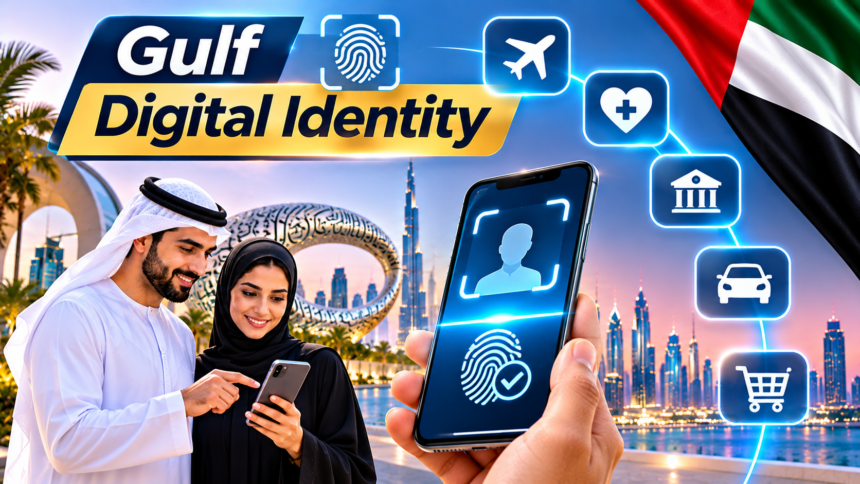
UAE Pass and Saudi Nafath: Digital Identity at Scale
A resident in Dubai needs to sign an official document, while a professional in Riyadh wants to access a government service without visiting an office. In Bahrain, a banking customer needs to verify their identity through a mobile application. Until recently, completing many such tasks could involve physical identification documents, repeated forms and face-to-face verification. Today, Gulf digital identity systems are changing how people access essential services by making secure identification possible through connected digital platforms.
- What Is Gulf Digital Identity and How Does It Work?
- 7 Ways Digital Identity Is Changing Everyday Services
- UAE Pass and Saudi Nafath: Digital Identity at Scale
- Digital Identity Systems Across All Six GCC Countries
- How Digital Identity Benefits Businesses and Consumers
- Privacy, Cybersecurity and Digital Identity Risks
- The Future of Digital Identity in the Gulf
- Frequently Asked Questions About Gulf Digital Identity
Across the six Gulf Cooperation Council countries, governments are developing systems that allow citizens and residents to prove their identities, access online services and complete certain transactions electronically.
These systems are becoming an important part of digital government infrastructure. Instead of maintaining separate accounts for every service, individuals can increasingly use a recognised digital identity to authenticate themselves through participating platforms.
The transformation extends beyond government websites.
Banks, telecommunications providers and other regulated businesses are integrating identity verification into digital customer experiences. In supported cases, users can open accounts, access information or authorise transactions without repeatedly presenting physical documentation.
The scale of adoption is particularly visible in the United Arab Emirates.
According to the UAE Telecommunications and Digital Government Regulatory Authority, UAE Pass has reached 12.5 million registered users, with 600 million logins and 12 million digitally signed documents reported in its published performance indicators.
Saudi Arabia has also developed a substantial digital identity infrastructure. Its official digital government platform states that the national single sign-on system supports access to more than 6,000 government and private-sector services.
Other GCC countries are building comparable capabilities through Bahrain’s eKey 2.0, Qatar’s digital identity application, Kuwait Mobile ID and Oman’s THEQA platform.
These developments indicate a shift in how identity is verified, but they do not mean that physical documents or in-person procedures have disappeared.
The growing importance of digital identity also raises questions about cybersecurity, data protection and accessibility.
Understanding the technology therefore requires examining both its benefits and the responsibilities involved in using it securely.
What Is Gulf Digital Identity and How Does It Work?
Digital identity is a system that enables an individual to prove who they are when accessing an electronic service.
It can involve verified personal information, secure authentication credentials and methods for approving transactions.
A national digital identity system generally works with participating government or private-sector organisations that rely on its identity-verification processes.
Digital Identity vs Physical Identification
A physical identity card contains information used to establish someone’s identity in person.
A digital identity can support electronic verification through an application or approved authentication system.
Depending on the platform, it may also provide access to electronic documents, digital signatures or secure authorisation.
The two formats can complement each other rather than serving as complete substitutes.
How Digital Identity Authentication Works
A typical process begins when a person selects an approved digital identity login option on a participating service.
The identity platform may send an authentication request to the user’s registered application.
After reviewing and approving the request, the user can be directed back to the service.
The exact verification process depends on the country’s system and the security level required.
Some transactions may require additional identity checks even when digital authentication is available.
The Role of Biometrics
Some digital identity applications use facial recognition or other biometric technology to help verify a user’s identity.
Biometric authentication can strengthen identity checks when properly implemented, but it also introduces privacy and security considerations.
Users should understand how their information is processed and should use official applications.
Digital Identity vs Traditional Verification
| Feature | Traditional Verification | Digital Identity |
|---|---|---|
| Identity Check | Physical documents | Approved electronic authentication |
| Service Access | May require office visits | Often available remotely |
| Documents | Paper copies and signatures | Digital documents where supported |
| Login Process | Separate service credentials | Unified identity for participating services |
| Security | Physical checks | Digital controls and authentication |
| Main Limitation | Travel and paperwork | Connectivity, devices and digital access |
The effectiveness of digital identity depends on whether the receiving organisation accepts it for the specific transaction.
7 Ways Digital Identity Is Changing Everyday Services
The benefits of digital identity become clearer when examining practical activities that residents perform regularly.
Although availability differs between countries and institutions, several major applications are emerging across the Gulf.
1. Faster Government Service Access
Residents can use digital identity systems to log in to participating government portals.
This can simplify applications, record checks and other administrative services.
However, certain transactions may still require additional supporting documents or appointments.
2. Digital Banking and Customer Verification
Banks must verify customer identities and satisfy applicable financial regulations.
Approved digital identity integration can help customers complete supported identification procedures through secure electronic channels.
For example, Bahrain’s Bank of Bahrain and Kuwait announced in July 2026 that it had integrated eKey 2.0 into several digital banking services, including account opening and customer information updates.
3. Electronic Document Signing
Some digital identity systems support recognised electronic signatures.
This can reduce the need to print, physically sign and scan eligible documents.
However, acceptance depends on applicable law and the type of document or transaction.
4. Healthcare Service Access
Digital authentication can allow patients to access participating health-service platforms more conveniently.
The technology may support appointment management, access to personal records and other approved digital services.
It does not automatically mean every medical record is stored in the national identity platform.
5. Telecommunications Services
Telecommunications companies need to identify customers and manage accounts securely.
Digital identity can support authentication for eligible transactions.
In Kuwait, an August 2026 service launched through Sahel allows citizens and residents to view telecommunications numbers and services registered under their names.
6. Business and Professional Transactions
Entrepreneurs may use digital identity to access government business portals, sign documents or complete approved administrative procedures.
This can be useful for businesses managing activities across different authorities.
However, digital identity does not remove licensing requirements or guarantee approval of commercial applications.
7. Secure Access to Personal Documents
Some platforms provide digital versions of identity documents or access to official records.
Kuwait Mobile ID, for example, supports a digital civil ID and a credentials wallet.
Oman’s THEQA system also enables identity verification and certified electronic signatures for eligible transactions.
Seven Applications Compared
| Application | Potential Benefit | Important Limitation |
|---|---|---|
| Government Services | Easier remote access | Service eligibility |
| Banking | Digital verification | Financial compliance |
| Document Signing | Less paperwork | Legal acceptance |
| Healthcare | Convenient authentication | Privacy requirements |
| Telecommunications | Improved identity checks | Provider integration |
| Business Services | Simpler administration | Licensing obligations |
| Digital Documents | Reduced physical-document reliance | Acceptance varies |
These improvements can make daily transactions more convenient without removing the need for appropriate safeguards.
UAE Pass and Saudi Nafath: Digital Identity at Scale
The UAE and Saudi Arabia offer two prominent examples of how national digital identity systems are becoming integrated into public and private services.
Both systems support secure authentication, but they operate within different administrative and regulatory environments.
UAE Pass: One Identity for Multiple Services
UAE Pass is the country’s unified national digital identity system for citizens, residents and eligible visitors.
It allows users to log in to participating services, sign supported documents digitally and request certain official documents.
The UAE Telecommunications and Digital Government Regulatory Authority reports 12.5 million registered users, 600 million logins and 12 million digitally signed documents in its published key indicators.
These figures illustrate extensive activity, but registered accounts and login events should not be confused with the number of unique people completing a particular transaction.
An individual may use the platform many times for different purposes.
How UAE Pass Changes Everyday Transactions
A resident may use UAE Pass to authenticate access to a participating government service without maintaining a separate username and password.
For supported documents, digital signing can also reduce the need to print and physically deliver paperwork.
The UAE Ministry of Finance adopted UAE Pass as its exclusive login mechanism for its services in August 2023, demonstrating how digital identity can become a normal entry point for public services.
However, residents should verify that they are dealing with an official or authorised service provider before approving a request.
Saudi Nafath and Unified Access
Saudi Arabia’s national digital identity infrastructure includes the Nafath mobile application and the national single sign-on system.
The official Saudi government portal explains that the system supports authentication across more than 6,000 public and private-sector services.
Nafath can provide an approval request through a registered mobile device.
Users should confirm that the request matches the service they intentionally accessed before authorising it.
The Relationship Between Nafath and Absher
Absher is an important Saudi digital government platform used for a range of Ministry of Interior services and related digital documents.
Nafath primarily supports unified identity verification and authentication for participating services.
The two systems are connected within Saudi Arabia’s wider digital identity infrastructure, but they do not perform identical functions.
UAE and Saudi Systems Compared
| Feature | UAE Pass | Saudi Nafath |
|---|---|---|
| Main Function | Unified digital identity and signatures | National identity authentication |
| Service Access | Participating public and private platforms | Participating government and private platforms |
| Mobile Authentication | Supported | Supported |
| Digital Documents | Supported features available | Wider ecosystem includes Absher |
| User Responsibility | Approve only genuine requests | Verify authentication requests |
| Availability | Depends on service and eligibility | Depends on service and eligibility |
Both systems show how identity verification can become a shared component of everyday digital services.
Digital Identity Systems Across All Six GCC Countries
The Gulf’s digital identity transformation is not limited to Dubai, Abu Dhabi or Riyadh.
Bahrain, Qatar, Kuwait and Oman have introduced systems designed to simplify identity verification and increase trust in electronic transactions.
Their technical features and availability differ, making it important to examine each platform individually.
Bahrain: eKey 2.0
Bahrain’s Information & eGovernment Authority provides eKey 2.0 as a national digital authentication solution.
The application supports secure single sign-on for participating public and private services.
Its published features include biometric authentication and an enhanced electronic know-your-customer process.
In July 2026, Bank of Bahrain and Kuwait announced the introduction of eKey 2.0 verification within its mobile banking services.
Supported activities included new account opening, updating customer information and device registration.
This provides a concrete example of digital identity extending beyond conventional government administration.
Qatar: Qatar Digital Identity

Qatar’s Ministry of Interior developed the Qatar Digital Identity application, commonly called QDI.
The platform provides digital identification and authentication capabilities for supported electronic services.
Qatar’s Ministry of Justice has also integrated QDI into selected remote legal documentation procedures.
These services can include identity checks associated with approved electronic transactions, although the availability of particular procedures depends on the relevant authority.
Kuwait: Mobile ID and Sahel
Kuwait Mobile ID, also known as Hawiyti, is issued by the Public Authority for Civil Information.
It allows eligible users to display their digital civil ID, verify identity and use approved electronic authentication and signature functions.
Sahel is a separate unified government services application.
It enables users to complete participating transactions, receive notifications and access government services.
The two platforms complement one another but should not be described as the same application.
Oman: THEQA Digital Identity
Oman’s THEQA platform provides a secure digital identity that can be activated through its mobile application.
Official guidance published in February 2026 describes capabilities including identity verification, electronic service access and certified electronic signatures.
Oman also has a Royal Oman Police digital identity service supporting identity verification and access to certain official documents.
THEQA represents a further development in making electronic authentication accessible without relying on older SIM-based activation arrangements.
GCC Digital Identity Platforms at a Glance
| Country | Main Platform | Main Capabilities |
|---|---|---|
| UAE | UAE Pass | Digital login, signatures, documents |
| Saudi Arabia | Nafath | Identity authentication and unified access |
| Bahrain | eKey 2.0 | Biometric verification and single sign-on |
| Qatar | QDI | Digital identification and supported transactions |
| Kuwait | Kuwait Mobile ID | Digital civil ID, verification and signatures |
| Oman | THEQA | Digital authentication and electronic signatures |
Although these platforms share objectives, a digital identity issued in one GCC country is not automatically accepted by every authority or business in another.
How Digital Identity Benefits Businesses and Consumers
Digital identity can create value by reducing repeated verification procedures, improving access to services and supporting electronic transactions.
For consumers, this may mean fewer forms and less travel. For businesses, it can mean simpler onboarding and more efficient administrative processes.
However, these benefits depend on reliable implementation and appropriate regulatory oversight.
Reducing Repeated Identity Checks
Businesses operating in regulated sectors often need to verify customer identities.
A trusted authentication system may simplify parts of that process, reducing the need to collect identical information repeatedly.
Nevertheless, a verified login does not necessarily satisfy every legal requirement for customer due diligence.
Banks and other regulated organisations remain responsible for the checks applicable to their activities.
Supporting Small Businesses
Small business owners may use digital identity to access government portals, complete authorised applications and sign eligible documents.
These capabilities can reduce the administrative burden associated with certain transactions.
For a business with limited employees, time saved on routine procedures can be particularly valuable.
Lowering Administrative Expenses
Digital transactions may reduce expenditure on paper, document handling and some face-to-face processing.
However, system integration, cybersecurity and employee training introduce their own costs.
The financial benefit should therefore be assessed through actual operating data rather than assuming that every digital transaction is cheaper.
Illustrative Administrative Cost Comparison
Consider a hypothetical company completing 1,000 customer identity-verification transactions each month.
| Monthly Measure | Manual Process | Digital Process |
|---|---|---|
| Transactions | 1,000 | 1,000 |
| Average Processing Cost | AED 20 | AED 9 |
| Total Direct Cost | AED 20,000 | AED 9,000 |
| Illustrative Difference | AED 11,000 |
These figures are fictional and do not represent official UAE Pass, Nafath or banking transaction costs.
They exclude initial integration expenses, software subscriptions, cybersecurity and exceptional cases requiring manual review.
Better Customer Experience
Digital identity may simplify the process of opening eligible accounts, accessing services and signing documents.
However, user experience depends on understandable instructions, functional applications and accessible support.
A complicated verification process can discourage users even when the underlying technology is secure.
For businesses, the objective should be to reduce unnecessary effort while preserving accurate identification.
Privacy, Cybersecurity and Digital Identity Risks
Digital identity systems depend on personal information and trusted authentication methods.
This makes privacy and cybersecurity central to their reliability.
An identity platform can provide strong technical protections while still requiring users and organisations to follow safe practices.
Protecting Personal Information
Identity records may contain names, identification numbers and other sensitive information.
Biometric verification introduces additional considerations because biometric characteristics cannot be changed as easily as ordinary passwords.
The UAE, Saudi Arabia and other GCC countries have their own data-protection frameworks, with different scopes and requirements.
Businesses using digital identity services must assess which obligations apply to their processing activities.
Authentication Fraud
One important risk arises when criminals trick users into approving requests they did not initiate.
A fraudulent caller may impersonate a bank or government employee and ask a victim to approve an authentication notification.
Residents should never approve an unexpected digital identity request simply because someone claims it is necessary.
Device Loss and Account Recovery
Losing a registered mobile phone may temporarily disrupt access to services.
Users should understand how to suspend access, recover their accounts and register replacement devices through official procedures.
They should also maintain suitable security settings on their phones.
Digital Exclusion
Not everyone has equal access to modern smartphones, reliable connectivity or the skills required to use digital services.
Older residents, people with disabilities and individuals requiring additional assistance may encounter barriers.
Digital service providers should consider accessible interfaces and appropriate alternative procedures where necessary.
Main Risks and Safeguards
| Risk | Possible Consequence | Practical Safeguard |
|---|---|---|
| Fraudulent Requests | Unauthorised authentication | Approve only expected requests |
| Lost Devices | Account access problems | Official recovery procedures |
| Personal Data Exposure | Privacy harm | Strong data controls |
| System Outages | Service disruption | Alternative access arrangements |
| Unclear Permissions | Unintended data sharing | Review requests carefully |
| Accessibility Barriers | Exclusion from services | Accessible assistance channels |
The success of digital identity depends on both convenient access and continued public confidence.
The Future of Digital Identity in the Gulf
Digital identity is becoming a foundational part of the GCC’s digital service infrastructure.
As more institutions adopt trusted authentication methods, residents may be able to complete additional administrative and commercial activities without repeatedly verifying their identities through separate procedures.
However, the next phase will depend on technical reliability, legal recognition and cooperation between service providers.
Greater Integration With Private Services
Banks, telecommunications companies and other businesses may increasingly adopt national identity platforms where authorised.
Bahrain’s integration of eKey 2.0 into banking services provides a recent example of this development.
For businesses, the opportunity is to improve customer access while maintaining required verification standards.
Digital Wallets and Electronic Credentials
Digital identity systems may also support the wider use of verified electronic documents.
Instead of repeatedly submitting scans of physical documents, individuals may be able to present approved digital credentials.
However, acceptance depends on the receiving organisation and applicable regulations.
Cross-Border Digital Identity
A possible longer-term development involves the recognition of digital credentials between countries.
This could simplify certain activities for people who work, study or operate businesses across borders.
The OECD’s 2026 Digital Government Outlook identifies institutional trust, mutual recognition and privacy safeguards as important requirements for cross-border identity systems.
The existence of national digital IDs across the GCC does not establish that they are already interchangeable.
The Importance of Human Support
As online identity verification becomes more common, governments and businesses should continue considering people who cannot easily use mobile applications.
Reliable assistance, accessible technology and appropriate recovery procedures will remain important.
The objective should be to make services easier to access without creating unnecessary barriers for users who need additional support.
Frequently Asked Questions About Gulf Digital Identity
What is a digital identity?
A digital identity allows a person to verify who they are when accessing approved electronic services. It may support authentication, digital documents and electronic signatures.
What is UAE Pass used for?
UAE Pass supports login to participating government and private-sector services, digital document signing and access to selected official documents.
Is Nafath the same as Absher?
No. Nafath provides national identity authentication, while Absher offers various Saudi government services and digital document features.
Can Bahrain residents use eKey 2.0 for banking?
Yes, where supported. Bank of Bahrain and Kuwait introduced eKey 2.0 authentication for selected mobile banking activities in July 2026.
What is Qatar’s digital identity application called?
Qatar’s Ministry of Interior operates the Qatar Digital Identity application, commonly known as QDI.
Does Kuwait have a digital civil ID?
Yes. Kuwait Mobile ID provides a digital version of the civil ID alongside supported verification and signature capabilities.
What is Oman’s THEQA platform?
THEQA is a digital identity platform supporting authentication, electronic access to participating services and certified electronic signatures.
Can one GCC digital ID be used across all six countries?
Not automatically. Cross-border acceptance depends on the systems, agreements and requirements of the relevant authorities.
Are digital signatures legally valid?
They can be recognised under applicable electronic transaction laws, subject to the type of signature, transaction and relevant legal requirements.
What should I do if I receive an unexpected authentication request?
Do not approve it. Use the official application or contact the relevant service provider through verified channels if you suspect fraudulent activity.
Final Thoughts
Digital identity systems are changing how people interact with everyday services across the Gulf.
From government applications and banking to official documents and business administration, trusted electronic authentication can reduce paperwork and improve convenience.
The UAE’s UAE Pass, Saudi Arabia’s Nafath, Bahrain’s eKey 2.0 and comparable systems in Qatar, Kuwait and Oman demonstrate how national digital infrastructure is becoming part of daily life.
However, convenience alone is not enough. Digital identity platforms must maintain strong security, protect personal information and remain accessible to different users.
For governments, the opportunity lies in providing efficient and trustworthy public services. For businesses, it involves simplifying customer interactions without weakening legal or security requirements.
For residents, the most important benefit is the ability to complete more tasks through reliable digital channels.
Ultimately, Gulf digital identity is reshaping more than the way people log in to applications. It is influencing how identity, trust and access are managed throughout the region’s digital economy.
Do follow us on Instagram
Read More – UAE Smart Home Data Privacy: Who Really Owns Your Data?