



Food Security and Sustainable Manufacturing in the GCC
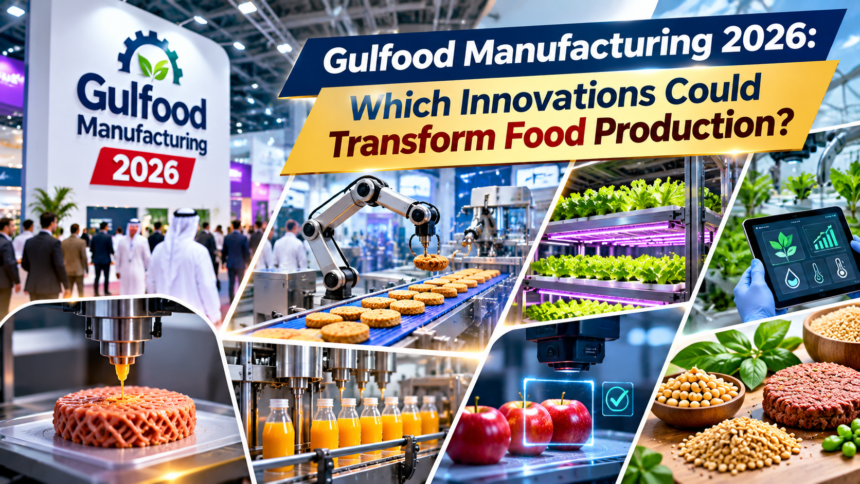
The global food industry is entering a period of rapid technological change as manufacturers search for ways to produce more efficiently, reduce waste and strengthen supply chains. From artificial intelligence and automated production lines to advanced packaging and next-generation ingredients, new technologies are changing how food reaches consumers. At Gulfood Manufacturing 2026, these innovations take centre stage as industry leaders gather in Dubai to explore the future of food and beverage production.
- What Is Gulfood Manufacturing 2026?
- 7 Innovations That Could Transform Food Production
- How AI and Robotics Are Changing Food Factories
- Smart Packaging and Food Safety Innovations
- Food Security and Sustainable Manufacturing in the GCC
- The Economics of Food Manufacturing Innovation
- Challenges Facing the Future of Food Manufacturing
- The Future of Gulfood Manufacturing 2026 and FAQs
The exhibition takes place from November 3 to 5, 2026, at Dubai World Trade Centre. Now in its 12th edition, the event brings together food manufacturers, technology developers, equipment suppliers, ingredient specialists and logistics companies from around the world.
The organisers list more than 2,500 exhibitors from over 80 participating countries, with more than 80,000 industry professionals expected and over 100 expert voices featured in the event programme.
These figures reflect the event’s published scale and expectations, rather than confirmed final attendance.
This year’s central theme focuses on strengthening food security through manufacturing innovation. Technologies designed to improve production capacity, maintain product quality and build more resilient supply chains feature prominently throughout the exhibition.
The event is organised around five major sectors: ingredients, processing, packaging, automation and control, and supply chain solutions.
Its FoodTech Summit also brings industry leaders together to discuss artificial intelligence, investment, manufacturing efficiency and future food systems.
For Gulf countries, the exhibition has significance beyond commercial networking. The region’s food manufacturers operate in an environment where supply chain resilience, energy efficiency and reliable access to ingredients are important economic considerations.
New technology may help businesses increase local processing capacity and reduce avoidable losses, but adopting advanced machinery also requires investment, technical expertise and careful financial planning.
The most important question is not simply which technologies are attracting attention, but which innovations can deliver measurable improvements in food production.
What Is Gulfood Manufacturing 2026?
Gulfood Manufacturing is an international business-to-business exhibition dedicated to food and beverage production technologies.
Unlike a consumer-focused food exhibition, its primary purpose is to connect manufacturers with businesses developing industrial equipment, ingredients, packaging systems and supply chain services.
The exhibition provides opportunities for companies to evaluate machinery, compare suppliers and discuss commercial partnerships.
Event Details
| Detail | Information |
|---|---|
| Event | Gulfood Manufacturing 2026 |
| Dates | November 3–5, 2026 |
| Venue | Dubai World Trade Centre |
| Edition | 12th |
| Exhibitors | More than 2,500 |
| Participating Countries | Over 80 |
| Expected Industry Professionals | More than 80,000 |
| Main Focus | Food manufacturing technology and innovation |
The exhibition is a trade event designed for industry professionals rather than a general consumer food festival.
Five Major Exhibition Sectors
The organisers have divided the event into five interconnected areas covering the food production process.
- Ingredients: Food formulations, additives, flavour systems, enzymes and other manufacturing inputs.
- Processing: Industrial equipment for preparing, heating, cooling, forming and inspecting food products.
- Packaging: Filling systems, sealing equipment, preservation technologies and packaging materials.
- Automation and Control: Robotics, sensors, industrial software and intelligent factory management.
- Supply Chain: Warehousing, storage, transportation, traceability and distribution systems.
Together, these sectors represent the activities required to manufacture food commercially and deliver it to customers.
Why Dubai Is Hosting This Industry Gathering
Dubai’s international trading networks and commercial infrastructure provide a location for manufacturers seeking suppliers and customers across the Middle East, Africa and international markets.
For participating companies, the exhibition provides access to businesses involved in different parts of the production chain.
However, attending the event does not automatically establish commercial demand or guarantee successful investment. Manufacturers still need to evaluate whether new technologies fit their products and operating requirements.
7 Innovations That Could Transform Food Production
Several technologies featured in the exhibition’s official programme could influence how food manufacturers operate.
Some are already widely used in industrial environments, while others are being developed or expanded for new applications.
1. Artificial Intelligence in Food Manufacturing
Artificial intelligence can analyse production information, identify unusual patterns and support decision-making.
A food factory might use AI-assisted systems to monitor equipment performance or identify potential quality problems.
The organisers’ automation sector highlights advanced data analytics, machine vision and intelligent monitoring.
However, AI-generated recommendations still require suitable testing and oversight, particularly when decisions affect food safety.
2. Robotics and Automated Production Lines
Industrial robots can support repetitive tasks such as handling products, packaging and moving materials.
Automation may improve consistency and reduce certain manual workloads.
However, manufacturers need appropriate safety systems, maintenance capabilities and trained employees.
The benefit depends on production volume and the ability to integrate the machinery with existing operations.
3. Smart Packaging Technology
Packaging innovation is a major area of the 2026 exhibition.
Featured systems include aseptic packaging, form-fill-seal machinery, vacuum packaging and modified-atmosphere packaging.
These technologies can help manufacturers protect products and manage their shelf life when appropriately validated.
However, packaging performance depends on the food type, storage conditions and regulatory requirements.
4. Advanced Food Processing Equipment
Modern processing systems can improve temperature control, mixing, cutting, forming and filling.
The exhibition includes industrial heating and cooling solutions, laboratory equipment and automated inspection technologies.
These systems may help manufacturers achieve more consistent production.
However, equipment performance must be assessed through actual output, energy consumption and product quality.
5. Next-Generation Food Ingredients
Ingredient innovation can influence taste, texture, stability and nutritional characteristics.
The exhibition highlights emulsifiers, enzymes, preservatives, stabilisers, starches and other formulation components.
Manufacturers may use improved ingredients to develop new products or address specific processing challenges.
Any nutritional or health claims must be supported by appropriate evidence and comply with applicable rules.
6. Intelligent Cold Chain and Logistics
Food products often require controlled storage and transportation conditions.
Temperature-monitoring systems, intelligent inventory software and automated warehouses may help businesses reduce avoidable losses.
The exhibition includes cold storage infrastructure, warehouse management tools and automated guided vehicles.
These technologies can support logistics efficiency, but they require reliable equipment and coordinated operations.
7. Digital Twins and Connected Factories
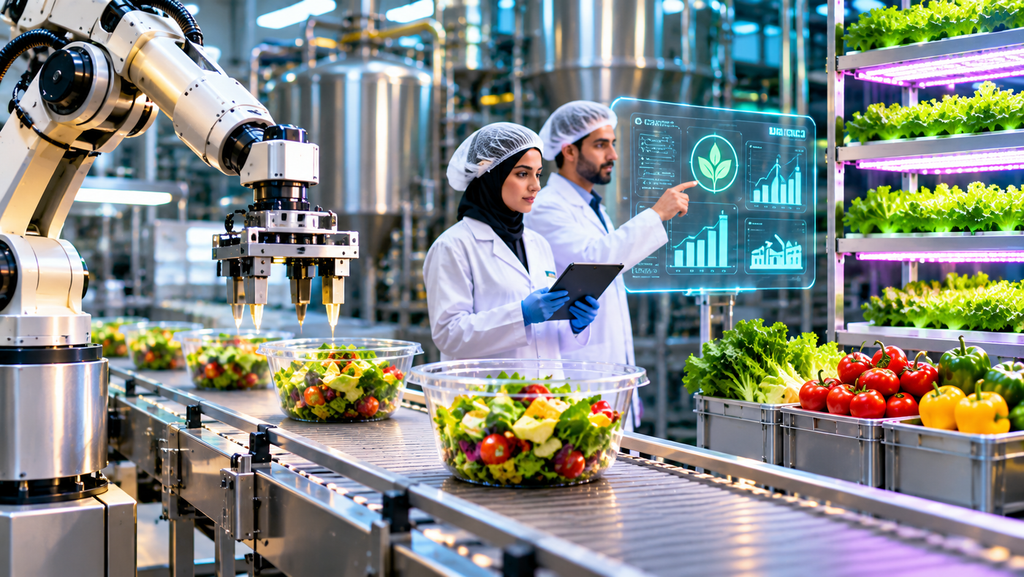
A digital twin is a digital representation of a physical system that uses relevant information to support analysis and monitoring.
Manufacturers may use digital twins to study production performance or evaluate potential operational changes.
The exhibition’s automation programme identifies digital twins, industrial Internet of Things systems and supervisory control technologies among its featured solutions.
Their usefulness depends on accurate information and appropriate integration with real equipment.
Seven Innovations Compared
| Innovation | Potential Benefit | Main Challenge |
|---|---|---|
| Artificial Intelligence | Improved analysis and monitoring | Data quality |
| Robotics | Consistent production processes | Equipment investment |
| Smart Packaging | Product protection and shelf life | Material and machinery costs |
| Advanced Processing | Production efficiency | Integration |
| New Ingredients | Product development | Safety and compliance |
| Intelligent Logistics | Better storage and distribution | Infrastructure requirements |
| Digital Twins | Operational visibility | Technical complexity |
These technologies could improve different stages of food manufacturing, but no single innovation is suitable for every factory.
How AI and Robotics Are Changing Food Factories
Artificial intelligence and robotics are among the most prominent technologies associated with modern industrial production.
Their potential value comes from improving decisions, reducing repetitive work and identifying problems before they disrupt operations.
However, manufacturers need to distinguish between technologies that demonstrate impressive capabilities and those that deliver practical financial benefits.
Predictive Maintenance
Industrial equipment requires regular maintenance.
A malfunctioning filling machine or processing system can interrupt production and create additional expenses.
Connected sensors may record information about temperature, vibration and other operating conditions.
Software can analyse this data to identify patterns suggesting that maintenance may be required.
At Gulfood Manufacturing 2026, automation supplier ifm is promoting industrial sensors and its moneo platform for connecting machinery information with monitoring systems.
This provides a concrete example of technology intended to improve visibility across production equipment.
However, predictive maintenance does not eliminate unexpected failures.
Automated Quality Inspection
Machine vision can help identify certain product defects or packaging problems.
For example, a camera-based inspection system may check whether packages have suitable labels or visible defects.
Automated inspection can support consistent monitoring during high-volume production.
Nevertheless, it must be validated for the actual products being assessed and should complement appropriate food safety controls.
Robotics in Packaging and Handling
Robotic systems can move products between production lines, prepare cartons and assist with palletising.
These applications may be particularly valuable where businesses handle large volumes of standardised products.
However, smaller manufacturers may find conventional machinery more economical.
Human Workers Remain Important
Automation changes employee responsibilities rather than necessarily eliminating the need for workers.
Factories still require technicians, engineers, quality-control specialists and experienced production managers.
Employee training is therefore an essential part of successful automation investment.
Smart Packaging and Food Safety Innovations
Packaging plays an important role in protecting food during storage, transportation and retail distribution.
It can influence shelf life, product quality and consumer convenience.
The 2026 exhibition places particular emphasis on packaging systems that combine efficiency, appropriate material selection and improved preservation methods.
Aseptic Packaging
Aseptic packaging involves processing and filling suitable products under controlled conditions designed to prevent contamination.
When appropriately implemented, it can support the safe storage of certain products without continuous refrigeration before opening.
However, the required process depends on the product and must meet relevant safety standards.
Modified-Atmosphere Packaging
Modified-atmosphere packaging involves changing the gas composition inside a package.
It is used for selected products to help manage deterioration and preserve quality.
The benefits depend on the food, packaging material and storage conditions.
It should not be regarded as a substitute for appropriate temperature control or hygiene.
Automated Inspection Systems
The exhibition’s processing sector includes X-ray inspection and laboratory measurement systems.
These technologies may help manufacturers identify specific physical contaminants or quality problems.
However, an inspection system cannot detect every possible food safety hazard.
Businesses must use suitable methods and maintain comprehensive food safety programmes.
Sustainable Packaging Materials
Manufacturers are also examining ways to reduce unnecessary packaging material and improve resource efficiency.
However, replacing conventional packaging with an alternative material does not automatically reduce environmental impact.
Companies must assess food protection, transport requirements, recyclability and the resources required to manufacture the material.
Packaging Technologies Compared
| Technology | Main Purpose | Key Consideration |
|---|---|---|
| Aseptic Packaging | Controlled filling and preservation | Process validation |
| Modified-Atmosphere Packaging | Managing product deterioration | Food-specific suitability |
| Vacuum Packaging | Removing air from suitable packages | Storage conditions |
| Automated Inspection | Detecting defined defects | Equipment capability |
| Smart Packaging Integration | Improved information and control | Cost and compatibility |
| Sustainable Materials | Potential environmental benefits | Full lifecycle assessment |
The most effective packaging solution is one that protects food reliably while meeting commercial, regulatory and environmental requirements.
Food Security and Sustainable Manufacturing in the GCC
Food security is a central theme of Gulfood Manufacturing 2026.
For Gulf countries, manufacturing capacity and supply chain resilience are important because the region must manage demanding climatic conditions and international trade dependencies.
Improved production technology may help businesses process imported or locally produced ingredients more efficiently.
However, food security involves more than constructing additional factories.
Reliable supply chains, diversified sourcing, affordable products and effective distribution are also essential.
Strengthening Local Processing Capacity
Food manufacturing allows countries to convert raw ingredients into products suitable for domestic consumption or export.
Investments in processing equipment may help manufacturers increase capacity and develop new product categories.
However, the economic value depends on production costs, market demand and access to ingredients.
Reducing Food Waste
Manufacturers can lose products through damaged packaging, unsuitable storage and production errors.
Better monitoring and handling may reduce some avoidable losses.
However, companies should measure actual waste before deciding which equipment upgrades are necessary.
Energy-Efficient Production
Food processing can require significant energy for heating, refrigeration and other operations.
Manufacturers may improve efficiency through suitable equipment, maintenance and process management.
Environmental benefits depend on actual energy savings rather than advertised efficiency claims alone.
Responsible Ingredient Sourcing
The exhibition highlights sourcing transparency and traceable supply chains.
Traceability systems can help companies identify where ingredients originated and how products moved through distribution networks.
However, digital records are useful only when the information entered is accurate and verified.
Sustainability Priorities
| Priority | Potential Improvement | Practical Requirement |
|---|---|---|
| Energy Efficiency | Reduced energy consumption | Performance measurement |
| Waste Reduction | Fewer manufacturing losses | Process monitoring |
| Water Management | More efficient water use | Suitable equipment |
| Ingredient Traceability | Better supply-chain visibility | Reliable records |
| Packaging Improvement | Reduced resource use | Lifecycle evaluation |
| Local Processing | Greater manufacturing capability | Competitive operations |
For Gulf manufacturers, the objective is to combine production growth with efficient use of resources.
The Economics of Food Manufacturing Innovation
Modern production technologies can require significant initial investment.
Manufacturers must therefore evaluate whether efficiency improvements, lower waste or additional production capacity justify their costs.
A technology demonstration at an exhibition can be useful, but purchasing decisions require detailed financial and operational analysis.
The Cost of Automation
Automation projects may involve machinery, software, installation, employee training and maintenance.
Some factories may also require changes to electrical systems, building layouts and production procedures.
Businesses should compare total ownership costs rather than focusing only on equipment prices.
Illustrative Factory Investment Model
Consider a hypothetical UAE food manufacturer examining an automated packaging upgrade.
| Financial Measure | Illustrative Amount |
|---|---|
| Equipment and Installation | AED 1,000,000 |
| Training and Integration | AED 150,000 |
| Total Initial Investment | AED 1,150,000 |
| Annual Labour and Handling Savings | AED 240,000 |
| Annual Waste Reduction Savings | AED 120,000 |
| Annual Additional Maintenance Costs | AED 60,000 |
| Net Annual Savings | AED 300,000 |
Under these hypothetical assumptions, the simple payback period would be approximately 3.8 years.
This calculation does not include financing, tax, inflation, equipment replacement or changes in production demand.
The figures are fictional and do not represent an actual Gulfood Manufacturing exhibitor’s financial results.
Why Small Manufacturers Face Different Choices
Large food manufacturers may be able to spread technology investment across substantial production volumes.
Smaller producers may need more flexible equipment or gradual upgrades.
For example, improving quality monitoring or inventory management may be more practical than replacing an entire production line.
Questions Before Purchasing Equipment
Manufacturers should evaluate the following factors:
- What specific production problem will the technology solve?
- Can the supplier demonstrate measurable performance?
- Is the equipment suitable for existing production lines?
- What are the full installation and maintenance costs?
- Will employees require specialist training?
- Are replacement parts and local support available?
- Does the system meet applicable food safety requirements?
- How will energy and waste savings be measured?
- What happens if the equipment becomes unavailable?
- Is the expected financial return realistic?
The most valuable innovation is not necessarily the most advanced machine. It is the solution that delivers reliable improvements for the manufacturer’s circumstances.
Challenges Facing the Future of Food Manufacturing
While advanced technologies create opportunities, their adoption introduces operational and commercial challenges.
Food manufacturers need to balance efficiency, safety, affordability and regulatory requirements.
High Investment Requirements
Advanced equipment can require substantial funding.
Companies may struggle to justify major upgrades when demand is uncertain or existing machinery remains functional.
Gradual modernisation may sometimes offer a more manageable approach.
Cybersecurity in Connected Factories
Industrial sensors, cloud platforms and automated control systems create additional digital connections.
If these systems are poorly secured, operational disruptions or unauthorised access could affect production.
Manufacturers should consider cybersecurity when selecting equipment and integrating factory systems.
Food Safety and Regulatory Compliance
New ingredients and manufacturing processes must comply with applicable food safety regulations.
A technology shown at an international exhibition may still require additional approval or validation before commercial use in a particular GCC market.
Workforce Development
Automation requires employees capable of operating, maintaining and troubleshooting increasingly sophisticated equipment.
Training and technical support are therefore important components of modern factory investment.
Supplier Dependence
A manufacturer may become dependent on one provider for replacement parts, software or maintenance.
Businesses should evaluate supplier reliability and long-term support before purchasing specialised systems.
Challenges Compared
| Challenge | Potential Impact | Management Priority |
|---|---|---|
| High Equipment Costs | Financial pressure | Detailed investment analysis |
| Cybersecurity | Operational disruption | Secure system design |
| Regulatory Requirements | Delayed implementation | Early compliance checks |
| Skills Shortages | Reduced equipment performance | Employee training |
| Supplier Dependence | Maintenance delays | Reliable service agreements |
| Technology Integration | Production interruptions | Controlled implementation |
Companies should approach innovation through structured testing and realistic expectations rather than assuming every new system will improve performance.
The Future of Gulfood Manufacturing 2026 and FAQs
Gulfood Manufacturing 2026 brings together technologies that could influence how the food industry develops over the coming years.
Artificial intelligence, robotics, advanced processing equipment and connected supply chains offer different ways to improve productivity and resilience.
However, their long-term significance will depend on actual adoption, measurable performance and the ability of manufacturers to operate them sustainably.
The FoodTech Summit
The exhibition’s FoodTech Summit features discussions covering food security, artificial intelligence, manufacturing efficiency and investment.
It provides a forum for industry participants to examine emerging technologies and their commercial implications.
The presence of a technology in the programme does not necessarily mean it has been deployed successfully at industrial scale.
Industry Excellence Awards
The 2026 Industry Excellence Awards cover 11 categories, including AI and smart manufacturing, food safety, packaging, processing and sustainable manufacturing.
The programme also includes a Factory of the Future Award recognising the use of advanced manufacturing technologies.
Award recognition can highlight promising developments, but manufacturers should still conduct independent assessments before purchasing products.
Frequently Asked Questions
When is Gulfood Manufacturing 2026?
The exhibition takes place from November 3 to 5, 2026.
Where is the event being held?
It is hosted at Dubai World Trade Centre in the UAE.
How many exhibitors are participating?
The official event website lists more than 2,500 exhibitors from over 80 participating countries.
What technologies are featured?
The programme covers AI, robotics, advanced processing, smart packaging, digital twins, food ingredients and intelligent supply chains.
Is Gulfood Manufacturing the same as Gulfood?
No. Gulfood Manufacturing focuses on food and beverage production technologies, while Gulfood is a separate international food and beverage trade exhibition.
Can AI improve food manufacturing?
AI may support quality monitoring, maintenance and production planning when systems are trained, tested and implemented appropriately.
What is smart packaging?
Smart packaging is a broad term covering packaging technologies designed to improve functionality, monitoring or product information. Its features vary between systems.
Why is food security important at the exhibition?
The event examines technologies and supply chain strategies that may help manufacturers improve production resilience and manage supply risks.
Can small food businesses benefit from the exhibition?
Yes. Smaller producers can explore suitable equipment, ingredients and suppliers, although investment decisions should reflect their financial capacity.
Will automation replace all food factory workers?
No. Automation can change particular tasks, but factories continue to require employees for maintenance, quality assurance, supervision and management.
Final Thoughts
Gulfood Manufacturing 2026 highlights the increasing role of technology in modern food and beverage production.
From intelligent factory systems and automated packaging to advanced ingredients and cold-chain solutions, the exhibition offers manufacturers opportunities to explore different approaches to improving performance.
For Gulf countries, these developments have particular relevance to food security, supply chain resilience and industrial growth.
However, technology alone cannot guarantee higher productivity, lower costs or more sustainable operations.
Successful innovation requires suitable equipment, trained employees, reliable suppliers and careful measurement of results.
For manufacturers, the exhibition provides an opportunity to compare solutions and establish partnerships. For technology companies, it offers access to potential customers seeking practical improvements in food production.
Ultimately, Gulfood Manufacturing 2026 demonstrates how the future of food production may be shaped by a combination of automation, intelligent systems, better packaging and more resilient supply chains.
The innovations most likely to matter are those that move beyond demonstrations and deliver reliable value in real factories.
Do follow us on Instagram
Read More – UAE Federal Budget 2027–2029: Where Will AED 292.5 Billion Go?