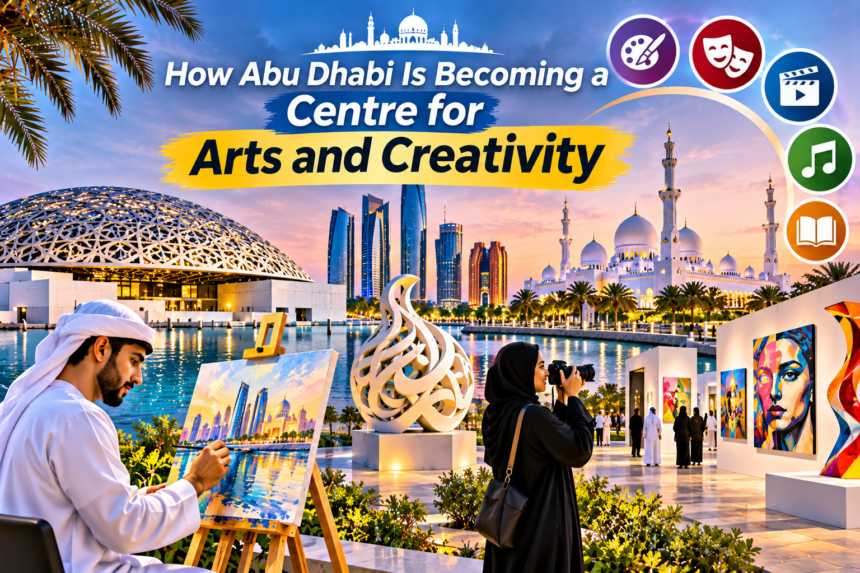
How Abu Dhabi Is Becoming a Centre for Arts and Creativity
Abu Dhabi is developing a cultural identity that brings together traditional heritage, modern art, music, architecture, film, design, and new forms of creative expression. Once widely recognised for its oil industry, impressive skyline, and major infrastructure projects, the UAE capital is now attracting growing attention as a destination for artists, cultural organisations, creative businesses, and visitors interested in the arts.
- 1. Saadiyat Cultural District Is Changing Abu Dhabi’s Cultural Landscape
- 2. Louvre Abu Dhabi Is Connecting Local and International Art
- 3. New Museums Are Creating a Wider Cultural Experience
- 4. Cultural Foundation Is Supporting Local Artists and Community Creativity
- 5. Emirati Heritage Is Inspiring Modern Artistic Expression
- 6. Art Festivals and Exhibitions Are Attracting Global Attention
- 7. Music and Performing Arts Are Expanding Creative Opportunities
- 8. Creative Education Is Helping Develop the Next Generation of Artists
- 9. Film, Media, Gaming, and Technology Are Broadening the Creative Economy
- 10. Support for Artists and Creative Businesses Is Strengthening the Ecosystem
- 11. Public Art Is Bringing Creativity into Everyday Urban Spaces
- 12. Art and Creativity Are Supporting Tourism and Economic Diversification
- Conclusion: Abu Dhabi Is Building a Creative Future Rooted in Culture
- Frequently Asked Questions (FAQs)
The transformation is visible across the city. International museums are opening, galleries are welcoming emerging artists, cultural festivals are bringing communities together, and creative spaces are providing opportunities for people to learn new skills. At the same time, traditional Emirati crafts, Arabic music, poetry, and storytelling are receiving renewed attention.
A major part of this development is happening on Saadiyat Island, where several important museums and cultural institutions are creating a dedicated cultural district. However, Abu Dhabi’s creative growth extends beyond museums. Cultural Foundation, Qasr Al Hosn, Manarat Al Saadiyat, Bait Al Oud, and Yas Creative Hub all contribute to a wider environment where artists, designers, filmmakers, musicians, and entrepreneurs can develop their ideas.
The Department of Culture and Tourism – Abu Dhabi has also identified cultural and creative industries as important contributors to social development, economic diversification, and international engagement. Its strategy covers areas such as visual arts, performing arts, heritage, crafts, design, publishing, film, television, multimedia, gaming, and esports.
This article explores how Abu Dhabi is becoming a centre for arts and creativity, the institutions and initiatives driving this change, and the opportunities this growing cultural environment may create for artists, businesses, residents, and visitors.
1. Saadiyat Cultural District Is Changing Abu Dhabi’s Cultural Landscape
One of the strongest examples of Abu Dhabi’s cultural development is Saadiyat Cultural District. Located on Saadiyat Island, this area brings together museums, exhibitions, public spaces, and creative experiences in one destination.
Rather than depending on a single attraction, the district is being developed as a place where visitors can explore different aspects of art, history, science, architecture, and contemporary culture.
Its major institutions include:
- Louvre Abu Dhabi: An international museum presenting artworks and historical objects from different civilisations.
- Zayed National Museum: A national museum exploring the history, heritage, and development of the UAE.
- Natural History Museum Abu Dhabi: A museum exploring the history of life on Earth, natural sciences, and the natural world.
- teamLab Phenomena Abu Dhabi: An immersive art destination combining digital technology, light, movement, and interactive experiences.
- Manarat Al Saadiyat: A cultural centre supporting exhibitions, workshops, community activities, and artistic programmes.
- Guggenheim Abu Dhabi: A major modern and contemporary art museum scheduled to open on 11 December 2026.
These institutions offer different experiences, but together they create opportunities for cultural exchange and learning. A visitor can explore historical artworks, understand the story of the UAE, experience digital installations, and discover contemporary artistic practices within the same wider district.
The development of Saadiyat Cultural District also demonstrates Abu Dhabi’s intention to make culture part of everyday city life. Museums and cultural spaces are not being treated only as tourist attractions. They are becoming places for education, discussion, research, and creative participation.
2. Louvre Abu Dhabi Is Connecting Local and International Art
The opening of Louvre Abu Dhabi in 2017 was a major moment in the development of the emirate’s cultural identity. The museum introduced an international approach to presenting art and history, bringing objects from different cultures and historical periods into a shared setting.
Its distinctive architecture, designed by Jean Nouvel, is one of its most recognisable features. The large geometric dome filters sunlight into the museum’s outdoor spaces, creating the effect commonly described as a “rain of light”.
However, the museum’s importance extends beyond its architecture.
Louvre Abu Dhabi presents art and historical objects in a way that encourages visitors to identify connections between civilisations. Instead of looking at history through the story of a single country, visitors can explore how different societies developed, traded, communicated, and influenced one another.
Its exhibitions and educational activities also provide opportunities for people to learn about artistic traditions, ancient objects, painting, sculpture, and contemporary creativity.
For Abu Dhabi, the museum supports several important goals:
- Attracting international artists, researchers, and cultural visitors.
- Encouraging interest in art history and museum education.
- Creating opportunities for dialogue between different cultures.
- Introducing residents and students to international artistic traditions.
- Strengthening the city’s position as a destination for cultural tourism.
Louvre Abu Dhabi has helped establish a foundation on which other museums and cultural institutions can build. It also shows how a city can use art to encourage international understanding while developing its own cultural identity.
3. New Museums Are Creating a Wider Cultural Experience
Abu Dhabi’s museum development is expanding the range of subjects visitors can explore.
Zayed National Museum is particularly important because it focuses on the story of the UAE and the legacy of the country’s founding father and the first president, Sheikh Zayed bin Sultan Al Nahyan. Through historical objects, exhibitions, and storytelling, it offers visitors an opportunity to understand the country’s development, traditions, and connections with the wider world.
Natural History Museum Abu Dhabi adds another dimension by exploring the natural world. Its exhibitions connect subjects such as evolution, biodiversity, geology, and the history of life with scientific learning.
Meanwhile, teamLab Phenomena Abu Dhabi introduces a different approach to artistic expression. Its immersive installations use digital technology and interactive elements to create experiences that change in response to visitors and their surroundings.
The museums are part of Saadiyat Cultural District, which has developed into a major concentration of cultural institutions. Zayed National Museum opened in December 2025, while Natural History Museum Abu Dhabi opened in November 2025.
Another major development is Guggenheim Abu Dhabi. Designed by architect Frank Gehry, the museum will focus on modern and contemporary art, with particular attention to artistic perspectives from West Asia, North Africa, and South Asia alongside wider international works.
The building features five distinct aerodynamic thermal steel towers, shaped like a falcon’s wings that act as chimneys to draw a cool air through a building.
The Department of Culture and Tourism – Abu Dhabi announced that Guggenheim Abu Dhabi will open on 11 December 2026. Its planned galleries and exhibition spaces are expected to strengthen the city’s contemporary art scene.
These developments show that Abu Dhabi is building a cultural environment that goes beyond traditional museum visits. It is creating opportunities for people to explore history, science, technology, and artistic innovation together.
4. Cultural Foundation Is Supporting Local Artists and Community Creativity
While major museums attract international attention, local creative institutions are equally important to the development of an arts community.
The Cultural Foundation, located opposite Qasr Al Hosn in central Abu Dhabi, has played an important role in the emirate’s cultural life since the early 1980s. It provides space for exhibitions, performances, workshops, and community activities.
The centre includes galleries, dedicated studio spaces, a 900-seat theatre, and the Abu Dhabi Children’s Library.
Its programmes cover different artistic interests, including visual art, music, theatre, dance, and traditional Arabic calligraphy. It also hosts artist residencies and activities that encourage interaction between Emirati and international creatives.
The Cultural Foundation is particularly valuable because it makes creative activities accessible to different age groups and experience levels.
For example:
- Beginners can attend introductory art classes.
- Experienced artists can develop their techniques through advanced workshops.
- Children can explore creativity through reading, art, and interactive learning.
- Visitors can attend cultural performances and exhibitions.
- Artists can use the space to share their work and connect with audiences.
Such facilities help make creativity a regular part of community life. They also provide opportunities for people who may not work professionally in the arts but want to develop their interests.
5. Emirati Heritage Is Inspiring Modern Artistic Expression
Becoming an international arts centre does not mean leaving traditional culture behind. In fact, one of Abu Dhabi’s important creative strengths is its effort to connect modern artistic expression with Emirati heritage.
The emirate has a rich cultural background shaped by desert life, pearling, fishing, trade, hospitality, poetry, music, and traditional craftsmanship.
These influences continue to provide inspiration for contemporary artists, designers, musicians, and storytellers.
Qasr Al Hosn is a strong example of how heritage can remain part of a modern cultural environment. Recognised as Abu Dhabi’s oldest stone building, it reflects the city’s historical development and provides visitors with an opportunity to learn about the emirate’s past.
Nearby, the House of Artisans highlights traditional Emirati crafts and the skills behind them. Visitors can discover practices such as Al Sadu weaving, traditional embroidery, palm-leaf crafts, and other forms of handmade work.
These traditions are more than decorative objects. They reflect the knowledge, creativity, and everyday experiences of earlier generations.
Heritage activities can also help younger people understand how traditional skills may influence modern design, fashion, architecture, and visual art.
This connection between old and new is important because it gives Abu Dhabi’s creative scene a distinctive identity. International influences can be welcomed while local stories, materials, techniques, and cultural experiences remain visible.
6. Art Festivals and Exhibitions Are Attracting Global Attention
Festivals and art fairs play an important role in making a city culturally active. They provide opportunities for artists to exhibit their work, galleries to meet collectors, and audiences to experience new ideas.
Abu Dhabi has developed a calendar of cultural events covering visual art, music, literature, traditional crafts, public installations, and creative discussions.
One of the important changes in 2026 is the arrival of Frieze Abu Dhabi. The event follows the 17 editions of Abu Dhabi Art, which concluded in 2025. Abu Dhabi Art grew from 42 galleries in its first edition in 2009 to 142 galleries in its final edition in 2025.
The inaugural Frieze Abu Dhabi is scheduled for 20–22 November 2026 at Manarat Al Saadiyat. It is organised by Frieze in partnership with the Department of Culture and Tourism – Abu Dhabi.
The event is expected to provide a platform for international galleries, artists, collectors, and cultural professionals to connect with Abu Dhabi’s creative community.
Other activities also contribute to the city’s cultural calendar. As of early November 2026,
the official calendar includes:
- Public Art Abu Dhabi Biennial: Scheduled from 23 October to 15 November 2026, bringing artworks and installations into public spaces.
- Traditional Handicrafts Festival: Scheduled from 23 October to 10 November 2026, highlighting traditional skills and craft practices.
- Frieze Abu Dhabi: Scheduled for 20–22 November 2026.
- Culture Summit Abu Dhabi: Scheduled for 8–10 December 2026, bringing cultural leaders and professionals together.
The calendar also features the Maritime Heritage Festival and other activities celebrating Emirati traditions and creative expression.
These events help create a cultural atmosphere throughout the year rather than limiting artistic activity to permanent museum exhibitions.
7. Music and Performing Arts Are Expanding Creative Opportunities
Visual art is only one part of a city’s creative identity. Music, theatre, dance, and live performance also help communities express themselves and share cultural experiences.
Abu Dhabi supports different forms of performing arts through venues, festivals, educational programmes, and cultural organisations.
The Cultural Foundation’s theatre hosts music, dance, and theatrical performances featuring local and international artists. Cultural festivals also introduce audiences to different styles of music and performance.
Bait Al Oud is another important institution. Founded in Abu Dhabi in 2008, it is dedicated to teaching, studying, and preserving the oud and other Arabic musical instruments.
Its programmes cover instrumental learning, music theory, vocals, and traditional Arabic musical forms. The centre aims to develop skilled musicians while keeping important musical traditions alive.
The wider performing arts environment also includes Berklee Abu Dhabi and The Arts Center at New York University Abu Dhabi, which contribute to music, performance, experimentation, and artistic education.
Such institutions help musicians and performers develop their skills, gain experience, and connect with other professionals.
They also give residents more opportunities to enjoy cultural activities, discover different musical traditions, and become involved in creative communities.
8. Creative Education Is Helping Develop the Next Generation of Artists
A successful creative city needs more than impressive buildings and exhibitions. It also needs people with the knowledge, confidence, and skills to create new work.
Creative education is therefore an important part of Abu Dhabi’s cultural development.
The city offers different learning opportunities through museums, cultural centres, universities, music institutions, art studios, and professional development programmes.
Manarat Al Saadiyat is one example. Its Art Studio offers workshops, classes, and hands-on activities for children, adults, students, and families. Participants can explore different art forms, experiment with materials, and develop practical creative skills.
Its Teaching Artist Fellowship also provides a structured five-month residency for selected artists who want to develop their teaching practice and community engagement skills.
Creative education can support different interests, including:
- Painting, drawing, and sculpture.
- Photography and visual storytelling.
- Graphic design and digital illustration.
- Music and instrument performance.
- Theatre, dance, and stage production.
- Traditional crafts and calligraphy.
- Film-making and media production.
- Creative writing and publishing.
These opportunities are valuable because artistic development often requires practice, guidance, feedback, and access to suitable facilities.
Education also helps young people discover careers they may not have considered before. Someone interested in drawing could explore graphic design, animation, or illustration. A student who enjoys music could consider performance, production, sound engineering, or music education.
By developing creative skills early, Abu Dhabi can help build a stronger foundation for its future cultural and creative industries.
9. Film, Media, Gaming, and Technology Are Broadening the Creative Economy
The meaning of creativity has expanded significantly in recent years. It is no longer limited to traditional forms such as painting, sculpture, and music.
Film, television, animation, digital content, gaming, esports, and interactive media have become important parts of the global creative economy.
Abu Dhabi is investing in these areas as part of its wider efforts to develop a connected creative ecosystem.
Yas Creative Hub is a major facility for media, entertainment, and gaming businesses. It provides a working environment for companies and professionals involved in film, television, content creation, and related industries.
The wider twofour54 ecosystem also supports creative collaboration, training, and talent development. Its Community Hub provides spaces where media, entertainment, and gaming professionals can meet, exchange ideas, and work together.
The Creative Media Authority was established to help accelerate the growth of Abu Dhabi’s creative media sector, including film and television, gaming, and esports. Its role also includes supporting talent development and connecting different creative industries.
These sectors can create opportunities for professionals such as:
- Film directors and producers.
- Screenwriters and editors.
- Cinematographers and photographers.
- Animators and visual effects artists.
- Game developers and designers.
- Sound designers and music producers.
- Digital marketing specialists.
- Esports professionals.
- Content creators and creative entrepreneurs.
The combination of technology and artistic thinking is particularly important for the future. Creative professionals increasingly work with digital tools, artificial intelligence, virtual production, interactive platforms, and online audiences.
By supporting these industries, Abu Dhabi is developing a creative economy that includes both traditional artistic practices and modern digital production.
10. Support for Artists and Creative Businesses Is Strengthening the Ecosystem
Artists need more than inspiration to build sustainable careers. They also need access to facilities, professional networks, training, business support, and opportunities to present or sell their work.
Abu Dhabi’s wider cultural strategy recognises the importance of creating an environment where creative professionals and businesses can develop.
The Department of Culture and Tourism – Abu Dhabi has outlined a planned investment of more than AED 30 billion across the culture and creative industries. Its strategy covers different areas, including museums, heritage, design, publishing, performing arts, visual arts, film, television, multimedia, gaming, and esports.
Initiatives such as the Creative Visa Programme are also designed to support talented creative professionals who want to live and work in the emirate.
The wider support environment can benefit different types of creative workers:
- Independent artists looking for opportunities to exhibit their work.
- Designers developing products and creative services.
- Filmmakers seeking production facilities and professional networks.
- Musicians building performance and teaching careers.
- Entrepreneurs starting creative businesses.
- Digital creators working in gaming, media, and interactive content.
This support matters because a creative industry cannot grow only through events and exhibitions. It needs professionals who can earn a living, build businesses, collaborate, and create work over the long term.
11. Public Art Is Bringing Creativity into Everyday Urban Spaces
Art does not always need to be displayed inside a museum or gallery. Public spaces can also become places for artistic expression.
Public art can include sculptures, murals, installations, interactive artworks, and creative designs placed in areas where residents and visitors regularly spend time.
Abu Dhabi’s Public Art Abu Dhabi programme and biennial contribute to this approach by bringing artistic projects into the wider urban environment.
Public art can make the city more visually interesting while introducing people to different forms of expression. It also allows audiences to encounter creativity without necessarily planning a museum visit.
Some benefits of public art include:
- Making shared spaces more attractive and engaging.
- Providing opportunities for artists to reach wider audiences.
- Encouraging conversations about identity, history, and society.
- Supporting cultural participation among residents.
- Connecting artistic ideas with everyday urban life.
Public installations can also help visitors understand that art is not limited to established artists or expensive exhibitions. It can be part of streets, parks, public buildings, and community spaces.
When creative work becomes visible in everyday surroundings, people may become more interested in exploring other cultural activities.
12. Art and Creativity Are Supporting Tourism and Economic Diversification
Abu Dhabi’s growing cultural scene is also connected to its wider economic development.
Cultural tourism attracts people who travel to experience museums, architecture, exhibitions, performances, festivals, and heritage sites. These visitors may also spend money on hotels, restaurants, transport, shopping, and other local services.
As a result, arts and culture can support employment and business activity beyond the creative sector itself.
For example, a major art exhibition may create work for curators, technicians, designers, security professionals, event organisers, marketing teams, transport providers, and hospitality businesses.
Cultural development can also encourage international companies and creative professionals to establish connections with the emirate.
The Department of Culture and Tourism describes the creative industries as important contributors to social and economic growth and diversification. Its cultural strategy connects artistic development with education, employment, community participation, and international engagement.
This demonstrates why arts and creativity are becoming part of Abu Dhabi’s broader economic plans. They can help develop professional opportunities while making the emirate more attractive to people seeking cultural experiences.
However, economic benefits are only one part of the picture. Art also contributes to education, personal expression, cultural understanding, and quality of life.
Conclusion: Abu Dhabi Is Building a Creative Future Rooted in Culture
Abu Dhabi is becoming an important centre for arts and creativity through a combination of cultural investment, international museums, local heritage institutions, art festivals, creative education, and support for modern industries.
Saadiyat Cultural District is changing the city’s cultural landscape, while institutions such as Louvre Abu Dhabi, Zayed National Museum, Natural History Museum Abu Dhabi, and teamLab Phenomena are offering new ways to explore art, history, science, and technology. The upcoming Guggenheim Abu Dhabi will add another major destination for contemporary art.
At the same time, Cultural Foundation, Qasr Al Hosn, House of Artisans, Bait Al Oud, Manarat Al Saadiyat, and Yas Creative Hub are helping develop a wider creative environment for artists, musicians, designers, filmmakers, and entrepreneurs.
The most important part of this transformation is the connection between local identity and international creativity. Abu Dhabi is not simply bringing global cultural institutions into the city. It is also creating opportunities to preserve Emirati heritage, develop local talent, and encourage new artistic ideas.
As the cultural scene continues to grow, its success will depend on accessibility, education, community participation, and sustainable opportunities for creative professionals.
Abu Dhabi’s journey towards becoming a centre for arts and creativity is about more than building museums and hosting festivals. It is about creating a city where heritage is valued, ideas are encouraged, and people have the freedom and opportunity to express themselves.
Frequently Asked Questions (FAQs)
1. Why is Abu Dhabi becoming a centre for arts and creativity?
Abu Dhabi is investing in museums, cultural districts, art festivals, education, heritage preservation, creative media, and artist support. These developments are attracting artists, cultural organisations, businesses, and visitors.
2. What is Saadiyat Cultural District known for?
Saadiyat Cultural District is a major cultural destination on Saadiyat Island. It includes Louvre Abu Dhabi, Zayed National Museum, Natural History Museum Abu Dhabi, teamLab Phenomena Abu Dhabi, and Manarat Al Saadiyat, with Guggenheim Abu Dhabi scheduled to open in December 2026.
3. What is the Cultural Foundation in Abu Dhabi?
The Cultural Foundation is a cultural centre near Qasr Al Hosn. It hosts art exhibitions, workshops, music and theatre performances, artist residencies, and activities at the Abu Dhabi Children’s Library.
4. How does Abu Dhabi support local artists?
Artists can benefit from galleries, workshops, art studios, artist residencies, cultural events, professional networks, and initiatives such as the Creative Visa Programme. Different opportunities are available depending on the discipline and programme requirements.
5. How does Abu Dhabi preserve Emirati arts and traditions?
The emirate supports traditional music, handicrafts, historical sites, heritage festivals, and cultural education through institutions such as Qasr Al Hosn, House of Artisans, and Bait Al Oud.
6. Are there opportunities to learn art in Abu Dhabi?
Yes. Cultural centres, art studios, museums, universities, and music institutions offer workshops, classes, educational programmes, and professional development opportunities for children, adults, students, and artists.
7. What creative industries are developing in Abu Dhabi?
The creative industries include visual arts, performing arts, design, crafts, publishing, film, television, digital media, gaming, esports, animation, and content production.
Do follow us on Instagram
Read More – Dubai Safari Park Raises Awareness About Wildlife and Conservation