The Future of Undersea Internet Cables and Digital Security in the Gulf
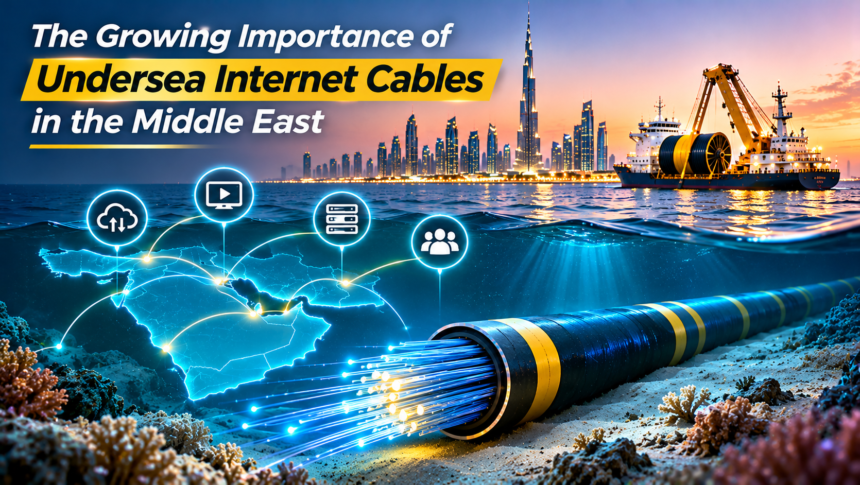
Beneath the waters of the Red Sea, Arabian Sea, Mediterranean Sea, and Arabian Gulf lies an extensive network of fibre-optic cables that supports one of the most important systems in the modern economy: international internet connectivity. While satellites, mobile networks, and data centres often receive greater public attention, much of the world’s cross-border digital communication depends on physical cables installed along the seabed.
- 1. Why Undersea Internet Cables Are Essential to the Middle East’s Digital Economy
- 2. How the Middle East Became a Strategic Hub for Global Internet Connectivity
- 3. Major Undersea Cable Projects Transforming Connectivity Across the GCC
- 4. Why Undersea Cables Matter for Cloud Computing, AI, and Financial Services
- 5. The Growing Risks Facing Undersea Internet Cables in the Middle East
- 6. How Gulf Countries Can Strengthen Digital Connectivity and Infrastructure Resilience
- 7. The Future of Undersea Internet Cables in the Middle East’s Digital Economy
Undersea internet cables in the Middle East are becoming increasingly important as countries expand their digital economies, develop artificial intelligence infrastructure, attract cloud computing investments, and strengthen international telecommunications networks. These cables carry information between continents, allowing businesses, governments, financial institutions, and individuals to communicate across borders.
The Middle East occupies a strategically important geographical position between Asia, Europe, and Africa. This location makes the region a major connection point for international data routes, particularly those passing through Egypt, the Red Sea, and neighbouring maritime corridors.
According to the International Telecommunication Union (ITU), submarine telecommunications cables carry more than 99% of international data traffic worldwide. This highlights their importance in supporting everyday digital activities, from video conferencing and online banking to international business transactions and cloud-based services.
However, increasing dependence on submarine infrastructure also creates challenges. Cable damage, concentrated routes, maintenance difficulties, and geopolitical uncertainty can affect international connectivity.
As the UAE, Saudi Arabia, Oman, Qatar, Bahrain, and Kuwait develop their digital infrastructure, the reliability, capacity, and geographical diversity of undersea internet cables will become increasingly relevant to long-term economic development.
1. Why Undersea Internet Cables Are Essential to the Middle East’s Digital Economy
Undersea internet cables are specialised telecommunications cables installed beneath oceans and seas to transmit information between countries and continents.
Modern systems use fibre-optic technology, which transfers data through pulses of light travelling along extremely thin glass fibres.
These systems can transmit enormous quantities of information over long distances, making them central to international telecommunications.
How Undersea Internet Cables Work
When a person in Dubai accesses an online service hosted in Europe, the information may travel through several telecommunications networks before crossing an international submarine cable.
The exact route depends on network arrangements, traffic management, and where the requested content is hosted.
The information eventually reaches the destination network, where it is processed and returned through an available connection.
Although this process may appear instantaneous to users, it depends on a coordinated system of data centres, terrestrial fibre networks, international cable systems, and telecommunications equipment.
Submarine cables are particularly useful for transmitting large volumes of information with relatively low latency.
Why Cables Matter More Than Satellites for International Capacity
Satellites remain valuable for connecting remote areas, supporting mobile communications, and providing certain backup services.
However, fibre-optic submarine cables carry the vast majority of international data traffic because they offer substantial transmission capacity and efficient long-distance connectivity.
Both technologies have important roles, but they are not interchangeable in every application.
Submarine Cables Versus Satellite Connectivity
| Feature | Undersea Fibre-Optic Cables | Satellite Internet |
|---|---|---|
| Primary Application | High-capacity international connectivity | Remote access, mobility and complementary connectivity |
| Transmission Capacity | Extremely high | Depends on satellite system and available spectrum |
| Latency | Generally low on efficient routes | Varies by satellite orbit and network |
| Physical Infrastructure | Cables installed along the seabed | Satellites, ground stations and user terminals |
| Main Vulnerabilities | Cable damage and landing-station issues | Interference, system failures and capacity limitations |
| Network Resilience | Benefits from diversified cable routes | Can provide complementary connectivity |
Why This Matters for Gulf Businesses
Many Gulf businesses depend on international digital systems.
A financial institution may communicate with overseas payment networks, while a retailer relies on cloud-hosted inventory software.
Manufacturers exchange technical data with international suppliers, and media companies distribute digital content to audiences around the world.
Reliable international connectivity supports these activities.
A disruption may not cause every online service to stop functioning because operators can reroute some traffic through alternative connections.
However, reduced network capacity can affect performance, particularly when several important routes experience problems simultaneously.
This makes submarine cable infrastructure a significant part of the Gulf’s wider digital economy.
2. How the Middle East Became a Strategic Hub for Global Internet Connectivity
The Middle East’s importance in international telecommunications is closely connected to its geography.
The region sits between three major economic areas: Europe, Asia, and Africa.
Submarine cable routes linking these continents frequently pass through maritime corridors around the Arabian Peninsula and Egypt.
These routes have become important to the global internet because they provide relatively direct connections between large population centres and commercial markets.
The Strategic Importance of the Red Sea
The Red Sea is a major route for submarine cables connecting Europe and Asia.
Many systems travel through the Red Sea before connecting through Egypt to the Mediterranean.
This creates an important international telecommunications corridor.
However, concentrating multiple cable systems within a relatively narrow geographical area can create shared risks.
If several cables are damaged in the same region, operators may need to redirect substantial amounts of traffic through alternative routes.
This can increase congestion or latency depending on the available network capacity.
Egypt’s Role in International Connectivity
Egypt occupies a significant position because of its location between the Mediterranean and Red Seas.
Terrestrial infrastructure connects cable landing points on both sides of the country, allowing data to move between the maritime systems serving Europe and Asia.
A November 2025 analysis by the Center for Strategic and International Studies identified Egypt and the Red Sea as critical areas for international submarine cable connectivity.
The research highlighted the concentration of intercontinental communication routes passing through this region.
These connections create economic opportunities for telecommunications operators while also making resilience an important policy and infrastructure concern.
The Role of the Arabian Gulf and Arabian Sea
The Arabian Gulf connects several important regional markets, including the UAE, Saudi Arabia, Qatar, Bahrain, Kuwait, and Iraq.
The Arabian Sea provides additional international connectivity through countries such as Oman.
This geography creates opportunities for cable systems that improve regional access and connect Gulf networks with wider international routes.
Important Regional Cable Corridors
| Maritime Corridor | Main Connectivity Role |
|---|---|
| Red Sea | Connects Asian and Middle Eastern networks toward Europe |
| Mediterranean Sea | Links Europe, North Africa and international cable routes |
| Arabian Sea | Supports connectivity between the Arabian Peninsula, South Asia and wider networks |
| Arabian Gulf | Connects Gulf countries through regional submarine systems |
| Gulf of Oman | Provides access between the Arabian Gulf and the Arabian Sea |
Geographical Diversity and Digital Resilience
A network with several cables following nearly identical routes may still face concentrated risks.
True resilience often requires different physical routes, alternative landing stations, and sufficient spare capacity.
Countries can therefore benefit from developing multiple international connections rather than relying heavily on one corridor.
This does not eliminate disruption risks, but it can provide telecommunications operators with additional options when individual systems fail.
3. Major Undersea Cable Projects Transforming Connectivity Across the GCC
Telecommunications companies and infrastructure investors have announced and developed several cable projects intended to improve capacity and connectivity across the Middle East.
These projects demonstrate how submarine cables are becoming part of wider national digital infrastructure strategies.
However, project announcements, landing agreements, construction milestones, and operational activation represent different stages of development.
The 2Africa Cable System
The 2Africa submarine cable system is one of the largest international telecommunications infrastructure projects.
Spanning approximately 45,000 kilometres, it connects regions across Africa, Europe, Asia, and the Middle East.
The system is designed to support high-capacity international communications and growing demand for digital services.
In February 2026, e& Carrier & Wholesale announced the activation of 2Africa connectivity at its SmartHub facility in the UAE.
The company stated that the integration would strengthen international capacity, resilience, and connectivity for telecommunications operators and enterprise customers.
Oman’s Connection to 2Africa
Oman has also pursued connectivity through the 2Africa system.
In May 2024, Ooredoo announced an agreement to land the cable in Barka and Salalah.
This arrangement reflects Oman’s geographical advantage, with access to maritime routes that connect the Arabian Peninsula to broader international networks.
Such investments can support the country’s ambitions in digital infrastructure and international telecommunications services.
The Fibre in Gulf Project
In January 2025, Ooredoo Group announced an agreement with Alcatel Submarine Networks to develop the Fibre in Gulf submarine cable system.
The project is designed to connect seven countries: Qatar, Oman, the UAE, Bahrain, Saudi Arabia, Kuwait, and Iraq.
It was announced with up to 24 fibre pairs and potential transport capacity of up to 720 terabits per second.
These are announced system specifications rather than evidence that all planned capacity is already commercially available.
The initiative is intended to improve regional connectivity while supporting demand from data centres, telecommunications operators, governments, and digital businesses.
Oman’s Salalah Digital Infrastructure
In August 2025, Ooredoo Oman announced the launch of its Salalah Data Centre and Submarine Cable Landing Station.
The facility combines data-centre services with international connectivity infrastructure.
Its development illustrates how cable landing stations can become part of a wider digital investment ecosystem rather than operating only as telecommunications facilities.
Major Regional Projects and Developments
| Cable or Project | Regional Connection | Significance |
|---|---|---|
| 2Africa | Africa, Europe, Asia and the Middle East | Large-scale international connectivity |
| Fibre in Gulf | Six GCC states and Iraq | Regional capacity and connectivity |
| SEA-ME-WE Cable Systems | Southeast Asia, Middle East and Western Europe | Long-distance intercontinental connectivity |
| Salalah Landing Infrastructure | Oman and international cable networks | Data-centre and connectivity development |
| Saudi Cable Landing Networks | Saudi Arabia and international routes | Regional telecommunications interconnection |
These projects reflect the strategic importance of international bandwidth, route diversity, and connectivity investment.
4. Why Undersea Cables Matter for Cloud Computing, AI, and Financial Services
Digital infrastructure is becoming increasingly important to economic development across the Gulf.
Governments and businesses are investing in cloud computing, artificial intelligence, data centres, financial technology, and advanced digital services.
These activities rely on a combination of computing infrastructure, domestic telecommunications networks, and international connectivity.
Submarine cables support the international component of that system.
Supporting Cloud Computing
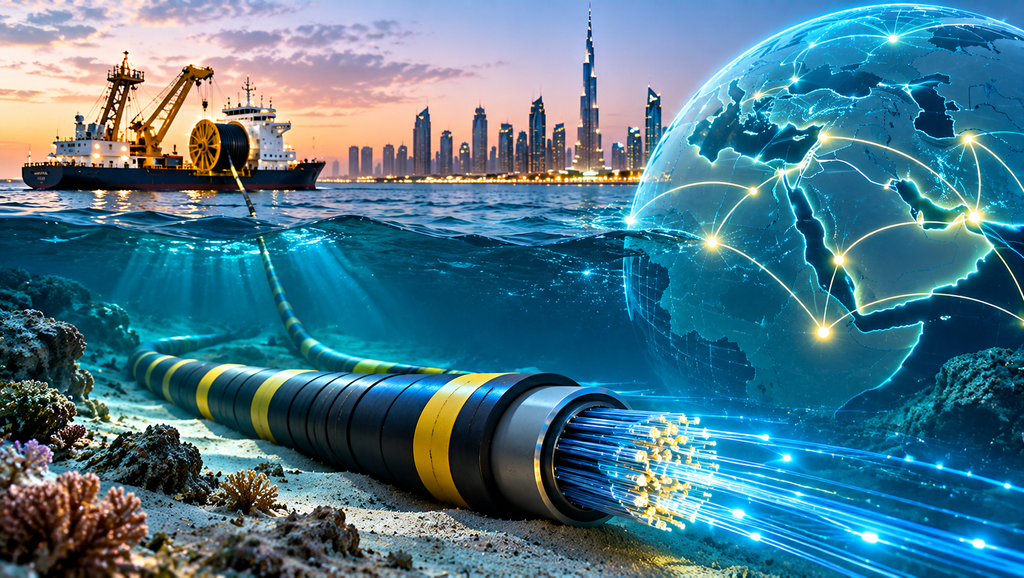
Cloud computing allows businesses to use computing resources and software hosted in data centres.
Although some services may operate locally, many organisations depend on international network connections for cross-border collaboration, backup, software distribution, and data exchange.
High-capacity cable systems can help provide the connectivity required by these activities.
However, network performance also depends on domestic fibre infrastructure, routing arrangements, data-centre capacity, and service-provider architecture.
The Relationship Between AI and Connectivity
Artificial intelligence systems can require substantial computing resources and data transfer.
Businesses may train models, access cloud-based AI tools, or exchange information between geographically separated computing facilities.
International cable capacity can support these processes.
However, the relationship between AI demand and submarine cable investment is not always direct.
Some AI workloads take place within a single data centre, while others require extensive interconnection.
The infrastructure requirements depend on the architecture and location of the computing systems.
Financial Services and International Transactions
Banks, payment processors, financial exchanges, and insurance companies rely on secure telecommunications networks.
International transactions often involve communication between institutions operating in different jurisdictions.
Submarine cables provide connectivity underlying many of these exchanges.
Network disruptions can therefore affect certain international financial operations, particularly when alternative routes are insufficient.
Financial institutions must maintain business continuity arrangements and appropriate network resilience.
Industries Supported by Submarine Connectivity
| Industry | Importance of International Connectivity |
|---|---|
| Banking | Cross-border payments and financial communication |
| Cloud Computing | International data and service access |
| Artificial Intelligence | Distributed computing and data exchange |
| E-commerce | Cross-border transactions and digital platforms |
| Healthcare | International digital services and collaboration |
| Education | Online learning and research access |
| Media | Streaming, content distribution and production |
| Manufacturing | Connected operations and supplier communication |
The Economic Value of Reliable Connectivity
Businesses may consider telecommunications reliability when evaluating where to establish offices, data centres, or technology operations.
Reliable international connectivity can support investment attractiveness.
However, submarine cables are only one factor.
Electricity reliability, regulation, workforce skills, local network infrastructure, cybersecurity, and operating costs also influence technology investment decisions.
5. The Growing Risks Facing Undersea Internet Cables in the Middle East
Submarine cables are generally reliable, but they remain exposed to physical and operational risks.
Damage can occur through maritime activity, natural hazards, equipment faults, or other incidents.
According to the ITU, more than 170 cable repairs were reported worldwide in 2025.
These incidents demonstrate the importance of network redundancy and effective maintenance arrangements.
Accidental Damage From Maritime Activity
Fishing equipment and ship anchors are important causes of submarine cable damage worldwide.
Cables located near busy maritime corridors or coastal areas may face particular exposure.
Cable operators use route planning, burial, protective measures, and maritime coordination to reduce these risks.
However, protection cannot eliminate every possibility of damage.
Natural Hazards and Seabed Conditions
Earthquakes, underwater landslides, and other geological events can damage submarine infrastructure.
The severity of the impact depends on cable location, seabed conditions, and the nature of the event.
Underwater repairs can be complex because damaged sections may be located far from shore or at considerable depths.
Repair crews require specialised equipment and vessels.
Geopolitical and Security Concerns
International submarine cables often cross maritime areas involving several countries.
Political tensions and security conditions can complicate access, maintenance, and repair operations.
Disruptions may also require traffic to be rerouted through other international networks.
However, not every cable failure should be attributed to deliberate interference.
Accidental damage remains an important documented cause of submarine cable faults.
Major Risks and Potential Responses
| Risk | Possible Impact | Resilience Measure |
|---|---|---|
| Fishing and Anchoring | Physical cable damage | Route protection and maritime awareness |
| Earthquakes | Multiple infrastructure failures | Geographical route diversity |
| Limited Repair Access | Longer restoration times | Repair coordination and contingency planning |
| Concentrated Cable Routes | Shared disruption exposure | Alternative international pathways |
| Landing-Station Failure | Local network interruption | Redundant facilities and connections |
| Capacity Shortages | Congestion during rerouting | Sufficient backup network capacity |
| Cybersecurity Threats | Risks to connected network systems | Access controls and security monitoring |
Why Repair Capacity Matters
Submarine cable repairs require specialised vessels, trained crews, technical equipment, and appropriate authorisations.
Repairs can take additional time when incidents occur in difficult geographical areas or when multiple cable systems require attention simultaneously.
Countries and operators can improve preparedness through coordination, maintenance agreements, and alternative traffic-routing arrangements.
6. How Gulf Countries Can Strengthen Digital Connectivity and Infrastructure Resilience
As Gulf economies become more dependent on international telecommunications, infrastructure resilience is becoming a strategic planning priority.
Governments, telecommunications companies, cloud providers, and infrastructure investors all have roles in strengthening connectivity.
The objective should be to reduce the likelihood that one technical failure causes widespread service disruption.
Developing Alternative Cable Routes
Geographical diversification is one of the most important resilience measures.
Countries may benefit from connections using different maritime corridors and landing stations.
For example, a network combining Red Sea, Arabian Sea, and other appropriately connected routes may offer alternatives when certain corridors experience disruption.
However, route diversity must be supported by sufficient capacity and effective interconnection.
Combining Submarine and Terrestrial Networks
Undersea cables connect countries across maritime routes, while terrestrial fibre systems provide connections across land.
The two can complement each other.
Regional terrestrial links may support traffic redistribution when submarine capacity is affected.
However, land-based systems face their own risks, including construction damage, infrastructure failures, and geographical concentration.
Resilience therefore depends on the complete network rather than one type of connection.
Strengthening Cable Landing Infrastructure
Cable landing stations connect submarine systems to terrestrial telecommunications networks.
These facilities are important because failures at landing points can affect access to otherwise operational cable systems.
Operators may improve resilience through redundant equipment, reliable power supplies, physical security, and appropriate maintenance arrangements.
The Role of International Cooperation
The ITU and the International Cable Protection Committee have established an international initiative to improve submarine cable resilience.
In July 2026, their International Advisory Body approved a report outlining recommendations intended to strengthen the protection and reliability of global submarine telecommunications infrastructure.
International cooperation is particularly relevant because cable routes often cross multiple legal jurisdictions.
Digital Infrastructure Resilience Checklist
- Assess dependence on individual international cable routes.
- Identify alternative maritime and terrestrial connections.
- Evaluate backup bandwidth and routing arrangements.
- Maintain reliable landing-station infrastructure.
- Establish incident response and communication procedures.
- Coordinate with relevant cable operators and authorities.
- Review physical and cybersecurity requirements.
- Test business continuity arrangements.
- Maintain current infrastructure documentation.
- Reassess risks as network demand changes.
Why Businesses Should Plan for Connectivity Disruptions
Companies relying on international digital services should understand how network interruptions could affect their operations.
Business continuity planning may include alternative connectivity providers, local data availability, backup systems, and contingency procedures.
The appropriate arrangements depend on the importance of digital connectivity to each organisation.
A financial institution or cloud service provider may require more extensive resilience measures than a small business using standard office applications.
7. The Future of Undersea Internet Cables in the Middle East’s Digital Economy
The importance of submarine cables is likely to grow as international demand for digital services continues.
Cloud computing, AI, online commerce, digital entertainment, and connected industrial systems all contribute to increasing data requirements.
For the Middle East, this creates opportunities to expand international telecommunications infrastructure and strengthen its role in global digital connectivity.
Greater Demand for International Bandwidth
As more businesses move applications to digital platforms, telecommunications operators must assess future capacity requirements.
Modern submarine cable systems can support substantial transmission capacity through advanced optical technologies.
However, expanding capacity requires investment in cable systems, landing facilities, telecommunications equipment, and network interconnections.
The Potential for New Digital Investment Hubs
Countries with strong international connectivity may attract businesses requiring reliable access to global networks.
These could include cloud providers, data-centre operators, telecommunications companies, and technology enterprises.
The UAE, Saudi Arabia, and Oman are among the countries pursuing international connectivity infrastructure and related digital investment.
However, economic benefits depend on wider business conditions.
A cable landing station alone does not guarantee that a country will become a major technology hub.
The Role of Private Investment
Submarine cable systems are often developed through partnerships involving telecommunications operators, technology companies, infrastructure investors, and other organisations.
These arrangements allow participants to share investment costs and gain access to international network capacity.
The growing involvement of large technology companies also reflects their increasing demand for high-capacity connections between computing facilities.
Opportunities for Regional Businesses
Submarine cable investment may support commercial activity beyond telecommunications operators.
Potential business opportunities include:
- Data-centre development and management.
- Network equipment and infrastructure services.
- Fibre-optic engineering and maintenance.
- Telecommunications security.
- Cloud and enterprise connectivity.
- Network monitoring and analytics.
- Infrastructure project management.
- Technical training and specialised engineering.
These opportunities depend on actual investment, procurement requirements, and the availability of qualified personnel.
The Importance of Long-Term Planning
Submarine cable systems require substantial capital and complex international coordination.
Development involves route surveys, environmental assessments, manufacturing, marine installation, regulatory approvals, and testing.
According to the ITU, new cable projects can take more than two years to become operational.
Consequently, infrastructure planning must anticipate future connectivity requirements rather than respond only after existing networks become congested.
Measuring Connectivity Success
The success of submarine cable investment should be assessed through practical indicators.
These may include available international capacity, network reliability, route diversity, latency, repair readiness, and the affordability of connectivity.
A country hosting numerous cable systems may still face concentrated risks if the routes share vulnerable corridors.
Similarly, high theoretical capacity does not automatically mean that every business or household receives affordable, high-quality service.
Conclusion
Undersea internet cables in the Middle East are becoming increasingly important as Gulf countries expand their digital economies and international telecommunications infrastructure.
These cables support global communication, online banking, cloud computing, artificial intelligence, e-commerce, education, and numerous other essential activities.
The Middle East’s geographical position between Europe, Asia, and Africa creates opportunities to develop international connectivity hubs.
Projects such as 2Africa, Fibre in Gulf, and new cable landing infrastructure in Oman demonstrate continued investment in regional network capacity.
However, growing connectivity also creates responsibility.
Cable damage, route concentration, repair challenges, and infrastructure security require careful planning and international cooperation.
The most resilient digital economies will need reliable submarine routes supported by terrestrial networks, secure landing stations, effective operational management, and sufficient alternative capacity.
For Gulf businesses and governments, submarine internet cables should therefore be understood as essential economic infrastructure rather than distant telecommunications assets.
As digital services become more deeply integrated into everyday life, the reliability of the networks beneath the sea will play an increasingly important role in the Middle East’s economic development and international competitiveness.
Do follow us on Instagram
Read More – Can Digital Twins Help Gulf Cities Manage Infrastructure More Efficiently?