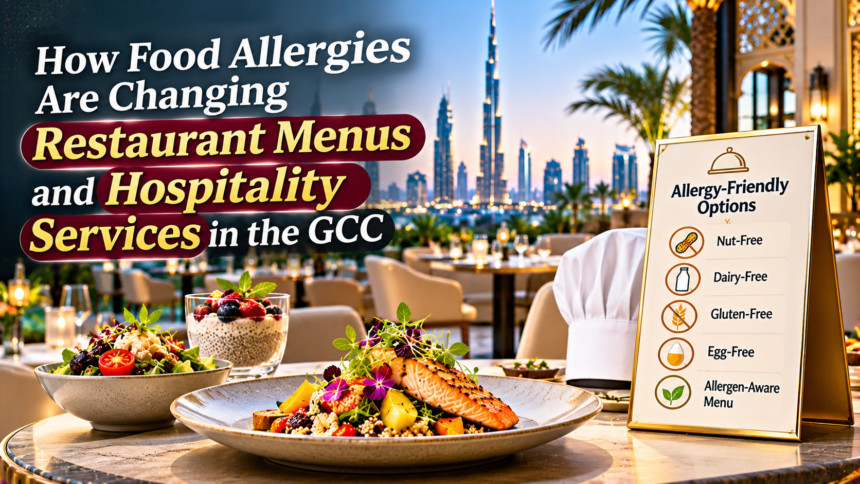
Why Allergen Awareness Is Essential for Gulf Hospitality Businesses
Dining across the Arabian Gulf has become increasingly diverse, with restaurants, hotels, cafés, and food delivery platforms serving customers from many nationalities and cultural backgrounds. From international hotel buffets to traditional Arabic restaurants and modern casual dining outlets, hospitality businesses are continuously adapting their menus to changing customer expectations. One consideration receiving greater attention is the need to accommodate people living with food allergies.
- 1. Why Food Allergies Are Becoming Important for GCC Restaurants
- 2. How Allergen Labelling Is Changing Restaurant Menus Across the GCC
- 3. Why Preventing Allergen Cross-Contact Is Essential in Restaurant Kitchens
- 4. How Food Allergies Are Transforming Hotel Dining and Guest Services
- 5. How Digital Menus and Food Delivery Platforms Are Responding to Allergies
- 6. The Business Opportunities and Challenges of Allergy-Aware Hospitality
- 7. The Future of Allergy-Friendly Dining and Hospitality Services in the GCC
Food allergies in GCC restaurants are influencing how businesses describe ingredients, prepare meals, train employees, and communicate with guests. For people with allergies, choosing a restaurant involves more than taste, price, or atmosphere. Accurate ingredient information and reliable food-handling procedures can be essential to avoiding potentially serious reactions.
Common allergens include milk, eggs, peanuts, tree nuts, fish, shellfish, wheat, soy, and sesame. Different countries have specific requirements concerning which allergens must be disclosed and how this information should be presented.
Across the United Arab Emirates, Saudi Arabia, Qatar, Kuwait, Bahrain, and Oman, food establishments operate within regulatory frameworks that address food safety and consumer protection. Saudi Arabia and Qatar provide particularly clear examples of formal allergen information requirements, while Dubai places allergen controls within its wider food safety standards.
The growing attention to allergy-aware dining creates both responsibilities and opportunities for the hospitality industry. Restaurants may need to redesign menus, introduce stronger kitchen procedures, and prepare employees to respond confidently to customer questions.
However, adding an allergen icon or offering a special menu does not automatically make food safe for every customer. Effective management requires accurate ingredient records, control of accidental allergen transfer, and honest communication about what a kitchen can safely provide.
Understanding these developments reveals how food allergies could influence the future of dining and hospitality services across the GCC.
1. Why Food Allergies Are Becoming Important for GCC Restaurants
A food allergy occurs when the immune system reacts to a particular food protein. Reactions can vary in severity and may involve symptoms affecting the skin, digestive system, breathing, or circulation.
In some cases, exposure can cause anaphylaxis, a potentially life-threatening allergic reaction requiring immediate medical treatment.
This makes food allergies an important safety consideration rather than simply a matter of individual food preference.
Food Allergies Versus Food Intolerances
Food allergies and food intolerances are not the same.
A food allergy involves an immune response to a food substance. Food intolerance generally involves a different mechanism and may produce symptoms such as digestive discomfort.
For example, lactose intolerance is different from an allergy to milk proteins.
Similarly, gluten-related dietary requirements can involve wheat allergy, coeliac disease, or other medical considerations. These conditions should not be treated as interchangeable.
Restaurants need to understand the distinction because food preparation and risk management requirements may differ.
Why Food Allergies Matter in Hospitality
A customer with a food allergy may need detailed information about ingredients, sauces, marinades, garnishes, and cooking methods.
A dish that appears suitable based on its name may contain an unexpected allergen.
For example, a salad dressing could contain sesame or nuts, while a dessert may include milk, eggs, or tree nuts.
Hotels and restaurants often serve customers who are unfamiliar with local dishes, making clear ingredient communication especially important.
Common Allergens and Possible Sources
| Allergen | Examples of Foods Where It May Appear |
|---|---|
| Milk | Cream sauces, cheese, desserts |
| Eggs | Mayonnaise, pastries, baked products |
| Peanuts | Sauces, confectionery, selected desserts |
| Tree Nuts | Baklava, pesto, pastries, garnishes |
| Fish | Seafood dishes, certain sauces |
| Crustaceans | Shrimp dishes, seafood stocks |
| Wheat | Bread, pasta, coatings, sauces |
| Soy | Soy sauce, selected processed ingredients |
| Sesame | Tahini, bread toppings, dressings |
This table provides examples rather than an exhaustive allergen list. Actual ingredients must always be checked.
What Regional Research Tells Us
Research on food allergies in the Middle East remains less extensive than in some other regions.
A 2026 systematic review in JAMA Pediatrics included only six studies from the Middle East among 190 studies examining food allergy risk factors internationally.
The limited regional evidence means that estimates should be interpreted carefully.
It would be inaccurate to claim a single verified food allergy prevalence rate for all GCC residents.
Nevertheless, businesses do not need to establish that allergies are increasing before recognising their responsibility to manage known risks.
2. How Allergen Labelling Is Changing Restaurant Menus Across the GCC
Restaurant menus traditionally emphasised flavour, ingredients, prices, and presentation.
Today, many establishments also need to provide nutritional and allergen information according to applicable requirements.
This information helps customers identify dishes that may contain substances they must avoid.
Saudi Arabia’s Allergen Disclosure Requirements

Saudi Arabia has established technical requirements covering allergen disclosure for food establishments serving meals outside the home.
The SFDA.FD 2605:2024 regulation addresses allergen information in restaurant menus and related food-service environments.
Saudi regulatory guidance identifies 14 allergen categories requiring appropriate disclosure when present.
These include relevant cereals, crustaceans, eggs, fish, peanuts, tree nuts, milk, soy, celery, mustard, sesame, sulphites, lupin, and molluscs.
Information must be presented in accordance with the applicable Arabic-language and display requirements.
Restaurants should consult the official standards and current local rules rather than relying on a generic international allergen chart.
Qatar’s Food-Service Guidance
Qatar’s Ministry of Public Health has published a Food Safety Code of Practice for Food Services.
The code states that listed menu items should include information about allergens identified under the relevant GSO labelling standard.
It also calls for allergen records to be available and addresses product traceability and food safety management.
These requirements illustrate the connection between menu information and the kitchen records needed to support it.
Dubai’s Food Safety Approach
Dubai Municipality provides food safety guidance for food establishments and places allergen controls within its wider food safety framework.
Its Food Systems Excellence Programme includes allergen control and nutrition and allergen disclosure among the evaluation criteria for food-service businesses.
Businesses operating in Dubai should review current requirements applicable to their specific activity rather than assuming that the same rules apply across every emirate.
Traditional Menus Versus Allergy-Aware Menus
| Menu Feature | Conventional Approach | Allergy-Aware Approach |
|---|---|---|
| Ingredients | General dish description | Verified ingredient information |
| Allergen Details | May be absent or limited | Relevant allergen disclosures |
| Customer Questions | Informal staff response | Established communication process |
| Recipe Changes | Menu description updated occasionally | Allergen records updated with recipe changes |
| Digital Ordering | Basic product information | Allergen information accessible where required |
| Buffet Service | Food name labels | Dish-specific allergen information and controls |
An effective menu should be understandable, accessible, and consistent with actual kitchen practices.
3. Why Preventing Allergen Cross-Contact Is Essential in Restaurant Kitchens
One of the greatest challenges in preparing meals for customers with food allergies is accidental allergen transfer.
This is commonly called cross-contact.
It can occur when proteins from an allergenic ingredient are unintentionally transferred to another food through equipment, hands, surfaces, utensils, or shared preparation processes.
Why Removing an Ingredient May Not Be Enough
Suppose a customer has a peanut allergy and asks for a dish without peanuts.
Removing a peanut garnish does not necessarily make the dish suitable if its sauce contains peanuts or if the meal has already been in contact with peanut-containing ingredients.
Similarly, preparing food on a shared surface without appropriate cleaning can introduce allergens.
Even small amounts of an allergen may cause reactions in susceptible individuals.
Shared Equipment and Cooking Areas
Restaurants frequently use shared cooking equipment to prepare different dishes.
Grills, fryers, chopping boards, knives, mixing equipment, and serving utensils can present cross-contact risks.
For example, frying food in oil that has also been used for products containing an allergen can introduce concerns for customers avoiding that ingredient.
Staff must understand how each dish is prepared, not only what appears in the final recipe.
Practical Kitchen Risk Controls
Food Allergy Research & Education recommends effective cleaning and appropriate separation of utensils and preparation equipment.
Codex Alimentarius guidance similarly emphasises allergen management throughout food preparation, handling, and service.
Kitchen Management Checklist
- Maintain accurate ingredient and allergen records.
- Review allergens in sauces, garnishes, and compound ingredients.
- Clean preparation surfaces and equipment appropriately.
- Use dedicated equipment where necessary and practical.
- Communicate allergy-related orders clearly to kitchen staff.
- Assess shared fryers, grills, and preparation spaces.
- Check supplier information when ingredients change.
- Prevent accidental contact during plating and service.
- Train employees to report uncertainty rather than guess.
- Decline or modify an order when safety cannot be assured.
Why Buffets Require Special Attention
Hotel buffets can create additional risks because many foods are displayed close together.
Serving utensils may be moved between dishes, and customers may unintentionally transfer ingredients.
Even accurate buffet labels cannot guarantee that displayed food remains free from cross-contact.
For customers with serious allergies, preparing a separately managed meal may be more appropriate than relying on an open buffet.
However, this depends on the establishment’s actual capabilities and procedures.
4. How Food Allergies Are Transforming Hotel Dining and Guest Services
Hotels serve guests with different dietary needs, languages, and cultural expectations.
Food allergies can influence the entire guest experience, from reservations and breakfast services to conferences, weddings, and room-service orders.
This makes allergen management an operational concern across multiple departments.
Allergy Information During Reservations
Hotels may invite guests to disclose relevant food allergies before arrival or when booking dining experiences.
This gives staff an opportunity to explain available arrangements and identify concerns early.
For example, a family booking a hotel stay may ask whether suitable breakfast options can be prepared for a child with a diagnosed food allergy.
The hotel should respond based on verified kitchen capabilities rather than automatically promising a completely allergen-free environment.
Restaurant and Room-Service Coordination
A guest’s allergy information may need to reach restaurant servers, kitchen supervisors, and room-service teams.
If communication breaks down between departments, the risk of mistakes increases.
Hotels can establish procedures ensuring that relevant allergy information is accurately transferred and confirmed.
However, customer information should be shared only with employees who need it for service and safety purposes.
Banquets, Events, and Corporate Hospitality
Large hospitality events may involve hundreds of guests and several food preparation stations.
Event planners should collect relevant dietary information through appropriate channels and communicate it to catering teams.
Menus, plated meals, and buffet arrangements should be reviewed before service.
Hospitality Services and Allergy Considerations
| Hospitality Service | Potential Allergy Challenge | Appropriate Approach |
|---|---|---|
| Hotel Breakfast | Shared buffet utensils | Clear information and controlled alternatives |
| Room Service | Communication errors | Confirmed allergy order procedures |
| Corporate Banquets | Multiple dietary requirements | Advance planning and verified meal allocation |
| Wedding Catering | High-volume service | Clearly documented kitchen instructions |
| Airport Lounges | Rapid turnover and shared displays | Accurate labels and trained staff |
| School or Family Events | Children with allergies | Appropriate communication and emergency arrangements |
Guest Trust and Transparency
A hotel that explains its food preparation limitations clearly may provide a better experience than one making assurances it cannot substantiate.
Hospitality professionals should avoid guaranteeing absolute safety unless such a claim can be properly supported.
The priority should be accurate information, appropriate preparation, and dependable communication.
5. How Digital Menus and Food Delivery Platforms Are Responding to Allergies
Digital ordering has become an important part of the GCC restaurant industry.
Customers increasingly browse menus, make reservations, and order meals through websites, QR-code menus, and delivery applications.
These systems create opportunities to make allergen information more accessible.
However, they also introduce new risks when information is incomplete or outdated.
Allergen Filters in Digital Menus
Digital menus can allow customers to view allergen information associated with individual dishes.
Some platforms may offer filters for ingredients customers wish to avoid.
For example, a customer could use a filter to identify meals that do not list milk as an ingredient.
However, the absence of milk from a recipe does not prove that the dish can be prepared without milk cross-contact.
Filters should therefore communicate their meaning and limitations accurately.
The Importance of Updated Recipes
Restaurants may change suppliers, ingredients, sauces, or preparation methods.
If their digital menu is not updated, customers could receive inaccurate information.
An effective system requires coordination between kitchen operations and the digital menu database.
Changes to recipes should trigger a review of allergen declarations before the updated dish is sold.
Third-Party Delivery Challenges
Food delivery platforms may display information supplied by restaurants.
However, responsibility for the accuracy and communication of allergen information must be established according to relevant law and commercial arrangements.
An allergy note entered by a customer should not be assumed to have been read, understood, and accepted by the kitchen.
Where necessary, the customer should obtain direct confirmation from the establishment.
Digital Allergy Management Features
| Digital Feature | Potential Benefit | Limitation |
|---|---|---|
| Allergen Icons | Faster identification of declared ingredients | Does not show all cross-contact risks |
| Ingredient Lists | Better customer information | Must remain current |
| Allergy Notes | Communicates individual requirements | Requires staff confirmation |
| Digital Recipe Database | Consistent menu information | Depends on accurate records |
| Order Alerts | Highlights allergy-related requests | Cannot replace safe preparation |
| Multilingual Menus | Supports international customers | Translations must be accurate |
Why Technology Cannot Replace Kitchen Safety
Digital tools can help organise information, but they cannot independently verify every food preparation step.
A restaurant with an advanced menu interface may still experience cross-contact if kitchen controls are inadequate.
The most effective approach combines accurate digital information with trained employees and verified operational procedures.
6. The Business Opportunities and Challenges of Allergy-Aware Hospitality
Allergy-aware hospitality can influence customer satisfaction, business reputation, staff training, and operational costs.
Restaurants that take allergy requirements seriously may become more attractive to customers who need dependable information.
However, potential commercial benefits should not be confused with guaranteed revenue growth.
Building Customer Confidence
Customers with food allergies may spend additional time researching restaurants before dining.
They may contact establishments in advance, examine menus, and ask about preparation procedures.
Clear answers and consistent staff knowledge can reduce uncertainty.
Positive experiences may encourage repeat visits, although customer loyalty depends on several factors beyond allergen management.
Staff Training and Responsibility
Employees need to understand common allergens, ingredient records, cross-contact risks, and appropriate customer communication.
Training should involve more than memorising a list of foods.
Staff should know whom to consult when they are uncertain and how to communicate an allergy request to the kitchen.
Frequent employee turnover can make refresher training particularly important.
The Cost of Operational Changes
Improving allergen management may require additional training, equipment, menu updates, supplier documentation, and food preparation procedures.
Some establishments may need to redesign workflows or limit certain menu claims.
These costs can be significant for smaller businesses.
However, the consequences of inaccurate information or unsafe handling can also include customer harm, complaints, and reputational damage.
Commercial Challenges and Responses
| Challenge | Potential Impact | Practical Response |
|---|---|---|
| Incomplete Ingredient Information | Incorrect customer guidance | Verified recipe records |
| Staff Turnover | Knowledge gaps | Regular training |
| Shared Kitchen Equipment | Cross-contact | Risk-based preparation controls |
| Changing Suppliers | Unexpected allergens | Supplier verification |
| Multilingual Communication | Misunderstood requests | Clear terminology and confirmation |
| Digital Menu Errors | Inaccurate disclosures | Controlled updating procedures |
| Overpromising Safety | Customer harm and loss of trust | Honest capability assessments |
Allergy-Friendly Versus Allergen-Free Claims
Businesses should use descriptions carefully.
A dish modified to avoid an ingredient is not necessarily free from traces of that allergen.
Similarly, a vegan dish may contain nuts, soy, sesame, or other allergens.
A gluten-free claim addresses a different issue from avoiding every possible food allergen.
Clear, specific language is more useful than broad claims suggesting universal suitability.
7. The Future of Allergy-Friendly Dining and Hospitality Services in the GCC
The future of allergy-aware dining in the GCC is likely to involve stronger ingredient documentation, staff training, digital information systems, and coordination between restaurants and their suppliers.
However, the effectiveness of these changes will depend on implementation rather than the number of allergy-related labels displayed.
Building Reliable Allergen Management Systems
Restaurants can begin by identifying the allergens present in their recipes and ingredients.
They should then evaluate where accidental cross-contact could occur during receiving, storage, preparation, cooking, and service.
Documented procedures can help employees apply consistent practices.
Regular reviews are particularly important when menus change.
The Role of International Food Safety Standards
Codex Alimentarius provides a Code of Practice on Food Allergen Management for Food Business Operators, known as CXC 80-2020.
The guidance addresses allergen controls across the supply chain and food-service environment.
It emphasises ingredient management, prevention of cross-contact, accurate information, employee awareness, and verification.
However, Codex guidance should be distinguished from specific legal requirements applicable in individual GCC countries.
A Practical Restaurant Allergen Readiness Checklist
- Identify allergens within every relevant recipe.
- Maintain accurate supplier and ingredient documentation.
- Review official allergen disclosure requirements.
- Provide accessible and understandable menu information.
- Train front-of-house and kitchen employees.
- Establish procedures for allergy-related orders.
- Review shared equipment and cross-contact risks.
- Update allergen records whenever recipes change.
- Establish appropriate emergency response procedures.
- Audit practices and correct identified weaknesses.
Preparing for Allergy-Related Emergencies
Food allergies can sometimes result in anaphylaxis.
Hospitality staff should be trained to recognise possible severe reactions and activate the establishment’s emergency response procedures.
These may include immediately contacting local emergency medical services and assisting in accordance with staff training and applicable protocols.
Guests who have been prescribed adrenaline or epinephrine should follow their personalised medical emergency plans.
Restaurants should not rely on menu information alone as their emergency preparedness strategy.
Measuring Service Improvements
Hospitality businesses can assess their allergen-management performance through several indicators.
These may include staff training completion, accuracy of recipe records, response times to customer questions, compliance audit findings, and the resolution of reported incidents.
Customer feedback can also identify areas requiring improvement.
However, the absence of reported incidents does not prove that all risks have been eliminated.
The Importance of Inclusive Dining
Allergy-aware hospitality should aim to make dining more accessible without creating unrealistic assurances.
Customers benefit when restaurants can explain what ingredients are present, how food is prepared, and whether suitable alternatives are available.
When an establishment cannot safely meet a particular requirement, it should communicate that limitation clearly.
This can be more responsible than offering a meal without sufficient information.
Conclusion
Food allergies are becoming an important consideration in how restaurants, cafés, hotels, and catering businesses across the GCC manage their services.
The need for accurate ingredient information, reliable preparation procedures, and clear communication is influencing menu design and hospitality operations.
Saudi Arabia’s allergen disclosure framework, Qatar’s food-service requirements, and Dubai’s wider food safety initiatives illustrate the regional attention being given to allergen management.
Digital menus and delivery platforms may also help customers obtain information, provided the underlying records are accurate and regularly updated.
However, effective food allergy management extends far beyond labelling.
Restaurants must consider cross-contact, supplier changes, shared kitchen equipment, employee training, and emergency preparedness.
For hospitality businesses, the greatest value lies in offering dependable information and services rather than simply promoting allergy-friendly menu options.
As Gulf hospitality markets continue developing, responsible allergen management could become an increasingly important element of food safety, guest confidence, and service quality.
Ultimately, the future of inclusive dining will depend on whether restaurants can combine culinary variety with the practical safeguards needed to help customers make informed and safer food choices.
Do follow us on Instagram
Read More – The Growing Demand for Flexible Housing Among International Professionals