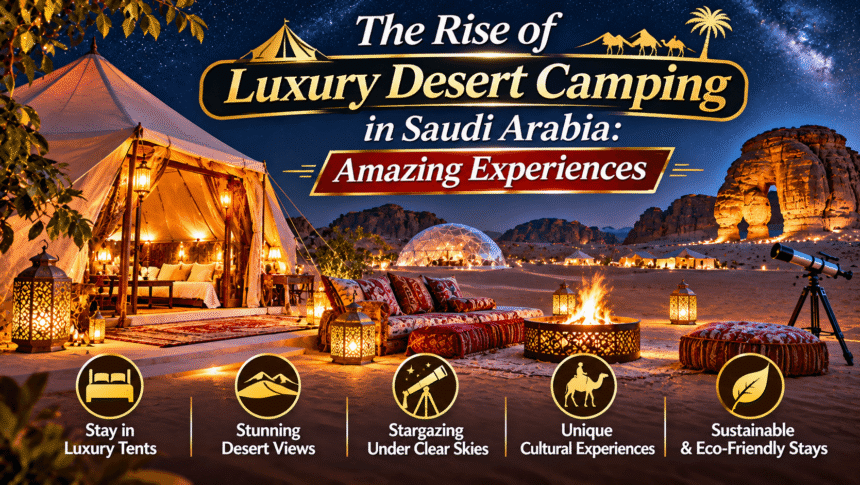
The Rise of Luxury Desert Camping in Saudi Arabia
Luxury desert camping in Saudi Arabia has grown rapidly as part of Vision 2030, These experiences combine comfortable stays with beautiful desert views and local culture. What were once simple desert camps or outdoor trips now offer stylish rooms, air-conditioned tents, and organised outdoor activities.
- 1. What Is Luxury Desert Camping?
- 2. Why Is Luxury Desert Camping Becoming Popular in Saudi Arabia?
- 3. AlUla: A Leading Destination for Luxury Desert Camping
- 4. What Makes a Luxury Desert Camp Different from Traditional Camping?
- 5. Traditional Arabian Culture Adds Value to the Experience
- 6. Activities Visitors Can Enjoy at Luxury Desert Camps
- 7. Stargazing: One of the Biggest Attractions of Desert Camping
- 8. How Vision 2030 Is Supporting Luxury Desert Tourism
- 9. Sustainability and Eco-Friendly Luxury Camping
- 10. Best Time to Experience Luxury Desert Camping in Saudi Arabia
- 11. Challenges Facing the Luxury Desert Camping Industry
- 12. Tips for Planning a Luxury Desert Camping Trip
- Conclusion
- Frequently Asked Questions (FAQs)
1. What Is Luxury Desert Camping?
Luxury desert camping is a style of outdoor travel that combines the natural experience of traditional camping with the comfort of high-quality accommodation. It allows visitors to stay in desert surroundings while enjoying facilities that are usually associated with luxury hotels and resorts.
It is also commonly known as glamping, a combination of the words glamorous and camping.
Traditional camping usually involves carrying tents, sleeping bags, cooking equipment and other supplies. Luxury desert camping makes the experience easier by providing ready-made accommodation, meals, bathroom facilities and organised activities.
Depending on the property, guests may find:
- Spacious canvas tents with comfortable beds.
- Private bathrooms and modern showers.
- Air conditioning or suitable heating.
- Outdoor seating areas with desert views.
- Restaurants serving local and international food.
- Guided desert tours and nature activities.
- Private spaces for stargazing and relaxation.
Some properties offer luxury tents, while others provide villas, mobile accommodation or Airstream-style trailers.
The main idea is simple: visitors can enjoy the peace and beauty of the desert without dealing with all the difficulties of ordinary camping.
2. Why Is Luxury Desert Camping Becoming Popular in Saudi Arabia?
Saudi Arabia has a wide range of natural landscapes, including sandy deserts, rocky mountains, valleys and coastal areas. These environments create opportunities for outdoor tourism and new types of accommodation.
In recent years, travellers have shown growing interest in experiences that offer more than standard hotel stays. Many people want to explore natural surroundings, learn about local culture and spend time away from crowded cities.
Luxury desert camping brings these interests together.
There are several reasons behind its growing popularity.
Demand for unique travel experiences
Many modern travellers prefer experiences that feel different from everyday life. Staying in a luxury desert tent, watching the sunset over sandstone mountains and enjoying dinner beneath the stars can create memorable travel experiences.
Comfort combined with adventure
Some visitors enjoy outdoor activities but do not want to sacrifice comfort. Luxury camping provides a balance between adventure and relaxation.
Growing interest in nature-based tourism
Desert landscapes offer opportunities for stargazing, hiking, photography, wildlife observation and cultural exploration. These activities attract visitors who want to connect with nature.
Investment in tourism infrastructure
Saudi Arabia is developing new tourism destinations and accommodation options under Vision 2030. This includes luxury resorts, outdoor retreats and glamping projects.
A 2025 report by Arab News described the growth of high-end glamping as part of the country’s changing tourism industry, highlighting how comfort, local heritage and sustainability are being combined in new desert experiences.
These developments are helping Saudi Arabia attract travellers interested in both luxury and nature.
3. AlUla: A Leading Destination for Luxury Desert Camping
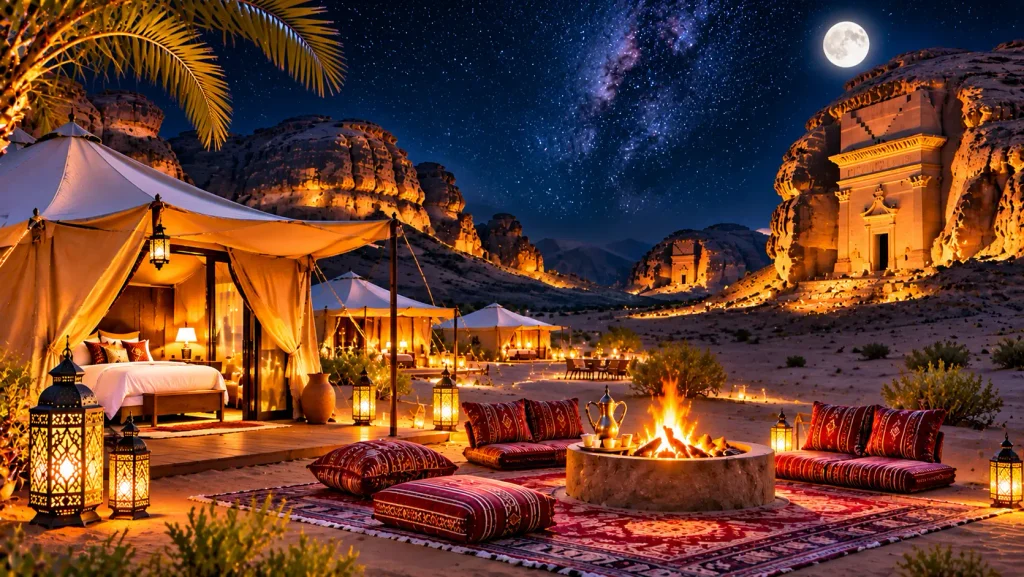
AlUla is one of the most recognisable destinations associated with luxury desert stays in Saudi Arabia. Located in the northwest of the country, it is known for its dramatic sandstone formations, ancient archaeological sites, palm-filled oasis and beautiful desert scenery.
AlUla is famous for its beautiful sandstone cliffs, desert valleys, and historical places like Hegra. It has also become a popular destination for luxury desert stays, with resorts such as Habitas AlUla and Banyan Tree AlUla offering unique experiences.
The destination offers a combination of natural beauty and cultural heritage that makes it particularly suitable for luxury outdoor tourism.
One of its most popular areas is Ashar Valley, a spectacular landscape surrounded by towering sandstone cliffs and natural rock formations.
Visitors can find several accommodation options in and around this valley, including:
Our Habitas AlUla
Our Habitas AlUla is a luxury desert resort that combines accommodation, wellness, dining and outdoor experiences. Its design focuses on connecting visitors with the surrounding landscape while offering modern comfort.
Banyan Tree AlUla
Banyan Tree AlUla offers an exclusive desert retreat in Ashar Valley. Its villa-style accommodation combines luxury facilities with the natural beauty of the sandstone surroundings.
Ashar Tented Resort
Ashar Tented Resort provides a tented accommodation experience among the desert sands and rock formations of Ashar Valley. It gives visitors an opportunity to enjoy the landscape while staying in a comfortable setting.
Caravan by Habitas
Caravan by Habitas offers a different type of glamping experience through Airstream-style accommodation and shared outdoor spaces. It offers a peaceful atmosphere surrounded by the natural beauty of AlUla.
These properties show that luxury desert stays are not limited to one type of accommodation. Visitors can choose between tented retreats, private villas and mobile-style camping experiences.
AlUla’s official tourism website currently lists these properties among its accommodation options.
4. What Makes a Luxury Desert Camp Different from Traditional Camping?
The biggest difference between luxury desert camping and traditional camping is the level of comfort and convenience.
Traditional camping usually requires visitors to prepare their own equipment, organise meals and manage basic facilities. Luxury desert camping provides many of these services in advance.
However, the experience is not limited to accommodation.
Comfortable sleeping arrangements
Guests can stay in furnished tents or private accommodation with comfortable beds, quality bedding and relaxing interiors.
Private facilities
Many luxury properties provide private bathrooms, modern showers and personal outdoor spaces. These facilities make longer stays more convenient.
Quality dining
Instead of preparing every meal themselves, visitors can enjoy prepared dishes at camp restaurants or through organised dining experiences.
Personalised services
Depending on the property, guests may receive guided tours, private transportation, wellness treatments and organised outdoor activities.
Beautiful natural surroundings
Luxury camps are often designed to take advantage of their location. Large windows, outdoor lounges and private terraces allow visitors to enjoy mountain and desert views.
This combination makes luxury desert camping suitable for families, couples, international travellers and people who want to experience nature in comfort.
5. Traditional Arabian Culture Adds Value to the Experience
One reason luxury desert camping is attractive in Saudi Arabia is its connection with traditional Arabian hospitality.
For generations, desert communities have welcomed travellers and visitors through shared meals, coffee, storytelling and traditional gatherings.
Modern desert retreats often take inspiration from these cultural practices to create a more meaningful experience.
Visitors may have opportunities to enjoy:
- Traditional Arabic coffee and dates.
- Saudi dishes prepared using regional ingredients.
- Local music and cultural performances.
- Stories about Bedouin life and desert traditions.
- Traditional decorations and handmade crafts.
- Outdoor dining inspired by Arabian hospitality.
The design of some desert properties also draws inspiration from traditional tents, natural colours and local architectural styles.
However, cultural experiences should be more than decorative elements. The most meaningful experiences are those that involve local guides, regional food producers, craftspeople and community knowledge.
This connection between modern hospitality and local heritage helps make luxury desert camping different from similar experiences in other parts of the world.
6. Activities Visitors Can Enjoy at Luxury Desert Camps
Luxury desert camping is not just about spending a night in a beautiful tent. It also provides an opportunity to explore the surrounding environment through different activities.
Depending on the destination and accommodation provider, visitors may enjoy several outdoor experiences.
Desert safaris
Guided desert drives allow visitors to explore sand dunes, rocky landscapes and remote viewpoints. Experienced drivers can take guests through suitable routes while explaining the area’s natural features.
Stargazing
One of the most memorable desert experiences is looking at the night sky. Away from bright city lights, remote desert locations can offer clearer views of stars and other celestial objects.
AlUla is particularly known for its nature and stargazing experiences.
Hiking and nature walks
Some desert regions have walking routes that pass through sandstone formations, mountain paths and valleys. Guided walks can help visitors understand the local landscape and its natural history.
Camel experiences
Camels have a long history in Arabian desert life. Guided camel experiences can introduce visitors to their importance in traditional transportation, trade and desert culture.
Desert photography
Sunrise and sunset create beautiful lighting across sand dunes and sandstone cliffs. These conditions attract photography enthusiasts who want to capture the natural colours and shapes of the desert.
Wellness and relaxation
Several luxury retreats offer wellness activities, including spa treatments, yoga, meditation and peaceful outdoor spaces.
These activities allow visitors to enjoy the destination at their own pace.
7. Stargazing: One of the Biggest Attractions of Desert Camping
The night sky is an important part of the luxury desert camping experience. In remote areas, there may be fewer artificial lights than in large cities, allowing visitors to observe stars more clearly.
After sunset, the desert atmosphere changes. The temperature becomes cooler, the surroundings become quieter and the sky can offer a beautiful view of the stars.
Some luxury accommodation providers arrange special stargazing experiences for their guests.
These may include:
- Guided astronomy sessions.
- Telescope observations.
- Learning about constellations.
- Photography of the night sky.
- Quiet outdoor seating areas.
- Private evening experiences.
AlUla’s sandstone valleys and open landscapes provide attractive surroundings for these activities.
Stargazing also gives travellers an opportunity to learn about astronomy while enjoying a peaceful outdoor environment.
8. How Vision 2030 Is Supporting Luxury Desert Tourism
Government support and growing interest from local and international tourists are helping Saudi Arabia’s glamping industry grow quickly. The industry is currently valued at around USD 1.2 billion.
Saudi Arabia’s Vision 2030 plan is bringing major changes to the country’s tourism industry. Its wider goal is to diversify the economy, attract international visitors and create new opportunities in hospitality, entertainment and cultural tourism.
The development of new tourism destinations has encouraged investment in hotels, resorts, outdoor activities and unique accommodation concepts.
AlUla is one of the major examples of this development. Its tourism offering combines archaeology, natural landscapes, cultural experiences and luxury hospitality.
Saudi Arabia’s 2025 Vision 2030 Annual Report recorded 123 million tourists during the year and highlighted the development of destinations including AlUla, the Red Sea, Aseer and Diriyah. The Kingdom also set an ambition of reaching 150 million visitors annually by 2030.
Luxury desert camping fits into this wider development by offering visitors a different type of accommodation and travel experience.
The Public Investment Fund has also identified luxury glamping as part of the proposed hospitality mix for the Soudah Peaks development in the Aseer region. Its published investment opportunity includes plans for 40 luxury glamping units. This is a development opportunity, rather than confirmation that those units are already operating.
These initiatives show how nature-based hospitality is becoming part of Saudi Arabia’s wider tourism plans.
9. Sustainability and Eco-Friendly Luxury Camping
Desert environments may look large and empty, but they are often sensitive ecosystems. Small plants, insects, reptiles and mammals depend on limited water and vegetation to survive.
For this reason, sustainability is an important part of responsible luxury desert tourism.
Many new desert camps and resorts are designed to protect the environment. They use eco-friendly buildings and materials that cause less harm to the desert, especially in remote areas and protected natural spaces. These places often combine traditional designs with modern comforts.
Some modern accommodation projects aim to reduce their environmental impact through better building design, energy management and waste reduction.
Important sustainable practices include:
Solar energy: Solar panels can provide electricity in remote locations and reduce dependence on fuel-based power sources.
Water conservation: Water-saving equipment, responsible laundry practices and careful water management are especially important in dry environments.
Waste management: Proper disposal and recycling help prevent plastic and other waste from damaging desert habitats.
Low-impact construction: Thoughtful building design can reduce disturbance to natural landscapes and protect surrounding vegetation.
Local sourcing: Using regional food products and working with local suppliers can support nearby communities.
However, luxury accommodation is not automatically environmentally friendly. Large buildings, heavy water use, transportation and artificial lighting can still affect desert ecosystems.
Visitors should therefore look beyond marketing claims and consider whether a property has clear environmental practices.
10. Best Time to Experience Luxury Desert Camping in Saudi Arabia
The cooler months are generally the most comfortable time for many visitors to enjoy desert camping in Saudi Arabia.
From November to March, temperatures in many desert regions are more suitable for outdoor activities such as hiking, sightseeing, stargazing and desert drives.
However, weather conditions vary by region. Some northern and inland areas can become quite cold at night, while coastal and mountainous destinations have different seasonal patterns.
Winter visits offer several advantages:
- More comfortable daytime temperatures in many desert locations.
- Pleasant conditions for outdoor dining.
- Better opportunities for hiking and nature walks.
- Comfortable evenings for stargazing.
- Greater opportunities to explore local heritage sites.
Visitors should still prepare for cold desert nights by carrying suitable clothing.
It is also important to check seasonal availability, as some accommodation providers operate special packages and experiences according to the time of year.
11. Challenges Facing the Luxury Desert Camping Industry
Although luxury desert camping offers new opportunities for Saudi tourism, it also faces several challenges.
Environmental pressure
Building accommodation in remote desert locations requires careful planning. Uncontrolled development can damage natural habitats and disturb wildlife.
Water availability
Desert regions have limited water resources. Luxury accommodation facilities need effective systems to manage water consumption.
Operating costs
Remote camps may require additional spending on transportation, electricity, staff, maintenance and supplies.
Seasonal demand
Many travellers prefer the cooler months for desert activities. This can create differences in demand between seasons.
Maintaining cultural authenticity
Luxury properties need to balance modern services with genuine local experiences. Cultural traditions should be presented respectfully and involve local communities.
Addressing these challenges will be important for the long-term development of this tourism sector.
12. Tips for Planning a Luxury Desert Camping Trip
A little preparation can make a desert stay more enjoyable and comfortable.
Here are some useful tips for travellers:
- Choose your destination: Research locations such as AlUla and the accommodation available in each area.
- Compare accommodation types: Check whether the property offers luxury tents, villas, Airstream trailers or another type of stay.
- Book in advance: Popular desert resorts may have limited availability during busy travel periods.
- Check included services: Confirm whether meals, guided activities, transportation and other facilities are part of the booking.
- Pack suitable clothing: Bring light clothing for warm daytime conditions and warmer layers for cooler evenings.
- Respect local customs: Follow cultural guidelines and instructions from accommodation providers.
- Follow environmental rules: Avoid littering, disturbing wildlife or leaving designated routes.
- Check access requirements: Some desert camping locations and protected areas have specific permits and entry conditions.
For independent camping, visitors should also check the relevant Saudi government rules. The National Center for Vegetation Cover Development and Combating Desertification states that camping under its designated camping system requires a permit and must take place in approved locations. This is separate from booking a stay at an authorised commercial resort.
Conclusion
The rise of luxury desert camping is giving travellers a new way to experience Saudi Arabia. Instead of choosing only traditional hotels or basic camping, visitors can now enjoy comfortable accommodation surrounded by some of the country’s most beautiful natural landscapes.
Destinations such as AlUla demonstrate how desert tourism can combine modern hospitality with traditional Arabian culture, outdoor adventures and natural beauty. Luxury tents, private villas and glamping experiences provide different ways to enjoy the desert without losing the feeling of being close to nature.
Vision 2030 is also supporting this wider transformation by encouraging tourism investment and developing new destinations across the Kingdom.
However, the future of luxury desert camping will depend on responsible development. Protecting limited water resources, reducing waste, respecting wildlife and involving local communities are important for keeping these experiences sustainable.
For travellers looking for something beyond an ordinary hotel holiday, luxury desert camping offers an opportunity to enjoy quiet surroundings, beautiful landscapes and a deeper connection with Saudi Arabia’s heritage.
As the country’s tourism industry continues to develop, desert stays are likely to remain an important part of its growing range of nature-based travel experiences.
Frequently Asked Questions (FAQs)
1. What is luxury desert camping in Saudi Arabia?
Luxury desert camping is an outdoor accommodation experience that combines natural surroundings with modern facilities. Visitors can stay in furnished tents, private villas or glamping units while enjoying activities such as stargazing, desert tours and outdoor dining.
2. Where can visitors experience luxury desert camping in Saudi Arabia?
AlUla is one of the main destinations for luxury desert stays. Ashar Valley offers properties such as Our Habitas AlUla, Banyan Tree AlUla, Ashar Tented Resort and Caravan by Habitas.
3. What is the difference between desert camping and glamping?
Traditional desert camping generally requires visitors to bring their own equipment and arrange basic facilities. Glamping provides prepared accommodation with comfortable beds, private facilities and additional services.
4. What activities can visitors enjoy during a luxury desert stay?
Popular activities include desert safaris, stargazing, hiking, camel experiences, nature photography, cultural activities and wellness sessions.
5. When is the best time for luxury desert camping in Saudi Arabia?
November to March is generally a comfortable period for outdoor desert activities in many parts of Saudi Arabia. However, local weather conditions and resort schedules can vary.
6. Is luxury desert camping suitable for families?
Yes. Many properties offer comfortable accommodation and organised activities that can suit families. Visitors should check age requirements, facilities and activity safety before booking.
7. How does Vision 2030 support luxury desert tourism?
Vision 2030 encourages investment in tourism, hospitality and nature-based experiences. Developments such as AlUla and proposed luxury glamping facilities at Soudah Peaks are examples of this wider tourism strategy.
8. Is luxury desert camping environmentally friendly?
It can be more responsible when properties manage water carefully, reduce waste, use suitable energy systems and avoid damaging natural habitats. However, environmental performance varies between properties.
9. Can visitors experience traditional Arabian culture during desert camping?
Yes. Some stays include Arabic coffee, local food, storytelling, traditional music and cultural activities. The experiences available depend on the property and local operators.
10. Do visitors need permission for desert camping in Saudi Arabia?
Independent camping in designated areas may require a permit under Saudi camping regulations. Visitors should check the National Center for Vegetation Cover Development and Combating Desertification’s current requirements and the rules of their chosen location.
Do follow us on Instagram
Read More – Why Winter Is the Best Time to Explore Wildlife in the Arabian Desert