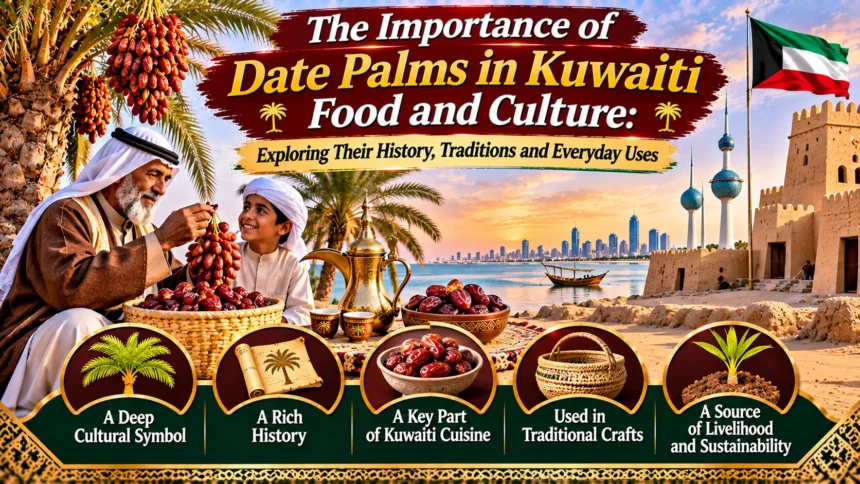
The Importance of Date Palms in Kuwaiti Food and Culture
Kuwait is known for its rich traditions, warm hospitality and strong connection with its cultural heritage. One of the most important symbols of this heritage is the date palm. For generations, this tree has played an important role in Kuwaiti food, agriculture, family life and traditional crafts.
- 1. The Historical Connection Between Kuwait and Date Palms
- 2. Dates: An Important Part of Traditional Kuwaiti Food
- 3. Popular Date Varieties Found in Kuwait
- 4. Understanding the Different Stages of Date Ripening
- 5. Dates and Arabic Coffee: A Symbol of Kuwaiti Hospitality
- 6. The Role of Dates During Ramadan and Special Occasions
- 7. Traditional Kuwaiti Sweets Made with Dates
- 8. Date Palm Leaves and Their Traditional Uses in Kuwaiti Homes
- 9. How Palm Fibres Supported Kuwait’s Traditional Maritime Life
- 10. The Date Palm as a Source of Shade and Shelter
- 11. Date Farming in Kuwait: From Traditional Farms to Modern Markets
- 12. Date Markets and the Importance of Seasonal Traditions
- 13. The Date Palm and Kuwait’s Cultural Identity
- 14. Protecting Date Palm Traditions for Future Generations
- Conclusion
- Frequently Asked Questions (FAQs)
The date palm is valued for much more than its sweet fruit. Its leaves have been used to make baskets, mats and household products, while its fibres were once used for ropes and other practical items. Its shade also made it a welcome presence in homes, gardens and farms.
Dates remain an important part of Kuwaiti food culture. They are served with Arabic coffee, offered to guests at traditional gatherings and enjoyed during Ramadan. Different varieties, including Barhi, Ikhlas and Sukkary, are available in local markets, especially during the summer harvest season.
Today, date palms continue to connect modern Kuwait with its past. Let’s explore the importance of date palms in Kuwaiti food and culture and understand why this tree holds such a special place in the country.
1. The Historical Connection Between Kuwait and Date Palms
The relationship between Kuwait and date palms goes back many generations. Before the discovery of oil transformed the country, many Kuwaiti families depended on fishing, pearl diving, trade, farming and other traditional activities.
In this environment, the date palm was a valuable natural resource. It provided food and shade and supplied materials that people could use to make everyday products. Families found different ways to use almost every useful part of the tree.
Date palms were also grown in areas where farming was possible. Farms in places such as Wafra and Abdali became associated with agricultural production, including date cultivation.
The tree was particularly valuable because it could grow in hot, dry environments when provided with suitable care and irrigation. This made it an important crop for communities living in the Arabian Gulf region.
Its importance was not limited to farms. Date palms became familiar features of traditional homes and public spaces. Many families planted them in gardens and continued caring for them across generations.
This long connection has helped make the date palm an important symbol of Kuwaiti heritage.
2. Dates: An Important Part of Traditional Kuwaiti Food
One of the biggest reasons date palms are valued in Kuwait is their fruit. Dates are naturally sweet and can be enjoyed fresh, soft or dried. They are eaten as snacks, served to guests and used in different traditional and modern recipes.
Dates are a natural source of sugar, fibre, and energy. Dried dates, known as tamr, can be stored for a long time without spoiling, making them easy to carry and useful for travel.
In Kuwaiti homes, dates are commonly offered alongside Arabic coffee or tea. They are also served during family gatherings and social occasions.
Dates are convenient to share and can be enjoyed by people of different ages. Their natural sweetness makes them suitable for everyday eating as well as special celebrations.
In the past, dates were especially important because they could provide food in a challenging environment. When fresh food was not always easy to find, dried dates were useful because they could be stored for longer periods when kept properly.
Today, dates remain popular in local markets and supermarkets. They are sold in different varieties, sizes and levels of ripeness.
Some common ways to enjoy dates in Kuwait include:
- Eating fresh dates as a snack.
- Serving dates with Arabic coffee.
- Stuffing dates with almonds, pistachios or other nuts.
- Using date paste in traditional and modern sweets.
- Adding dates to desserts and baked products.
- Serving them during Ramadan and family gatherings.
These simple food traditions show how closely the date palm is connected with daily life in Kuwait.
3. Popular Date Varieties Found in Kuwait
Kuwait’s date markets offer different varieties, each with its own flavour, colour and texture. Some dates are soft and juicy, while others are firmer, sweeter or easier to store.
Among the popular varieties enjoyed in Kuwait are:
Barhi: Barhi is one of the best-known varieties in Kuwaiti markets. It is particularly popular when harvested at the yellow Khalal stage, when the fruit is firm, crisp and sweet. It becomes softer as it ripens further.
Ikhlas: Ikhlas is another variety enjoyed by date lovers in Kuwait. It is valued for its sweetness and is commonly found among the dates sold in local markets.
Sukkary: Sukkary is known for its sweet taste and soft texture when fully ripe. It is another popular choice for people who enjoy naturally sweet dates.
Khalas: Khalas is a well-known Gulf date variety. It is appreciated for its flavour and is consumed at different stages of ripeness.
Medjool: Medjool dates are generally larger and are known for their soft texture and rich sweetness. They are often sold as a premium product and may be stuffed with nuts or other fillings.
The popularity of particular varieties can change according to market supply and consumer preference. However, Barhi, Ikhlas and Sukkary have been highlighted among the popular choices on Kuwaiti dining tables.
4. Understanding the Different Stages of Date Ripening
One interesting part of date farming is that dates do not become ready to eat all at once. They pass through different stages as they grow and ripen on the tree.
In Kuwait, three commonly discussed stages are Khalal, Rutab and Tamr. Each stage has a different appearance, texture and taste.
Khalal: At this stage, dates are usually firm and crunchy. Depending on the variety, they can be yellow, red or another bright colour. Some varieties, particularly Barhi, are popular when eaten at this stage.
Rutab: This is the soft-ripening stage. The fruit becomes softer, darker and juicier as it develops more sweetness. Many people enjoy Rutab because of its soft texture.
Tamr: This is the fully mature stage, when dates become more developed and have less moisture. They are commonly dried or stored and can be used for longer periods.
The wider botanical process includes earlier growth stages known as Hababouk and Kimri. These occur before the fruit reaches the stages commonly sold for eating.
In Kuwait, the main date harvest period generally falls between July and September, although the exact timing can vary according to the variety and growing conditions.
5. Dates and Arabic Coffee: A Symbol of Kuwaiti Hospitality
One of the most beautiful traditions connected with dates in Kuwait is serving them with Arabic coffee.
When guests visit a traditional Kuwaiti home or diwaniya, they are often welcomed with small cups of Arabic coffee and a plate of dates. This simple gesture represents generosity, respect and hospitality.
Dates are a natural partner for coffee because their sweetness balances the strong flavour of the drink. Guests can enjoy them together while talking and spending time with family members or friends.
The tradition is especially visible during special occasions, including weddings, family celebrations and Ramadan gatherings.
Dates may also be served in more decorative ways. Some are placed in attractive bowls, while others are filled with almonds, pistachios or dried fruits before being presented to guests.
The practice continues in modern Kuwait, showing how an old food tradition remains part of everyday social life. Recent reports from Kuwait’s date markets also describe stuffed dates as a popular choice for diwaniya gatherings.
6. The Role of Dates During Ramadan and Special Occasions
Dates have a special place in the food traditions of Ramadan. Across Kuwait and much of the Arab world, dates are commonly eaten when breaking the daily fast at sunset.
Families often begin their Iftar meal with dates and water before moving on to soups, rice dishes, meat, vegetables and other foods.
During Ramadan, dates are also commonly shared with relatives, neighbours and visitors. They may be included in food gifts or served at community gatherings.
The connection between dates and Ramadan makes the fruit especially meaningful during this month. It also reflects a long-standing tradition of sharing simple and nourishing food with others.
Dates are not limited to Ramadan, however. They are also enjoyed during Eid, weddings, family visits and other social occasions.
For many Kuwaiti families, keeping dates available at home is a simple way of maintaining a familiar hospitality tradition.
7. Traditional Kuwaiti Sweets Made with Dates
Date palms have also influenced the way sweets are prepared in Kuwait. The natural sweetness and soft texture of dates make them useful ingredients in several traditional and modern desserts.
One example is Tamriya, a sweet date-based preparation. Date paste can be enjoyed plain or mixed with ingredients such as sesame tahini, nuts and other flavourings.
Dates are also used in different snack-style sweets. They may be filled with almonds, pistachios or cashews, covered with chocolate or combined with biscuits and other ingredients.
Some popular date-based treats include:
- Stuffed dates: Dates filled with almonds, pistachios, cashews or dried fruits.
- Date paste: Soft dates prepared into a smooth mixture for desserts and snacks.
- Date syrup: A thick sweet liquid made from dates, used in some traditional and modern recipes.
- Date balls: Small sweet portions made by mixing dates with sesame seeds, nuts or coconut.
- Date biscuits: Baked products with date fillings and decorative toppings.
Local date sellers in Kuwait report demand for date paste, date syrup and stuffed-date products, showing how the fruit continues to inspire new food ideas.
These treats also make attractive gifts, especially during celebrations and family visits.
8. Date Palm Leaves and Their Traditional Uses in Kuwaiti Homes
The importance of date palms in Kuwaiti culture goes far beyond their fruit. Before modern household products became widely available, people used the leaves and fronds of the tree to create practical items.
One traditional craft was palm-frond weaving. Craftspeople separated the fronds into strips, cleaned them, sometimes dyed them and then woven them into different shapes.
This work required patience and skill. Both men and women contributed to the craft, producing items that were useful in traditional homes.
Some common palm-woven products included:
Sufra: A round or rectangular mat used as a surface for serving meals. Family members could sit around it and share food.
Mahfa: A traditional hand fan made from palm fronds. It was useful during hot summer days when electric fans were not available.
Hasir: A woven palm mat used as an alternative to carpets and as a sitting surface in homes and diwaniyas.
Zabeel: A woven container with handles, traditionally used for carrying purchases, vegetables and other household materials.
Mallala: A hanging basket used for storing cooked food safely away from children and animals.
These products show how the date palm became part of daily household life in Kuwait.
Today, palm-frond weaving is also demonstrated at heritage events and workshops to help preserve the traditional skill.
9. How Palm Fibres Supported Kuwait’s Traditional Maritime Life
Kuwait has a long history of fishing, pearl diving and maritime trade. Before oil became the country’s main source of wealth, these activities were central to the local economy.
The date palm also contributed to this maritime lifestyle. Its fibres were used to make strong ropes that could support different activities around boats and the sea.
In traditional pearl diving, ropes were important for practical tasks, including helping divers descend into the water and return to the surface.
Palm-frond products were also useful around boats and coastal work. Woven mats could provide shade, while baskets and containers helped store and carry supplies.
This connection between the date palm and the sea is an interesting part of Kuwaiti history. It shows how a single tree could support both household needs and the work of people who depended on the Gulf waters.
The use of palm fibres in ropes and other traditional products has been documented in accounts of Kuwait’s pre-oil crafts.
10. The Date Palm as a Source of Shade and Shelter
Date palms were useful for much more than just their fruit. In the past, people in Kuwait used palm trunks to build roofs, bridges, furniture, and boats.
They also used the leaves to make baskets, rugs, and ropes, as well as for shade and fuel. The seeds were often used to feed animals.
Kuwait experiences very hot summers, so shade has always been valuable. Date palms helped people create more comfortable surroundings in their homes, gardens and outdoor spaces.
Their wide leaves provide shade, while groups of palm trees can create cooler areas in open spaces.
In earlier times, palm leaves were used in temporary shelters and simple structures. The trunk could also be used as a building material in some traditional construction.
According to accounts of traditional Kuwaiti life, parts of the tree were used in house roofs, bridges and other practical structures. Leaves were also used for shade and, in some cases, as firewood for cooking.
Today, date palms are commonly planted around homes, farms, parks, roads and public areas. Apart from their fruit, they add greenery and help create attractive outdoor spaces.
Their presence is a reminder of the practical relationship between people and the natural environment.
11. Date Farming in Kuwait: From Traditional Farms to Modern Markets
Date farming continues to be part of Kuwait’s agricultural activity. Although the country is a smaller date producer than some other countries in the region, date palms are still grown on farms and in private gardens.
Wafra and Abdali are among the areas associated with agricultural production and date cultivation.
Growing date palms in Kuwait requires proper care. The hot, dry climate and sandy soil make irrigation and maintenance important for healthy growth and fruit production.
Farmers need to pay attention to watering, pruning, pollination and the condition of the fruit bunches.
During the harvest season, date clusters may be protected with special bags or covers to reduce damage from dust, birds and falling fruit.
The fruits are then collected and prepared for sale or storage. Fresh dates are available in local markets, while other varieties are packed and sold throughout the year.
Recent reporting from Kuwait describes thousands of tonnes of dates being harvested annually from farms in areas such as Wafra and Abdali. It also highlights the continued interest of families who grow palm trees in their own gardens.
12. Date Markets and the Importance of Seasonal Traditions
Date markets are an important part of Kuwait’s food culture. During the harvest season, sellers display different varieties of fresh dates, allowing customers to choose according to their preferred taste and texture.
Souq Al-Mubarakiya is one of the places where visitors can explore traditional food products and date shops. Farm markets and specialist sellers also offer local and imported varieties.
The summer harvest creates activity among farmers, sellers and customers. People visit markets to buy fresh dates for their homes, while others purchase them as gifts for family and friends.
Some dates are sold in simple packaging, while premium varieties may be arranged in decorative boxes.
The date season also creates opportunities for farmers to share their produce and for customers to learn about different varieties.
For visitors interested in Kuwaiti food culture, visiting a traditional date market can be an interesting way to experience the country’s relationship with this fruit.
13. The Date Palm and Kuwait’s Cultural Identity
The date palm is more than an agricultural product in Kuwait. It represents the resourcefulness, hard work and traditions of earlier generations.
The date palm (nakhla) is an important symbol of Kuwaiti culture and heritage. It represents strength, generosity, and the connection between Kuwait’s traditional desert life and modern society.
Its gardens, farming communities and shared meals. For older generations, date palms may also bring back memories of harvesting fruit, weaving palm leaves and using handmade household products.
In the past, date palm trees helped people find water in dry desert areas, making it easier for communities to settle and grow. In Kuwaiti poetry, stories, and folk songs, the tree is seen as a symbol of strength, good fortune, and prosperity.
The palm tree is also part of a wider cultural tradition across the Arab region. UNESCO inscribed shared knowledge, skills, traditions and practices connected with date palms on its Representative List of the Intangible Cultural Heritage of Humanity in 2022.
The recognition includes communities from Kuwait and other participating countries. It covers the knowledge involved in growing palm trees, using their products, making crafts and passing traditional practices to future generations.
This international recognition highlights the importance of protecting the knowledge and skills associated with the date palm.
14. Protecting Date Palm Traditions for Future Generations
Modern lifestyles have changed the way people use date palms. Many household products that were once made from palm leaves are now manufactured using plastic, metal and other materials.
However, traditional palm weaving and date farming remain valuable parts of Kuwait’s heritage.
Preserving these practices requires the involvement of families, farmers, cultural organisations and local communities.
Some useful ways to support these traditions include:
- Buying dates from local farms and markets.
- Learning about traditional date varieties.
- Supporting palm-weaving workshops.
- Visiting heritage exhibitions and cultural events.
- Encouraging younger generations to learn traditional crafts.
- Planting and caring for date palms where suitable.
- Documenting the memories and knowledge of older farmers and craftspeople.
These activities help maintain a connection between traditional life and modern society.
They also remind people that cultural heritage is not only found in museums. It can be preserved through simple everyday activities, such as serving dates to guests or using handmade palm products at home.
Conclusion
The importance of date palms in Kuwaiti food and culture comes from their many uses and their connection with generations of traditional life. Their fruits have provided food for families, guests and communities, while their leaves, fibres and trunks have been used to make useful household products and support traditional activities.
Dates remain an important part of Kuwaiti hospitality, especially when served with Arabic coffee during family gatherings and diwaniya visits. Different varieties, including Barhi, Ikhlas and Sukkary, continue to be enjoyed throughout the year, with the summer harvest bringing special attention to local date markets.
Beyond food, palm weaving, farming and traditional uses of the tree help keep Kuwait’s cultural heritage alive. Protecting these practices ensures that future generations can understand the value of the date palm and the stories connected with it.
For Kuwait, the date palm is not simply a tree. It is a lasting symbol of food, hospitality, creativity and cultural identity.
Frequently Asked Questions (FAQs)
1. Why are date palms important in Kuwaiti culture?
Date palms are important because they provide food, shade and materials for traditional crafts. They are also connected with hospitality, family gatherings, farming and Kuwait’s pre-oil way of life.
2. What are the popular date varieties in Kuwait?
Barhi, Ikhlas and Sukkary are among the popular varieties found on Kuwaiti dining tables and in local markets. Khalas and Medjool are also familiar choices.
3. When is the date harvest season in Kuwait?
The main date harvest period generally falls between July and September. The exact timing varies according to the date variety and growing conditions.
4. How are dates served in Kuwait?
Dates are commonly served with Arabic coffee or tea. They are also offered during family gatherings, diwaniya visits, Ramadan and special celebrations.
5. What are the different stages of date ripening?
The three commonly enjoyed stages in Kuwait are Khalal, when dates are firm; Rutab, when they become soft and ripe; and Tamr, when they reach full maturity and are suitable for longer storage.
6. How were date palm leaves used in traditional Kuwaiti homes?
Palm leaves were woven into mats, baskets, hand fans, food covers, storage containers and other household products. They were also used to make items such as the Sufra, Mahfa and Zabeel.
7. Where are date palms grown in Kuwait?
Date palms are found in private gardens, farms, parks and public spaces. Wafra and Abdali are among the areas associated with agricultural production and date cultivation.
8. Are date palms recognised as cultural heritage?
Yes. UNESCO inscribed the shared knowledge, skills, traditions and practices associated with date palms on its Representative List of the Intangible Cultural Heritage of Humanity in 2022, with Kuwait among the participating countries.
Do follow us on Instagram
Read More – Traditional Saudi Arabian Dishes Every Food Lover Should Know