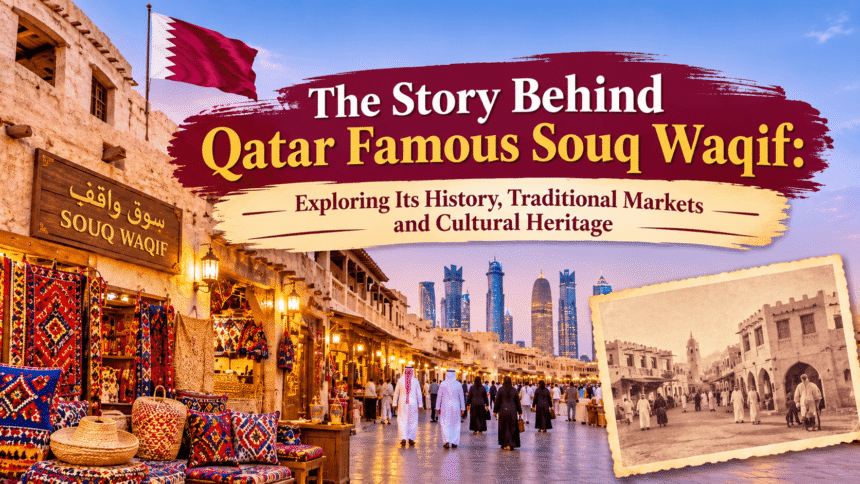
The Story Behind Qatar Famous Souq Waqif: History, Culture and Heritage
Souq Waqif, meaning “the standing market” in Arabic, is a historic marketplace in Doha, Qatar. It began as a small trading place for Bedouins and local people near Wadi Msheireb and later grew into one of the city’s most popular cultural landmarks
- 1. Where Is Souq Waqif Located?
- 2. The History Behind the Qatar Famous Souq Waqif
- 3. How Souq Waqif Started as a Traditional Trading Market
- 4. The Importance of Souq Waqif in Old Doha’s Daily Life
- 5. Traditional Architecture: What Makes Souq Waqif Special?
- 6. The 2003 Fire and the Restoration of Souq Waqif
- 7. The Spice Market: A Colourful Part of Souq Waqif
- 8. Falcon Souq: A Place Connected with Qatar’s Heritage
- 9. Gold, Textiles and Traditional Handicrafts
- 10. Traditional Food and Restaurants at Souq Waqif
- 11. Cafés, Social Gatherings and the Evening Atmosphere
- 12. Art and Cultural Events at Souq Waqif
- 13. Why Souq Waqif Is Important to Qatar’s Cultural Identity
- 14. Why Every Visitor to Doha Should Explore Souq Waqif
- 15. Tips for Exploring Souq Waqif
- Conclusion
- Frequently Asked Questions (FAQs)
Qatar is known for its modern skyline, beautiful museums, luxury hotels and impressive architecture. However, one of the best places to understand the country’s traditional lifestyle is not a modern shopping mall or a large tourist attraction. It is Souq Waqif, a historic marketplace located in the heart of Doha.
For more than a century, this market has been connected with trade, local businesses, family gatherings and everyday life. Its narrow streets, traditional buildings, colourful shops and welcoming atmosphere reflect the character of old Doha.
In the past, people visited the souq to buy food, livestock, fabrics, spices and other household goods. Traders from different areas also gathered here to sell their products and exchange information. Over time, the market became more than a place for shopping. It developed into an important social and cultural centre.
Today, Souq Waqif attracts visitors from around the world. People come to explore traditional shops, see falcons, enjoy Qatari food, purchase handmade products and experience the atmosphere of an old Arabian marketplace.
Let’s discover the story behind Qatar’s famous Souq Waqif and understand how it became one of the most recognisable cultural places in Doha.
1. Where Is Souq Waqif Located?
Souq Waqif is located in the centre of Doha, close to the traditional waterfront area and within walking distance of the Corniche. Its location makes it easy to include in a cultural visit to the Qatari capital.
The market stands on the site of an older trading area that developed along the banks of Wadi Musheireb. In the past, this area was connected with Doha’s coastal communities and everyday commercial activities.
Unlike modern shopping centres, Souq Waqif is built around traditional walkways, small shops and open spaces. Visitors can move between different market sections, discovering new products and local experiences along the way.
Its central location has helped it remain an important meeting point for residents and tourists. Even with the growth of modern Doha, the souq continues to connect people with the city’s older traditions.
2. The History Behind the Qatar Famous Souq Waqif
The name Souq Waqif has an interesting connection with the history of the market. In Arabic, the word “waqif” means standing, while “souq” means market.
Historians believe the market began around 100 to 200 years ago as a place where Bedouins, fishermen, and local people gathered to meet and trade goods.
One commonly shared explanation connects the name with traders who stood along the waterfront area to sell their products. Before permanent shops became common, sellers would gather around the wadi and offer goods to people passing through the area.
Some historical accounts explain that the market area could be affected by water from the nearby wadi and coastal surroundings. As a result, trading often took place in open spaces where merchants stood rather than inside permanent buildings.
The name reflects the image of a traditional marketplace where people gathered to trade, talk and meet one another.
Although the exact details of the name’s origin are not fully established, the connection with standing traders is widely repeated in accounts of Souq Waqif’s history.
3. How Souq Waqif Started as a Traditional Trading Market
Souq Waqif developed more than a century ago, when Doha was still a much smaller settlement than the modern city we see today.
At that time, many local families depended on fishing, pearl diving, trade, livestock and other traditional activities. The market provided a place where people could buy essential products and sell goods brought from nearby settlements.
Some stories suggest that the name “Waqif” came from traders who used to stand outside their shops to sell goods like spices, clothes, and fish. Another explanation links the name to the water and flooding that sometimes occurred near the nearby valley.
Traders and local residents gathered to exchange different types of products. These included wool, livestock, fabrics, food supplies and other everyday items. Qatar’s coastal location also encouraged commercial connections with other parts of the Arabian Gulf.
The market was especially useful because it brought different communities together. Farmers, fishermen, merchants and travelling traders could meet in one place to exchange their products.
In those days, markets were also important sources of information. People discussed business, local news, weather conditions and events taking place in nearby communities.
This made Souq Waqif an important centre of communication as well as trade. Its role went beyond buying and selling, helping create connections between people across old Doha.
4. The Importance of Souq Waqif in Old Doha’s Daily Life
Before modern shopping centres and supermarkets became common, traditional markets played an important role in everyday life.
Souq Waqif was one of the places where local families could find many of the products they needed. People visited the market to purchase food, household items, clothing materials and other supplies.
Traders also played an important role in the community. They developed relationships with customers, shared knowledge about products and built businesses that sometimes continued across generations.
The market was also a social meeting place. People met friends, exchanged news and spent time with family members while shopping.
Its importance can be understood through several traditional activities:
- Daily shopping: Families bought food, spices, fabrics and household products.
- Livestock trading: Animals were an important part of traditional trade and local economic life.
- Coastal connections: The market reflected Doha’s links with fishing and pearl-diving communities.
- Social gatherings: Traders and residents met to discuss business and everyday matters.
- Cultural exchange: Products and ideas from different regions were brought into the marketplace.
These activities helped Souq Waqif become an important part of Doha’s social and economic history.
5. Traditional Architecture: What Makes Souq Waqif Special?
One of the most attractive features of Souq Waqif is its traditional architecture. The market looks very different from the glass buildings and modern shopping centres found across Doha.
Its buildings have a simple appearance that reflects the traditional architecture of the Arabian Gulf. Many structures feature mud-rendered walls, wooden doors, small windows and decorative details.
The narrow walkways and shaded passages also have a practical purpose. They provide protection from strong sunlight and help make movement around the market more comfortable during warmer weather.
Traditional building materials were an important part of the restoration process. The Aga Khan Trust for Culture explains that modern metal roof coverings were replaced with traditional roofs made using dangeal wood and bamboo, with a binding layer of clay and straw. Traditional methods of keeping buildings cool were also reintroduced. <Cite ref=”turn804825view1″/>
Some notable architectural features include:
- Mud-covered walls: These create the traditional appearance of the market.
- Wooden doors: Many shops have traditional-style wooden entrances.
- Shaded walkways: Covered passages protect visitors from direct sunlight.
- Traditional roofs: Wood, bamboo, clay and straw were used during the restoration.
- Courtyards and open spaces: These provide places for visitors to gather and relax.
The architecture is an important reason why the souq remains one of Doha’s most recognisable heritage areas.
6. The 2003 Fire and the Restoration of Souq Waqif
One of the most important events in the modern history of Souq Waqif was the fire that destroyed a significant part of the old market in 2003.
Before this event, some buildings had already fallen into poor condition. Modern changes and unsuitable additions had also affected the appearance of parts of the traditional market.
The fire created a major challenge for the future of the souq. There was a need to protect what remained and bring the older trading area back to life without losing its historic character.
In 2003, a major fire badly damaged large parts of the historic market. Instead of replacing it with modern buildings, Qatar’s leaders decided to protect and restore the market to preserve its history and cultural importance
A major restoration and revitalisation project followed. The design work took place between 2004 and 2007, and the project was completed in 2008. The work was led by Qatar’s Private Engineering Office, with architect Mohamed Ali Abdullah associated with the design.
The restoration aimed to bring back the traditional appearance of the market.
Some modern buildings and unsuitable additions were removed. Traditional roofing methods and building materials were reintroduced, while the market’s walkways and overall layout were improved.
The project also introduced modern facilities, including improved lighting, without changing the traditional atmosphere.
This restoration was important because it protected the historic identity of the area while allowing businesses to continue operating.
The Aga Khan Trust for Culture highlighted the project as an example of heritage restoration that kept the souq as a working marketplace rather than turning it into a purely decorative attraction.
7. The Spice Market: A Colourful Part of Souq Waqif
The spice market is one of the most enjoyable areas to explore inside Souq Waqif.
As visitors walk through the narrow passages, they can see large bags and containers filled with colourful spices, herbs and dried products. The different smells create a special atmosphere that makes the market interesting even for people who are not planning to buy anything.
Some common products include saffron, cardamom, cinnamon, cloves, sumac, dried lemons and different types of herbs.
The shops also sell dried flowers, dates, honey, tea leaves and coffee beans. These products are used in traditional cooking across Qatar and other parts of the Middle East.
For visitors interested in food, the spice market offers a chance to learn about the ingredients used in regional recipes.
The market also shows how Doha’s traditional trading culture remains connected with different parts of the world. Spices and food products from various regions continue to find customers here.
8. Falcon Souq: A Place Connected with Qatar’s Heritage
One of the most interesting sections of Souq Waqif is the Falcon Souq. It reflects the importance of falconry in Qatari culture and the country’s traditional relationship with desert life.
Falconry has been practised in the Arabian Peninsula for generations.
The Falcon Souq in Souq Waqif is a special market dedicated to falcons and Qatar’s long history of falconry. It celebrates the country’s national bird and the Bedouin tradition of training and hunting with falcons, which is recognised by UNESCO as part of its Intangible Cultural Heritage.
For many generations, Bedouins trained falcons to hunt birds like the houbara bustard in the desert. Falcons were valued for their speed and sharp eyesight.
Over time, this traditional hunting practice became a popular sport and an important part of Qatari culture, representing patience, courage, and tradition.
Falconry has became an important part of cultural identity and heritage. It is still respected in Qatar and remains visible during traditional gatherings and sporting events.
At the Falcon Souq, visitors can see different falcons and learn about the equipment used by falconers. Depending on the arrangements, visitors may also be able to photograph a bird or hold one under the supervision of a trained handler.
The souq also has a falcon hospital, where birds receive specialised care. It provides veterinary facilities and medical services for falcons.
This market is much more than a place to see birds. It offers an opportunity to understand an important part of Qatar’s cultural heritage.
9. Gold, Textiles and Traditional Handicrafts
Souq Waqif is also known for its variety of traditional shopping areas. Visitors can find jewellery, fabrics, handmade products, souvenirs and decorative objects.
The Gold Souq is particularly popular among people interested in jewellery. Its shops display necklaces, bracelets, rings and other gold items in different designs.
The textile and handicraft shops offer another interesting experience. Customers can explore colourful fabrics, traditional clothing materials, rugs, carpets and decorative products.
Some stores also sell wooden objects, glass items, antiques, musical instruments and traditional accessories.
These products show the variety of skills and materials connected with the region’s cultural heritage.
Visitors can explore different sections to find:
- Traditional fabrics and garments.
- Handmade carpets and rugs.
- Jewellery and decorative accessories.
- Wooden objects and household products.
- Traditional musical instruments.
- Souvenirs and regional handicrafts.
The market’s shopping areas help connect traditional products with modern customers.
10. Traditional Food and Restaurants at Souq Waqif
Food is another important part of the Souq Waqif experience. The market has restaurants, cafés and street-food sellers offering Qatari dishes and food from different parts of the region.
Visitors can enjoy traditional meals while sitting in a setting that reflects Doha’s older architectural style.
Popular food experiences include traditional rice dishes, grilled meats, stews, fresh bread, sweets and small snacks.
Qatari dishes such as Machboos are particularly worth trying. Machboos is a traditional rice dish prepared with meat or seafood and a mixture of spices.
The souq is also a good place to enjoy Arabic coffee and dates. These are important parts of regional hospitality and are commonly served to guests.
Some food options you may come across include:
- Machboos: A traditional rice dish prepared with meat, chicken or seafood.
- Regag: Thin traditional bread that can be served with different fillings.
- Karak tea: A popular milk tea flavoured with spices.
- Samosas: Small savoury pastries with different fillings.
- Kunafa: A sweet dessert made with pastry and cheese or cream.
- Baklava: A layered pastry filled with nuts and sweet syrup.
The combination of traditional food and lively outdoor cafés makes the souq a popular place for evening dining.
11. Cafés, Social Gatherings and the Evening Atmosphere
Souq Waqif changes its character as the day moves towards evening.
During the day, visitors explore the shops and markets, while the atmosphere becomes particularly lively after sunset. Restaurants and cafés attract residents, families and tourists who come to enjoy food, drinks and conversation.
In Qatari culture, social gatherings are important. The traditional majlis provides a place where people meet, welcome guests and discuss different topics.
The cafés at Souq Waqif offer a modern version of this social experience. People sit outside, enjoy Arabic coffee or tea and spend time with friends and family.
Visitors can also experience traditional games and watch people enjoying football matches or simply talking at outdoor tables.
The busy evening atmosphere is one of the reasons why the souq remains popular with both residents and tourists.
12. Art and Cultural Events at Souq Waqif
Souq Waqif is not only a shopping destination. It also has a connection with art, cultural events and traditional entertainment.
The Souq Waqif Art Centre is one place where visitors can explore artwork and creative products. Its surroundings include decorative woodwork, colourful tiles and workshops where visitors may see artists working.
The wider market also hosts exhibitions and cultural activities throughout the year.
During special occasions and festival periods, visitors may see traditional music, street performances, costume displays and other public activities.
These events make the souq a lively cultural space rather than simply a place to purchase goods.
Seasonal celebrations, particularly during national and religious occasions, can bring additional colour and activity to the market. Exact events and programmes vary, so visitors should check current announcements before planning around a particular performance.
13. Why Souq Waqif Is Important to Qatar’s Cultural Identity
Souq Waqif has a special place in Qatar’s cultural identity because it connects modern Doha with its traditional past.
Many cities have developed rapidly, replacing older buildings with modern structures. However, the continued presence of Souq Waqif helps visitors understand what everyday commercial life once looked like in Doha.
It preserves several elements of traditional culture, including:
- The architecture and layout of old marketplaces.
- Traditional shopping and trading practices.
- Falconry and its cultural importance.
- Regional food and hospitality traditions.
- Handmade goods and local crafts.
- The social habit of meeting and spending time together.
The market is also important because it remains a working public space. Local businesses continue to operate, and residents still visit for shopping, meals and social activities.
Its restoration demonstrates how a historic place can be protected while continuing to serve modern needs.
14. Why Every Visitor to Doha Should Explore Souq Waqif
For visitors, Souq Waqif offers a different experience from Doha’s modern attractions.
It is a place where people can explore traditional architecture, learn about Qatari customs, enjoy local food and discover products that reflect the region’s history.
First-time visitors can spend several hours walking through its different sections. Each area offers something different, from spices and jewellery to falcons, textiles and cafés.
Some of the best experiences include:
- Exploring the narrow traditional streets.
- Visiting the Falcon Souq.
- Discovering the spice and perfume shops.
- Enjoying traditional Qatari food.
- Buying handmade products and souvenirs.
- Relaxing at an outdoor café.
- Photographing the traditional buildings and evening atmosphere.
The market is particularly enjoyable in the cooler months, when spending time outdoors is more comfortable.
It is a good destination for families, solo travellers, food lovers and anyone interested in Qatar’s history.
15. Tips for Exploring Souq Waqif
A little planning can make a visit to Souq Waqif more enjoyable.
Here are some simple tips for exploring the market:
- Visit in the evening: The market is generally more lively after sunset, with restaurants and cafés attracting visitors.
- Wear comfortable shoes: The market has many narrow streets and walking areas.
- Explore different sections: Do not limit your visit to the main street. Smaller lanes contain interesting shops and products.
- Try traditional food: Make time to enjoy Qatari dishes, Arabic coffee and local sweets.
- Ask before taking photographs: Be respectful when photographing shopkeepers, visitors and animals.
- Compare prices: When shopping, compare products and ask about prices before making a purchase.
- Respect local customs: Dress comfortably and follow local cultural expectations.
- Check event information: Cultural performances and seasonal activities may change throughout the year.
Exploring the market at a relaxed pace allows visitors to enjoy its atmosphere and discover details that can easily be missed.
Conclusion
The story behind Qatar’s famous Souq Waqif is a story of trade, community, culture and preservation. What began as a traditional marketplace near the banks of a wadi developed into one of the most important social and commercial spaces in old Doha.
The market survived changes in the city, periods of decline and a major fire in 2003. Its restoration, completed in 2008, helped bring back its traditional architectural character while allowing businesses to continue operating.
Today, Souq Waqif remains an important part of Qatar’s cultural identity. Its spice shops, Falcon Souq, Gold Souq, traditional restaurants and handmade products give visitors an opportunity to experience the country’s heritage.
More than a shopping destination, it is a living reminder of how people traded, met and shared their daily lives in old Doha. Exploring Souq Waqif is therefore one of the best ways to understand the connection between Qatar’s traditional past and its modern present.
Frequently Asked Questions (FAQs)
1. What is Souq Waqif famous for?
Souq Waqif is famous for its traditional architecture, spice shops, Falcon Souq, Gold Souq, handmade products, restaurants and lively cultural atmosphere.
2. How old is Souq Waqif in Qatar?
Souq Waqif is more than a century old. It developed as a trading market when Doha was still a much smaller settlement.
3. What does the name Souq Waqif mean?
In Arabic, “souq” means market and “waqif” means standing. The name is commonly connected with traders who stood in open areas to sell their goods near the old wadi.
4. What happened to Souq Waqif in 2003?
A major fire in 2003 destroyed a significant part of the old market. A restoration project followed, and the revitalised souq was completed in 2008.
5. What can visitors buy at Souq Waqif?
Visitors can buy spices, perfumes, gold jewellery, traditional fabrics, carpets, handicrafts, souvenirs, musical instruments and other products.
6. Why is the Falcon Souq important?
The Falcon Souq represents Qatar’s traditional falconry heritage. It allows visitors to learn about falcons, see traditional equipment and understand the importance of the birds in Qatari culture.
7. Is Souq Waqif worth visiting in Doha?
Yes. It is one of Doha’s most important cultural destinations, offering shopping, traditional food, architecture, art and opportunities to experience local customs.
8. What is the best time to visit Souq Waqif?
Evenings are generally a good time to visit because the cafés, restaurants and market streets become lively. The cooler months are especially comfortable for exploring the outdoor areas.
Do follow us on Instagram
Read More – How Sea Turtles Find Their Way Back to Oman’s Beaches