



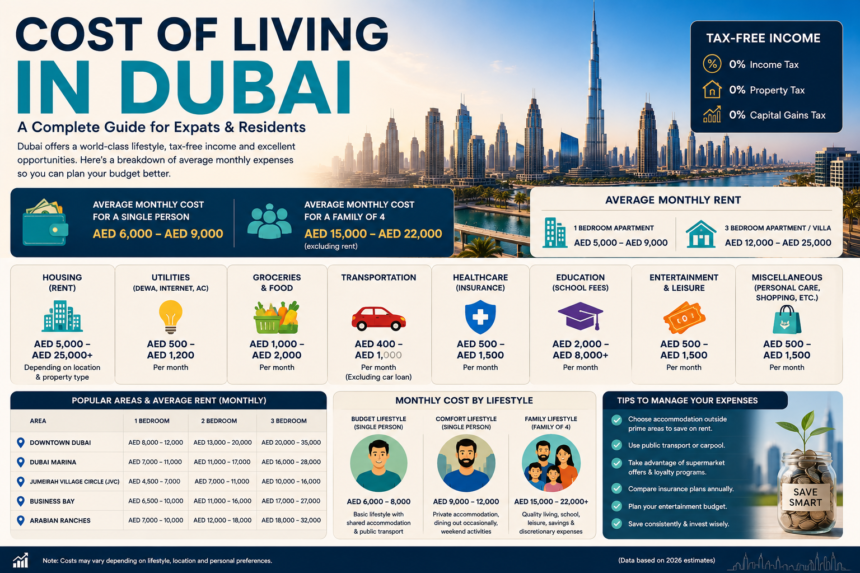
Cost of Living in Dubai in 2026 Ultimate Guide to Monthly Expenses, Budgeting, and Saving Money
Dubai continues to rank among the world’s most desirable cities for expatriates, entrepreneurs, digital nomads, students, and investors. Known for its iconic skyline, luxurious lifestyle, world-class infrastructure, tax-friendly income environment, and excellent career opportunities, Dubai attracts millions of residents from over 200 nationalities.
- Why Dubai Attracts Millions of Expats
- Is Dubai Expensive?
- Average Monthly cost of living in Dubai
- Housing Costs
- Popular Residential Areas Cost of Living in Dubai
- Utility Bills
- Internet and Mobile Services
- Grocery Cost of Living in Dubai
- Dining Out
- Transportation Cost of Living in Dubai
- Healthcare Expenses
- Education Cost of Living in Dubai
- Childcare Cost of Living in Dubai
- Entertainment and Leisure cost of living in Dubai
- Fitness and Wellness cost of living in Dubai
- Clothing and Shopping cost of living in Dubai
- Banking and Financial Services
- Cost of Living in Dubai for Students
- Cost of Living in Dubai for Digital Nomads
- Cost of Living in Dubai for Families
- Factors That Influence Living Costs
- How to Save Money in Dubai
- Sample Monthly Budget
- Common Financial Mistakes
- Future Living Cost Trends
- Frequently Asked Questions
One of the most common questions people ask before relocating is: “How much does it cost to live in Dubai in 2026?”
The answer depends on several factors, including your lifestyle, accommodation choice, family size, transportation habits, and entertainment preferences. While Dubai is often associated with luxury, it also offers affordable living options for those who plan their finances wisely for cost of living in Dubai.
This comprehensive guide covers every major living expense in Dubai, including housing, transportation, groceries, healthcare, education, utilities, leisure, and practical money-saving tips. Whether you’re moving alone, relocating with your family, or considering Dubai for work or study, this guide will help you estimate your monthly budget.
Why Dubai Attracts Millions of Expats
Dubai remains a global destination due to several advantages:
- Tax-friendly personal income environment
- Strong employment opportunities
- High standard of living
- Safe and modern communities
- Excellent healthcare facilities
- International schools and universities
- Efficient public transportation
- World-class shopping and entertainment
- Diverse multicultural society
- Strategic location connecting Europe, Asia, and Africa
These factors make Dubai one of the most attractive cities for professionals and businesses.
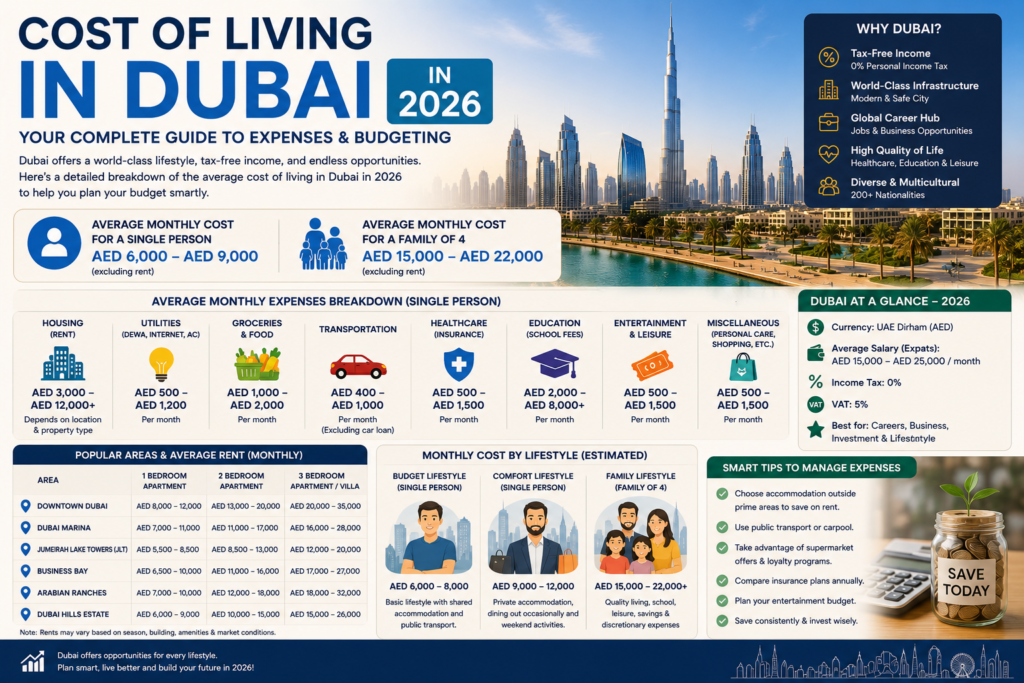
Is Dubai Expensive?
Dubai can be as affordable or as luxurious as you choose.
Your monthly expenses largely depend on:
- Area where you live
- Property type
- Family size
- Dining habits
- Transportation choices
- School fees (if applicable)
- Healthcare requirements
- Entertainment spending
Someone living modestly and using public transport will typically spend much less than someone renting a luxury apartment and dining out frequently.
Average Monthly cost of living in Dubai
Single Professional
Typical monthly cost of living in Dubai expenses include:
- Accommodation
- Food
- Utilities
- Transportation
- Internet and mobile
- Healthcare
- Leisure
- Miscellaneous costs
Overall spending varies according to lifestyle and neighbourhood.
Couple
Couples generally benefit from shared housing and utility costs, although entertainment and travel budgets may increase depending on lifestyle.
Family
Families should also budget for:
- Education
- Childcare
- Larger accommodation
- Family healthcare
- Recreation
Housing and education are often the largest household expenses.
Housing Costs
Accommodation is usually the biggest monthly expense.
Apartments
Available options include:
- Studio apartments
- One-bedroom apartments
- Two-bedroom apartments
- Three-bedroom apartments
Rental prices vary depending on:
- Location
- Building age
- Amenities
- Access to transport
- Community facilities
Villas
Families often choose villas due to:
- Larger living space
- Private gardens
- Parking
- Community facilities
- Family-friendly neighbourhoods
Villa rental costs generally increase with size and location.
Popular Residential Areas Cost of Living in Dubai
Popular communities cost of living in Dubai include:
1. Downtown Dubai: Ideal for professionals seeking city-centre living close to offices, shopping, and entertainment.
2. Dubai Marina: Known for waterfront apartments, restaurants, and vibrant nightlife.
3. Business Bay: A popular mixed-use district offering residential and commercial developments.
4. Jumeirah Village Circle (JVC): Favoured by many residents seeking more affordable rental options.
5. Dubai Hills Estate: Offers modern communities, parks, schools, and family-oriented amenities.
6. Arabian Ranches: Popular with families looking for spacious villas and suburban living.
Utility Bills
Monthly household utilities may include:
- Electricity
- Water
- Cooling (where applicable)
- Waste services
Usage depends on:
- Apartment size
- Family size
- Air conditioning use
- Season
Energy-efficient habits can help reduce costs.
Internet and Mobile Services
Most residents require:
- Home broadband
- Mobile phone plan
- Streaming subscriptions (optional)
Costs vary depending on speed, data allowances, and bundled services.
Grocery Cost of Living in Dubai
Food expenses depend on:
- Household size
- Shopping habits
- Imported products
- Organic food preferences
- Dining frequency
Common grocery categories include:
- Fresh fruit and vegetables
- Meat and seafood
- Dairy products
- Rice and pasta
- Bread
- Household essentials
Shopping at different supermarkets or buying local produce can help control spending.
Dining Out
Dubai offers restaurants for every budget.
Options include:
- Food courts
- Cafés
- Casual dining
- Family restaurants
- Fine dining
- International cuisine
Cooking at home regularly is generally more economical than eating out frequently.
Transportation Cost of Living in Dubai
Dubai provides several transport options.
1. Dubai Metro
The Metro offers:
- Air-conditioned stations
- Fast city connections
- Affordable fares
- Convenient access to business districts
It is one of the most cost-effective ways to travel.
2. Public Buses
Buses connect many residential and commercial areas, complementing the Metro network.
3. Taxis
Taxis are widely available throughout Dubai and can be booked through authorised providers.
4. Ride-Hailing Services
Ride-hailing apps offer convenient transportation but may cost more than public transport for regular commuting.
5. Private Cars
Owning a car involves additional expenses such as:
- Fuel
- Insurance
- Maintenance
- Parking
- Registration
Before purchasing a vehicle, compare the ongoing costs with your commuting needs.
Healthcare Expenses
Dubai offers both public and private healthcare services.
Potential healthcare costs include:
- Health insurance
- Doctor consultations
- Specialist appointments
- Prescription medication
- Dental care
- Emergency treatment
Residents should ensure they understand the health insurance provided by their employer or arrange suitable coverage where required.
Education Cost of Living in Dubai
Families relocating with children should budget for:
- School tuition
- Registration fees
- Uniforms
- Books
- Transport
- Extracurricular activities
Fees vary significantly depending on the curriculum and institution.
Childcare Cost of Living in Dubai
Parents may also consider:
- Nurseries
- Daycare centres
- Babysitting
- After-school programmes
Planning these costs in advance helps with long-term budgeting.
Entertainment and Leisure cost of living in Dubai
Dubai offers a wide variety of entertainment options.
Popular activities include:
- Beaches
- Theme parks
- Shopping malls
- Cinemas
- Museums
- Desert safaris
- Water parks
- Sporting events
- Cultural festivals
Entertainment budgets vary greatly depending on lifestyle.
Fitness and Wellness cost of living in Dubai
Many residents budget for:
- Gym memberships
- Yoga classes
- Personal trainers
- Sports clubs
- Swimming facilities
Some residential communities include fitness facilities within the rental package.
Clothing and Shopping cost of living in Dubai
Shopping costs depend on personal preferences.
Dubai offers:
- Luxury brands
- High-street fashion
- Outlet malls
- Local markets
- Seasonal sales
Planning purchases around promotions can reduce expenses.
Banking and Financial Services
Residents may incur costs related to:
- Banking services
- Credit cards
- International money transfers
- Insurance
- Investment products
Compare financial products carefully before choosing a provider.
Cost of Living in Dubai for Students
Students should budget for:
- Tuition fees
- Accommodation
- Food
- Transport
- Study materials
- Internet
- Personal expenses
Sharing accommodation can significantly reduce monthly costs.
Cost of Living in Dubai for Digital Nomads
Remote workers typically prioritise:
- High-speed internet
- Flexible accommodation
- Coworking spaces
- Mobile connectivity
- Health insurance
Dubai continues to attract digital professionals due to its modern infrastructure and international business environment.
Cost of Living in Dubai for Families
Family budgets should account for:
- Larger housing
- School fees
- Healthcare
- Childcare
- Family transport
- Recreation
- Savings
Long-term financial planning is especially important for families relocating permanently.
Factors That Influence Living Costs
Several variables affect your monthly expenses:
- Accommodation location
- Property size
- Household size
- Lifestyle choices
- Transport method
- Dining habits
- Utility usage
- Children’s education
- Healthcare requirements
Understanding these factors helps you create a realistic budget.
How to Save Money in Dubai
You can reduce living costs by:
- Choosing accommodation close to work.
- Using public transport where practical.
- Cooking meals at home.
- Shopping during promotions.
- Comparing utility providers and plans where applicable.
- Setting a monthly budget.
- Avoiding unnecessary subscriptions.
- Taking advantage of loyalty programmes.
- Planning entertainment spending.
- Building an emergency savings fund.
Small changes can lead to meaningful long-term savings.
Sample Monthly Budget
A simple monthly budget might include:
- Housing
- Utilities
- Groceries
- Transport
- Healthcare
- Internet and mobile
- Entertainment
- Savings
- Miscellaneous expenses
Adjust the allocation according to your priorities and income.
Common Financial Mistakes
Avoid:
- Renting beyond your budget
- Overspending on dining out
- Ignoring emergency savings
- Accumulating unnecessary debt
- Failing to compare financial products
- Underestimating education costs
- Not tracking monthly expenses
Responsible budgeting contributes to financial stability.
Future Living Cost Trends
Several factors may influence future expenses:
- Population growth
- New residential developments
- Infrastructure expansion
- Technological innovation
- Energy efficiency initiatives
- Economic conditions
- Tourism demand
Keeping informed about market trends can help with financial planning.
Frequently Asked Questions
Q1. Is Dubai affordable for expatriates?
Ans: Yes. Dubai offers accommodation and lifestyle options across a broad range of budgets. Careful planning and responsible spending can make living in the city manageable for many expatriates.
Q2. What is the largest monthly expense?
Ans: For most residents, housing is the largest recurring cost, followed by education for families and transportation depending on commuting habits.
Q3. Can I live without owning a car?
Ans: Many residents rely successfully on the Metro, buses, taxis, and ride-hailing services, particularly in well-connected areas.
Q4. Is healthcare expensive?
Ans: Healthcare costs depend on the level of insurance, treatment required, and whether services are provided through public or private facilities. Adequate health insurance is important for managing medical expenses.
Q5. How can I reduce my monthly expenses?
Ans: Choosing affordable accommodation, using public transport, cooking at home, budgeting carefully, and taking advantage of discounts and loyalty programmes are effective ways to lower living costs.
Conclusion
Dubai continues to offer an exceptional quality of life, supported by excellent infrastructure, career opportunities, modern healthcare, international education, and a vibrant multicultural environment. Although the city has a reputation for luxury, living costs can be tailored to suit a variety of budgets through thoughtful financial planning.
The key to managing the cost of living in Dubai in 2026 is understanding your priorities, selecting accommodation that fits your budget, monitoring recurring expenses, and making informed financial decisions. Whether you are relocating for work, starting a business, studying, or moving with your family, a realistic budget will help you enjoy everything the city has to offer while maintaining long-term financial stability.
By planning ahead, comparing services, and adopting sensible spending habits, you can build a comfortable and rewarding life in one of the world’s most dynamic and internationally connected cities.
Do follow us on Instagram
Read More – Is Dubai Expensive? Your Complete Budget Guide For It