



Alfred Manasseh Is Taking Enterprise AI Beyond Chatbots
The next generation of companies may not scale by adding people at the same rate they add revenue, customers or operations. Instead, they may grow through a new combination of human teams and autonomous AI teams working side by side.
- From Industrial Engineering to Artificial Intelligence
- The Moment AI Changed the Equation
- Building AI That Works Inside Real Organizations
- From AI Tools to AI Teams
- AI as an Amplifier
- Building the Operating Layer for the AI Workforce
- A GCC Company With Global Ambitions
- Alfred Manasseh Turning Vision Into Real Deployment
- Moving Fast and Owning the Outcome
- Building the Future From the GCC
Alfred Manasseh believes this shift could fundamentally change how organizations are built.
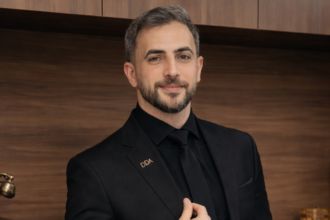
As Co-Founder and Chief Operating Officer of Shaffra, a GCC enterprise AI company, Manasseh is helping develop a new operating model where artificial intelligence moves beyond assisting employees and begins taking responsibility for real business functions.
His ambition is not simply to build another AI product.
It is to help define what the AI workforce itself means.
“I want Shaffra to help define what the AI workforce means globally.”
That vision places Alfred at the center of a much larger transformation taking place across the Gulf. Businesses and governments are moving beyond experimentation and beginning to ask a more important question.
What happens when AI stops being a tool sitting beside the organization and becomes part of how the organization actually operates?
For Alfred, the answer begins with redesigning work itself.
From Industrial Engineering to Artificial Intelligence
Alfred did not begin his career as a technology founder.
His professional journey started with industrial engineering, operations, business transformation, procurement, infrastructure and process improvement. He studied Industrial Engineering at Concordia University in Montreal, Canada, where his academic experience gave him a strong foundation in understanding systems, efficiency, resources and performance.
That background became an important part of the way he approaches technology today.
Operations teaches an important lesson. A great idea has little value if it cannot work in the real world. Processes have to function. People have to understand them. Costs have to make sense. Results have to be measurable.
Alfred carried that mindset into his professional career, including his work in Canada around large scale operations and technology driven improvements. His experience included supporting Air Canada facilities through Sodexo Canada, where operational performance, time and cost were important considerations.
Rather than viewing these experiences as separate from his technology career, Alfred sees them as part of the same story.
He learned how organizations work before turning his attention to how technology could change the way they work.
The Moment AI Changed the Equation
For years, software was primarily designed to help people perform their jobs.
It made communication faster, information easier to access and repetitive processes simpler. But the development of modern AI introduced a different possibility.
Software could begin doing parts of the work itself.
That shift changed Alfred’s perspective.
Instead of seeing AI as another software category, he began looking at it through the lens of operations. If an organization has a process that requires people to review information, make decisions, update systems, communicate with customers or coordinate multiple steps, could AI eventually take responsibility for parts of that process?
That question became central to the thinking behind Shaffra.
The company’s current direction focuses on Autonomous AI Teams designed for enterprise and government environments. Rather than positioning AI as a standalone assistant, Shaffra is working toward an environment where AI employees can perform defined responsibilities across business functions.
The distinction is important.
The objective is not simply to create impressive demonstrations. It is to move AI from experimentation into actual deployment and make it accountable for real outcomes inside organizations.
Building AI That Works Inside Real Organizations
One of Alfred’s strongest beliefs is that the difficult part of enterprise AI is not creating an impressive demonstration.
The real challenge begins after the demonstration.
Organizations have security requirements, governance structures, existing software, sensitive information, internal processes, compliance needs and people who ultimately remain responsible for outcomes.
That means an AI system cannot simply be intelligent. It needs to operate within boundaries. It needs a defined role, access to the right information, a clear understanding of its responsibilities and a way for its performance to be measured.
This practical approach has become central to Alfred’s work at Shaffra, where his responsibilities sit across strategy, operations, product development, partnerships, clients, execution and governance.
The goal is to make AI useful in the places where businesses actually operate, rather than keeping it isolated as an experimental technology.
That ambition is already being tested in real enterprise and government environments. Shaffra’s Autonomous AI Teams are being deployed across organizations in the GCC, and the company is now expanding the model internationally, including into Azerbaijan.
For Manasseh, the significance is bigger than geographic expansion.
It is proof that serious AI technology built in the GCC can travel.
From AI Tools to AI Teams
The concept Alfred is championing represents a significant change in how companies may think about their workforce.
Today, companies often measure their capacity through headcount. If a business wants to grow, it usually expects to hire more people, create more departments and expand management structures.
Alfred believes AI could change that equation.
The future organization may instead ask what combination of human employees and AI employees is required to achieve a particular outcome.
That does not necessarily mean replacing people. In Alfred’s view, the greater opportunity is to give talented people more leverage.
A strong employee supported by an AI workforce could potentially manage more information, complete more processes and focus more attention on decisions that require human judgment, creativity and leadership.
This creates a very different vision of productivity.
AI becomes an amplifier rather than simply an automation tool.
AI as an Amplifier
For Manasseh, one of the biggest misunderstandings around artificial intelligence is the idea that its value should be measured only by how many tasks it can automate.
He sees a much bigger opportunity.
“AI is an amplifier. It amplifies great people, great companies and great ideas.”
That idea sits at the heart of his vision for the future of work.
A strong employee supported by an AI workforce could potentially operate at a scale that once required a much larger team. Managers may lead both human and AI teammates. Specialists may work alongside AI employees that handle repetitive operational responsibilities. Entrepreneurs may be able to build capabilities that previously required far larger organizations.
For Alfred, this is where AI becomes transformational.
It does not simply remove tasks from people’s schedules. It increases the capacity of capable people and organizations.
A great salesperson supported by AI can respond faster and manage more opportunities. A strong operations leader can oversee more workflows. A growing company can increase output without expanding headcount at exactly the same rate.
That changes the economics of growth.
Instead of asking how many people are required to support expansion, organizations may begin asking how human intelligence and AI capacity can be combined more effectively.
Alfred believes this shift could lead to smaller, more capable and more responsive organizations while allowing people to focus on the work where human judgment matters most.
Building the Operating Layer for the AI Workforce
Shaffra’s ambition extends beyond building individual AI agents or isolated automation tools.
The company is building what Alfred describes as an operating layer for the AI workforce.
The idea is to give organizations an enterprise platform through which they can deploy, govern and manage autonomous AI teams across the business.
This means giving AI defined roles, enterprise knowledge, permissions, memory, workflows, governance and measurable responsibilities, then allowing human and AI teams to operate together inside the same organization.
Solutions across areas such as Project Management, HR, Sales and Call Center are applications of a much bigger idea.
They are not meant to exist as disconnected tools.
They form part of a broader system where organizations can build, manage and scale an AI workforce in the same environment.
This positioning is important because real organizations rarely operate through isolated tasks. Departments depend on one another. Information moves between systems. Decisions affect multiple teams. Employees operate within approval structures, policies and compliance requirements.
For AI to become a meaningful part of the workforce, it must be able to function inside that reality.
That is the challenge Shaffra is trying to solve.
The opportunity is enormous, but so is the responsibility. Building an AI workforce is not only about increasing what technology can do. It is also about creating the governance, accountability and operational structure necessary to make that technology dependable inside serious organizations.
A GCC Company With Global Ambitions
Alfred’s ambitions for Shaffra extend far beyond the Gulf.
He believes the GCC has an unusual opportunity in the global technology landscape. The region has invested heavily in digital transformation and artificial intelligence, while governments and enterprises are increasingly looking for practical ways to turn those investments into measurable outcomes.
For Alfred, the GCC should not only be a market that adopts technologies developed elsewhere.
It can also be a place where category defining technology is created.
“The next global AI giant does not have to come from Silicon Valley. It can come from the GCC.”
That belief is becoming more visible as Shaffra expands beyond individual AI applications and develops its broader Enterprise AI Workforce Platform.
The company’s international expansion into Azerbaijan also points toward a wider ambition beyond the GCC, creating a pathway into the Caspian region.
For Alfred, international growth is not simply about entering another market.
It is about proving that technology built in the GCC can solve serious enterprise problems globally.
Alfred Manasseh Turning Vision Into Real Deployment
One of Alfred’s proudest achievements is not a single award or headline.
It is seeing an idea move from a concept into technology that operates in serious enterprise and government environments.
That distinction matters to him because AI can look impressive in a presentation.
Real deployment is much harder.
Once technology enters an organization, expectations change. It has to integrate with existing systems. It has to handle real information. It has to follow governance requirements. It has to deliver consistent results.
This is where Alfred’s operational background becomes particularly valuable.
He approaches AI with the mindset of someone who has spent years thinking about how systems can become faster, more efficient and more scalable.
His focus is not simply on what AI can do.
It is on what organizations can achieve when AI is properly designed into their operations.
Moving Fast and Owning the Outcome
Alfred’s approach to leadership is built around a simple philosophy.
“Move fast. Stay curious. Own the outcome.”
He believes that important decisions rarely come with perfect information. Waiting for certainty can mean missing opportunities.
For him, moving quickly does not mean acting carelessly. It means making a decision, measuring the result, learning from what happens and adjusting when necessary.
That attitude reflects his wider approach to entrepreneurship.
His career did not begin with a ready made technology company or a guaranteed path. It developed through operations, traditional business, transformation and eventually artificial intelligence.
Each stage added another layer to the way he thinks.
Today, that mindset shapes how Shaffra builds, tests and deploys technology in real environments.
Building the Future From the GCC
Alfred Manasseh’s journey is ultimately a story about evolution.
An industrial engineer became an operator. The operator became an entrepreneur. The entrepreneur found himself at the intersection of business transformation and artificial intelligence.
Today, his focus is on something much larger than another AI application.
He wants to help define what the AI workforce becomes.
For Alfred, the next few years will reshape not only software but the structure of companies themselves. Human teams and AI teams may increasingly work together, leaders may manage both people and autonomous systems, and organizations may grow in output without increasing headcount at the same pace.
Shaffra is positioning itself to become the operating layer behind that shift.
The company’s goal is not simply to participate in the AI transformation but to help define how enterprises deploy, govern and manage an AI workforce at scale.
That ambition also carries a wider message about the Gulf.
The region does not need to remain only a customer of global technology.
It can build it.
It can export it.
And it can create companies capable of shaping entirely new technology categories.
“The next global AI giant does not have to come from Silicon Valley. It can come from the GCC.”
Alfred Manasseh is building Shaffra with exactly that belief.
Not as another AI tool from the region, but as a company aiming to help define the global operating model for the AI workforce.
Follow Alfred Manasseh on Instagram
Read More – Dubai Outdoor Activities: Amazing Ultimate Adventure Guide