



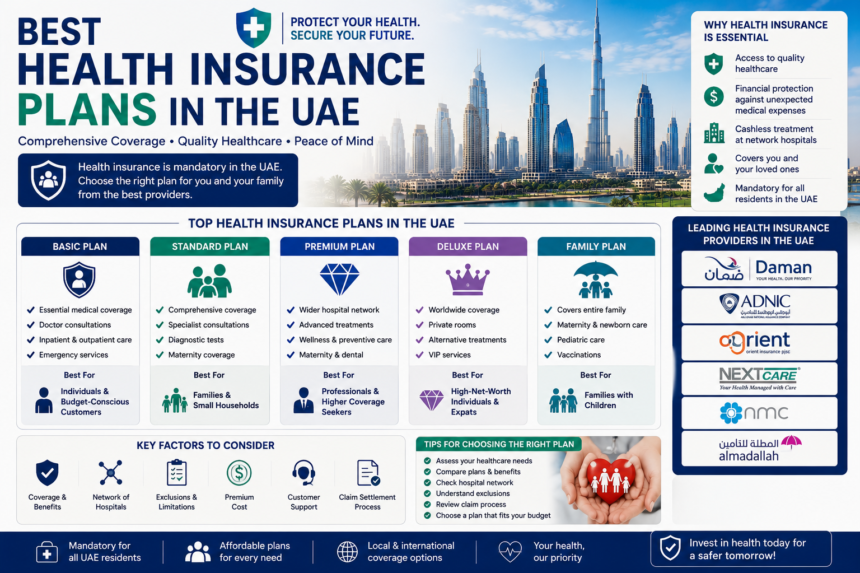
Best Health Insurance Plans in the UAE 2026 Ultimate Guide to Choose the Right Medical Insurance
Health insurance is an essential part of living and working in the United Arab Emirates (UAE). Whether you are an expatriate, UAE resident, entrepreneur, freelancer, student, or business owner, having the right medical insurance provides financial protection and access to quality healthcare services.
- Why Health Insurance Plans in the UAE Is Important?
- Understanding the System of Health Insurance Plans in the UAE
- Types of Health Insurance Plans in the UAE
- Features to Compare Before Choosing a Health Insurance Plans in the UAE
- Network Hospitals
- Hospitalisation Coverage
- Outpatient Benefits
- Emergency Medical Treatment
- Maternity Benefits
- Child Healthcare
- Preventive Healthcare
- Prescription Medication
- Dental and Optical Benefits
- Mental Health Services
- Chronic Disease Management
- Telemedicine
- Common Exclusions
- Waiting Periods
- Factors Affecting Premiums
- Choosing the Right Health Insurance Plans in the UAE
- Tips for Selecting the Best Policy: Health Insurance Plans in the UAE
- Health Insurance Plans in the UAE for Expats
- Health Insurance Plans in the UAE for Entrepreneurs
- Common Mistakes to Avoid for Health Insurance Plans in the UAE
- Future Trends for Health Insurance Plans in the UAE
- Frequently Asked Questions
The UAE is home to one of the most advanced healthcare systems in the Middle East, with modern hospitals, specialized clinics, experienced healthcare professionals, and cutting-edge medical technology. However, medical treatment can be expensive without adequate insurance coverage. Choosing the right health insurance plans in the UAE helps reduce unexpected healthcare costs while ensuring timely access to medical services.
With numerous insurance providers and policy options available, selecting the best plan can seem overwhelming. Coverage, premiums, network hospitals, exclusions, waiting periods, maternity benefits, chronic disease management, and emergency services all vary between insurers and policy types.
This comprehensive guide explains the best health insurance plans in the UAE, different policy types, important features to compare, eligibility, costs, common exclusions, and practical tips for choosing a policy that suits your personal or family needs.
Why Health Insurance Plans in the UAE Is Important?
Medical insurance offers both financial protection and peace of mind.
Key benefits of health insurance plans in the UAE include:
- Access to quality healthcare
- Financial protection against medical expenses
- Cashless treatment at network hospitals (where available)
- Preventive healthcare benefits
- Emergency medical care
- Specialist consultations
- Diagnostic services
- Prescription medication coverage (subject to policy terms)
- Family healthcare protection
- Long-term health management
Having suitable health insurance allows you to seek medical care without bearing the full cost of treatment.
Understanding the System of Health Insurance Plans in the UAE
Health insurance requirements and healthcare regulations differ across the UAE’s emirates.
In general, employers often arrange health insurance for eligible employees, while individuals, dependants, entrepreneurs, and self-employed professionals may need to arrange appropriate coverage themselves where required.
Before purchasing a policy, review the latest legal requirements that apply to your emirate of residence.
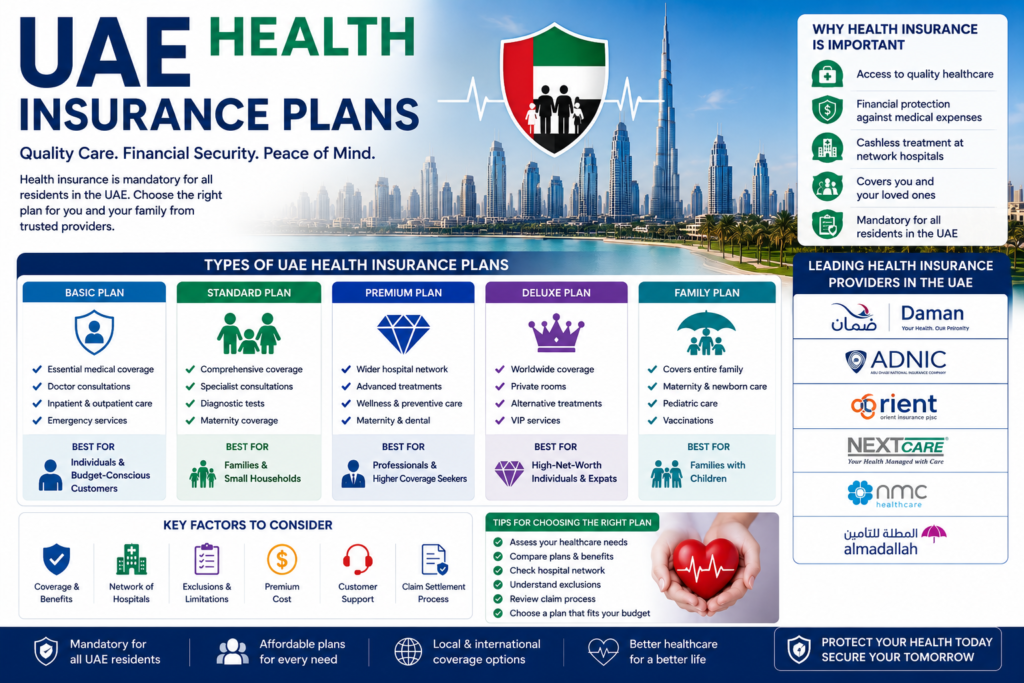
Types of Health Insurance Plans in the UAE
1. Individual Health Insurance: This health insurance plan is designed for one person.
Suitable for:
- Professionals
- Freelancers
- Entrepreneurs
- Students
- Retirees
These plans can often be customised according to healthcare needs and budget.
2. Family Health Insurance: Family plans cover multiple eligible members under one policy.
Potential advantages include:
- Simplified policy management
- Comprehensive family protection
- Maternity benefits (where included)
- Child healthcare coverage
Coverage and eligibility vary by insurer.
3. Employer-Sponsored Health Insurance: Many employers provide medical insurance as part of employee benefits.
Coverage may include:
- Hospitalisation
- Outpatient treatment
- Emergency services
- Specialist consultations
Employees should review the policy carefully to understand coverage limits and whether dependants can be added.
4. International Health Insurance:
Suitable for people who:
- Travel frequently
- Live in multiple countries
- Require international medical coverage
These plans often provide wider geographical coverage than domestic policies.
5. Senior Citizen Health Insurance: Some insurers offer plans specifically designed for older adults, although eligibility, pricing, waiting periods, and benefits vary.
Features to Compare Before Choosing a Health Insurance Plans in the UAE
Rather than focusing only on premiums, compare the overall value of each policy.
Important features of health insurance plans in the UAE include:
- Annual coverage limit
- Hospital network
- Outpatient benefits
- Inpatient treatment
- Emergency medical care
- Day-care procedures
- Prescription medication
- Diagnostic tests
- Preventive healthcare
- Telemedicine services
- Maternity cover
- Dental and optical benefits (where available)
- Chronic disease management
- International coverage
Network Hospitals
Most insurers maintain a network of approved hospitals and clinics.
Using network providers may offer advantages such as:
- Cashless treatment (subject to approval)
- Lower out-of-pocket expenses
- Faster claims processing
- Access to specialists
Always check whether your preferred healthcare providers are included in the insurer’s network.
Hospitalisation Coverage
Hospital benefits commonly include:
- Room charges (subject to policy limits)
- Surgery
- Intensive care
- Nursing services
- Diagnostic investigations
- Medication administered during admission
Coverage limits differ between policies.
Outpatient Benefits
Many plans include outpatient services such as:
- General practitioner consultations
- Specialist visits
- Diagnostic imaging
- Laboratory tests
- Prescription medication
- Physiotherapy (where covered)
Some policies require co-payments or prior authorisation.
Emergency Medical Treatment
Emergency coverage may include:
- Ambulance services
- Emergency department treatment
- Hospital admission
- Emergency surgery
- Trauma care
Review the policy wording to understand coverage conditions and exclusions.
Maternity Benefits
Some comprehensive plans provide maternity-related coverage, which may include:
- Antenatal consultations
- Delivery costs
- Pregnancy-related complications
- Postnatal care
- Newborn healthcare
Waiting periods often apply, so review policy terms before relying on maternity benefits.
Child Healthcare
Family policies may include benefits for children, such as:
- Routine consultations
- Vaccinations (subject to policy)
- Paediatric care
- Emergency treatment
Coverage varies by insurer and plan.
Preventive Healthcare
Many insurers encourage preventive care through benefits such as:
- Health screenings
- Annual medical check-ups
- Wellness programmes
- Vaccinations
- Lifestyle support
Preventive care can contribute to better long-term health outcomes.
Prescription Medication
Medicine coverage differs significantly between policies.
Check whether your plan covers:
- Generic medicines
- Brand-name medicines
- Long-term medication
- Specialist prescriptions
Some plans apply annual limits or co-payments.
Dental and Optical Benefits
Standard medical insurance may not include routine dental or optical care.
Where available, optional benefits may cover:
- Dental check-ups
- Fillings
- Tooth extractions
- Eye examinations
- Prescription glasses or contact lenses
Always confirm what is included before purchasing additional cover.
Mental Health Services
Some comprehensive plans include mental health benefits such as:
- Psychiatric consultations
- Psychological therapy
- Counselling
- Inpatient mental healthcare
Availability depends on the insurer and policy.
Chronic Disease Management
Individuals with long-term medical conditions should review whether the policy includes:
- Specialist consultations
- Monitoring
- Prescription medication
- Diagnostic tests
- Ongoing treatment
Waiting periods and exclusions may apply.
Telemedicine
Many insurers now provide digital healthcare services, including:
- Online consultations
- Prescription renewals
- Medical advice
- Follow-up appointments
Telemedicine can improve convenience for non-emergency healthcare needs.
Common Exclusions
Health insurance policies often exclude or limit certain treatments.
Examples may include:
- Cosmetic procedures
- Experimental treatments
- Non-medically necessary services
- Some pre-existing conditions (subject to policy terms)
- Certain elective procedures
Read the policy wording carefully before purchasing.
Waiting Periods
Some benefits may only become available after a specified waiting period.
Waiting periods are commonly associated with:
- Maternity benefits
- Certain medical conditions
- Specific treatments
Understanding waiting periods helps avoid unexpected claim refusals.
Factors Affecting Premiums
Insurance costs depend on several factors, including:
- Age
- Medical history
- Type of policy
- Coverage level
- Geographic coverage
- Optional benefits
- Family size
Comparing multiple policies can help identify suitable value.
Choosing the Right Health Insurance Plans in the UAE
Before purchasing a health insurance plans in the UAE, consider:
Healthcare Needs
Evaluate:
- Current medical conditions
- Frequency of doctor visits
- Medication requirements
- Family healthcare needs
Hospital Preferences
Check whether your preferred hospitals and clinics are included in the insurer’s network.
Budget
Balance affordability with adequate coverage rather than selecting a policy based solely on the lowest premium.
Customer Service
Research the insurer’s reputation for:
- Claims handling
- Customer support
- Digital services
- Ease of communication
Tips for Selecting the Best Policy: Health Insurance Plans in the UAE
- Compare multiple insurers.
- Read the policy wording carefully.
- Review exclusions.
- Understand co-payments and deductibles.
- Verify network hospitals.
- Confirm annual coverage limits.
- Check waiting periods.
- Review renewal conditions.
- Consider future healthcare needs.
Taking time to compare policies can help you make a more informed decision.
Health Insurance Plans in the UAE for Expats
Expatriates should consider:
- Employer-provided cover
- Family requirements
- International coverage needs
- Emergency assistance
- Hospital network
- Local regulatory requirements
People relocating to the UAE should arrange suitable medical insurance as early as possible.
Health Insurance Plans in the UAE for Entrepreneurs
Business owners often require flexible insurance that supports:
- Individual coverage
- Family protection
- Employee healthcare
- International travel
- Business continuity
Professional advice may help identify suitable business healthcare solutions.
Common Mistakes to Avoid for Health Insurance Plans in the UAE
Avoid:
- Choosing the cheapest policy without reviewing benefits
- Ignoring exclusions
- Overlooking waiting periods
- Not checking hospital networks
- Failing to disclose relevant medical information accurately
- Assuming all treatments are covered
Reading the policy documentation carefully helps prevent misunderstandings.
Future Trends for Health Insurance Plans in the UAE
The healthcare insurance industry continues to evolve through:
- Digital claims processing
- Artificial intelligence
- Telemedicine
- Personalised healthcare
- Preventive wellness programmes
- Mobile health applications
- Data-driven care management
Innovation is expected to improve customer experience and healthcare access.
Frequently Asked Questions
Q1. Is health insurance mandatory in the UAE?
Ans: Health insurance requirements vary depending on the emirate and individual circumstances. Check the latest regulations that apply to your place of residence and employment.
Q2. What is the difference between inpatient and outpatient cover?
Ans: Inpatient cover generally relates to treatment requiring hospital admission, while outpatient cover includes consultations, diagnostic tests, and treatments that do not require an overnight stay.
Q3. Can I choose my own hospital?
Ans: Many insurers provide access to a network of approved hospitals and clinics. Coverage outside the network may differ depending on the policy.
Q4. Are pre-existing medical conditions covered?
Ans: Coverage for pre-existing conditions varies by insurer and policy. Review the policy wording carefully and disclose relevant medical information during the application process.
Q5. Should families purchase family health insurance?
Ans: A family policy can simplify administration and provide healthcare protection for eligible family members, although suitability depends on individual needs and available benefits.
Conclusion
Choosing the best health insurance plan in the UAE is an important financial and healthcare decision. A well-designed policy not only protects you from unexpected medical expenses but also provides access to quality healthcare services, preventive care, specialist treatment, and emergency support when you need it most.
Instead of focusing solely on premiums, compare policies based on overall value, including coverage limits, hospital networks, outpatient benefits, emergency services, waiting periods, customer support, and optional features such as maternity, dental, optical, and international coverage.
Whether you are an expatriate, UAE resident, entrepreneur, family, or student, taking the time to assess your healthcare needs and compare available options can help you select a policy that supports your long-term wellbeing and financial security. As the UAE healthcare sector continues to innovate, comprehensive health insurance plans in the UAE remains one of the most valuable investments you can make for yourself and your loved ones.
Do follow us on Instagram
Read More – UAE Golden Visa