


Gulf Winter Destinations and Why the Season Feels Different
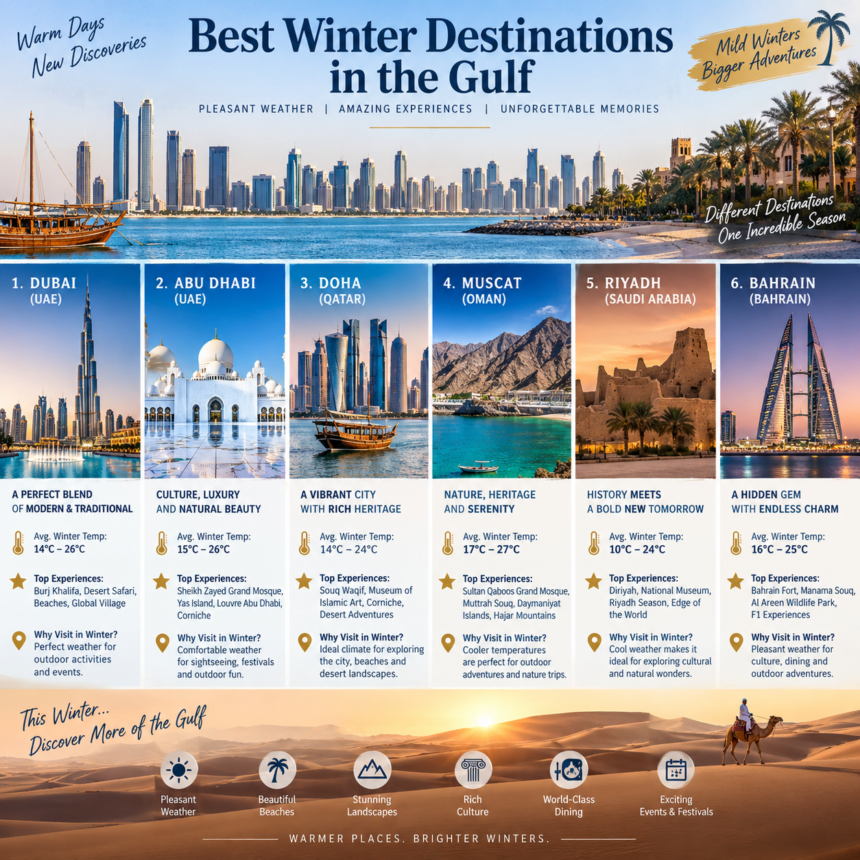
The Best Winter Destinations in the Gulf offer a completely different side of the Arabian Peninsula from the extreme heat many international travellers associate with the region. Between roughly November and March, cooler temperatures make mountains, deserts, beaches, old towns and outdoor dining much easier to enjoy.
- Best Winter Destinations in the Gulf and Why the Season Feels Different
- When Is the Best Time for a Gulf Winter Holiday
- Quick Comparison of the Best Gulf Winter Destinations
- 1. Hatta, UAE
- 2. Jebel Jais, UAE
- 3. Liwa and Al Dhafra, UAE
- 4. AlUla, Saudi Arabia
- 5. Riyadh and Diriyah, Saudi Arabia
- 6. Taif, Saudi Arabia
- 7. Khor Al Adaid, Qatar
- 8. Doha, Qatar
- 9. Bahrain Fort and Manama, Bahrain
- 10. Tree of Life and Sakhir, Bahrain
- 11. Jabal Akhdar and Jebel Shams, Oman
- 12. Sharqiyah Sands, Oman
- 13. Salalah, Oman
- 14. Kuwait City, Kuwait
- 15. Kuwait Desert Camping Areas
- Which Gulf Winter Destination Is Best for You
- Best Gulf Winter Destinations for Families
- Best Gulf Winter Destinations for Adventure
- Best Places for Desert Camping in Winter
- What Should You Pack for a Gulf Winter Trip
- Common Winter Travel Mistakes in the GCC
- Gulf Winter Travel Checklist
- Final Thoughts on Gulf Winter Destinations
Winter can mean kayaking between mountains in Hatta, watching the sunset among AlUla’s sandstone formations, camping beside Qatar’s Inland Sea, hiking high above the valleys of Oman or spending a cool evening exploring Bahrain’s historic forts.
The weather is not identical across the GCC. Saudi Arabia’s northern and mountain areas can become genuinely cold, while coastal destinations such as Bahrain remain mild. Oman combines pleasant lowland temperatures with much colder mountain conditions, and Kuwait can experience surprisingly chilly winter nights.
That variety is what makes winter one of the best seasons for exploring the Gulf.
Best Winter Destinations in the Gulf and Why the Season Feels Different
Summer travel across the Gulf often revolves around indoor attractions, shopping centres, water activities and air-conditioned spaces. Winter changes the possibilities.
Hiking becomes more comfortable. Desert camps become practical. Outdoor markets stay lively into the evening, and travellers can spend much longer exploring heritage sites without intense daytime heat.
Official tourism guidance reflects this seasonal shift. Qatar describes November to February as one of its best periods for outdoor experiences, with typical winter temperatures around 15°C to 20°C. Bahrain reports mild fall and winter weather averaging around 25°C, while Oman describes November to early March as a period of milder, drier weather that is particularly suited to trekking and camping.
What becomes easier in winter?
- Desert safaris
- Hiking
- Camping
- Heritage walks
- Outdoor dining
- Cycling
- Beach afternoons
- Stargazing
- Mountain road trips
- Festivals and outdoor events
Winter does not mean freezing conditions everywhere. For much of the GCC, it simply means comfortable outdoor weather.
When Is the Best Time for a Gulf Winter Holiday
For a broad GCC trip, November through March is usually the most practical winter travel period, although the ideal month changes according to destination.
Saudi mountain and desert areas can become cold after sunset. Oman’s high mountains can approach freezing in winter, while Qatar and Bahrain remain comparatively mild. Kuwait’s official climate information notes that winter temperatures can fall to around 6°C, with colder northwesterly winds possible.
Use this as a planning guide.
| Travel Style | Good Period |
|---|---|
| Desert camping | November to February |
| City sightseeing | November to March |
| Mountain hiking | October to March |
| Outdoor dining | November to March |
| Beach and winter sun | November to April |
| Heritage exploration | November to March |
| Stargazing | Cooler, clear winter nights |
Travellers should still check local forecasts immediately before departure, particularly for mountain trips and overnight desert stays.
Quick Comparison of the Best Gulf Winter Destinations
If you do not know where to begin, this table gives a quick overview.
| Destination | Country | Best For |
|---|---|---|
| Hatta | UAE | Mountains and outdoor adventure |
| Jebel Jais | UAE | Hiking and adrenaline |
| Liwa | UAE | Desert landscapes |
| AlUla | Saudi Arabia | Heritage and desert scenery |
| Riyadh and Diriyah | Saudi Arabia | City events and culture |
| Taif | Saudi Arabia | Mountains and cool weather |
| Khor Al Adaid | Qatar | Desert and sea |
| Doha | Qatar | Culture and city breaks |
| Bahrain Fort and Manama | Bahrain | Heritage and food |
| Tree of Life and Sakhir | Bahrain | Desert road trips |
| Jabal Akhdar and Jebel Shams | Oman | Mountain escapes |
| Sharqiyah Sands | Oman | Desert camping |
| Salalah | Oman | Beaches and nature |
| Kuwait City | Kuwait | Urban and cultural breaks |
| Kuwait Desert | Kuwait | Winter camping |
The best destination depends less on which country is most famous and more on the type of winter experience you want.
1. Hatta, UAE
Hatta is one of the strongest choices for travellers who want to see a mountain side of Dubai.
Located in the Hajar Mountains away from central Dubai’s towers, Hatta combines reservoirs, rocky landscapes, heritage attractions and outdoor activities.
Winter is particularly suited to the area because activities become much more comfortable.
Visitors can explore:
- Mountain trails
- Hatta Heritage Village
- Kayaking
- Mountain biking
- Hatta Wadi Hub
- Glamping and mountain lodges
- Honey and farming experiences
Visit Dubai’s 2026 Hatta guide highlights kayaking, hiking, mountain biking, ziplining, heritage attractions and winter endurance events, while Dubai’s average winter temperature is listed at around 23°C.
Best for: Active couples, families and weekend road trips.
Why winter works: You can spend far more time outdoors without the intense heat associated with the warmer months.
2. Jebel Jais, UAE
For mountain views and adrenaline, Jebel Jais in Ras Al Khaimah is one of the UAE’s standout winter escapes.
The landscape is very different from the glass towers and beaches often associated with the country.
Visitors can combine scenic drives with outdoor adventure and mountain experiences.
One of the best-known activities is Jais Flight, a 2.83 kilometre zipline operating high above the Hajar mountain landscape. Its main winter schedule runs from October through April.
Popular winter activities include:
- Hiking
- Scenic viewpoints
- Ziplining
- Mountain dining
- Camping experiences
- Adventure courses
Bring an extra layer of clothing. Temperatures at elevation can be significantly cooler than at the coast.
3. Liwa and Al Dhafra, UAE
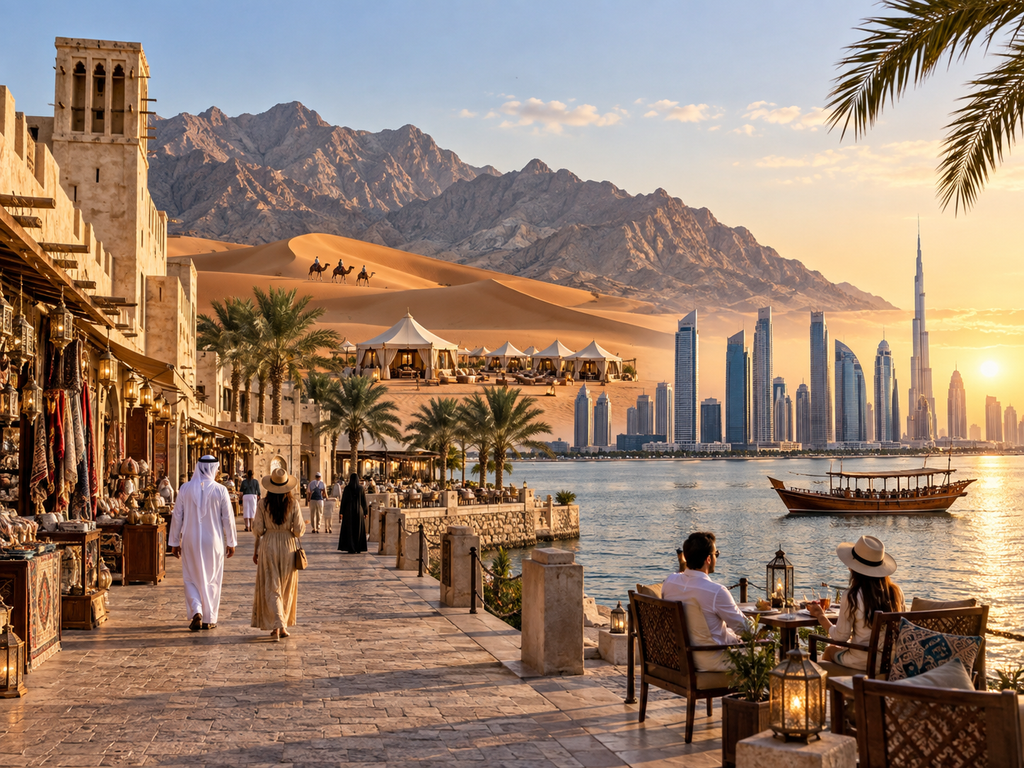
If Dubai represents the futuristic image of the UAE, Liwa reveals the scale of its desert landscape.
The Liwa region sits within Al Dhafra and opens into the Empty Quarter, where enormous dunes create one of the most dramatic desert environments in the country.
Winter is an especially interesting time because the region hosts outdoor cultural and motorsport activities.
The Liwa International Festival takes place during the cooler season around the famous Tel Moreeb dune, combining motorsport, traditional experiences, souqs, balloon activities and entertainment.
Choose Liwa if you want:
- Huge sand dunes
- Desert photography
- Luxury desert resorts
- Camping
- Stargazing
- A road trip far from the city
An overnight stay is often more rewarding than rushing back to Abu Dhabi on the same day.
4. AlUla, Saudi Arabia
Few Gulf Winter Destinations combine archaeology, landscape and luxury tourism as successfully as AlUla.
The destination was once part of important ancient trade routes and contains Hegra, Saudi Arabia’s first UNESCO World Heritage Site.
Visitors can explore Hegra, AlUla Old Town, Elephant Rock and dramatic desert landscapes while also experiencing contemporary hospitality and cultural events.
Winter temperatures published by Visit Saudi range roughly from 6°C to 25°C, making the season particularly suitable for outdoor exploration. Visit Saudi also specifically highlights AlUla as a winter destination for exploring its tombs during mild days and gathering around campfires at night.
Best experiences
- Hegra
- AlUla Old Town
- Elephant Rock
- Desert hiking
- Stargazing
- Hot air balloon experiences
- Maraya
Pack warmer clothing for evenings. Desert temperatures can drop quickly after sunset.
5. Riyadh and Diriyah, Saudi Arabia
Winter is one of the most enjoyable periods for exploring Saudi Arabia’s capital.
The cooler season allows visitors to spend more time outside, enjoy dining terraces and explore the city’s seasonal entertainment.
Nearby Diriyah adds a strong cultural dimension.
Its historic environment, restaurants and heritage attractions create a very different atmosphere from Riyadh’s modern business districts.
Saudi Arabia’s current winter tourism calendar specifically highlights Riyadh for seasonal entertainment and Diriyah for outdoor dining, cultural shows and heritage experiences.
Choose Riyadh and Diriyah for:
- Urban entertainment
- Restaurants
- Heritage
- Museums
- Shopping
- Seasonal events
- Short city breaks
This combination works particularly well for travellers who want culture without committing to a remote desert itinerary.
6. Taif, Saudi Arabia
Taif sits at elevation and is known for mountain landscapes, farms and its cooler climate.
Al Hada Mountain provides dramatic views, while the wider region combines natural scenery with markets and heritage attractions.
Visit Saudi lists winter temperatures of roughly 6°C to 27°C for Taif, making it significantly different from the hot image many travellers associate with Saudi Arabia.
Why visit in winter?
The air can feel crisp, mountain drives are comfortable and outdoor exploration becomes easier.
Visitors can explore:
- Al Hada
- Scenic mountain roads
- Local markets
- Parks
- Heritage locations
- Farms
Taif is especially appealing for travellers who prefer mountain landscapes over deserts.
7. Khor Al Adaid, Qatar
Khor Al Adaid proves that a desert destination does not need to be only sand.
Known as Qatar’s Inland Sea, the area combines large dunes with coastal water in the country’s southeast.
It is approximately 80 kilometres from Doha and requires proper 4×4 access through desert terrain.
Visit Qatar recommends November through April as the best period to explore Khor Al Adaid. Activities include dune driving, sandboarding, camping, birdwatching, swimming and guided nature experiences.
Best for
- Desert safaris
- Couples
- Adventure
- Photography
- Camping
- Families with older children
Do not attempt serious dune driving in an ordinary vehicle. Guided trips are the easier choice for first-time visitors.
8. Doha, Qatar
Not every winter trip needs to involve sleeping in a tent.
Doha offers one of the easiest short winter city breaks in the region.
Qatar’s winter period from November to February generally brings sunny conditions and temperatures around 15°C to 20°C, which makes walking, outdoor dining and cultural exploration far more comfortable.
A winter day can combine:
- Souq Waqif
- The Corniche
- Museums
- Katara
- Parks
- Traditional food
- Waterfront walks
The city can also act as a base for desert and beach excursions.
Best for: Travellers who want an easy combination of culture, restaurants and outdoor weather.
9. Bahrain Fort and Manama, Bahrain
Bahrain works especially well as a compact winter break.
Because the country is relatively small, travellers can combine city dining, souqs and historical sites without spending hours driving between attractions.
Winter temperatures average around 25°C according to Bahrain Tourism, making the season suitable for outdoor walks and heritage exploration.
Bahrain Fort is an especially strong winter stop. The UNESCO-listed archaeological site sits near the sea and includes a walking route with views of the fort, palm trees and coastline.
Combine it with:
- Manama Souq
- Muharraq
- Local restaurants
- Museums
- Seaside walks
Bahrain is a good option for travellers who want a relaxed two or three-day winter escape rather than a long road trip.
10. Tree of Life and Sakhir, Bahrain
For a different side of Bahrain, drive into the Sakhir desert.
The Tree of Life has survived for centuries in an otherwise dry landscape and remains one of the country’s best-known natural landmarks.
Bahrain Tourism describes the tree as roughly 440 years old and located around 35 kilometres from Manama. A visitor centre nearby provides information about the landscape and archaeological discoveries.
Winter makes this drive more comfortable.
Build a desert day around:
- Tree of Life
- Sakhir landscapes
- Outdoor photography
- Nearby attractions
- Sunset viewing
The area is especially appealing around late afternoon when temperatures soften and the desert light becomes warmer.
11. Jabal Akhdar and Jebel Shams, Oman
For travellers who genuinely want cold Gulf weather, Oman’s mountains should be high on the list.
Jabal Akhdar and Jebel Shams sit high within the Hajar Mountains and can be dramatically cooler than Muscat.
Experience Oman notes that the mountain areas can be up to 15°C colder than the lowlands. Official travel guidance also warns that winter mountain temperatures can fall below freezing, so warm clothing is recommended.
What can you do?
- Hiking
- Canyon viewpoints
- Village walks
- Stargazing
- Luxury mountain stays
- Photography
Jebel Shams is associated with some of Oman’s most dramatic canyon landscapes, while Jabal Akhdar combines mountain scenery with agricultural terraces and villages.
Important: Certain mountain roads require suitable vehicles, so check access conditions before travelling.
12. Sharqiyah Sands, Oman
For classic Arabian desert scenery, Sharqiyah Sands is one of Oman’s strongest winter destinations.
The dunes range through rich red and honey tones and form part of one of the country’s most recognisable landscapes.
Winter brings increased activity to North Al Sharqiyah, with official tourism information highlighting camping, dune activities and outdoor recreation during the cooler season.
A winter desert stay can include:
- Dune driving
- Camel experiences
- Desert camps
- Sunset watching
- Stargazing
- Outdoor dinners
Night temperatures can feel much colder than expected, particularly after a warm afternoon.
Pack layers rather than assuming desert equals heat.
13. Salalah, Oman
Salalah is famous internationally for its green Khareef season, but winter offers a completely different reason to visit.
From October to May, the weather is mild and pleasant, making it suitable for outdoor exploration and beach trips along the Arabian Sea.
Instead of the misty green landscapes associated with summer Khareef, winter travellers can focus on:
- Beaches
- Frankincense heritage
- Hiking
- Coastal drives
- Camping
- Cultural attractions
This makes Salalah especially useful for travellers who want winter sunshine rather than cold weather.
Best for: Beaches, nature and a slower holiday.
14. Kuwait City, Kuwait
Kuwait’s winter provides a welcome contrast with its extremely hot summer.
Official climate information places the main winter period between early December and mid-February and notes that temperatures can fall significantly, particularly during cold northwesterly winds.
That cooler weather makes urban exploration more comfortable.
A winter city break can focus on:
- Waterfront areas
- Museums
- Traditional markets
- Cafes
- Cultural attractions
- Outdoor dining
Kuwait is less mountain-focused than Oman or the UAE, so winter travel here is more about urban culture, waterfront life and desert traditions.
Pack a jacket for evenings rather than assuming the country remains warm at all hours.
15. Kuwait Desert Camping Areas
Winter camping is not simply a tourism activity in Kuwait. It is part of a wider seasonal social tradition.
Kuwait’s 2025 to 2026 camping season officially ran from November 15 to March 15, with camps appearing across northern and southern desert areas. Government reporting describes winter camping as a tradition connected with community, hospitality and time away from city life.
Why choose a winter camp?
- Cooler desert weather
- Open landscapes
- Family gatherings
- Barbecues
- Stargazing
- A break from the city
Visitors should use authorised camping locations and check current seasonal regulations because designated areas and rules can change from year to year.
Which Gulf Winter Destination Is Best for You
Not every traveller wants the same experience.
Use this quick decision table.
| You Want | Choose |
|---|---|
| Mountain adventure | Hatta or Jebel Jais |
| Ancient history | AlUla |
| Luxury desert escape | Liwa |
| Dunes meeting the sea | Khor Al Adaid |
| Serious mountain scenery | Jebel Shams |
| Traditional desert camping | Sharqiyah Sands |
| Easy city break | Doha |
| Heritage weekend | Bahrain |
| Winter beaches | Salalah |
| Seasonal desert culture | Kuwait |
| Events and city energy | Riyadh |
If you are planning a longer trip, combining two contrasting environments can make the journey more interesting.
For example, spend a few days in Dubai and then escape to Hatta, or combine Muscat with Jabal Akhdar and Sharqiyah Sands.
Best Gulf Winter Destinations for Families
Families generally need destinations with easy transport, varied activities and comfortable accommodation.
Strong family options include:
- Hatta for kayaking and outdoor activities
- Doha for museums, parks and desert excursions
- Bahrain for compact sightseeing
- Riyadh for entertainment and attractions
- Salalah for beaches
- Kuwait City for easy urban exploration
Families travelling with very young children may prefer city-based destinations over remote mountain hikes or demanding desert drives.
For adventure activities, always check age, height and health restrictions before booking.
Best Gulf Winter Destinations for Adventure
Adventure travellers have even more options.
Hatta offers mountain biking, kayaking and hiking.
Jebel Jais adds ziplining and dramatic mountain landscapes.
Khor Al Adaid combines dune driving and camping with coastal scenery.
Jebel Shams provides serious hiking and canyon views.
Sharqiyah Sands is suited to desert exploration and camping.
AlUla combines hiking and outdoor experiences with archaeology.
The important consideration is preparation.
Desert and mountain environments can become dangerous when travellers underestimate navigation, vehicle requirements or temperature changes.
Best Places for Desert Camping in Winter
Camping is one of the experiences that makes Gulf winter particularly distinctive.
| Destination | Camping Style |
|---|---|
| Liwa | Huge Empty Quarter dunes |
| AlUla | Scenic desert camps |
| Khor Al Adaid | Dunes beside the sea |
| Sharqiyah Sands | Classic Omani desert |
| Kuwait Desert | Seasonal social camping |
First-time visitors may find organised camps more comfortable than independent camping.
Established camps can provide beds, meals, bathrooms and guided activities while still allowing travellers to experience the desert at night.
Remember: desert nights can become cold, especially in Saudi Arabia and Oman.
What Should You Pack for a Gulf Winter Trip
Gulf winter packing is more complicated than simply bringing summer clothing.
Daytime conditions can remain sunny while nights become cool.
Pack these basics:
- Lightweight daytime clothing
- A warm jacket
- Comfortable walking shoes
- Sunglasses
- Sunscreen
- Reusable water bottle
- Hat
- Power bank
- Modest clothing for cultural sites
For mountain trips add:
- Fleece or thermal layer
- Proper hiking shoes
- Wind-resistant jacket
For desert camping add:
- Warm nighttime clothing
- Closed shoes
- Flashlight
- Extra water
Do not underestimate the temperature difference between afternoon and midnight.
Common Winter Travel Mistakes in the GCC
Assuming winter is warm everywhere is one of the most common mistakes. Oman’s mountains and parts of Saudi Arabia can become genuinely cold.
Packing no sun protection is another problem. Cooler temperatures do not remove strong sunlight.
Driving into the desert without preparation can create serious risk. Destinations such as Khor Al Adaid require appropriate four-wheel-drive vehicles and experienced drivers.
Other mistakes include:
- Booking mountain accommodation without checking road requirements
- Wearing only sandals for hiking
- Forgetting warm clothes for desert nights
- Assuming every attraction operates on the same winter timetable
- Visiting popular areas on weekends without advance booking
- Ignoring changing weather forecasts
A little planning makes winter travel much more enjoyable.
Gulf Winter Travel Checklist
Before booking
- Decide whether you want mountains, desert, beaches or cities.
- Compare daytime and nighttime temperatures.
- Check visa requirements.
- Research local driving conditions.
- Reserve popular winter accommodation early.
For mountain travel
- Check road access.
- Pack warm clothing.
- Wear suitable shoes.
- Start hikes early.
- Carry enough water.
For desert travel
- Use a 4×4 where required.
- Consider an experienced guide.
- Carry extra water.
- Bring warm evening layers.
- Tell someone your travel plan if heading remotely.
For cultural travel
- Pack modest clothing.
- Check attraction hours.
- Respect photography restrictions.
- Plan around Friday and public holiday schedules.
For families
- Check activity age limits.
- Avoid overly ambitious driving days.
- Carry snacks and water.
- Mix outdoor activities with easier sightseeing.
The Gulf may look geographically compact on a map, but the landscapes and travel conditions can change quickly.
Final Thoughts on Gulf Winter Destinations
The best Gulf Winter Destinations show how diverse the GCC becomes once temperatures fall.
The UAE can take visitors from Dubai’s skyline to Hatta’s mountain reservoirs, Jebel Jais and the enormous dunes of Liwa.
Saudi Arabia offers AlUla’s ancient landscapes, Riyadh’s energetic winter calendar and the cooler mountains of Taif. Visit Saudi specifically promotes winter as a season for camping, climbing, city exploration and AlUla’s heritage experiences.
Qatar becomes especially comfortable between November and February, with Doha offering an easy cultural city break and Khor Al Adaid providing one of the Gulf’s most unusual combinations of desert and sea.
Bahrain delivers mild winter sunshine, heritage walks, Manama’s food scene and desert attractions such as the Tree of Life. Its tourism authority describes winter as one of the best seasons for outdoor experiences.
Oman may offer the greatest landscape variety. Travellers can move between cold mountain viewpoints, desert camps and mild coastal destinations such as Salalah during the same broader winter season.
Kuwait offers a different experience, where winter transforms the desert into a major seasonal social space and makes urban exploration far more comfortable than during the hottest months.
For travellers, the biggest mistake is thinking Gulf winter means only escaping the heat.
The season creates entirely different experiences.
It makes hiking possible for longer periods, brings people back into the desert, creates evenings around campfires and turns outdoor markets, heritage sites and waterfronts into places where visitors can spend hours rather than minutes.
That is why the best Gulf winter holiday may not be one destination at all.
It could be a mountain morning, a desert sunset, a historic old town and a beach afternoon, all within the same regional trip.
For travellers willing to explore beyond the biggest city skylines, winter reveals some of the most memorable landscapes and experiences the Gulf has to offer.
Do follow us on Instagram
Read More – Best Places for Hiking in Gulf Countries