



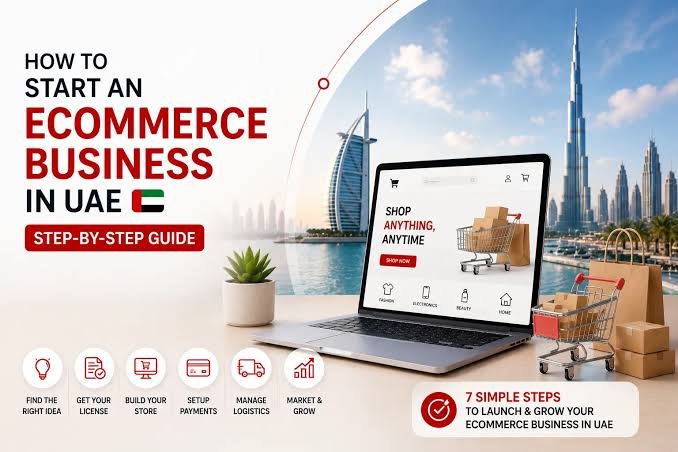
Common E-Commerce Branding Mistakes Dubai Businesses Should Avoid
Building an e-commerce business in Dubai is relatively easy compared with the challenge that comes next: creating a brand customers actually remember, trust and return to. Thousands of companies can launch a website, list products on marketplaces or begin selling through social media. Far fewer successfully turn those activities into a recognisable brand with loyal customers and sustainable margins.
- How to Build an E-Commerce Brand in Dubai From the Ground Up
- Choose the Right Licence and Business Structure
- Create a Brand Customers Can Recognise and Remember
- Build a Professional Online Store That Creates Trust
- Build Reliable Payments, Delivery and Returns
- Use Content, Social Media and Influencers to Build Awareness
- Price Products for Profit, Not Just for Sales
- Build Customer Trust and Turn Buyers Into Loyal Customers
- Measure Performance and Scale the Brand Carefully
- A Practical Dubai E-Commerce Brand Checklist
Learning how to build an e-commerce brand in Dubai therefore requires more than choosing products and running online advertisements. Entrepreneurs need to understand licensing, customer expectations, branding, pricing, fulfilment, digital payments, consumer protection, VAT and customer retention.
Dubai continues to strengthen its position as a regional centre for digital business. Dubai Chamber of Digital Economy reported that it supported 1,690 digital startups to establish and expand in Dubai during 2025, representing 39.7% year-on-year growth. Around 20% of supported companies came from mobility technology, SaaS and e-commerce combined.
The UAE also has a specific legal framework for e-commerce. Federal Decree-Law No. 14 of 2023 on Modern Technology-Based Trade covers online sales conducted through websites, apps, social media and digital marketplaces. Businesses selling online must obtain the required licence and approvals, operate secure technology infrastructure, protect customer information and provide accurate information about products and services.
This means a Dubai e-commerce brand needs to combine strong marketing with professional operations.
The following guide explains how to choose a clear market position, build a memorable brand, create a trustworthy online store, manage logistics and payments, attract customers and turn first-time buyers into long-term supporters.
How to Build an E-Commerce Brand in Dubai From the Ground Up
The first step is understanding the difference between an e-commerce store and an e-commerce brand.
An online store sells products.
A brand gives customers a reason to choose that store instead of dozens of alternatives.
A strong brand usually has:
- A clear target customer
- Recognisable visual identity
- Consistent tone of voice
- Strong product positioning
- Reliable customer experience
- Clear promise
- Repeat customers
Start with the customer
Do not begin by asking:
“What product can I sell?”
A better question is:
“Who am I trying to serve, and what problem can I solve better?”
For example, instead of launching another general skincare website, a business could focus on:
- Korean skincare for UAE residents
- Products for sensitive skin
- Premium men’s grooming
- Desert-climate skincare
- Affordable beauty essentials
The narrower positioning makes marketing easier.
Define what makes the brand different
Your difference does not need to be revolutionary.
It could be:
- Better delivery
- Better curation
- Better customer service
- Higher quality
- Stronger expertise
- More convenient packaging
- Better local understanding
- More sustainable products
The key is making the difference understandable.
Customers should be able to answer:
“Why should I buy from this brand instead of another one?”
Write a simple brand statement
For example:
“We help busy Dubai professionals discover premium healthy snacks delivered quickly to their homes and offices.”
This identifies:
- Customer
- Product
- Market
- Benefit
A clear statement helps guide marketing, product selection and website design.
Choose the Right Licence and Business Structure
Branding should not come before legal setup.
The UAE Government states that businesses need the appropriate licence to conduct e-commerce activities. Online trade can include websites, mobile applications, social media and digital marketplaces.
Dubai DET also lists business licensing routes for mainland companies, including e-trader and other licence categories depending on the activity. Businesses need to select the appropriate licence and meet the applicable requirements.
Choose the activity carefully
The activity listed on the licence should match what the business actually does.
Possible areas may include:
- E-commerce
- General trading
- Fashion
- Cosmetics
- Electronics
- Digital products
- Professional services
Some categories may require additional approvals.
For example, regulated products can involve additional authorities.
Always confirm requirements before buying inventory.
Mainland or free zone
Both routes can work for e-commerce businesses.
A mainland structure may suit companies that want broader local operations.
A free zone may appeal to founders seeking:
- Startup packages
- Flexi-desk options
- Visa packages
- Digital-business ecosystems
However, do not choose based only on the first-year licence cost.
Compare:
- Setup fees
- Renewal
- Visa allocation
- Office requirements
- Activities
- Customs implications
- Warehousing
- Mainland selling arrangements
Think beyond launch
A cheap licence may work when the business has ten orders a month.
It may become restrictive when the company:
- Hires staff
- Opens a warehouse
- Imports larger quantities
- Adds new product categories
Choose a structure that supports reasonable growth.
Create a Brand Customers Can Recognise and Remember
Brand identity goes far beyond a logo.
Customers should recognise the company across:
- Website
- Packaging
- TikTok
- Delivery boxes
- Customer support
- Marketplace listings
Choose a strong name
A good e-commerce brand name should ideally be:
- Easy to pronounce
- Easy to spell
- Easy to search
- Suitable for the target market
- Flexible enough for growth
Before committing, check:
- Trade-name availability
- Domain availability
- Social media usernames
- Trademark conflicts
Avoid choosing a name only because the domain is available.
Build a visual identity
Important visual elements include:
- Logo
- Fonts
- Photography
- Packaging
- Website design
Consistency matters more than complexity.
A simple visual system used consistently often looks stronger than a complicated identity applied differently everywhere.
Develop a brand voice
Decide how the company should sound.
It might be:
- Friendly
- Expert
- Premium
- Minimal
- Energetic
- Practical
For example, a premium fragrance company should not sound identical to a youth-focused sportswear brand.
Tell a believable story
Customers increasingly want to understand the business behind the product.
Explain:
- Why the company started
- What it believes
- How products are selected
- What makes the experience different
Do not invent a dramatic founder story.
A simple and authentic explanation is usually stronger.
Build a Professional Online Store That Creates Trust
The website is one of the most important trust signals for an e-commerce company.
A weak website can make a legitimate business look unreliable.
Essential pages
Most e-commerce stores should include:
- Home
- Shop
- Product pages
- About
- Contact
- FAQs
- Shipping information
- Returns policy
- Privacy policy
- Terms and conditions
Product pages should answer questions
A strong product page should explain:
- Price
- Product name
- Size
- Materials or ingredients
- Specifications
- Delivery estimate
- Return conditions
- Availability
For physical products, use high-quality images from different angles.
Make the website mobile-first
Many customers will visit from smartphones.
Test:
- Navigation
- Search
- Product filters
- Checkout
- Payment
- Forms
A desktop website that is difficult to use on mobile will lose sales.
Follow UAE e-commerce requirements
The UAE’s consumer-protection framework covers e-commerce businesses registered in the UAE. Online sellers are required to provide details about their licensing entity and adequate information about the product or service, specifications, contractual terms, payment and warranty.
The executive regulations also require e-commerce sellers to clearly display relevant product details such as the producer or importer’s identity, product type, ingredients, quantity and other required particulars depending on the product category.
Transparency should therefore be built into the website from the beginning.
Build Reliable Payments, Delivery and Returns
Brand reputation can collapse if the operational experience does not match the marketing.
Customers expect the purchase to work smoothly after clicking “buy.”
Offer convenient payment options
Depending on the target customer, this may include:
- Credit cards
- Debit cards
- Digital wallets
- Bank transfers
- Buy Now, Pay Later
- Cash on delivery where practical
Payment methods should feel secure and professional.
Use a trusted payment gateway
Avoid creating unusual manual payment processes.
Customers should receive:
- Clear checkout
- Payment confirmation
- Order confirmation
- Digital invoice
The UAE’s e-commerce framework specifically requires online sellers to provide a clear digital invoice for transactions.
Delivery is part of the brand
Customers may judge the company by:
- Speed
- Packaging
- Tracking
- Communication
Compare logistics partners based on:
| Factor | What to Check |
|---|---|
| Coverage | UAE-wide or limited |
| Speed | Same-day, next-day or standard |
| Tracking | Live tracking available |
| Returns | Pickup options |
| Cash on delivery | Supported or not |
| Failed delivery | Handling process |
| Cost | Flat or variable |
Do not overpromise
If standard delivery takes two days, do not promise same-day delivery.
Reliable delivery builds more trust than unrealistic claims.
Create a clear return process
Customers should understand:
- Return period
- Eligible items
- Condition requirements
- Refund process
- Delivery responsibility
Confusing returns can damage trust before a customer even purchases.
Use Content, Social Media and Influencers to Build Awareness
Customers rarely discover a new e-commerce brand automatically.
The company needs a consistent acquisition strategy.
Choose platforms based on customers
Instagram may work well for:
- Fashion
- Beauty
- Food
- Home
- Lifestyle
TikTok can help brands using:
- Demonstrations
- Trends
- Short reviews
- Product education
LinkedIn may make sense for:
- B2B products
- Corporate gifting
- Business services
Do not feel pressure to use every platform.
Create useful content
A brand should not post only:
“Buy now.”
Useful content can include:
- How-to guides
- Product comparisons
- Tips
- Demonstrations
- Behind-the-scenes videos
- Customer questions
For example, a coffee brand could create:
“How to choose coffee beans for cold brew.”
This can attract people before they are ready to purchase.
Use user-generated content
Real customers can be powerful marketing assets.
Encourage customers to share:
- Product photos
- Reviews
- Unboxing
- Testimonials
Always obtain appropriate permission before reusing customer content.
Influencer marketing
Influencer partnerships can help when the creator has the right audience.
Evaluate:
- Location
- Engagement
- Audience quality
- Brand fit
- Past promotions
A creator with 30,000 highly relevant UAE followers may create better results than one with 500,000 international followers.
Track sales, not only views
Important metrics include:
- Website visits
- Add-to-cart rate
- Conversion rate
- Cost per purchase
- Revenue
Likes and impressions are useful for awareness, but sales determine whether the channel is sustainable.
Price Products for Profit, Not Just for Sales
Strong brands can fail if their pricing is weak.
The selling price must cover the real cost of the product.
Possible expenses include:
- Product cost
- Import
- Shipping
- Customs
- Storage
- Packaging
- Payment processing
- Delivery
- Returns
- Marketing
- Staff
Example
| Cost | Amount |
|---|---|
| Product | AED 80 |
| Freight | AED 10 |
| Packaging | AED 5 |
| Delivery allocation | AED 15 |
| Payment fees | AED 4 |
| Marketing | AED 20 |
| Overhead | AED 10 |
| Total | AED 144 |
If the product sells for AED 150, the margin is extremely small.
Pricing based only on supplier cost can therefore be misleading.
Understand VAT
The standard UAE VAT rate is generally 5% on taxable supplies.
A UAE-resident business must register for VAT when taxable supplies and imports exceed AED 375,000 over the previous 12 months or are expected to exceed that amount within the next 30 days. Voluntary registration is available from AED 187,500 under the applicable conditions.
Monitor turnover as the store grows.
Avoid excessive discounts
Constant promotions can train customers to wait.
Better promotional strategies can include:
- Bundles
- Free delivery
- Loyalty discounts
- Limited offers
- Referral rewards
Protect both brand value and margins.
Build Customer Trust and Turn Buyers Into Loyal Customers
The strongest e-commerce brands do not depend entirely on finding new customers every month.
They create repeat purchases.
Deliver what you promise
Trust is built through consistency.
If the website says next-day delivery, aim to provide it consistently.
If an order is delayed, communicate quickly.
Respond to customer questions
Provide clear support through channels such as:
- Live chat
- Phone
Set realistic response times.
Encourage reviews
Reviews help new customers trust the business.
Ask satisfied customers for feedback after delivery.
Do not buy fake reviews.
Handle negative reviews professionally
Do not argue publicly.
A useful response might be:
“We are sorry your order arrived later than expected. Please send us your order number so we can investigate this immediately.”
Professional problem-solving can strengthen credibility.
Create loyalty
Possible strategies include:
- Points
- Member prices
- Referral rewards
- Early access
- Free delivery
- Birthday benefits
Keep the programme simple.
Use email carefully
Email can help with:
- New products
- Reorders
- Educational content
- Offers
Avoid sending promotions so frequently that customers unsubscribe.
Measure Performance and Scale the Brand Carefully
Growth should be based on data.
E-commerce businesses can generate strong revenue while still losing money.
Track both sales and profitability.
Important metrics
| Metric | Why It Matters |
|---|---|
| Revenue | Total sales |
| Gross margin | Product profitability |
| Conversion rate | Website performance |
| Average order value | Customer spending |
| Customer acquisition cost | Marketing efficiency |
| Repeat purchase rate | Loyalty |
| Return rate | Product/customer fit |
| Delivery cost | Fulfilment efficiency |
Understand customer acquisition cost
If you spend AED 10,000 on advertising and acquire 200 customers:
Customer acquisition cost:
AED 10,000 ÷ 200 = AED 50
If your average profit from each customer is only AED 30, the campaign may not be sustainable unless repeat purchases improve lifetime value.
Increase average order value
Possible strategies include:
- Bundles
- Cross-selling
- Free-delivery threshold
- Product recommendations
For example:
Free delivery above AED 200
may encourage a customer with a AED 170 basket to add another product.
Expand products carefully
Do not add new products just to make the website look bigger.
Ask:
- Does the same customer want this?
- Does it fit the brand?
- Is the margin strong?
- Can operations handle it?
A focused 20-product brand can be stronger than a confusing 2,000-product store.
Scale operations before they break
As order volume grows, improve:
- Inventory tracking
- Fulfilment
- Customer support
- Accounting
- Returns
Dubai Chamber of Digital Economy’s Business in Dubai platform also provides digital companies with access to company-setup support, business matchmaking and connections to partners, investors and growth programmes.
Businesses planning significant growth can explore these ecosystem resources rather than trying to solve every problem independently.
A Practical Dubai E-Commerce Brand Checklist
Building an e-commerce brand requires many moving pieces.
A checklist can make the process easier.
Business setup
- Business model selected
- Target customer identified
- Licence obtained
- Required approvals checked
- Business bank account prepared
Brand
- Brand name selected
- Domain checked
- Social usernames checked
- Logo created
- Brand colours and fonts defined
- Brand voice defined
Website
- Mobile-friendly store
- Product descriptions
- Professional images
- Contact information
- Shipping policy
- Return policy
- Privacy information
- Secure checkout
Operations
- Payment gateway
- Courier
- Packaging
- Inventory system
- Returns system
- Customer service process
Marketing
- Social channels
- SEO
- Paid advertising
- Influencer strategy
- Review strategy
Finance
- Product costs calculated
- Margins checked
- Marketing costs tracked
- VAT threshold monitored
- Bookkeeping system established
Learning how to build an e-commerce brand in Dubai requires combining business setup, branding, customer experience, logistics, marketing and financial management.
The first goal should not be creating the largest product catalogue.
It should be creating a clear reason for a specific customer to choose your business.
Start with positioning. Understand who you serve, what problem you solve and why the customer should trust you. Then make the brand consistent across the website, packaging, social media and customer service.
Operational quality is equally important. Dubai customers increasingly expect convenient digital shopping experiences, so payment, delivery, tracking and returns must work smoothly.
Businesses should also make sure they operate within the UAE’s e-commerce framework. Online sellers need the appropriate licence, must follow consumer-protection requirements, provide accurate product and contractual information and issue digital invoices.
VAT should also be monitored as the company grows. The mandatory registration threshold for UAE-resident businesses remains AED 375,000 in taxable supplies and imports under the current FTA rules.
Most importantly, do not build an e-commerce company that depends entirely on advertising for every sale. A real brand creates recognition and repeat customers.
When customers remember the name, trust the service, recommend the company and return without needing another expensive advertisement, the business has moved beyond simply operating an online store.
It has started building a genuine e-commerce brand.
Do follow us on Instagram
Read More – How to Price Products and Services for the UAE Market