




Common Emergency Fund Mistakes Dubai Residents Should Avoid
Dubai can offer a high standard of living, strong career opportunities and access to world-class services, but it can also be an expensive place to live if household finances are not managed carefully. Rent, transport, insurance, groceries, school fees, travel and lifestyle spending can absorb a large part of monthly income. Learning how to build an emergency fund while living in Dubai can therefore give residents an important financial cushion when something unexpected happens.
- How to Build an Emergency Fund While Living in Dubai Step by Step
- Calculate Your Essential Monthly Dubai Expenses
- Decide How Many Months of Savings You Really Need
- Keep Emergency Savings Separate From Everyday Spending
- Automate Emergency Savings After Every Salary
- Reduce Dubai Lifestyle Spending Without Making Life Miserable
- Pay Down Expensive Debt While Building the Fund
- Know What Counts as a Real Emergency
- Rebuild the Fund Immediately After Using It
- Review Your Emergency Fund After Major Life Changes
- A Practical Dubai Emergency Fund Checklist
An emergency fund is money kept specifically for essential, unplanned expenses. It is not the same as money saved for a holiday, a new car or shopping. Its purpose is to protect you if your income suddenly falls or you face an unavoidable expense.
For Dubai residents, emergencies can include:
- Job loss
- Medical expenses
- Urgent travel
- Car repairs
- Unexpected relocation
- Family emergencies
- Temporary loss of income
The right emergency fund will be different for everyone. A single professional with low fixed expenses may need less than a family with children, school fees and one main source of income. Someone with commission-based earnings may also need a larger buffer than a person with a predictable monthly salary.
Where you keep the money matters too. UAE banks may offer current, savings and deposit products with different minimum-balance requirements, fees and interest or profit conditions. The Central Bank of the UAE requires financial institutions to clearly disclose these conditions, including minimum-balance rules and the consequences of falling below them.
This guide explains how much emergency savings you may need, how to calculate your essential Dubai expenses, where to keep the money, how to save faster and how to avoid using the fund for everyday spending.
How to Build an Emergency Fund While Living in Dubai Step by Step
The easiest way to build an emergency fund is to break the goal into smaller stages.
Trying to save six months of expenses immediately can feel unrealistic.
Instead, build gradually.
Stage 1: Create a starter emergency fund
Your first goal could be:
- AED 2,500
- AED 5,000
- AED 10,000
The right starting amount depends on your income.
This money can help cover smaller emergencies without using a credit card.
For example:
- Car repair: AED 1,500
- Emergency flight: AED 2,000
- Medical expense: AED 1,000
A starter fund can absorb these costs.
Stage 2: Build one month of essential expenses
Once you have a starter fund, aim for enough to cover one full month of essential spending.
If your essential monthly expenses are AED 12,000:
One-month target = AED 12,000
Stage 3: Build toward three months
Three months can provide a stronger financial buffer.
AED 12,000 × 3 = AED 36,000
Stage 4: Consider six months or more
People with greater financial uncertainty may prefer a larger fund.
This can include:
- Self-employed professionals
- Business owners
- Commission-based workers
- Single-income families
- People supporting relatives abroad
The correct target should reflect your financial risks rather than an arbitrary rule.
Calculate Your Essential Monthly Dubai Expenses
Before deciding how much to save, calculate what you actually need to survive for one month.
Do not use your total lifestyle spending.
Focus on essential expenses.
Typical categories
| Essential Expense | Monthly Amount |
|---|---|
| Rent | AED X |
| Electricity and water | AED X |
| Groceries | AED X |
| Transport | AED X |
| Insurance | AED X |
| Mobile and internet | AED X |
| Loan payments | AED X |
| School fees | AED X |
| Family support | AED X |
| Essential subscriptions | AED X |
Convert annual expenses into monthly amounts
Some Dubai expenses are not paid monthly.
Rent is a common example.
If your annual rent is AED 84,000:
AED 84,000 ÷ 12 = AED 7,000 per month
Use AED 7,000 when calculating your emergency-fund target, even if the landlord collects rent through a few cheques.
Separate needs from wants
Essential:
- Rent
- Basic groceries
- Electricity
- Transport to work
- Insurance
- Loan payments
Non-essential:
- Restaurants
- Luxury shopping
- Premium subscriptions
- Weekend staycations
- Frequent entertainment
In an emergency, many lifestyle expenses could be reduced.
This makes your emergency-fund target more realistic.
Example
Suppose your normal monthly spending is AED 20,000.
But your essential spending is only:
Rent: AED 7,000
Groceries: AED 2,000
Utilities: AED 1,000
Transport: AED 1,500
Insurance: AED 500
Loans: AED 2,000
Total essential expenses:
AED 14,000
A three-month emergency fund would therefore be:
AED 42,000
not AED 60,000.
Decide How Many Months of Savings You Really Need
You will often hear that everyone needs three to six months of expenses.
That can be a useful starting point, but personal circumstances matter.
Three months may be reasonable when
You have:
- Two stable household incomes
- Low debt
- Strong insurance
- Relatively low fixed expenses
- Good employment security
Six months may make more sense when
You have:
- One household income
- Children
- High rent
- Large loan commitments
- Variable earnings
- Business income
- Significant financial dependants
Self-employed residents
Entrepreneurs and freelancers often have irregular income.
Their emergency fund may need to cover both:
- Personal living expenses
- Essential business expenses
If your business slows for two or three months, you may still need to pay:
- Licence renewal
- Software
- Office expenses
- Employees
- Insurance
Do not mix the personal emergency fund with business cash reserves.
Families
A family may need a bigger financial cushion because it has more unavoidable expenses.
Possible costs include:
- School fees
- Family health expenses
- Childcare
- Larger housing
A household relying on one salary may also be more vulnerable if the income stops unexpectedly.
Keep Emergency Savings Separate From Everyday Spending
Where you keep the emergency fund can strongly affect whether you actually preserve it.
If all savings sit inside your everyday current account, it becomes easy to spend them.
A separate savings account can create a useful barrier.
What to look for
Consider:
- Easy access
- Low fees
- No unnecessary risk
- Reasonable return
- Suitable minimum balance
The Central Bank requires UAE financial institutions to disclose whether a deposit account has an initial-deposit or minimum-balance requirement and to warn customers about any fees associated with falling below the required balance.
Financial institutions must also disclose the expected interest or profit rate and how frequently it will be paid.
Avoid locking the entire fund away
Fixed deposits may provide higher returns, but they may also impose restrictions or reduce interest or profit if you withdraw early.
The CBUAE requires banks to disclose the implications of withdrawing a fixed deposit before maturity.
Emergency savings should therefore remain reasonably accessible.
You could use a structure such as:
- One month of expenses in instant-access savings
- Additional reserves in another low-risk savings product
Check account fees
Do not allow banking fees to slowly reduce the emergency fund.
The Central Bank requires licensed financial institutions to disclose fees and provide the applicable fee schedule to consumers.
Ask:
- Is there a minimum balance?
- Is there a monthly fee?
- Is there a withdrawal penalty?
- What interest or profit is paid?
Automate Emergency Savings After Every Salary
One of the most effective ways to build an emergency fund is to automate it.
Do not wait until the end of the month to see what remains.
Save first.
Example
Monthly salary:
AED 15,000
Automatic emergency transfer:
AED 1,500
That equals 10% of income.
Over 12 months:
AED 18,000
without requiring a monthly decision.
Use salary day
Schedule the transfer for:
- Salary day
- One day after salary
This reduces the chance that the money will be spent elsewhere.
Start small if necessary
If 10% feels impossible, begin with:
- 3%
- 5%
- AED 500
Consistency matters more than choosing an impressive amount and giving up after two months.
Increase savings when income rises
If your salary rises from AED 12,000 to AED 14,000, avoid spending the full increase.
You could direct:
AED 1,000 toward lifestyle improvement
and
AED 1,000 toward savings.
This allows your quality of life and financial security to improve together.
Use bonuses carefully
Performance bonuses and commissions can accelerate your emergency fund.
For example:
Bonus received: AED 10,000
Possible split:
Emergency fund: AED 6,000
Investment: AED 2,000
Personal spending: AED 2,000
You do not need to save every extra dirham.
But allocating part of irregular income can help you reach the target faster.
Reduce Dubai Lifestyle Spending Without Making Life Miserable
Building an emergency fund does not require avoiding every enjoyable activity.
It requires identifying where money is disappearing without creating much value.
Track lifestyle spending for one month
Look at:
- Restaurant deliveries
- Cafes
- Shopping
- Taxis
- Entertainment
- Subscriptions
Small frequent expenses can become large monthly totals.
Example
Coffee and snacks:
AED 30 × 20 days = AED 600
Food delivery:
AED 100 × 12 orders = AED 1,200
Unnecessary subscriptions:
AED 300
Total:
AED 2,100 per month
Redirecting even half of that:
AED 1,050 × 12 = AED 12,600
That can create a meaningful emergency reserve.
Use a temporary savings sprint
For three months, reduce:
- Dining out
- Shopping
- Premium entertainment
- Frequent taxis
Redirect the difference into savings.
This does not have to become a permanent lifestyle.
Avoid extreme budgeting
Cutting all enjoyable spending can make a financial plan difficult to maintain.
Instead, decide which expenses genuinely matter.
For example:
Keep one weekly restaurant meal.
Reduce food delivery on weekdays.
This is more sustainable.
Pay Down Expensive Debt While Building the Fund
Emergency savings and debt repayment often need to happen together.
If you have no savings at all, putting every extra dirham toward debt can leave you dependent on credit again when an emergency occurs.
A balanced approach may work better.
Example strategy
First:
Build AED 5,000 starter fund.
Then:
Direct more money toward high-cost debt.
After expensive debt falls:
Increase emergency savings toward three to six months.
Why debt affects emergency planning
Monthly debt payments increase the amount you need to survive.
For example:
Essential living expenses: AED 10,000
Loan payments: AED 4,000
Total required:
AED 14,000
The higher your fixed debt obligations, the larger your emergency fund may need to be.
Avoid using credit cards as an emergency fund
A credit card is borrowed money.
It can provide short-term flexibility, but it does not replace savings.
If you lose income and begin paying:
- Rent
- Groceries
- Utilities
through credit, debt can increase quickly.
Know your bank costs
The CBUAE requires financial institutions to clearly disclose fees, costs and product conditions to customers.
When managing debt, review:
- Interest or profit rate
- Late fees
- Early-settlement charges
- Monthly instalments
Understanding these costs can help you prioritise repayment.
Know What Counts as a Real Emergency
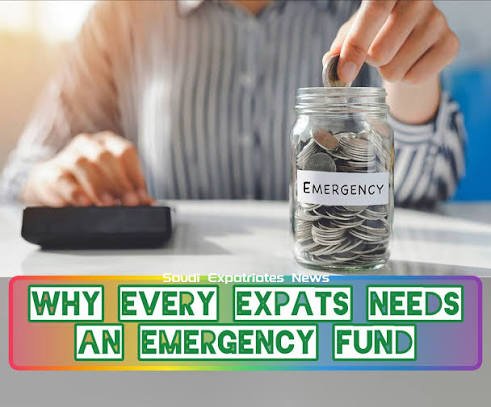
One of the hardest parts of maintaining an emergency fund is deciding when to use it.
A real emergency is generally:
Unexpected
You could not reasonably plan for it.
Essential
The expense cannot simply be ignored.
Urgent
Delaying it could create a bigger problem.
Good reasons to use the fund
These might include:
- Temporary job loss
- Essential medical expense
- Emergency family travel
- Critical car repair
- Emergency housing expense
Usually not emergencies
These might include:
- New phone
- Holiday
- Designer purchase
- Concert ticket
- Regular annual insurance payment
- Planned car servicing
Expected expenses should ideally have their own savings categories.
Create separate sinking funds
A sinking fund is savings for a known future cost.
Examples:
Travel fund
Car-maintenance fund
Insurance fund
School-fee fund
Annual licence fund
Keeping these separate protects the emergency fund.
Rebuild the Fund Immediately After Using It
Emergency funds are designed to be used.
Using one for a genuine emergency does not mean the plan failed.
It means the fund did its job.
The important step is rebuilding it.
Example
Emergency fund:
AED 40,000
Emergency expense:
AED 8,000
Remaining:
AED 32,000
New short-term goal:
Restore the missing AED 8,000.
Temporarily increase savings
For a few months, reduce:
- Entertainment
- Shopping
- Travel
and redirect the money toward rebuilding.
Review why the emergency happened
Sometimes an “emergency” reveals a predictable expense.
For example:
A large car repair may suggest you need a separate maintenance fund.
A sudden annual insurance payment may show that annual bills need better planning.
Use the experience to improve the budget.
Review Your Emergency Fund After Major Life Changes
Your original target may become outdated.
Review it after important financial changes.
These can include:
- Salary increase
- Marriage
- New child
- Moving home
- Taking a mortgage
- Starting a business
- Changing jobs
- Becoming a single-income household
Example
Old rent:
AED 60,000 annually
New rent:
AED 96,000 annually
Monthly housing cost rises from:
AED 5,000
to:
AED 8,000
Your emergency-fund target should probably increase.
Lifestyle inflation matters
As income rises, fixed expenses often rise too.
People may upgrade:
- Apartment
- Car
- School
- Travel
If monthly commitments increase, the financial cushion should also grow.
Review at least once a year
Ask:
- What are my current essential expenses?
- Has my income changed?
- Has my employment risk changed?
- Have debts increased?
- Are more people dependent on me?
Then adjust the target.
A Practical Dubai Emergency Fund Checklist
Use this checklist to build your plan.
Calculate expenses
- Monthly rent calculated
- Utilities included
- Groceries included
- Transport included
- Insurance included
- Loan repayments included
- Family obligations included
Choose target
- Starter emergency amount
- One-month target
- Three-month target
- Six-month target if appropriate
Banking
- Separate savings account
- Minimum balance checked
- Fees checked
- Interest or profit terms checked
- Easy access confirmed
Saving
- Automatic transfer created
- Salary-day saving scheduled
- Bonuses partly allocated
- Spending reviewed monthly
Protection
- Credit card not treated as emergency savings
- Separate travel fund
- Separate car-maintenance fund
- Separate annual-expense fund
Simple emergency-fund example
| Stage | Target |
|---|---|
| Starter fund | AED 5,000 |
| 1 month essentials | AED 12,000 |
| 3 months essentials | AED 36,000 |
| 6 months essentials | AED 72,000 |
These are only examples.
Your own target should be based on your real essential expenses.
Learning how to build an emergency fund while living in Dubai is less about finding a perfect savings number and more about creating financial breathing room.
Start by calculating the minimum amount your household needs every month. Include rent, groceries, utilities, transport, insurance, debt and any other unavoidable commitments.
Then build the fund gradually.
A small starter fund can protect you against immediate unexpected costs. One month of expenses creates more stability. Three to six months can provide a stronger buffer against job loss or longer periods of financial uncertainty.
Keep the emergency fund separate from daily spending and choose a savings product with transparent fees and reasonable access. UAE banks are required to disclose minimum-balance requirements, fees and expected interest or profit conditions for deposit products, so compare these details before choosing where to keep the money.
Automating the process can make saving much easier. Even a modest transfer every salary day can create a significant financial cushion over time.
Most importantly, protect the fund from lifestyle spending.
A holiday is worth saving for, but it is not an emergency. A new phone may be useful, but it is usually not an emergency either.
Emergency savings work best when they are reserved for the moments when you genuinely need financial protection. Building that buffer can make living in Dubai feel far more financially secure, even when unexpected expenses or changes in income occur.
Do follow us on Instagram
Read More – How to Grow a Small Business Across GCC Countries