Changing Ways of Kuwait City: From Old Town to Modern Capital
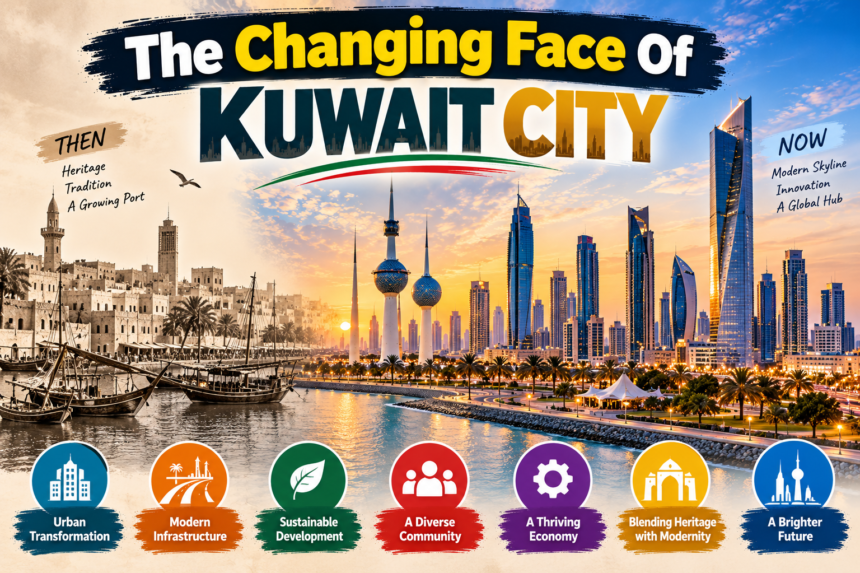
Kuwait City has changed dramatically over the past century. What was once a small coastal settlement known for fishing, pearl diving, boat building, and regional trade has developed into a modern capital filled with high-rise buildings, shopping centres, business districts, cultural attractions, and expanding residential neighbourhoods.
- 1. From a Small Coastal Settlement to a Modern Capital
- 2. The Changing Skyline: Modern Architecture and Iconic Buildings
- 3. Historic Markets Still Keep Kuwait’s Traditional Identity Alive
- 4. Public Spaces and Green Areas Are Becoming More Important
- 5. Shopping, Food, and Entertainment Have Changed
- 6. Business Districts and Commercial Development Are Expanding
- 7. Residential Life and Housing Preferences Are Changing
- 8. Transportation and Roads Are Reshaping Everyday Movement
- 9. Cultural Centres and Museums Are Giving the City New Experiences
- 10. Technology Is Changing the Way People Use the City
- 11. Environmental Challenges Are Influencing the Future of Urban Planning
- 12. How Kuwait City Is Preserving Its Heritage While Modernising
- 13. The Future of Kuwait City: What Could Change Next?
- Conclusion: Kuwait City Is Building a New Identity While Keeping Its History Alive
- Frequently Asked Questions (FAQs)
Today, Kuwait City presents an interesting combination of traditional identity and modern urban life. Its skyline features impressive towers, while traditional markets continue to welcome shoppers. Modern shopping malls stand alongside historic neighbourhoods, and new cultural spaces provide opportunities for entertainment, education, and community activities.
These changes have influenced much more than the city’s appearance. They have transformed how people travel, work, shop, spend their free time, choose their homes, and interact with their surroundings.
Oil discovery played a major role in Kuwait’s development, bringing economic resources that supported roads, housing, healthcare, education, and public infrastructure. However, rapid urban growth also created challenges involving traffic, environmental conditions, housing, and the preservation of historical areas.
As Kuwait moves towards its long-term development vision, the city continues to explore new ways to improve infrastructure, encourage private investment, protect cultural identity, and create better living environments.
In this article, we explore 10 remarkable ways changing face of Kuwait City , from its historic roots and modern skyline to lifestyle changes, public spaces, transportation, business development, and future urban plans.
1. From a Small Coastal Settlement to a Modern Capital
To understand the changing face of Kuwait City, it is important to look at its history.
The word “Kuwait” comes from kūt, an Arabic diminutive meaning “little fort,” likely named after a small defensive structure built near the water
Kuwait developed as a coastal settlement during the 18th century. Early communities depended heavily on fishing, pearl diving, boat building, and maritime trade. Its location along the Arabian Gulf made it an important connection point for merchants travelling between Arabia, Persia, India, and other trading regions.
The early town was very different from the modern capital. Houses were generally built using locally available materials, streets were narrow, and neighbourhoods were organised around family life, markets, mosques, and coastal activities.
The coastline was central to everyday life. Boats were used for fishing and trade, while the nearby sea provided employment and resources for many families.
During the early 20th century, Kuwait faced economic difficulties as the traditional pearl trade declined. The discovery of oil in 1938 became a major turning point, although large-scale economic and urban transformation developed over the following decades.
Large oil reserves were first discovered in 1937, but exploitation was delayed by World War II. Once exports began in 1946, the city entered its “Golden Era,” triggering an architectural and socioeconomic explosion
On June 19, 1961, Kuwait gained full independence from Britain, officially establishing Kuwait City as the capital of a sovereign, democratic constitutional monarchy
Oil revenues helped fund modern hospitals, schools, roads, public services, and housing. The population increased, and the city expanded beyond its traditional urban boundaries.
Historian Farah Al-Nakib’s book Kuwait Transformed: A History of Oil and Urban Life explores how this process changed the city’s buildings, streets, neighbourhoods, and social relationships.
The transformation was remarkable: a relatively compact coastal town gradually became a modern urban centre with wide roads, large residential districts, commercial buildings, and high-rise architecture.
2. The Changing Skyline: Modern Architecture and Iconic Buildings
One of the most visible signs of Kuwait City’s transformation is its skyline.
As the city’s economy expanded, modern architecture became an important part of its identity. New commercial buildings, hotels, office towers, and residential developments changed the appearance of the capital.
Among the best-known landmarks are the Kuwait Towers. Their distinctive design, featuring three towers with blue-green spheres, has become a symbol of Kuwait’s modern development.
Located along Arabian Gulf Street, the towers represent a connection between architecture, engineering, and the country’s relationship with the sea.
Another important landmark is Liberation Tower, also known as Tahrir Tower. Standing approximately 372 metres tall, it is a major telecommunications structure and an important feature of the city’s skyline. Kuwait’s Ministry of Communications describes it as a symbol of the country’s resilience and modern architectural identity.
Other buildings and developments have also influenced the modern capital:
- Al Hamra Tower: A prominent skyscraper recognised for its distinctive architectural form.
- Kuwait National Assembly Building: An important example of modern public architecture.
- Seif Palace: A historic government landmark that connects Kuwait’s traditional identity with its modern political institutions.
- Modern commercial towers: Office buildings that support banking, business, professional services, and other economic activities.
These buildings show that architecture is more than creating tall structures. It also reflects changes in the economy, technology, national identity, and the needs of a growing city.
However, a successful urban landscape needs more than an impressive skyline. Buildings must also be supported by accessible public spaces, transport, suitable infrastructure, and comfortable surroundings.
3. Historic Markets Still Keep Kuwait’s Traditional Identity Alive
Despite the development of modern shopping centres, traditional markets continue to play an important role in Kuwait City’s cultural and commercial life.
One of the most famous examples is Souq Al-Mubarakiya, a historic market where visitors can experience a more traditional side of the capital.
The market is known for its shops selling spices, perfumes, traditional clothing, gold, food, household products, and local items. Its restaurants and cafés also attract residents who enjoy traditional Kuwaiti dishes and social gatherings.
Walking through the market offers a different experience from shopping in a modern mall. Visitors can explore small shops, speak with shopkeepers, discover local products, and enjoy the atmosphere of traditional commerce.
Why does Souq Al-Mubarakiya remain important?
- It preserves an important part of Kuwait’s trading heritage.
- It provides opportunities for small businesses and shopkeepers.
- It attracts residents and international visitors.
- It supports traditional food and shopping experiences.
- It connects younger generations with local culture.
The market also shows that modernisation does not always require removing traditional places. Historic markets can continue to serve residents while becoming cultural attractions.
This balance between heritage and modern development is an important part of Kuwait City’s changing identity.
4. Public Spaces and Green Areas Are Becoming More Important
As cities grow, residents need places where they can relax, exercise, meet friends, and spend time with their families.
Public parks and open spaces are therefore important parts of urban development.
One major example in Kuwait City is Al Shaheed Park, which combines green areas, cultural attractions, museums, walking paths, and recreational facilities.
According to the park’s official website, it covers approximately 335,000 square metres and includes lakes, landscaped spaces, cafés, restaurants, a jogging track, and a dedicated cycling path. It also contains the Memorial Museum and Habitat Museum, which highlight Kuwait’s history and natural heritage.
The park offers a different experience from the city’s busy roads and commercial districts.
Residents can visit to:
- Walk or jog in a landscaped environment.
- Spend time with family and friends.
- Visit museums and cultural spaces.
- Attend exhibitions and public events.
- Enjoy cafés and outdoor areas.
- Take part in recreational activities.
In October 2026, the third phase of Al Shaheed Park was scheduled to open, adding further recreational, cultural, and entertainment facilities to the wider park project.
The development of public spaces reflects a wider interest in making urban areas more enjoyable for residents.
For a city with a hot desert climate, outdoor spaces also need careful planning. Suitable shade, water management, native plants, and maintenance are important for ensuring that parks remain useful throughout the year.
5. Shopping, Food, and Entertainment Have Changed
Shopping and entertainment have become major parts of modern life in Kuwait City.
Traditional markets still attract people looking for local products and cultural experiences, but modern shopping malls offer a very different environment.
Large malls combine retail shops, restaurants, cinemas, cafés, entertainment venues, and family activities within one location.
Some well-known shopping destinations around Kuwait City and its metropolitan area include:
- The Avenues.
- Marina Mall.
- 360 Mall.
- Al Hamra Mall.
- Souq Al-Mubarakiya.
These locations provide shopping experiences for different budgets and interests.
The changing food culture
Food is another area where modern and traditional lifestyles come together.
Kuwait’s food culture includes traditional dishes such as machboos, harees, murabyan, and local seafood. At the same time, the city has restaurants serving Indian, Lebanese, Turkish, Italian, Japanese, American, and other international cuisines.
This variety reflects Kuwait’s multicultural population and the growing influence of international food businesses.
Residents can enjoy traditional meals at local restaurants, try international dining experiences, or meet friends at cafés.
Food has therefore become more than a basic daily requirement. It is also part of social life, family gatherings, business meetings, and leisure activities.
6. Business Districts and Commercial Development Are Expanding
Kuwait City has long been an important centre for business, finance, administration, and trade.
The development of commercial buildings and modern office districts has changed the way many people work.
Areas such as Sharq, Kuwait City Centre, and surrounding commercial districts contain office towers, financial institutions, professional services, hotels, and retail facilities.
These locations support a range of industries, including:
- Banking and financial services.
- Insurance and investment.
- Real estate and property management.
- Retail and wholesale trade.
- Information technology.
- Professional consulting.
- Hospitality and business services.
Kuwait’s long-term development strategy aims to strengthen the country’s position as a regional financial and commercial centre.
The official Kuwait Vision 2035 programme, also known as New Kuwait, includes ambitions to develop a diversified economy, encourage private-sector participation, improve infrastructure, and support a sustainable living environment.
The Kuwait Direct Investment Promotion Authority also identifies infrastructure, renewable energy, healthcare, education, housing, logistics, transport, tourism, and technology among its targeted investment sectors.
These priorities may influence the future of Kuwait City by creating business opportunities and encouraging investment in urban services.
However, the success of commercial development depends not only on new buildings but also on suitable transport, skilled workers, reliable infrastructure, and a business environment that supports long-term activity.
7. Residential Life and Housing Preferences Are Changing
The growth of Kuwait City has also changed the way people choose their homes.
Traditional residential areas once developed around compact neighbourhoods, family connections, local markets, and short distances between everyday facilities.
Modern urban development has introduced a wider range of housing options, including apartments, large family houses, residential compounds, and newer suburban communities.
Many residents consider several factors when choosing a home:
- Monthly rent or property purchase price.
- Distance from work.
- Access to schools and hospitals.
- Parking and road connections.
- Nearby supermarkets and shopping centres.
- Space for family activities.
- Security and building maintenance.
The growth of suburban living
Residential expansion has taken place beyond the traditional city centre. Larger homes and planned residential areas have become important parts of the wider metropolitan landscape.
However, low-density suburban development can increase dependence on private vehicles. Residents may need to travel longer distances for work, shopping, education, and healthcare.
A recent study published in GeoJournal on 26 October 2026 compared Kuwait’s urban landscape in 1951 with its expansion by 2024. It describes how the former compact urban core developed into a much larger, low-density urban structure with wide arterial roads and extensive residential suburbs.
This change shows that the future of housing is connected to wider urban planning decisions.
Providing enough homes is important, but neighbourhoods also need convenient services, suitable public transport, accessible public spaces, and infrastructure that supports different household needs.
8. Transportation and Roads Are Reshaping Everyday Movement
Transportation is one of the most important parts of Kuwait City’s development.
As residential neighbourhoods, business districts, schools, and shopping areas expanded, the need for better road connections increased.
Wide roads, highways, flyovers, bridges, and major junctions are now important features of the capital and its surrounding metropolitan areas.
One prominent infrastructure project is Sheikh Jaber Al-Ahmad Al-Sabah Causeway, which improves road connectivity across Kuwait Bay between Kuwait City and areas to the north.
The Ministry of Public Works includes road construction, transport infrastructure, airport development, and other major public works among its development priorities.
How transport affects daily life
Better transport connections can help residents reach workplaces, schools, hospitals, and shopping areas more easily.
However, road-based development also brings challenges:
- Heavy traffic during peak hours.
- Time spent travelling between residential and business districts.
- Dependence on private cars.
- Parking pressure in busy areas.
- Fuel consumption and vehicle emissions.
This is why future urban planning needs to consider more than road construction.
Public transport, safe pedestrian routes, cycling facilities, and better connections between neighbourhoods can help create a more balanced transport system.
For residents, transport improvements can make a noticeable difference to daily life by reducing travel difficulties and improving access to important services.
9. Cultural Centres and Museums Are Giving the City New Experiences
Kuwait City is not only a business and residential centre. It is also an important location for culture, art, education, and entertainment.
The city has invested in facilities that bring cultural activities closer to the public.
One major example is the Sheikh Jaber Al-Ahmad Cultural Centre, which is part of Kuwait’s cultural district. It provides spaces for performing arts, concerts, theatre, and other cultural programmes.
Another important attraction is the Sheikh Abdullah Al-Salem Cultural Centre, a major museum complex focused on subjects including science, natural history, space, and human culture.
The Kuwaiti government identifies both cultural centres among the country’s major visitor attractions.
These places provide opportunities for people to explore knowledge and creativity outside traditional educational settings.
They also support:
- Cultural exhibitions.
- Music and theatre performances.
- Educational activities.
- Family visits.
- Public discussions and events.
- Opportunities for artists and creative professionals.
Cultural development is important because a modern city needs more than offices and shopping centres. It also needs places where residents can discover history, experience art, and participate in community life.
10. Technology Is Changing the Way People Use the City
Digital technology is becoming an increasingly important part of everyday life in Kuwait City.
Residents use mobile applications and online services to manage payments, book appointments, search for properties, order food, arrange transport, and communicate with businesses.
Technology is also changing how organisations deliver services.
For example, businesses may use digital platforms for customer support, online sales, scheduling, and property management. Residents may also benefit from electronic government services that reduce the need to visit offices for certain procedures.
In the property sector, digital platforms can help people:
- Search for available homes.
- Compare rental options.
- View property photographs and details.
- Arrange appointments with agents.
- Manage selected building services.
- Access digital payment and administrative services.
Technology can improve convenience, but it also creates new responsibilities involving data protection, online fraud, cybersecurity, and digital access.
The wider goals of New Kuwait 2035 include developing a more connected and effective government and supporting the country’s digital and economic development.
The future of Kuwait City will therefore depend partly on how successfully technology is used to improve public services and everyday experiences.
11. Environmental Challenges Are Influencing the Future of Urban Planning
Kuwait City’s growth has created opportunities, but it has also brought environmental challenges.
The desert climate, high summer temperatures, air pollution, traffic, water use, and limited natural greenery all influence the way the city develops.
Heat and outdoor comfort
High temperatures can make walking and outdoor activities difficult for much of the year.
Urban planners need to consider shade, suitable building materials, shaded pedestrian routes, green areas, and cooling strategies when designing neighbourhoods.
Air quality and pollution
Road traffic, industrial activity, construction, and regional dust events can affect air quality.
A study published in GeoJournal in October 2026 discusses connections between Kuwait’s urban development, environmental conditions, public spaces, and public health. It highlights issues such as vehicle dependence, limited walkability, and unequal environmental exposure.
Water and energy use
Cooling buildings during hot weather requires energy, while maintaining green spaces requires careful water management.
Modern developments can consider energy-efficient air conditioning, suitable insulation, water-saving fixtures, and responsible landscaping.
The importance of green spaces
Parks and landscaped areas can provide places for recreation, improve the experience of public spaces, and support urban biodiversity.
Al Shaheed Park demonstrates how greenery, museums, recreational facilities, and public activities can be brought together in the heart of the capital.
The long-term goal is to make the city more comfortable and environmentally responsible without ignoring its climate and resource limitations.
12. How Kuwait City Is Preserving Its Heritage While Modernising
A city can develop new infrastructure while continuing to protect its history and identity.
Kuwait City has several historical landmarks that help residents and visitors understand its past.
These include:
Seif Palace: A historic landmark associated with Kuwait’s leadership and government. Its traditional architectural features provide a contrast with nearby modern buildings.
Souq Al-Mubarakiya: A traditional market that continues to support local shopping, food businesses, and cultural experiences.
The Grand Mosque: One of Kuwait’s most important religious and architectural landmarks.
Kuwait National Museum: A place where visitors can learn about Kuwait’s history, culture, and archaeological heritage.
Traditional courtyard houses: Surviving examples of earlier residential design that reflect the climate, lifestyle, and building methods of historic Kuwait.
Preserving heritage is not always easy. Older buildings may need restoration, maintenance, and protection from inappropriate development.
However, historic places can contribute to tourism, education, local business, and community identity.
The challenge for Kuwait City is to make heritage part of its future rather than treating it as something separate from modern development.
13. The Future of Kuwait City: What Could Change Next?
Kuwait’s Vision 2035 provides a long-term direction for transforming the country into a diversified financial, commercial, and cultural centre.
The vision includes seven strategic pillars, covering areas such as a sustainable economy, effective government, infrastructure, environmental development, healthcare, education, and international positioning.
Several areas may play an important role in the city’s future.
More connected infrastructure
Further development of roads, public services, transport links, utilities, and airport facilities can help support the needs of a growing city.
Better residential communities
Future housing developments may focus more on access to schools, healthcare, public spaces, shopping, and transport.
Stronger private-sector participation
Encouraging businesses and investment outside traditional oil-related activities can support employment opportunities and economic diversification.
More sustainable urban development
Energy efficiency, water conservation, green spaces, and climate-aware building design can help make the city more suitable for everyday life.
More cultural and entertainment opportunities
Museums, cultural centres, public parks, sports facilities, and entertainment destinations can provide residents with a wider choice of leisure activities.
Improved digital services
Online government services, smart infrastructure, digital property platforms, and connected city systems may make everyday tasks more convenient.
These developments will depend on investment, planning, project delivery, and public participation. Vision 2035 provides a direction, but the quality of everyday life will depend on how effectively individual plans are carried out.
Conclusion: Kuwait City Is Building a New Identity While Keeping Its History Alive
Kuwait City has travelled a remarkable journey from a small coastal settlement to a modern capital with impressive buildings, busy commercial districts, cultural centres, residential communities, and expanding infrastructure.
Oil discovery accelerated its transformation, creating opportunities for modern healthcare, education, housing, roads, and public services. Today, the city continues to change through new residential developments, digital technology, commercial activity, cultural attractions, and environmental planning.
However, urban growth also brings challenges. Traffic, housing affordability, heat, pollution, vehicle dependence, and the preservation of historic neighbourhoods require attention.
The future success of Kuwait City will not depend only on constructing taller buildings or expanding roads. It will also depend on creating comfortable neighbourhoods, improving public spaces, protecting cultural identity, and making daily life better for residents.
From the traditional atmosphere of Souq Al-Mubarakiya to the modern skyline around Kuwait Towers, the city represents a connection between its past and future.
The changing face of Kuwait City is not just a story of new buildings. It is a story of people, culture, economic progress, and the continuing search for a more connected and liveable urban future.
Frequently Asked Questions (FAQs)
1. How has Kuwait City changed over the years?
Kuwait City has developed from a traditional coastal settlement based on trade, fishing, and pearl diving into a modern capital with high-rise buildings, major roads, commercial districts, shopping centres, cultural institutions, and expanding residential areas.
2. What caused the rapid development of Kuwait City?
The discovery of oil in 1938 was a major turning point. Oil revenues supported economic growth and investment in healthcare, education, housing, transportation, public services, and modern infrastructure.
3. What are the most famous landmarks in Kuwait City?
Some well-known landmarks include Kuwait Towers, Liberation Tower, Seif Palace, the Grand Mosque, Souq Al-Mubarakiya, Al Shaheed Park, and Sheikh Jaber Al-Ahmad Cultural Centre.
4. Why is Souq Al-Mubarakiya important to Kuwait City?
Souq Al-Mubarakiya preserves an important part of Kuwait’s traditional trading culture. It offers local products, traditional food, perfumes, spices, clothing, and social spaces that connect residents and visitors with the city’s heritage.
5. What is Kuwait Vision 2035?
Kuwait Vision 2035, also known as New Kuwait, is a long-term national development plan. It aims to develop Kuwait as a financial, commercial, and cultural centre while improving infrastructure, public services, economic diversification, and living conditions.
6. Is Kuwait City becoming more environmentally friendly?
There are efforts to improve green spaces, building efficiency, resource management, and urban infrastructure. Al Shaheed Park is one example of a major public green-space project. However, heat, pollution, traffic, and water use remain important environmental challenges.
7. How is technology changing life in Kuwait City?
Digital services are changing shopping, payments, property searches, communication, business operations, and access to selected government services. Smart systems may also improve building management and urban infrastructure.
8. What challenges does Kuwait City face as it develops?
Major challenges include traffic congestion, housing affordability, hot weather, air pollution, dependence on private vehicles, environmental pressure, and the need to preserve historic places.
9. What is the role of Al Shaheed Park in Kuwait City?
Al Shaheed Park is a major urban green space that combines landscaped areas, museums, lakes, walking paths, cycling facilities, cafés, and cultural events. It provides recreational and educational opportunities for residents and visitors.
10. What might Kuwait City look like in the future?
Future development may focus on improved infrastructure, better residential communities, sustainable buildings, stronger business activity, digital services, and more accessible public spaces under the wider direction of Kuwait Vision 2035.
Do follow us on Instagram
Read More – How Real Estate Trends Are Changing the Way People Live in the GCC