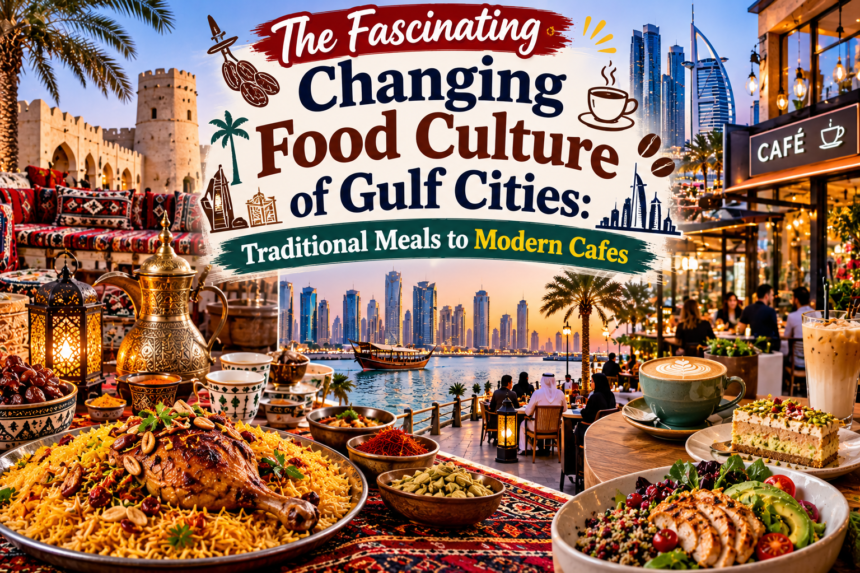
The Changing Food Culture of Gulf Cities: From Traditional Meals to Modern Cafés
The food culture of Gulf cities has changed a lot over the years. In the past, traditional meals were closely connected to family life, local customs, fishing, farming, and trade. People enjoyed dishes made with rice, meat, fish, dates, and spices. Meals were often shared with family members and guests, making food an important part of hospitality. Today, Gulf cities such as Dubai, Doha, Riyadh, Abu Dhabi, Kuwait City, and Manama offer a much wider food experience. Alongside traditional restaurants, visitors can find modern cafés, international food chains, specialty coffee shops, healthy restaurants, and creative dining spaces.
- Understanding the Traditional Food Culture of the Gulf
- 1. Traditional Gulf Dishes That Remain Popular
- 2. How Gulf Cities Became International Food Destinations
- 3. The Rise of Modern Cafés in Gulf Cities
- 4. Traditional Flavours Meet Modern Cooking
- 5. How Young People Are Changing Eating Habits
- 6. The Growing Influence of Food Delivery Apps
- 7. The Role of Tourism in Gulf Food Culture
- 8. Healthier Eating and Changing Food Preferences
- 9. The Importance of Traditional Markets and Local Food Businesses
- 10. How Gulf Cities Differ in Their Food Experiences
- 11. Challenges Facing the Modern Gulf Food Industry
- 12. What the Future of Gulf Food Culture May Look Like
- Tips for Exploring the Food Culture of Gulf Cities
- Conclusion
- Frequently Asked Questions (FAQs)
This change does not mean that traditional food has disappeared. Instead, old recipes and modern food trends now exist side by side. A family might enjoy a traditional rice dish at home, visit a popular café on the weekend, and order international food through a delivery app during a busy workday. Young people are exploring new tastes, while many restaurants are finding creative ways to present local dishes to a new generation.
The changing food culture of Gulf cities reflects changes in lifestyles, tourism, technology, business, and the mix of people living in the region. From traditional meals served at family gatherings to stylish cafés in busy shopping districts, food continues to connect people with their culture while introducing them to new experiences.
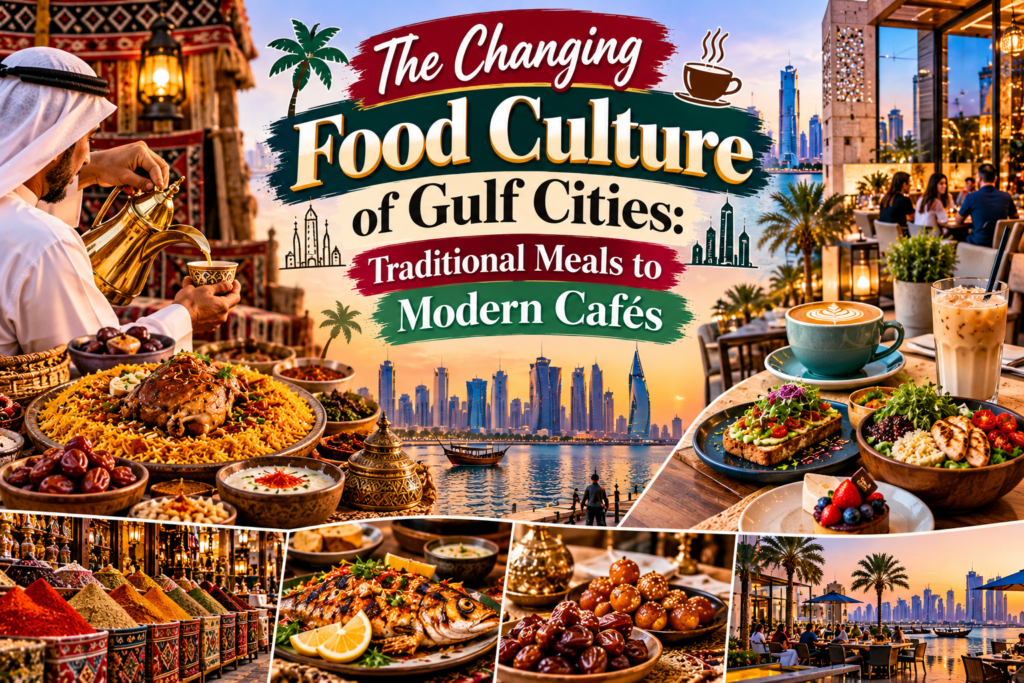
Understanding the Traditional Food Culture of the Gulf
People in this region depend on the sea, the desert, and trade routes for their daily food. Fishing communities consume fish and seafood, while those living in desert areas rely on ingredients such as dates, milk, meat, and grains. Due to trade with South Asia, East Africa, and other parts of the world, rice and spices have become very common.
Traditional Gulf cooking developed from these local resources and cultural connections. Recipes were passed from one generation to another, and many dishes became part of family celebrations, religious occasions, weddings, and national festivals.
In Gulf culture, food plays a key role in demonstrating hospitality. When a guest visits a home, they are offered Arabic coffee and dates before a large meal is served. Sharing food is a way of showing respect; in many households, the large meal is placed in the center of the table so that everyone can share it.
Although cooking styles differ between countries and families, several values remain common across the region:
- Hospitality: Guests are welcomed with food and drinks.
- Family connections: Meals bring relatives together.
- Cultural identity: Traditional recipes help preserve local heritage.
- Generosity: Special occasions often include large meals prepared for guests.
- Community: Food is shared during celebrations, religious events, and neighbourhood gatherings.
These traditions continue to influence how people eat today, even as Gulf cities become more modern and internationally connected.
1. Traditional Gulf Dishes That Remain Popular
Traditional dishes are still an important part of everyday life in Gulf cities. While modern restaurants offer many international choices, local meals continue to attract residents and visitors who want to experience the region’s authentic flavours.
Some traditional dishes are prepared regularly at home, while others are especially popular during family gatherings, weddings, Ramadan, and national celebrations.
Machboos and Majboos
Machboos, also known by similar names in different Gulf countries, is a popular rice dish cooked with meat, chicken, or fish. It is usually prepared with spices that give it a rich smell and flavour. Depending on the recipe, ingredients may include cardamom, cinnamon, dried lime, cloves, and other seasonings.
The dish is enjoyed across several Gulf countries, although recipes and cooking methods vary. It is a familiar choice for family lunches, celebrations, and gatherings with friends.
Harees
Harees is made mainly with wheat and meat, cooked slowly until the ingredients become soft and blend together. It is especially associated with Ramadan and special occasions in parts of the Gulf. Its simple ingredients and slow cooking method make it a meaningful example of traditional home cooking.
Thareed
Thareed combines bread with a stew containing meat and vegetables. The bread absorbs the flavour of the broth, creating a filling and comforting meal. It is particularly associated with Ramadan in several Gulf communities.
Grilled Meat and Seafood
Grilled lamb, chicken, and fish are also common in Gulf food culture. Coastal communities have long depended on seafood, while meat dishes remain popular for family gatherings and celebrations.
Dates and Arabic Coffee
Dates and Arabic coffee are more than refreshments. They represent hospitality and are often offered to guests at home, during meetings, and at cultural events. Today, modern cafés sometimes serve speciality coffee alongside dates, bringing a traditional pairing into a contemporary setting.
These dishes remain popular because they offer more than taste. They carry memories, family traditions, and a sense of belonging that modern food trends cannot easily replace.
2. How Gulf Cities Became International Food Destinations
One of the biggest reasons behind the changing food culture of Gulf cities is the growth of international travel, business, and tourism. Over the past few decades, cities such as Dubai, Doha, Abu Dhabi, and Riyadh have developed into major business and tourism destinations. As more people travel to the region for work, education, holidays, and business opportunities, the demand for different types of food has increased.
The Gulf is home to people from many countries, including India, Pakistan, the Philippines, Egypt, Lebanon, Jordan, and other parts of Asia, Africa, and Europe. These communities have brought their own cooking traditions, ingredients, and eating habits with them. As a result, Gulf cities now offer a wide variety of food in a relatively small area.
In many neighbourhoods, people can find traditional Gulf restaurants next to Indian curry houses, Lebanese grills, Turkish bakeries, Japanese sushi restaurants, Italian cafés, and American-style burger shops. This variety makes eating out an everyday opportunity to explore different cultures.
International food has also influenced local restaurants. Some chefs combine Gulf ingredients with modern cooking methods, while others create new versions of traditional dishes. A restaurant might serve a classic rice meal with a modern presentation or offer a traditional dessert in a café-style setting.
This cultural mix has made Gulf cities exciting places for food lovers. At the same time, it has encouraged restaurant owners to offer something different to attract customers who have many dining choices.
3. The Rise of Modern Cafés in Gulf Cities
Modern cafés have become an important part of daily life in many Gulf cities. In the past, people would visit traditional coffee shops to enjoy tea, drink Arabic coffee, and engage in conversation. Today, cafés offer much more than just drinks. They have evolved into social spaces where people meet with friends, study, work remotely, celebrate special occasions, and take a break after the busy day.
Specialty coffee shops are particularly popular among younger customers and professionals. These cafés may offer espresso, cappuccino, flat white, cold brew, pour-over coffee, and seasonal drinks. Many also serve pastries, sandwiches, cakes, and light meals.
The atmosphere is another reason for their popularity. Modern cafés often feature comfortable seating, stylish interiors, soft lighting, decorative plants, and quiet corners. Some have outdoor seating where customers can enjoy city views during the cooler months.
Cafés also serve different purposes throughout the day. A customer might stop for a takeaway coffee in the morning, meet a colleague in the afternoon, and return in the evening to spend time with friends. This flexibility makes cafés an important part of modern urban life.
Social media has helped cafés become even more popular. Attractive interiors, creative desserts, colourful drinks, and beautifully presented meals encourage customers to share photos and videos online. For some businesses, this online attention helps attract new visitors.
However, the café trend is not limited to international brands. Many local businesses are creating their own identities by using regional flavours, Arabic design, traditional hospitality, and locally inspired menus.
4. Traditional Flavours Meet Modern Cooking
One interesting development in Gulf food culture is the way traditional ingredients are appearing in modern dishes. Instead of choosing between old and new food styles, many restaurants are bringing them together.
For example, dates can be used in cakes, desserts, smoothies, and sauces. Cardamom, saffron, rose water, and pistachios can add regional flavour to modern drinks and baked goods. Traditional breads may be served with contemporary dips, while familiar rice and meat dishes may be presented in individual portions for restaurant customers.
Some cafés offer Arabic coffee-inspired desserts or drinks, while bakeries create new versions of regional sweets. Restaurants may also combine traditional grilled meat with salads, wraps, or lighter side dishes to appeal to customers who want a different dining experience.
This approach can help traditional food reach younger audiences. Someone who is not familiar with a classic Gulf dish might first try a modern version at a café or restaurant. That experience may encourage them to explore the original recipe later.
There is also a growing interest in the story behind food. Customers may want to know where an ingredient comes from, how a dish is prepared, or why it is connected to a particular celebration. Restaurants that explain these details can create a stronger connection between food and culture.
Still, not every traditional dish needs to be changed. Many people continue to prefer family recipes prepared in familiar ways. The most interesting part of this trend is that both traditional cooking and creative experimentation can exist together.
5. How Young People Are Changing Eating Habits
Young people are playing an important role in the changing food culture of Gulf cities. Their lifestyles, work schedules, travel experiences, and use of social media influence what they eat and where they spend their time.
For many young residents, eating out is not only about satisfying hunger. It is also a social activity. Friends may meet at a café to talk, choose a restaurant for a birthday celebration, or visit a new food outlet because it has become popular online.
Younger customers are often interested in trying new dishes and flavours. They may enjoy traditional meals at home while exploring ramen, tacos, sushi, speciality burgers, or plant-based food when dining out. This does not necessarily mean that they are leaving traditional food behind. Instead, they are adding more choices to their everyday lives.
Convenience is another important factor. Busy work schedules and long commutes can make quick meals attractive. Ready-to-eat food, takeaway coffee, meal deals, and food delivery services fit easily into a fast-paced routine.
At the same time, some young consumers are showing interest in healthier options. Depending on the city and the customer, popular choices may include fresh juices, salads, protein-rich meals, vegetarian dishes, and reduced-sugar drinks.
Food businesses are responding by offering menus that appeal to different needs. Many restaurants now provide a mixture of traditional favourites, international dishes, lighter meals, and convenient takeaway options.
6. The Growing Influence of Food Delivery Apps
Technology has changed how people in Gulf cities discover, order, and enjoy food. Food delivery apps allow customers to browse menus, compare prices, read reviews, and place orders without visiting a restaurant.
This convenience is especially useful for busy workers, families, and people who prefer to eat at home. Customers can order anything from traditional rice meals and grilled chicken to pizza, desserts, coffee, and healthy lunch bowls.
Delivery services have also created new opportunities for food businesses. Smaller restaurants can reach customers beyond their immediate neighbourhood, while some food brands operate mainly through delivery rather than maintaining a large dining space.
However, delivery culture has also changed the relationship between customers and restaurants. People may choose a meal based on ratings, delivery time, discounts, and photographs rather than the atmosphere or service of a physical restaurant.
There are challenges, too. Delivery charges can increase the final cost of a meal, and food quality may change during transport. Packaging waste is another concern, especially when orders include several containers, bags, and disposable utensils.
For traditional restaurants, the challenge is to make familiar dishes suitable for delivery without losing their quality. Rice, grilled meat, soups, breads, and sauces all require suitable packaging and careful preparation.
Even with these challenges, food delivery has become a major part of modern dining habits in many Gulf cities.
7. The Role of Tourism in Gulf Food Culture
Tourism has helped make food an important part of the Gulf travel experience. Visitors often want to explore local dishes alongside famous landmarks, shopping areas, museums, beaches, and cultural attractions.
In Dubai, tourists can enjoy Emirati food while also exploring restaurants serving cuisines from around the world. Doha offers opportunities to discover Qatari dishes, traditional markets, and modern dining spaces. In Riyadh, visitors can experience Saudi cuisine alongside new restaurants and cafés. Manama and Kuwait City also offer a mixture of traditional dishes, regional specialities, and international dining.
Food markets and traditional restaurants can help visitors understand local culture in a more personal way. Trying a traditional rice dish, tasting a local sweet, or enjoying Arabic coffee provides a connection to everyday life that sightseeing alone may not offer.
Tourism has also encouraged restaurants to improve their menus, service, interior design, and overall dining experience. Some businesses present local dishes in ways that are easier for international visitors to understand, while others focus on preserving traditional cooking methods.
Food festivals, seasonal markets, and special dining events can introduce visitors to regional ingredients and recipes. During Ramadan, for example, restaurants and hotels may offer iftar and suhoor experiences that bring families, friends, and visitors together.
However, food tourism works best when it respects local traditions. Traditional dishes should not be treated only as attractions for visitors. They are also part of the everyday lives, memories, and identities of the people who prepare and enjoy them.
8. Healthier Eating and Changing Food Preferences
Health and wellness are becoming more visible in the food industry across Gulf cities. Many customers are paying greater attention to what they eat, how food is prepared, and how meals fit into their daily routines.
This interest has encouraged some restaurants and cafés to introduce fresh salads, grilled dishes, vegetarian meals, smoothies, fruit bowls, and other lighter options. Some cafés offer dairy alternatives, while others provide meals with clear ingredient information or different portion sizes.
Traditional food can also fit into a balanced lifestyle. Home-cooked meals prepared with vegetables, grains, fish, and suitable portions can provide variety without requiring people to abandon familiar flavours. The key is often how food is prepared and how frequently different foods are eaten.
At the same time, healthier eating does not mean every customer wants the same thing. Some people prioritise convenience, while others focus on taste, price, portion size, or dietary needs. Restaurants need to balance these preferences when planning their menus.
There is also growing interest in food choices that reduce waste and make better use of ingredients. Some businesses are exploring more efficient packaging, while customers may prefer reusable cups or restaurants that offer practical ways to reduce disposable waste.
Although these changes are not the same everywhere, they show how modern food culture is responding to wider conversations about health, convenience, and sustainability.
9. The Importance of Traditional Markets and Local Food Businesses
Traditional markets remain important places to experience the food culture of Gulf cities. They often sell spices, dates, nuts, sweets, fresh ingredients, and locally prepared food. Their narrow walkways, small shops, and lively atmosphere offer a different experience from modern shopping centres.
Markets such as Souq Waqif in Doha demonstrate how traditional settings can continue to attract both residents and tourists. Visitors can browse food shops, discover regional ingredients, and stop at restaurants or cafés while exploring the area.
Local restaurants and family-run food businesses also help protect traditional recipes. They may prepare dishes using methods learned from older generations, keeping flavours and cooking styles alive.
These businesses face challenges, including rising rent, changing customer expectations, competition from large chains, and the need to market themselves online. Some respond by improving their service, offering takeaway options, or creating a stronger social media presence while keeping their traditional menus.
Supporting local food businesses can help preserve cultural knowledge and keep neighbourhood dining areas lively. It also allows customers to discover dishes that may not be widely available in international restaurant chains.
Traditional markets and modern cafés therefore serve different but complementary roles. One offers a direct connection to local history and everyday trading, while the other reflects changing lifestyles and new dining habits.
10. How Gulf Cities Differ in Their Food Experiences
Although Gulf countries share some food traditions, each city has its own identity. Local ingredients, family customs, migration, tourism, and business development all influence what people eat.
- Dubai: Known for its international dining scene, the city offers everything from Emirati dishes and street food to fine dining and speciality coffee.
- Doha: Traditional Qatari food, local markets, waterfront restaurants, and contemporary cafés create a mixture of cultural and modern experiences.
- Riyadh: Saudi food traditions remain important, while the city’s growing restaurant and café scene offers many new dining choices.
- Abu Dhabi: Local Emirati flavours sit alongside international restaurants, hotel dining, and modern café culture.
- Kuwait City: Traditional Kuwaiti dishes, regional restaurants, bakeries, and contemporary coffee shops are part of the city’s varied food scene.
- Manama: Bahraini food traditions and seafood are complemented by cafés and restaurants serving regional and international cuisine.
These examples are general descriptions rather than strict rules. Every city contains different neighbourhoods, price ranges, and food preferences. A small family restaurant may offer a completely different experience from a luxury hotel restaurant in the same city.
What connects these places is their ability to welcome new food trends while maintaining important parts of their culinary heritage.
11. Challenges Facing the Modern Gulf Food Industry
The growth of restaurants, cafés, and delivery services brings opportunities, but it also creates challenges.
Rising costs: Rent, ingredients, staff, utilities, and delivery services can make it difficult for small restaurants to remain affordable.
Strong competition: Customers have many options, so businesses must offer good food, reliable service, fair prices, and a pleasant experience.
Preserving traditional recipes: Younger generations may have less time to learn traditional cooking at home. Restaurants, families, and cultural programmes can help pass these recipes on.
Food waste: Large menus, oversized portions, and unsold meals can create waste. Better planning, storage, and portion choices can help reduce it.
Balancing authenticity and innovation: Modern presentation can attract new customers, but changing a traditional dish too much may disappoint people who value its original flavour.
For businesses, success often depends on understanding the people they serve. Some customers want affordable everyday meals, others look for new experiences, and many want both options at different times.
12. What the Future of Gulf Food Culture May Look Like
The future of food culture in Gulf cities will likely involve a continued mix of tradition, technology, and creativity. Traditional restaurants will remain important, while modern cafés and new dining concepts continue to attract customers.
One possible trend is the use of local ingredients in more creative ways. Dates, regional spices, seafood, and traditional grains may appear in new dishes, desserts, and drinks. This can give restaurants a distinct identity while helping customers discover familiar ingredients in new forms.
Technology will probably remain important, too. Digital menus, online reservations, delivery platforms, and social media marketing already influence how many people choose where to eat. Restaurants that combine convenient service with good food and hospitality may be better positioned to attract regular customers.
There may also be more interest in affordable dining, healthier options, and reducing food waste. These priorities can encourage businesses to design flexible menus and offer customers more choices.
At the same time, traditional meals will continue to matter because they connect people with their families, history, and cultural identity. Modern cafés may change how people socialise, but they do not remove the importance of sharing food during family gatherings and celebrations.
The strongest food culture is not necessarily the one that follows every new trend. It is the one that can welcome new ideas without losing the traditions that make it special.
Tips for Exploring the Food Culture of Gulf Cities
If you want to understand Gulf food culture, try a mix of traditional and modern dining experiences rather than visiting only famous restaurants.
- Try a traditional local dish: Look for machboos, harees, thareed, or a local speciality associated with the city you are visiting.
- Visit a traditional market: Explore the spices, dates, sweets, and ingredients used in regional cooking.
- Enjoy Arabic coffee and dates: Learn about the hospitality traditions behind this familiar combination.
- Visit a modern café: Try speciality coffee, local-inspired desserts, or a contemporary interpretation of regional flavours.
- Ask about the ingredients: Restaurant staff may be able to explain how a dish is prepared and where its flavours come from.
- Compare different price ranges: Small local restaurants can offer a different experience from hotel restaurants and luxury dining venues.
- Explore food beyond shopping malls: Neighbourhood cafés, markets, and family-run restaurants can provide a more varied picture of local food culture.
- Respect local customs: Be mindful of local dining etiquette, particularly during Ramadan and at traditional family-style meals.
Trying different types of food can make a trip more interesting and help you understand the people and traditions behind the dishes.
Conclusion
The changing food culture of Gulf cities tells a story of tradition meeting modern life. Traditional meals such as machboos, harees, and thareed continue to connect families with their cultural roots. At the same time, modern cafés, international restaurants, food delivery apps, and creative menus reflect the changing lifestyles of people living in the region.
Cities such as Dubai, Doha, Riyadh, Abu Dhabi, Kuwait City, and Manama show how different food traditions can exist together. Residents can enjoy familiar home-cooked meals, explore international cuisines, and discover modern versions of traditional flavours.
Although dining habits will continue to change, hospitality and sharing food remain important parts of Gulf culture. The future is not simply about replacing traditional dishes with modern trends. It is about finding ways for both to grow together.
For residents and visitors alike, exploring the food culture of Gulf cities is an opportunity to experience the region’s history, diversity, and changing identity—one meal at a time.
Frequently Asked Questions (FAQs)
1. What is traditional Gulf food?
Traditional Gulf food includes dishes such as machboos, harees, thareed, grilled meat, and seafood. Dates and Arabic coffee are also important parts of local hospitality. Recipes vary between countries and families.
2. How has food culture changed in Gulf cities?
Food culture has expanded through tourism, migration, technology, and changing lifestyles. Traditional restaurants now share the market with international dining brands, modern cafés, speciality coffee shops, and food delivery services.
3. Why are modern cafés so popular in the Gulf?
Modern cafés offer coffee, light meals, comfortable seating, and places to meet friends or work. Their attractive interiors, convenient locations, and social media presence also help make them popular.
4. Is traditional Gulf food still popular?
Yes. Traditional dishes remain important during family gatherings, weddings, Ramadan, and national celebrations. Many people also enjoy them as everyday meals at home and in local restaurants.
5. What are some famous traditional dishes in Gulf countries?
Popular dishes include machboos or majboos, harees, thareed, grilled meat, and regional seafood dishes. Specific recipes and names differ across the Gulf.
6. How has tourism influenced Gulf food culture?
Tourism has increased demand for local food experiences and international cuisines. It has also encouraged restaurants to improve their menus, service, and dining environments for residents and visitors.
7. What role do food delivery apps play in Gulf cities?
Food delivery apps make it easier to order meals from home or work. They help restaurants reach more customers, although delivery charges, packaging waste, and food quality during transport can be challenges.
8. Are healthier food options becoming more common in Gulf cities?
Many restaurants and cafés now offer options such as salads, grilled meals, fresh juices, vegetarian dishes, and lighter menus. Availability varies by location and restaurant.
9. Where can visitors experience traditional Gulf food?
Visitors can explore traditional restaurants, local markets, family-run food businesses, and cultural dining experiences. Asking local residents for recommendations can also help uncover less widely known places.
10. What is the future of food culture in Gulf cities?
The food scene is likely to keep combining traditional recipes with modern dining experiences. Local ingredients, digital services, creative cafés, and interest in healthier and more sustainable choices may continue to shape the industry.
Do follow us on Instagram
Read More – 15 Amazing Affordable Leisure Activities in Doha on a Budget