


Best Strategies to Secure Your Dream Home
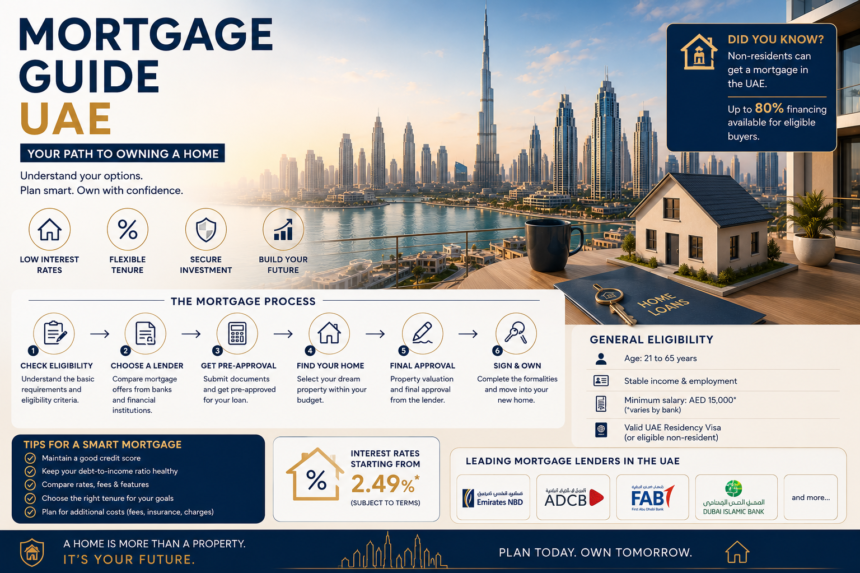
Buying a home is one of the biggest financial decisions you will ever make, and understanding the mortgage process is essential before taking that step. Whether you are a UAE resident, an expatriate, or a first-time property buyer, this Mortgage Guide UAE explains everything you need to know about home financing. From understanding mortgage types and eligibility requirements to comparing lenders and managing repayments, this guide will help you make informed decisions and avoid common borrowing mistakes. With proper planning, securing a home loan in the UAE can become a smooth and rewarding experience.
- What Is a Mortgage?
- Why Use a Mortgage in the UAE?
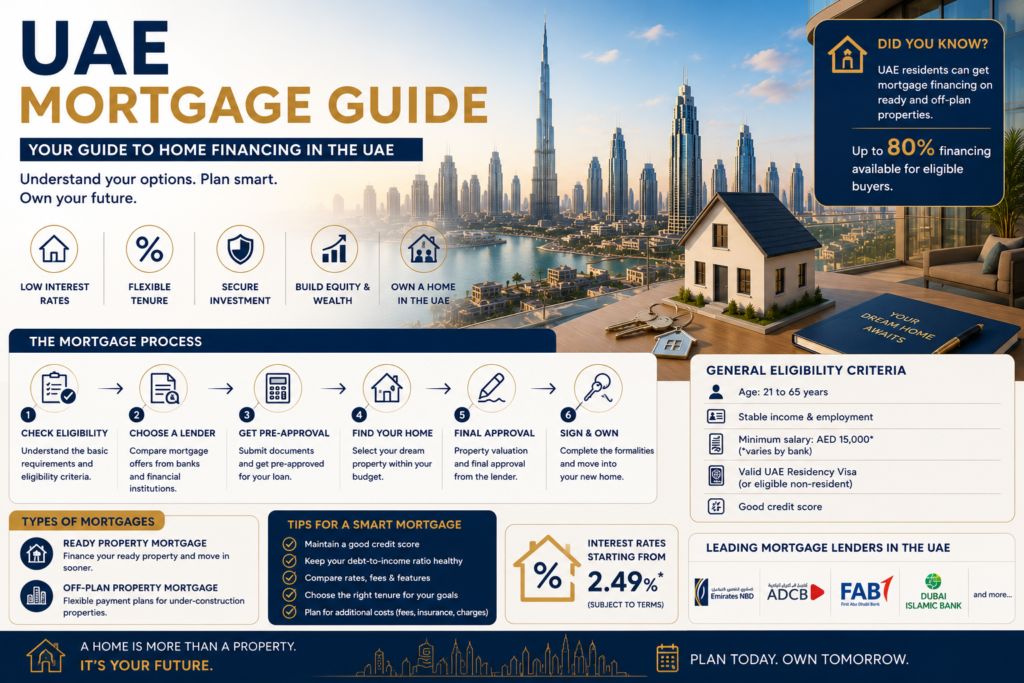
- Mortgage Guide UAE: Types of Home Loans
- Who Can Apply for a Mortgage?
- Documents Required
- Understanding Interest Rates
- Mortgage Approval Process
- Costs Associated with a Mortgage
- Choosing the Right Mortgage
- Tips to Improve Your Mortgage Approval Chances
- Fixed vs Variable Interest Rates
- Common Mortgage Mistakes to Avoid
- Mortgage Guide UAE for First-Time Home Buyers
- Mortgage Planning Checklist
- Frequently Asked Questions
- Conclusion
What Is a Mortgage?
A mortgage is a loan provided by a bank or financial institution that allows buyers to purchase a property without paying the full amount upfront.
Instead, borrowers repay the loan over an agreed period through monthly installments that include both the principal amount and interest.
Mortgages make property ownership more affordable while allowing buyers to spread the cost over many years.
Why Use a Mortgage in the UAE?
Many buyers choose a mortgage instead of paying the full purchase price because it offers greater financial flexibility.
Some of the main benefits include:
- Makes homeownership more affordable.
- Preserves personal savings.
- Allows buyers to invest in better properties.
- Offers flexible repayment periods.
- Helps build long-term financial assets.
- Provides opportunities for property investment.
A well-planned mortgage can support both personal and investment goals.
Mortgage Guide UAE: Types of Home Loans
Banks and financial institutions offer different mortgage products to suit various financial needs.
Common mortgage types include:
- Fixed-rate mortgages.
- Variable-rate mortgages.
- Islamic home financing.
- First-time buyer mortgages.
- Buy-to-let investment mortgages.
- Refinancing options.
Understanding these options helps buyers choose the financing solution that best matches their budget and long-term plans.
Who Can Apply for a Mortgage?
Both UAE nationals and eligible expatriates can apply for home financing.
Applicants generally need to meet requirements such as:
- Minimum age criteria.
- Stable employment or business income.
- Good credit history.
- Required minimum salary.
- Acceptable debt-to-income ratio.
- Valid identification documents.
Each lender may have slightly different eligibility conditions, so comparing several banks is always recommended.
Documents Required
Preparing your paperwork in advance can speed up the approval process.
Commonly requested documents include:
- Passport copy.
- Emirates ID.
- UAE residence visa.
- Salary certificate.
- Bank statements.
- Employment confirmation.
- Property purchase agreement.
- Proof of down payment.
Self-employed applicants may also need to provide business and financial records.
Understanding Interest Rates
Interest rates significantly affect the total amount you repay over the life of the mortgage.
When comparing mortgage offers, consider:
- Fixed interest rates.
- Variable interest rates.
- Introductory offers.
- Total borrowing cost.
- Loan tenure.
- Early settlement charges.
Choosing the right interest structure can save you a substantial amount over time.
Mortgage Approval Process
Although the process varies slightly between lenders, it generally follows these steps:
- Assess your budget.
- Compare mortgage providers.
- Submit your application.
- Provide supporting documents.
- Receive pre-approval.
- Choose your property.
- Complete property valuation.
- Final loan approval.
- Sign mortgage documents.
- Complete the property transfer.
Understanding each stage helps buyers prepare for a smoother purchasing experience.
Costs Associated with a Mortgage
Besides monthly repayments, borrowers should budget for several additional expenses.
These may include:
- Mortgage processing fees.
- Property valuation charges.
- Mortgage registration fees.
- Home insurance.
- Life insurance where applicable.
- Property registration fees.
- Legal and administrative costs.
Considering these expenses in advance helps prevent unexpected financial pressure.
Choosing the Right Mortgage
Not every mortgage product is suitable for every buyer.
Before making your decision, evaluate:
- Interest rate.
- Repayment flexibility.
- Loan tenure.
- Down payment requirement.
- Monthly affordability.
- Customer service.
- Early repayment options.
- Total financing cost.
Comparing multiple lenders can help you find the mortgage that offers the best value for your financial situation.
Tips to Improve Your Mortgage Approval Chances
Getting approved for a mortgage becomes much easier when your financial profile is well prepared.
Here are some practical tips:
- Maintain a good credit history.
- Pay existing debts on time.
- Save for a larger down payment.
- Keep stable employment.
- Avoid taking new loans before applying.
- Prepare all required documents in advance.
- Compare mortgage products from multiple lenders.
- Choose a repayment amount that fits your monthly budget.
Strong financial planning can improve both your approval chances and your borrowing terms.
Fixed vs Variable Interest Rates
One of the most important decisions borrowers make is choosing between a fixed-rate and a variable-rate mortgage.
| Fixed Rate | Variable Rate |
|---|---|
| Monthly payments remain predictable during the fixed period | Interest rate may increase or decrease over time |
| Easier budgeting | May offer lower initial rates |
| Less affected by market changes | Monthly repayments can fluctuate |
| Suitable for buyers seeking stability | Suitable for buyers comfortable with changing rates |
Understanding the advantages of each option helps you select the mortgage that aligns with your financial goals.
Common Mortgage Mistakes to Avoid
Many buyers make avoidable mistakes that increase the overall cost of borrowing.
Avoid these common errors:
- Borrowing more than you can comfortably afford.
- Ignoring additional property-related costs.
- Choosing a loan based only on the lowest interest rate.
- Not comparing different lenders.
- Failing to read the loan agreement carefully.
- Overlooking early repayment charges.
- Applying without checking your financial readiness.
Taking time to evaluate your options can save money over the life of your mortgage.
Mortgage Guide UAE for First-Time Home Buyers
Buying your first home can feel overwhelming, but careful preparation makes the process much smoother.
First-time buyers should:
- Set a realistic property budget.
- Understand all borrowing costs.
- Obtain mortgage pre-approval before property hunting.
- Compare different loan products.
- Keep emergency savings after purchasing.
- Think about long-term affordability instead of only the initial monthly payment.
A well-planned mortgage supports long-term financial security rather than creating unnecessary financial pressure.
Mortgage Planning Checklist
Use this checklist before submitting your mortgage application.
| Checklist Item | Completed |
|---|---|
| Calculated your budget | □ |
| Checked mortgage eligibility | □ |
| Compared lenders | □ |
| Prepared required documents | □ |
| Saved for the down payment | □ |
| Estimated monthly repayments | □ |
| Reviewed additional costs | □ |
| Planned emergency savings | □ |
Following a checklist helps reduce delays and makes the home-buying journey more organized.
Frequently Asked Questions
Who can apply for a mortgage in the UAE?
Both UAE nationals and eligible expatriates can apply for a mortgage, provided they meet the lender’s income, employment, credit, and documentation requirements.
How much down payment is usually required?
The required down payment depends on factors such as the property’s value, the applicant’s residency status, and the lender’s financing policies.
Can self-employed individuals get a mortgage?
Yes. Many banks offer mortgage solutions for self-employed applicants, although additional business and financial documentation may be required.
What is mortgage pre-approval?
Mortgage pre-approval is an initial assessment by a lender indicating how much you may be eligible to borrow before choosing a property.
Should I choose a fixed or variable interest rate?
The best option depends on your financial situation and risk tolerance. Fixed rates provide payment stability, while variable rates may change with market conditions.
Conclusion
This Mortgage Guide UAE provides a clear understanding of how home financing works and what buyers should consider before applying for a mortgage. From understanding loan types and eligibility requirements to comparing lenders and calculating total borrowing costs, careful planning can help you make confident financial decisions. A mortgage is a long-term commitment, so selecting the right financing option is just as important as choosing the right property.
Whether you are purchasing your first home or investing in real estate, following the advice in this Mortgage Guide UAE can simplify the borrowing process and improve your chances of approval. By preparing your finances, comparing loan products, understanding repayment obligations, and avoiding common mistakes, you can secure a mortgage that supports your long-term financial goals while making homeownership in the UAE more achievable.
Do follow us on Instagram
Read More – Property Fees in Dubai: Best Ultimate Guide to Save Money