



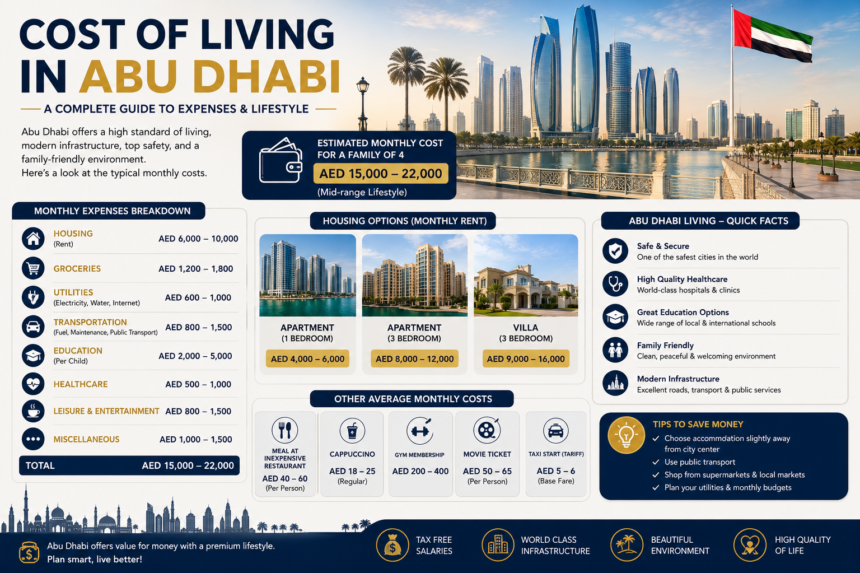
Complete Guide for Cost of Living in Abu Dhabi 2026
Abu Dhabi, the capital of the United Arab Emirates, is known for its modern infrastructure, high quality of life, excellent career opportunities, and family-friendly environment. As one of the most developed cities in the Middle East, it attracts professionals, entrepreneurs, students, families, and investors from around the world. However, one of the most important questions for anyone planning to move to the capital is: How much does it cost to live in Abu Dhabi?
- Is Abu Dhabi Expensive to Live In?
- Housing Costs in Abu Dhabi
- Cheapest Areas to Live in Abu Dhabi
- Utility Costs in Abu Dhabi
- Grocery Costs in Abu Dhabi
- Eating Out in Abu Dhabi
- Transportation Costs in Abu Dhabi
- Public Transportation in Abu Dhabi
- Healthcare Costs in Abu Dhabi
- Education Costs in Abu Dhabi
- Childcare Costs
- Entertainment and Leisure in Abu Dhabi
- Shopping Costs in Abu Dhabi
- Fitness and Gym Memberships
- Mobile and Internet Costs
- Average Monthly Cost of Living for a Single Person
- Cost of Living for a Couple
- Cost of Living for a Family
- How to Save Money While Living in Abu Dhabi
- Is Abu Dhabi Cheaper Than Dubai?
- Salary Needed to Live Comfortably in Abu Dhabi
- Tips for New Residents
The cost of living in Abu Dhabi depends heavily on your lifestyle, accommodation, location, family size, transportation choices, and spending habits. Housing is usually the largest monthly expense, while groceries, utilities, transportation, dining, education, and entertainment can significantly affect the overall budget.
Abu Dhabi can be expensive compared with many cities, but it is possible to manage expenses effectively by choosing affordable accommodation, using public transportation, cooking at home, and taking advantage of the city’s many free or low-cost activities. For professionals receiving housing or transportation allowances from their employers, the overall financial picture can be considerably more comfortable.
This guide explains the major expenses involved in living in Abu Dhabi and provides practical information to help you plan a realistic monthly budget.
Is Abu Dhabi Expensive to Live In?
Abu Dhabi is generally considered an expensive city, particularly when it comes to housing and private education. However, the actual cost of living varies significantly from one person to another.
A single professional living in a shared apartment and preparing most meals at home can maintain a relatively controlled budget. On the other hand, a family renting a large villa, sending children to private schools, owning multiple cars, and dining frequently at upscale restaurants can spend substantially more each month.
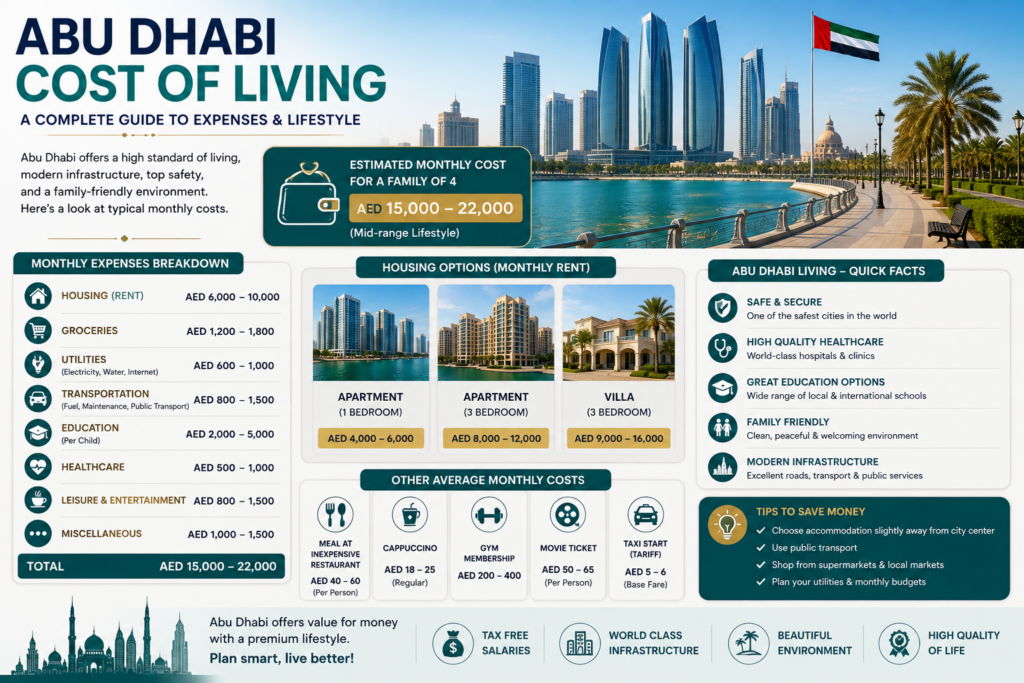
The biggest factors affecting your cost of living include:
- Monthly rent
- Location of your home
- Family size
- School and childcare costs
- Transportation
- Grocery spending
- Dining and entertainment
- Healthcare and insurance
- Shopping habits
- Lifestyle preferences
Understanding these categories before moving can help you avoid unexpected expenses.
Housing Costs in Abu Dhabi
Housing is usually the biggest expense for residents. Rental prices vary according to the neighborhood, property size, building quality, amenities, and proximity to business districts and public transportation.
Apartments in central and popular areas can command higher rents, while residents willing to live farther from the city center may find more affordable options.
Typical accommodation choices include studio apartments, one-bedroom apartments, two-bedroom apartments, larger apartments, villas, and shared accommodation.
Approximate Monthly Housing Budget
A general budgeting range may look like this:
- Shared accommodation: around AED 1,000–2,500 per person
- Studio apartment: around AED 2,500–5,000+
- One-bedroom apartment: around AED 3,500–7,000+
- Two-bedroom apartment: around AED 5,000–10,000+
- Larger apartments and villas: AED 8,000+ depending on location and property
These figures are broad estimates rather than fixed market prices. Rental costs can change considerably based on the specific property and area.
Popular residential areas include Al Reem Island, Khalifa City, Mohammed Bin Zayed City, Al Raha, Al Mushrif, Al Khalidiyah, and other communities around Abu Dhabi.
Cheapest Areas to Live in Abu Dhabi
Residents looking to reduce housing costs can consider areas outside the most premium central neighborhoods.
Khalifa City is popular among families who want larger properties and a quieter residential environment. It is farther from central Abu Dhabi but offers different housing options.
Mohammed Bin Zayed City can also appeal to residents looking for larger homes and comparatively affordable accommodation.
Mussafah is known for more budget-oriented housing and is particularly popular with workers and residents seeking lower-cost accommodation.
For those who prioritize convenience and access to city-center attractions, areas such as Al Khalidiyah and Al Mushrif may be more suitable, although rental costs can vary.
Choosing a neighborhood should involve more than simply comparing rent. Consider commuting time, transportation costs, nearby schools, supermarkets, healthcare facilities, and other everyday services.
Utility Costs in Abu Dhabi
Utilities are another important part of the monthly budget. Depending on the property and consumption, residents may pay for electricity, water, cooling, internet, and mobile services.
A single person living in a small apartment may spend less than a family living in a large property, particularly because air conditioning can contribute significantly to electricity consumption during the hotter months.
A reasonable monthly household budget may include:
- Electricity and water
- Air conditioning or cooling charges
- Internet
- Mobile phone services
- Gas, where applicable
Combined utility and communication costs can range from roughly AED 500 to AED 1,500 or more per month depending on the household and consumption.
Residents should always check whether cooling charges are included in their rent or billed separately because this can make a noticeable difference to monthly expenses.
Grocery Costs in Abu Dhabi
Food expenses depend heavily on whether you cook at home or eat out regularly. Abu Dhabi has supermarkets ranging from budget-oriented stores to premium international retailers.
A single person who shops carefully and prepares most meals at home may spend approximately AED 600–1,200 per month on groceries. Families can spend considerably more depending on household size and dietary preferences.
Common grocery expenses include:
- Rice and grains
- Fresh vegetables
- Fruits
- Meat and seafood
- Milk and dairy products
- Bread
- Eggs
- Cooking oil
- Snacks
- Beverages
- Household cleaning products
Buying local and seasonal products can help reduce grocery costs. Shopping at larger supermarkets and comparing weekly promotions can also make a significant difference.
Eating Out in Abu Dhabi
Abu Dhabi has a huge variety of restaurants, cafes, fast-food outlets, food courts, and fine-dining establishments.
A meal at an inexpensive restaurant can be relatively affordable, while meals at upscale restaurants can cost considerably more.
For budget-conscious residents, eating out occasionally while cooking most meals at home is one of the easiest ways to control monthly expenses.
A person who frequently orders food through delivery apps may spend much more than expected because delivery fees, service charges, and frequent small orders can add up.
For a controlled budget, consider:
- Preparing lunch at home
- Limiting food delivery
- Choosing casual restaurants
- Taking advantage of meal deals
- Planning weekly grocery shopping
- Reserving fine dining for special occasions
Transportation Costs in Abu Dhabi
Transportation is another major consideration. Abu Dhabi has an extensive road network and public transportation system, while taxis are widely available.
Residents can choose between buses, taxis, private cars, ride-hailing services, cycling in suitable areas, and walking for short journeys.
Public transportation can be one of the most affordable ways to travel regularly. However, people who live farther from their workplace or frequently travel across the emirate may prefer a private vehicle.

Car Ownership Costs
Owning a car involves more than the purchase price. Your monthly budget should account for:
- Fuel
- Insurance
- Vehicle registration
- Maintenance
- Parking
- Tolls, where applicable
- Repairs
- Car financing, if relevant
Fuel costs can be manageable compared with many international cities, but parking, maintenance, insurance, and financing can increase the total cost of ownership.
Before purchasing a vehicle, calculate the total annual cost rather than focusing only on the monthly installment.
Public Transportation in Abu Dhabi
Public buses provide an affordable option for residents who live and work near suitable routes. Taxis are convenient for occasional journeys but can become expensive if used every day.
People who rely primarily on public transportation may be able to maintain a lower monthly transportation budget than those who own and operate a car.
For residents considering where to live, proximity to public transport can therefore influence the overall cost of living. A slightly more expensive apartment near your workplace or a convenient transport route could potentially reduce commuting expenses and travel time.
Healthcare Costs in Abu Dhabi
Healthcare is an important consideration when calculating the cost of living in Abu Dhabi. The UAE has a developed healthcare system with public and private medical facilities.
Health insurance is an essential part of financial planning. Depending on employment arrangements, insurance may be provided by an employer. However, coverage varies, so residents should understand what their policy includes.
Potential healthcare expenses include:
- Doctor consultations
- Prescription medicines
- Dental care
- Specialist appointments
- Diagnostic tests
- Emergency treatment
- Health insurance premiums, where applicable
Families should carefully review healthcare coverage because medical expenses can vary significantly depending on treatment and insurance benefits.
Education Costs in Abu Dhabi
For families with children, education can become one of the largest expenses after housing.
Abu Dhabi has numerous private and international schools offering different curricula, including British, American, Indian, and other educational systems.
School fees vary significantly according to the institution, grade level, curriculum, and facilities. Additional costs may include:
- Registration fees
- School uniforms
- Books
- Transportation
- Meals
- Extracurricular activities
- Technology requirements
- School trips
Parents should research total annual education costs rather than considering tuition alone.
Childcare Costs
Families with young children may also need to budget for nurseries, daycare, babysitting, or other childcare services.
Childcare prices vary according to the facility, schedule, location, and services provided. Full-time professional childcare can significantly increase a family’s monthly expenses.
Parents should compare several options and check what is included in the advertised price before making a decision.
Entertainment and Leisure in Abu Dhabi
Abu Dhabi offers plenty of entertainment options, from beaches and parks to museums, shopping centers, cinemas, restaurants, sporting activities, and cultural attractions.
The good news is that residents do not need to spend large amounts every weekend. The city has several activities that can be enjoyed for free or at relatively low cost.
Budget-friendly activities include:
- Visiting public beaches
- Exploring parks
- Walking along the Corniche
- Spending time at outdoor public spaces
- Exploring cultural areas
- Visiting shopping malls without making major purchases
- Joining community events
- Enjoying free public events when available
Premium entertainment, theme parks, concerts, and luxury experiences can increase monthly spending substantially.
Shopping Costs in Abu Dhabi
Shopping can be a major part of lifestyle spending, especially in a city with numerous modern malls and international brands.
Residents should distinguish between essential purchases and discretionary spending. Clothing, electronics, cosmetics, home furnishings, and luxury goods can quickly increase a monthly budget.
A practical approach is to create a separate shopping allowance rather than treating shopping as an unlimited expense.
Taking advantage of seasonal promotions and comparing prices before purchasing larger items can help manage costs.
Fitness and Gym Memberships
Fitness expenses vary depending on the type of facility. Basic gyms can be relatively affordable, while premium fitness clubs can charge significantly higher membership fees.
Residents can reduce fitness costs by using outdoor walking and running areas, public parks, community facilities, or home workouts.
For those who prefer professional gyms, compare membership terms carefully. Some facilities offer monthly plans, while others provide discounted annual memberships.
Mobile and Internet Costs
Reliable internet and mobile connectivity are essential for most residents. Monthly telecommunications costs depend on the provider, plan, data requirements, and whether multiple family members have individual subscriptions.
A single person may be able to maintain a relatively modest communications budget, while a family with several mobile lines and a home internet connection will naturally spend more.
Before choosing a plan, compare data allowances, international calling options, contract requirements, and additional charges.
Average Monthly Cost of Living for a Single Person
A single professional can potentially manage their expenses efficiently by choosing shared accommodation or a reasonably priced studio, cooking regularly, and using public transportation.
A sample monthly budget might look like:
- Rent/shared accommodation: AED 1,500–4,500
- Utilities and internet: AED 400–800
- Groceries: AED 600–1,000
- Transportation: AED 250–700
- Mobile phone: AED 100–300
- Dining and entertainment: AED 400–1,000
- Personal expenses: AED 300–700
This creates a broad estimated range of approximately AED 3,550–9,000 per month, excluding major purchases, debt repayments, international travel, and other exceptional expenses.
Actual spending can be significantly lower or higher depending on lifestyle.
Cost of Living for a Couple
Couples typically have higher expenses but can benefit from sharing rent, utilities, transportation, and household costs.
A moderate monthly budget for a couple might include:
- One-bedroom apartment: AED 3,500–7,000+
- Utilities and internet: AED 600–1,000
- Groceries: AED 1,000–1,800
- Transportation: AED 500–1,200
- Dining and entertainment: AED 700–1,500
- Mobile services: AED 200–500
- Miscellaneous expenses: AED 500–1,000
A couple could therefore spend approximately AED 7,000–14,000 or more per month, depending heavily on rent and lifestyle.
Cost of Living for a Family
Family budgets can vary enormously. Housing and education are usually the biggest factors.
A family with children may need to budget for:
- Two- or three-bedroom accommodation or a villa
- Utilities
- Groceries
- School fees
- Transportation
- Healthcare
- Childcare
- Entertainment
- Clothing and household expenses
A middle-income family may spend AED 15,000–30,000+ per month, while families choosing premium housing, private schools, multiple vehicles, and frequent luxury activities can spend considerably more.
Employer-provided benefits can dramatically change the calculation. Housing allowances, school allowances, health insurance, annual flights, and transportation benefits can reduce the amount a family needs to pay from its own income.
How to Save Money While Living in Abu Dhabi
Although Abu Dhabi can be expensive, smart financial planning can make daily life much more manageable.
Choose Housing Carefully
Do not select a home based solely on appearance. Compare rent, commuting costs, parking, utilities, maintenance, and access to schools and supermarkets.
Cook at Home
Preparing most meals at home is one of the simplest ways to reduce food expenses.
Use Public Transportation
If your workplace and home are connected by public transport, you may be able to avoid the significant costs associated with car ownership.
Compare Supermarket Prices
Different stores offer different prices. Compare promotions and consider buying frequently used products in economical quantities.
Limit Food Delivery
Frequent food delivery can become a hidden monthly expense. Cooking at home and carrying packed meals can make a noticeable difference.
Use Free Activities
Abu Dhabi offers beaches, parks, walking areas, cultural attractions, and public spaces that allow residents to enjoy the city without spending heavily.
Track Monthly Expenses
Create categories for rent, food, transportation, utilities, shopping, entertainment, and savings. Reviewing your spending each month can help identify unnecessary expenses.
Is Abu Dhabi Cheaper Than Dubai?
The answer depends on where you live and your lifestyle. Both cities offer expensive and relatively affordable options.
Abu Dhabi is the UAE’s capital and has a strong residential and business environment. Dubai is internationally known for its tourism, entertainment, business, and luxury lifestyle.
Housing costs can vary widely in both cities, so it is not always accurate to say one is universally cheaper than the other. A person’s final budget depends on neighborhood, accommodation type, commute, lifestyle, and family needs.
If you are choosing between the two cities, compare the complete cost of living rather than rent alone.
Salary Needed to Live Comfortably in Abu Dhabi
The salary needed for a comfortable lifestyle depends on personal circumstances.
A single professional receiving employer-provided accommodation may be comfortable on a considerably lower salary than someone who must pay full market rent.
Similarly, a family with children may require a significantly higher household income because of housing and education costs.
When evaluating a job offer, consider the complete compensation package, including:
- Basic salary
- Housing allowance
- Transportation allowance
- Health insurance
- Annual air tickets
- School allowance
- Bonuses
- Paid leave
- End-of-service benefits
A seemingly higher salary may not necessarily provide better financial value if another employer offers substantial housing, education, or transportation benefits.
Tips for New Residents
People moving to Abu Dhabi for the first time should prepare a realistic financial plan before arriving.
Start by estimating your initial costs, which may include accommodation deposits, transportation, household items, documentation, insurance, and other setup expenses.
It is also wise to maintain an emergency fund. Unexpected medical bills, vehicle repairs, travel requirements, or changes in employment can create financial pressure.
New residents should also avoid comparing their lifestyle with social media portrayals of Abu Dhabi. The city offers luxury experiences, but residents can enjoy a comfortable lifestyle without spending excessively.
Final Thoughts on the Cost of Living in Abu Dhabi
The cost of living in Abu Dhabi depends largely on your housing choice, family size, transportation, education requirements, and lifestyle. While the city can be expensive, careful planning makes it possible to manage expenses effectively.
For most residents, housing will be the largest monthly expense. Families should pay particular attention to school and childcare costs, while single professionals can often reduce expenses through shared accommodation and public transportation.
A practical Abu Dhabi budget should include rent, utilities, groceries, transportation, healthcare, communications, entertainment, and savings. It is also important to consider one-time costs when moving to the city.
The best way to live comfortably in Abu Dhabi is to understand your income and expenses before making major commitments. Compare neighborhoods, research rental prices, take advantage of employer benefits, track your spending, and set aside money for emergencies and savings.
With good financial planning, Abu Dhabi can offer an attractive combination of career opportunities, modern infrastructure, safety, cultural experiences, and a high standard of living. Whether you are moving alone, with a partner, or with your family, understanding the cost of living in Abu Dhabi is the first step toward creating a comfortable and financially sustainable life in the UAE.
Do follow us on Instagram
Read More – Best Free Attractions in Abu Dhabi