

12 Cultural Attractions in Dubai That Reveal the City’s Real Story
Dubai is often introduced through its tallest buildings, luxury hotels and futuristic attractions. Yet the city has another story that becomes visible when you leave the skyscrapers behind and walk through old neighbourhoods, museums, traditional markets and historic waterfront districts.
- Why Cultural Attractions in Dubai Are Worth Exploring
- 1. Al Fahidi Historical Neighbourhood
- 2. Dubai Creek
- 3. Ride a Traditional Abra
- 4. Al Shindagha Museum
- 5. Etihad Museum
- 6. Jumeirah Mosque
- 7. Al Fahidi Fort
- 8. Explore the Spice Souk
- 9. Visit the Gold Souk
- 10. Sheikh Saeed Al Maktoum House
- 11. Jumeirah Archaeological Site
- 12. Alserkal Avenue
- 13. Dubai Opera
- Old Dubai Is the Best Place to Begin
- A One-Day Cultural Itinerary in Dubai
- A Two-Day Dubai Culture Itinerary
- Traditional Architecture Is Part of the Experience
- Emirati Hospitality Is Also Part of Culture
- Contemporary Dubai Culture Is Multicultural
- Dubai Is Investing in Cultural Preservation
- Cultural Experiences Can Be Budget Friendly
- Best Cultural Attractions in Dubai at a Glance
- Best Time to Explore Cultural Dubai
- What to Wear at Cultural Attractions
- FAQs About Cultural Attractions in Dubai
- Conclusion
The best Cultural Attractions in Dubai reveal how a small trading settlement beside Dubai Creek developed into one of the world’s most internationally connected cities. Visitors can explore Al Fahidi Historical Neighbourhood, learn about the formation of the UAE at Etihad Museum, discover Emirati traditions at Al Shindagha Museum, visit Jumeirah Mosque and wander through souks that continue Dubai’s long commercial history.
Dubai’s official cultural portal lists heritage sites including Al Fahidi Historical Neighbourhood, Al Fahidi Fort, Jumeirah Archaeological Site, Sheikh Saeed Al Maktoum House and Jumeirah Mosque, alongside museums such as Etihad Museum and Al Shindagha Museum.
For travellers who think Dubai is only about modern architecture, these places provide an important reminder: the futuristic city did not appear without a past.
Why Cultural Attractions in Dubai Are Worth Exploring
Dubai’s modern transformation happened rapidly, which can sometimes make visitors assume there is little historical material to explore.
That assumption is wrong.
The areas around Dubai Creek preserve evidence of the trading, pearling and maritime communities that shaped the city before oil wealth and modern development changed its economy.
Dubai Culture and Arts Authority manages museums, heritage sites, art institutions and cultural programmes designed to preserve and promote that history. Dubai’s official city portal also identifies culture and heritage as a major part of the emirate’s public cultural landscape.
Cultural sightseeing can help visitors understand:
- traditional Emirati architecture,
- Dubai’s trading history,
- pearl diving,
- maritime life,
- Islamic culture,
- the creation of the UAE,
- traditional crafts,
- local food,
- contemporary Gulf art,
- and the role of Dubai Creek in the city’s development.
This gives greater meaning to the modern city.
Once you understand Dubai’s trading origins, the international character of the city feels less surprising.
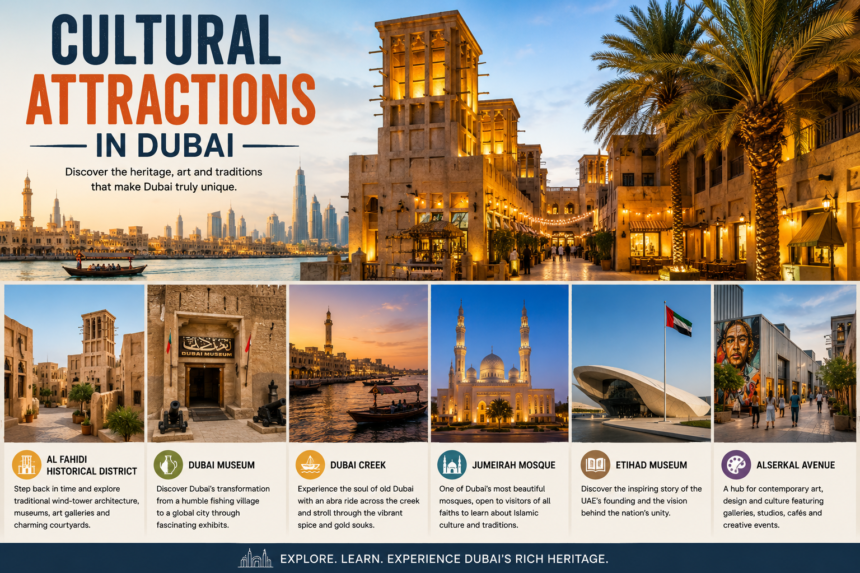
1. Al Fahidi Historical Neighbourhood
Al Fahidi Historical Neighbourhood is one of the most important places to begin.
Located in Bur Dubai near Dubai Creek, the district preserves traditional architecture, narrow lanes, courtyards and wind towers.
Visit Dubai describes Al Fahidi as a destination where visitors can explore the city’s culture, heritage and architecture.
Unlike a conventional museum where everything is displayed behind glass, Al Fahidi allows visitors to physically walk through an older style of urban environment.
The neighbourhood is known for traditional barjeel, or wind towers.
Before modern air conditioning, these architectural features helped direct air into buildings, demonstrating how homes were adapted to the Gulf climate.
Visitors can spend time exploring:
- traditional architecture,
- galleries,
- cultural spaces,
- cafés,
- courtyards,
- craft shops,
- and nearby museums.
The experience is particularly enjoyable early in the morning or during cooler late-afternoon hours.
Best for: First-time visitors, photography, architecture and history.
Suggested image placement: Traditional wind towers and narrow lanes inside Al Fahidi.
2. Dubai Creek
Dubai Creek is not simply a body of water.
It is one of the most important places in the city’s history.
Dubai’s early economy depended heavily on trade, fishing, pearling and maritime activity around the Creek.
Traditional wooden boats still operate here today, creating one of the strongest visual connections between historic and modern Dubai.
A walk around the Creek allows visitors to see:
- abras,
- dhows,
- trading areas,
- souks,
- heritage districts,
- and modern city development.
Dubai Municipality is also implementing the Dubai Creek Lights project across eight kilometres of waterfront, specifically designed to highlight the area’s historical, architectural and cultural identity while improving its nighttime experience.
This shows how Dubai continues to modernize the Creek without ignoring its heritage value.
Best for: Walking, photography, families and first-time visitors.
3. Ride a Traditional Abra
One of the simplest cultural experiences in Dubai is also one of the most memorable.
Traditional wooden abras carry passengers across Dubai Creek between Bur Dubai and Deira.
The crossing is short, but it provides a glimpse of the city’s historic relationship with water.
Visitors see:
- wooden boats,
- trading districts,
- old waterfront buildings,
- markets,
- and Dubai’s increasingly modern skyline.
The appeal comes from authenticity.
An abra is not simply a themed tourist attraction. It remains part of the Creek’s everyday transport environment.
Pairing an abra crossing with Al Fahidi, the Spice Souk and Gold Souk creates one of Dubai’s strongest low-cost cultural itineraries.
4. Al Shindagha Museum
For a deeper understanding of Dubai and Emirati life, Al Shindagha Museum deserves significant time.
The museum complex sits within the historic Al Shindagha district near Dubai Creek.
Its exhibitions explore subjects including:
- Emirati traditions,
- traditional crafts,
- pearl diving,
- maritime culture,
- perfume,
- archaeology,
- family life,
- and childhood.
The museum’s official visitor material highlights experiences such as the Culture of the Sea Pavilion, traditional jewellery, crafts, Perfume House and an immersive pearl-diving experience.
This makes Al Shindagha particularly valuable because it does not present culture as one broad concept.
Instead, visitors can explore individual parts of Emirati life.
The Perfume House, for example, explains the cultural importance of fragrances and traditional perfume-making.
The Culture of the Sea section explores the maritime world that played a major role in Dubai’s economy.
Families can also find experiences designed for younger visitors.
Best for: History, Emirati culture, families and travellers wanting a deeper cultural experience.
5. Etihad Museum
Anyone interested in understanding the UAE as a country should visit Etihad Museum.
The museum focuses particularly on the formation of the United Arab Emirates and the political developments surrounding federation.
Dubai’s official 2026 city guide describes Etihad Museum as a place where visitors can explore UAE history through photographs, films and other material, with particular attention to the period between 1968 and 1974.
This is important context.
Visitors often experience Dubai and Abu Dhabi as highly developed global cities without understanding how recently the UAE itself was formed.
The federation officially came into existence on 2 December 1971.
Etihad Museum helps explain the political discussions and leadership that shaped that process.
The museum is particularly useful for visitors interested in:
- UAE history,
- politics,
- nation-building,
- leadership,
- and modern Gulf development.
Best for: History lovers, students and travellers interested in the formation of the UAE.
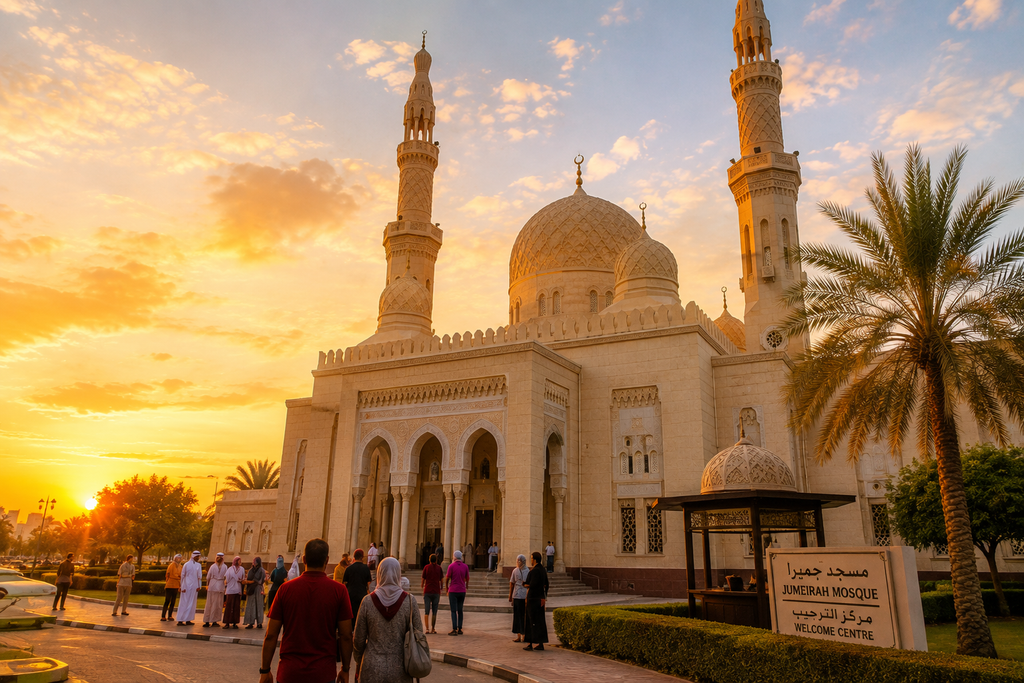
6. Jumeirah Mosque
Jumeirah Mosque provides visitors with an opportunity to learn more about Islam and Emirati culture.
Visit Dubai highlights the mosque as a cultural attraction where people of different faiths can learn about Islam, Emirati culture and the building’s architecture through guided experiences.
This makes it especially valuable for international visitors.
Religious architecture can be visually beautiful, but the guided cultural experience provides context that photographs alone cannot.
Visitors can learn about:
- mosque architecture,
- Islamic traditions,
- prayer,
- Ramadan,
- Emirati customs,
- and everyday religious practices.
The mosque is also one of Dubai’s most recognizable traditional architectural landmarks.
Visitor tip: Dress respectfully and check current tour schedules before visiting.
Suggested image placement: Jumeirah Mosque during soft morning or sunset light.
7. Al Fahidi Fort
Al Fahidi Fort is one of Dubai’s most historically significant structures.
Visit Dubai identifies it as an important historic site connected with the origins of the UAE and Old Dubai.
The fort has long been associated with Dubai Museum and represents a very different architectural period from the glass towers that now dominate much of the city.
Historic forts are important because they demonstrate how communities protected themselves and organized governance before the modern state infrastructure visitors see today.
Even visitors who spend only a short time around Bur Dubai should include the surrounding fort area within an Old Dubai walking route.
Best for: History, architecture and Old Dubai sightseeing.
8. Explore the Spice Souk
Culture is not found only inside museums.
Markets can tell just as much about a city.
Dubai’s Spice Souk in Deira remains one of the most atmospheric traditional shopping areas in the city.
Dubai’s official 2026 guide encourages visitors to experience baskets filled with aromatic herbs and spices while exploring the traditional marketplace.
Walking through the souk engages several senses at once.
Visitors see bright colours, smell spices and hear merchants interacting with shoppers.
Products may include:
- saffron,
- dried herbs,
- spices,
- teas,
- nuts,
- incense,
- and traditional ingredients.
The experience also reflects Dubai’s long trading connections with South Asia, Iran, Arabia and other parts of the world.
Best for: Food lovers, photography and traditional market experiences.
9. Visit the Gold Souk
The Gold Souk is another famous part of Deira.
Its importance goes beyond jewellery shopping.
It reflects Dubai’s historic role as a trading centre.
Dubai’s official city guide identifies the Gold Souk as one of its key arts and culture experiences, highlighting the enormous selection of precious jewellery available in Deira.
The displays themselves can feel almost like an attraction.
Shop windows contain elaborate gold necklaces, bracelets and traditional jewellery designs.
You do not need to purchase anything to appreciate the experience.
Combined with the nearby Spice Souk and an abra ride, the Gold Souk completes a classic cultural route through Old Dubai.
10. Sheikh Saeed Al Maktoum House
Dubai’s official cultural portal lists Sheikh Saeed Al Maktoum House among the city’s important museums and heritage sites.
The building is significant because it is associated with Dubai’s ruling family and provides insight into the architecture and lifestyle of an earlier period.
Historic houses are useful cultural attractions because they make history feel personal.
Instead of focusing only on dates and political developments, visitors can understand:
- how spaces were organized,
- how families lived,
- how architecture responded to climate,
- and how traditional materials were used.
The house fits naturally into an Al Shindagha cultural itinerary.
11. Jumeirah Archaeological Site
Dubai’s history extends much further back than the modern emirate.
The Jumeirah Archaeological Site gives visitors a glimpse into that deeper history.
Visit Dubai identifies it as an important cultural location where archaeological discoveries reveal earlier periods of settlement in the area.
Archaeological heritage has received increased institutional attention in Dubai.
In May 2026, Dubai introduced Law No. 11 of 2026 covering antiquities and archaeological sites across terrestrial, marine and mountainous areas of the emirate.
This reflects a broader effort to protect historic material while Dubai continues developing rapidly.
For visitors interested in archaeology, the site provides an important reminder that Dubai’s human history predates its modern urban transformation by many centuries.
12. Alserkal Avenue
Dubai’s culture is not limited to heritage.
Contemporary creativity matters too.
Alserkal Avenue is one of the strongest places to experience modern art and independent cultural activity in the city.
Dubai’s official guide describes former warehouse spaces transformed into venues for innovative artists, curators, cafés and independent cinema.
This makes Alserkal particularly interesting after visiting Old Dubai.
The contrast reveals how Dubai’s cultural identity continues to evolve.
Visitors can encounter:
- contemporary art galleries,
- exhibitions,
- installations,
- independent cinema,
- design,
- creative studios,
- cafés,
- and cultural events.
Best for: Contemporary art, young travellers, designers and creative professionals.
13. Dubai Opera
Culture in Dubai also includes performing arts.
Dubai Opera has become one of the city’s major venues for international and regional performances.
The 2026 Visit Dubai city guide identifies it as a world-class performing arts venue hosting cultural entertainment and offering backstage tours.
Depending on the programme, visitors may find:
- opera,
- ballet,
- theatre,
- concerts,
- musicals,
- comedy,
- and other performances.
This makes Dubai Opera useful for travellers wanting an evening cultural activity rather than daytime heritage sightseeing.
Its location in Downtown Dubai also means it can easily be combined with other attractions.
Old Dubai Is the Best Place to Begin
For a first cultural day in Dubai, focus on one area rather than travelling across the entire city.
Bur Dubai and Deira provide the strongest concentration of accessible heritage experiences.
Visit Dubai describes Bur Dubai as the original centre of the city and a major home of Dubai’s cultural heritage.
A practical route could include:
- Al Fahidi Historical Neighbourhood
- Al Fahidi Fort area
- Dubai Creek
- Abra crossing
- Spice Souk
- Gold Souk
- Al Shindagha district
This itinerary creates a natural story.
You begin with architecture and neighbourhood history.
Then you reach the Creek.
You cross the water using traditional transport.
Finally, you explore the commercial districts that reflect Dubai’s trading identity.
A One-Day Cultural Itinerary in Dubai
Morning
Start at Al Fahidi Historical Neighbourhood.
Walk slowly through the lanes and examine the wind towers and courtyards.
Continue toward the Creek.
Late morning
Take an abra across Dubai Creek.
Explore Deira’s traditional markets.
Lunch
Choose an Emirati, Gulf, Iranian or South Asian restaurant around Old Dubai.
Dubai’s multicultural food traditions are themselves part of the city’s social history.
Afternoon
Visit Al Shindagha Museum or Etihad Museum.
Evening
Walk around Al Seef or return to the Creek area around sunset.
This itinerary provides a complete cultural experience without requiring constant taxi journeys across the city.
A Two-Day Dubai Culture Itinerary
If you have more time, separate heritage and modern culture.
Day 1: Historic Dubai
- Al Fahidi
- Dubai Creek
- Abra ride
- Gold Souk
- Spice Souk
- Al Shindagha Museum
Day 2: UAE History and Contemporary Culture
- Etihad Museum
- Jumeirah Mosque
- Alserkal Avenue
- Dubai Opera or another evening performance
This helps visitors understand that Dubai culture has two important dimensions:
Preserving the past
and
Creating new cultural expression
Traditional Architecture Is Part of the Experience
One mistake visitors make is focusing only on museums.
Architecture itself can be a cultural source.
Traditional Gulf buildings often incorporated features developed specifically for local climate conditions.
Wind towers are the most famous example.
Courtyards provided privacy and airflow.
Narrow streets could create shade.
Materials were selected based on local availability.
The architecture therefore reflects environmental adaptation as much as design preference.
Walking through Al Fahidi is valuable precisely because these ideas become visible in physical space.
Emirati Hospitality Is Also Part of Culture
Cultural understanding is not limited to buildings and museums.
Hospitality plays an important role in Emirati society.
Traditional experiences may include Arabic coffee and dates.
Visit Dubai’s culture-focused experiences specifically highlight Emirati-style hospitality as part of learning about local customs.
For visitors, simple cultural etiquette helps:
- accept hospitality respectfully,
- dress appropriately at religious sites,
- ask before photographing people,
- avoid disrupting prayer,
- and follow local instructions at heritage locations.
Respectful curiosity usually creates a much better cultural experience than simply taking photographs and leaving.
Contemporary Dubai Culture Is Multicultural
Dubai’s cultural identity today cannot be described only through traditional Emirati heritage.
The city has become home to communities from around the world.
Indian, Pakistani, Filipino, Iranian, Arab, African, European and many other communities contribute to everyday life.
That influence appears in:
- food,
- neighbourhoods,
- music,
- art,
- language,
- business,
- festivals,
- and fashion.
This makes Dubai’s modern culture layered.
Emirati heritage remains fundamental, but the contemporary city is also defined by international exchange.
In many ways, this multiculturalism continues Dubai’s older identity as a trading city connected with distant regions.
Dubai Is Investing in Cultural Preservation
Rapid development can create a challenge.
How does a city continue building new infrastructure while protecting its historical identity?
Dubai has been investing more heavily in heritage preservation.
Dubai Culture manages museums and heritage sites, while recent initiatives have focused on documenting and protecting local history.
In April 2026, the Erth Dubai Awards honoured cultural and social documentation projects designed to preserve Dubai’s living memory and strengthen national identity.
The emirate also introduced its updated archaeological law in May 2026, expanding protection of antiquities and archaeological sites.
These initiatives demonstrate that heritage preservation is becoming increasingly formalized.
Cultural Experiences Can Be Budget Friendly
Exploring Dubai culture does not necessarily require an expensive ticket budget.
Some of the strongest experiences involve simply walking through historic districts.
Budget-friendly cultural activities can include:
- exploring Al Fahidi,
- walking beside Dubai Creek,
- taking an abra,
- browsing the souks,
- walking through Al Seef,
- visiting public cultural districts,
- photographing historic architecture.
Museums can then be added selectively.
This makes cultural tourism particularly useful for travellers trying to balance expensive Dubai attractions with lower-cost experiences.
A day spent exploring Old Dubai can deliver several hours of meaningful sightseeing without theme-park-level spending.
Best Cultural Attractions in Dubai at a Glance
| Attraction | Best For |
|---|---|
| Al Fahidi Historical Neighbourhood | Architecture and Old Dubai |
| Dubai Creek | Maritime history |
| Traditional Abra | Heritage transport |
| Al Shindagha Museum | Emirati traditions |
| Etihad Museum | UAE national history |
| Jumeirah Mosque | Islamic culture |
| Al Fahidi Fort | Dubai history |
| Spice Souk | Traditional trade |
| Gold Souk | Commerce and jewellery |
| Sheikh Saeed House | Historic architecture |
| Jumeirah Archaeological Site | Archaeology |
| Alserkal Avenue | Contemporary art |
| Dubai Opera | Performing arts |
The strongest cultural trip combines several categories rather than visiting only museums.
Best Time to Explore Cultural Dubai
Dubai’s cooler months generally provide the most comfortable conditions for walking through heritage districts.
Approximately October through April is particularly suitable for:
- Al Fahidi,
- Dubai Creek,
- souks,
- outdoor heritage areas,
- and cultural walking tours.
During summer, cultural sightseeing is still possible.
Start outdoor sections early in the morning and move into museums during the hottest part of the day.
Al Shindagha Museum, Etihad Museum and galleries provide good indoor alternatives.
Evening visits can also work well around Creek and heritage waterfront areas.
What to Wear at Cultural Attractions
For most museums and heritage districts, normal comfortable clothing is suitable.
Religious sites require greater attention.
At places such as Jumeirah Mosque, visitors should dress modestly and respect any specific clothing rules.
For general cultural sightseeing:
- wear comfortable walking shoes,
- choose lightweight clothes,
- carry sun protection,
- and keep a light layer for strongly air-conditioned indoor spaces.
Photography policies can differ between museums, religious sites and exhibitions.
Always check before taking photographs.
FAQs About Cultural Attractions in Dubai
What are the best Cultural Attractions in Dubai?
Al Fahidi Historical Neighbourhood, Al Shindagha Museum, Etihad Museum, Jumeirah Mosque, Dubai Creek, the Gold and Spice Souks, Alserkal Avenue and historic sites around Old Dubai are among the strongest choices. Dubai’s official cultural portal lists a broad range of museums, heritage sites and art centres across the city.
Is Old Dubai worth visiting?
Yes. Old Dubai provides important historical context that visitors cannot get from newer districts. Visit Dubai describes Bur Dubai as the city’s original centre and an important area for cultural heritage.
What is Al Fahidi Historical Neighbourhood famous for?
It is known for traditional architecture, winding lanes, courtyards and wind towers, offering insight into Dubai’s older urban environment.
What can visitors learn at Etihad Museum?
The museum explains the formation and history of the UAE, particularly developments around the federation period between 1968 and 1974.
Can non-Muslims visit Jumeirah Mosque?
Jumeirah Mosque offers cultural tours designed to introduce visitors of different faiths to Islam, Emirati culture and mosque architecture. Visitors should check current schedules and dress requirements before attending.
Where can I learn about Emirati traditions in Dubai?
Al Shindagha Museum is one of the strongest choices, with exhibitions covering maritime life, pearl diving, traditional perfume, crafts, archaeology and childhood.
Does Dubai have contemporary art attractions?
Yes. Alserkal Avenue is one of the city’s major contemporary cultural districts, bringing galleries, creative spaces, cafés and independent cinema into former warehouse buildings.
Are cultural attractions in Dubai expensive?
Not necessarily. Walking through Al Fahidi, Dubai Creek and traditional souks can provide hours of cultural sightseeing at relatively low cost. Museums and guided experiences can then be added depending on budget.
Conclusion
The best Cultural Attractions in Dubai prove that understanding the city requires looking beyond the skyline.
Al Fahidi Historical Neighbourhood reveals traditional architecture and urban life.
Dubai Creek explains why trade became so important to the city’s development.
Traditional abras maintain a direct connection with the Creek’s maritime past.
Al Shindagha Museum explores everything from pearl diving and perfume to traditional crafts, while Etihad Museum tells the larger national story of how the UAE was formed.
Jumeirah Mosque gives international visitors an opportunity to learn about Islam and Emirati culture, while Deira’s Gold and Spice Souks preserve the atmosphere of Dubai’s trading traditions.
At the same time, Alserkal Avenue and Dubai Opera show that culture in Dubai is not something preserved only in the past.
It continues to evolve.
That is perhaps the most interesting cultural story Dubai offers.
The city has transformed dramatically, but its identity still connects Creek and skyscraper, heritage and technology, Emirati traditions and global influences.
For visitors willing to move beyond the major modern attractions, cultural Dubai provides something valuable: a clearer understanding of how one of the world’s most futuristic cities became what it is today.
follow us on Instagram
Read More – Desert Adventures in Dubai: 12 Amazing Experiences