



A Modern Vision for Longevity Care
Healthcare is entering a new era.
- From Internal Medicine to Longevity Medicine
- Dr. Wajdi Albonji Looking Beyond Symptoms
- Why Longevity Medicine Is Gaining Attention
- Personalization at the Heart of Care
- The Importance of Metabolic and Hormonal Health
- Exploring Regenerative Medicine and Emerging Therapies
- Putting the Human Being Behind the Data
- Dubai’s Growing Role in Longevity and Wellness
- A Medical Journey Built on Continuous Learning
- Looking Toward the Future
For decades, medicine has primarily focused on diagnosing diseases and treating them once they appear. While that approach remains essential, growing attention is now being placed on another question: what if healthcare could identify risks earlier and help people maintain their health, performance, and quality of life for longer?
This changing perspective has created growing interest in preventive and longevity medicine, and it is within this evolving space that Dr. Wajdi Albonji has developed his professional focus.
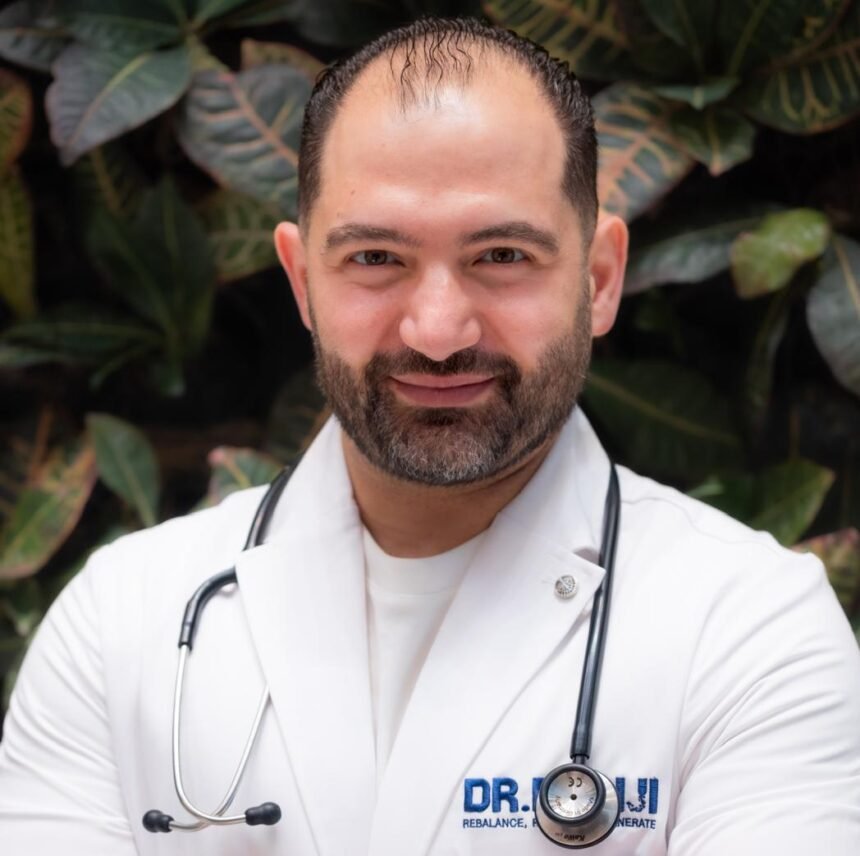
Based in Dubai, Dr. Albonji brings together his background in internal medicine with interests in functional medicine, regenerative medicine, preventive healthcare, and longevity-focused care. With more than a decade of experience in internal medicine, his approach looks beyond individual symptoms and considers the wider factors that may influence a person’s health over time.
His philosophy is straightforward but increasingly relevant: healthcare should not only respond to illness. It should also focus on understanding the individual, identifying potential risks, and supporting better health decisions before problems become more serious.
From Internal Medicine to Longevity Medicine
Dr. Albonji’s journey into longevity medicine is built on a strong foundation in conventional medical practice.
He earned his medical degree from Lebanese University before completing his residency training in internal medicine at the University of Balamand. His professional experience has also included work at the American University of Beirut Medical Center, including exposure to hematology and oncology.
These experiences helped shape a clinical perspective based on understanding how different aspects of the body can interact.
Internal medicine requires physicians to look beyond a single complaint. A patient experiencing fatigue, changes in weight, sleep difficulties, reduced energy, or metabolic concerns may have several factors contributing to the way they feel.
That broader way of thinking naturally connects with the principles of functional and longevity medicine.
Today, Dr. Albonji’s work explores areas including metabolic health, hormonal balance, advanced diagnostics, preventive medicine, regenerative approaches, and long-term health optimization.
Dr. Wajdi Albonji Looking Beyond Symptoms
One of the defining ideas behind Dr. Albonji’s approach is the importance of understanding contributing factors rather than focusing exclusively on symptoms.
Human health is rarely straightforward. Genetics, nutrition, lifestyle, sleep, stress, environment, metabolic health, hormones, existing medical conditions, and other factors can all influence how an individual feels and functions.
Two people can experience similar symptoms while having completely different underlying circumstances.
This makes individualized assessment particularly important.
A person experiencing low energy, for example, may have very different needs from another individual reporting the same concern. Instead of assuming that one solution will work for everyone, a more comprehensive assessment can help establish a clearer picture of the individual’s health.
This perspective is central to the growing conversation around personalized medicine.
For Dr. Albonji, the objective is to understand the bigger picture and use that understanding to guide appropriate medical decisions.
Why Longevity Medicine Is Gaining Attention
Longevity medicine has become one of the most discussed areas of modern healthcare, but the concept is about much more than simply living longer.
Increasingly, the focus is on healthspan, meaning the years a person can remain healthy, active, independent, and able to maintain a strong quality of life.
People are becoming more interested in maintaining physical strength, cognitive function, metabolic health, mobility, energy, and overall wellbeing as they age.
This has changed the way many people think about healthcare.
Instead of waiting for a significant health problem to appear, individuals are increasingly interested in understanding their health earlier and identifying areas that may require attention.
Preventive care, lifestyle choices, nutrition, exercise, sleep, metabolic health, body composition, hormonal health, and medical risk factors can all contribute to this wider picture.
Dr. Albonji’s work sits within this evolving approach, where prevention and personalized assessment become important parts of long-term healthcare.
Personalization at the Heart of Care
There is no single longevity formula that can be applied to everyone.
Age alone does not determine a person’s health. Two individuals of the same age may have completely different medical histories, lifestyles, genetics, health risks, goals, and levels of physical activity.
This is why personalization is such an important part of modern longevity care.
Rather than beginning with a predetermined treatment, the process should begin with understanding the patient.
Medical history, symptoms, lifestyle, existing health conditions, laboratory findings, metabolic markers, and other relevant clinical information can help physicians develop a clearer understanding of an individual’s needs.
The objective is not necessarily to introduce more treatments. It is to determine what is medically appropriate for the person in front of the physician.
This becomes especially important in an era when social media has made health trends, supplements, testing methods, and emerging therapies more accessible than ever.
Innovation can create valuable opportunities, but medical decisions still require careful assessment and professional guidance.
The Importance of Metabolic and Hormonal Health
Metabolic and hormonal health are increasingly discussed within preventive and longevity medicine.
Metabolism influences many essential functions within the body, including blood sugar regulation, energy management, body composition, and cardiovascular health.
Hormones can also influence several aspects of physical and mental wellbeing.
Dr. Albonji considers these areas as part of a broader clinical picture rather than treating them as isolated concerns.
This is important because a strategy that may be suitable for one individual may not necessarily be appropriate for another.
The growing popularity of online health trends has also made accurate medical interpretation more important. Information can spread quickly, but not every popular treatment or wellness claim has the same level of clinical evidence behind it.
For that reason, proper evaluation, appropriate testing, evidence-based decision-making, and medical supervision remain essential.
Exploring Regenerative Medicine and Emerging Therapies
Regenerative medicine and peptide-based therapies have attracted considerable interest as healthcare continues to explore new approaches to health and aging.
Dr. Albonji’s professional interests include regenerative medicine and peptides as part of the broader longevity landscape.
However, emerging therapies require thoughtful medical consideration.
Their suitability depends on several factors, including the individual patient’s circumstances, the therapy being considered, available evidence, potential benefits and risks, and relevant medical and regulatory standards.
This balance between innovation and responsibility is particularly important in longevity medicine.
The field is developing rapidly, and new ideas continue to emerge. At the same time, responsible healthcare requires physicians to distinguish between promising developments and treatments that are genuinely appropriate for a particular patient.
For Dr. Albonji, innovation is therefore most meaningful when it remains connected to sound clinical judgment.
Putting the Human Being Behind the Data
Technology is transforming the healthcare experience.
Advanced diagnostics, laboratory testing, wearable technology, medical imaging, and health data can provide physicians and patients with more information than ever before.
But information alone does not create good healthcare.
Patients rarely arrive with only one concern. Someone may experience poor sleep alongside reduced energy, changes in weight, stress, difficulty recovering from exercise, or questions about their metabolic or hormonal health.
The challenge is understanding how those concerns may connect.
This is where the human role of medicine remains essential.
For Dr. Albonji, patient-centered care means looking beyond numbers and test results to understand the person behind them. A medical strategy should consider the individual’s circumstances, needs, health status, and long-term objectives.
As healthcare becomes increasingly technology driven, maintaining this human connection will remain critical.
Dubai’s Growing Role in Longevity and Wellness
Dubai has emerged as a major international destination for healthcare, wellness, technology, and medical innovation.
Its diverse population brings together people from different countries, cultures, lifestyles, and healthcare backgrounds. This creates an environment where new approaches to preventive health and wellness can develop alongside established medical practices.
The city’s growing healthcare ecosystem also provides opportunities for specialists working in emerging areas such as longevity medicine.
Dr. Albonji’s work in Dubai places him within this wider transformation as interest in preventive healthcare, performance, wellness, and healthy aging continues to grow across the region.
The increasing use of digital healthcare has also expanded the ways patients can access medical expertise, creating new possibilities for communication and continuity of care.
A Medical Journey Built on Continuous Learning
Longevity medicine is still developing.
Scientific understanding continues to change, diagnostic technologies are advancing, and emerging therapies are being studied and evaluated. Some approaches gain stronger evidence over time, while others require further research or reconsideration.
For physicians working in this field, continuous education is therefore essential.
Dr. Albonji’s transition from internal medicine toward functional, regenerative, preventive, and longevity-focused healthcare reflects the broader evolution taking place within medicine itself.
Importantly, longevity medicine does not have to compete with conventional medicine.
Its strongest future may lie in combining the rigorous foundations of established clinical practice with greater attention to prevention, personalization, lifestyle, early risk identification, and long-term health.
Looking Toward the Future
The future of healthcare will not be defined by a single treatment or technology.
Instead, it is likely to be shaped by better information, earlier intervention, responsible innovation, and a deeper understanding of individual health.
This is where Dr. Wajdi Albonji’s journey becomes particularly relevant.
His foundation in internal medicine provides a strong clinical base, while his work across functional, regenerative, preventive, and longevity medicine reflects a broader vision of healthcare.
The objective is not simply to respond when something goes wrong. It is to encourage a more proactive understanding of health and help individuals make informed decisions about their long-term wellbeing.
Longevity, ultimately, is not only about adding more years to life.
It is about making those years healthier, more active, more independent, and more meaningful.
As medicine continues to evolve, Dr. Albonji’s work reflects an important shift in the healthcare conversation: from treating disease after it appears to thinking more carefully about health before it becomes a problem.
And at the center of that shift remains one enduring principle.
Better healthcare begins with understanding the person behind the patient.
Follow Dr Wajdi Albonji on Instagram
Read More – Freelancing in the UAE Guide Every Beginner Should Read