


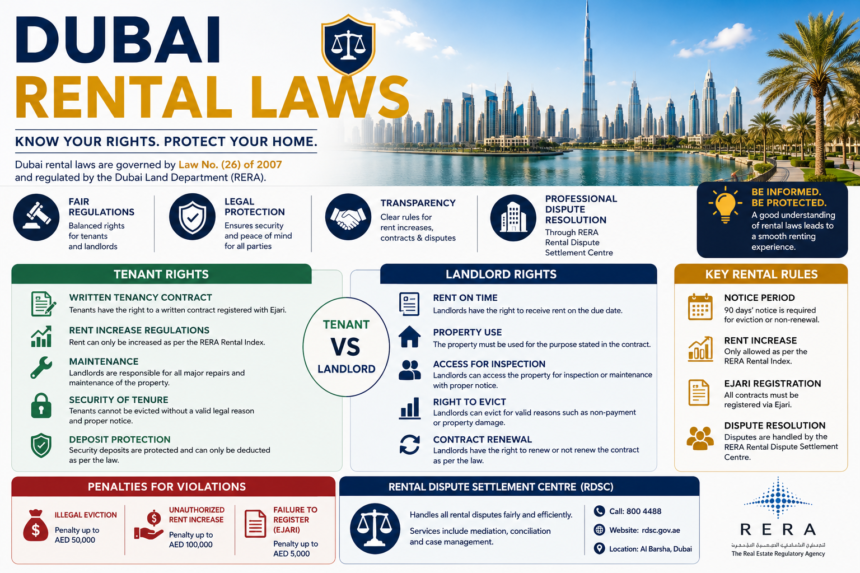
Dubai Rental Laws Explained
Renting a home in Dubai is a straightforward process when both tenants and landlords understand their legal rights and responsibilities. However, many people are unfamiliar with the rules governing tenancy agreements, rent increases, security deposits, and dispute resolution. This Dubai Rental Laws Explained guide provides a clear overview of the key regulations that apply to residential rentals in Dubai. Whether you are renting your first apartment, relocating to the city, or managing an investment property, understanding these laws will help you avoid disputes and enjoy a smoother rental experience.
- Why Understanding Dubai Rental Laws Is Important
- What Is a Tenancy Contract?
- Dubai Rental Laws Explained: Understanding Tenant Rights
- Landlord Responsibilities
- Tenant Responsibilities
- Understanding Ejari Registration
- Rent Increases
- Security Deposits
- Maintenance Responsibilities
- Common Rental Disputes and How to Avoid Them
- Tips for First-Time Renters in Dubai
- Rental Checklist Before Signing the Lease
- Frequently Asked Questions
- Conclusion
Why Understanding Dubai Rental Laws Is Important
Knowing the rental rules protects both landlords and tenants throughout the tenancy period.
Understanding the law helps you:
- Avoid legal disputes.
- Understand your contractual obligations.
- Protect your financial interests.
- Handle rent increases correctly.
- Complete tenancy procedures properly.
- Build a positive landlord-tenant relationship.
A well-informed renter or property owner is more likely to avoid misunderstandings.
What Is a Tenancy Contract?
A tenancy contract is a legally binding agreement between the landlord and tenant.
It generally includes:
- Property details.
- Rental amount.
- Payment schedule.
- Lease duration.
- Security deposit.
- Maintenance responsibilities.
- Renewal conditions.
- Notice period.
Both parties should carefully review every clause before signing the agreement.
Dubai Rental Laws Explained: Understanding Tenant Rights
Dubai law provides tenants with important legal protections.
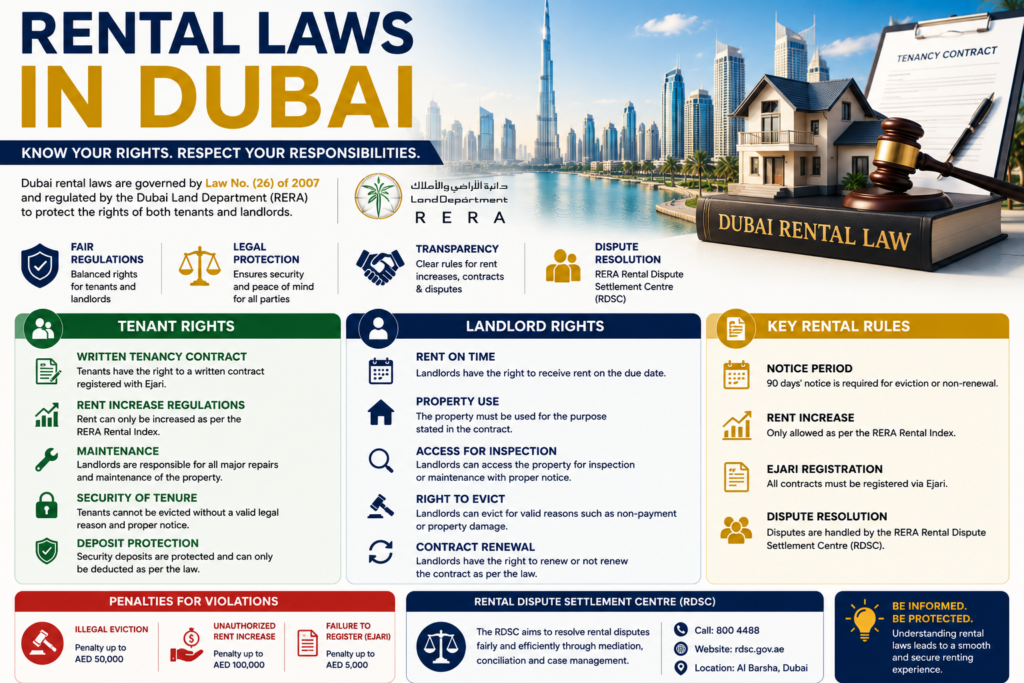
Some key tenant rights include:
- Living in a safe and habitable property.
- Receiving a valid tenancy contract.
- Protection from unlawful eviction.
- Proper notice before certain contract changes.
- Fair treatment during the tenancy.
- Access to agreed property facilities.
Understanding these rights helps tenants protect themselves throughout the rental period.
Landlord Responsibilities
Landlords also have legal obligations toward their tenants.
Their responsibilities commonly include:
- Providing a livable property.
- Completing agreed maintenance.
- Respecting the tenancy agreement.
- Following legal procedures for rent increases.
- Issuing necessary documentation.
- Maintaining shared property obligations where applicable.
A responsible landlord contributes to a successful tenancy experience.
Tenant Responsibilities
Tenants also have duties under the tenancy agreement.
These often include:
- Paying rent on time.
- Maintaining the property responsibly.
- Following community rules.
- Reporting maintenance issues.
- Avoiding unauthorized property modifications.
- Respecting neighbors.
Meeting these responsibilities helps prevent disputes with the landlord.
Understanding Ejari Registration
Ejari is an important part of Dubai’s rental system.
It helps:
- Register tenancy contracts.
- Create official rental records.
- Support government services.
- Improve transparency.
- Protect tenant and landlord rights.
Many essential services require a valid Ejari registration.
Rent Increases
Rent adjustments are regulated and cannot always be made freely.
Factors affecting rent increases may include:
- Existing tenancy terms.
- Applicable regulations.
- Market rental values.
- Required notice periods.
Tenants should review any proposed increase carefully and understand their contractual rights.
Security Deposits
Most rental agreements require a refundable security deposit before moving in.
The deposit generally helps cover:
- Property damage beyond normal wear and tear.
- Outstanding utility obligations where applicable.
- Unpaid contractual responsibilities.
Both parties should document the property’s condition before move-in to reduce future disagreements.“laws”
Rental Agreement Renewal
At the end of the tenancy period, both the landlord and tenant should discuss whether they wish to renew the rental agreement.
Before renewing the contract, consider:
- Updated rental terms.
- Lease duration.
- Payment schedule.
- Maintenance responsibilities.
- Any agreed contract amendments.
- Required notice periods.
Reviewing the agreement carefully before renewal helps prevent misunderstandings during the next tenancy period.
Maintenance Responsibilities
Understanding who is responsible for property maintenance is essential for avoiding disputes.
Maintenance responsibilities may include:
Landlord Responsibilities
- Major structural repairs.
- Building-related maintenance.
- Essential property systems.
- Agreed repairs under the tenancy contract.
Tenant Responsibilities
- Keeping the property clean.
- Reporting maintenance issues promptly.
- Minor day-to-day maintenance where applicable.
- Using the property responsibly.
Always review the tenancy agreement to understand how maintenance obligations are allocated.
Common Rental Disputes and How to Avoid Them
Most rental disagreements can be prevented through clear communication and proper documentation.
Common disputes include:
- Rent payment delays.
- Security deposit deductions.
- Maintenance responsibilities.
- Property damage claims.
- Lease renewal disagreements.
- Early termination issues.
To reduce the risk of disputes:
- Keep written records of important communications.
- Document the property’s condition before moving in.
- Save copies of all payment receipts.
- Read the tenancy agreement carefully before signing.
- Communicate concerns promptly.
A proactive approach often helps resolve issues before they become serious.
Tips for First-Time Renters in Dubai
If you are renting for the first time, following these practical tips can make the experience much smoother.
- Read the tenancy agreement carefully.
- Register your tenancy through Ejari.
- Understand your rights and obligations.
- Budget for rent, utilities, and other living expenses.
- Inspect the property before moving in.
- Ask questions if any contract terms are unclear.
- Keep copies of all important documents.
Being well prepared helps you enjoy a hassle-free rental experience.
Rental Checklist Before Signing the Lease
Use this checklist before committing to any rental property.
| Checklist Item | Completed |
|---|---|
| Reviewed the tenancy contract | □ |
| Verified the rental amount | □ |
| Inspected the property | □ |
| Understood maintenance responsibilities | □ |
| Confirmed Ejari registration | □ |
| Reviewed security deposit terms | □ |
| Checked payment schedule | □ |
| Kept copies of all documents | □ |
Following this checklist helps ensure that you enter your tenancy with confidence.
Frequently Asked Questions
What is Ejari?
Ejari is the official system used to register tenancy contracts in Dubai, helping create a transparent and legally recognized rental process.
Can landlords increase the rent at any time?
No. Rent increases are subject to applicable regulations, notice requirements, and the terms of the tenancy agreement.
Is a written tenancy contract necessary?
Yes. A written tenancy contract clearly outlines the rights and responsibilities of both the landlord and the tenant.
Who is responsible for property maintenance?
Responsibility depends on the tenancy agreement and the nature of the repair. Major maintenance is generally handled by the landlord, while tenants are expected to take reasonable care of the property.
What should I do before signing a rental agreement?
Review the contract carefully, inspect the property, understand all financial obligations, confirm the rental terms, and keep copies of every signed document.
Conclusion
Understanding Dubai Rental Laws Explained is essential for anyone renting or managing a property in Dubai. Knowing your rights and responsibilities, understanding tenancy agreements, registering your contract through Ejari, and following the correct procedures for rent, maintenance, and renewals can help create a smooth and legally compliant rental experience. Both tenants and landlords benefit from clear communication and a thorough understanding of their contractual obligations.
Whether you are renting your first apartment or managing multiple investment properties, this Dubai Rental Laws Explained guide provides the knowledge needed to make informed decisions and avoid unnecessary disputes. By staying informed, maintaining proper documentation, and respecting the tenancy agreement, you can enjoy a secure, transparent, and stress-free rental experience in Dubai.
Do follow us on Instagram
Read More – Furnished vs Unfurnished Apartments: Best Ultimate Guide to Choosing Smartly