

Want a Gulf Engineering Career? These Roles Stand Out
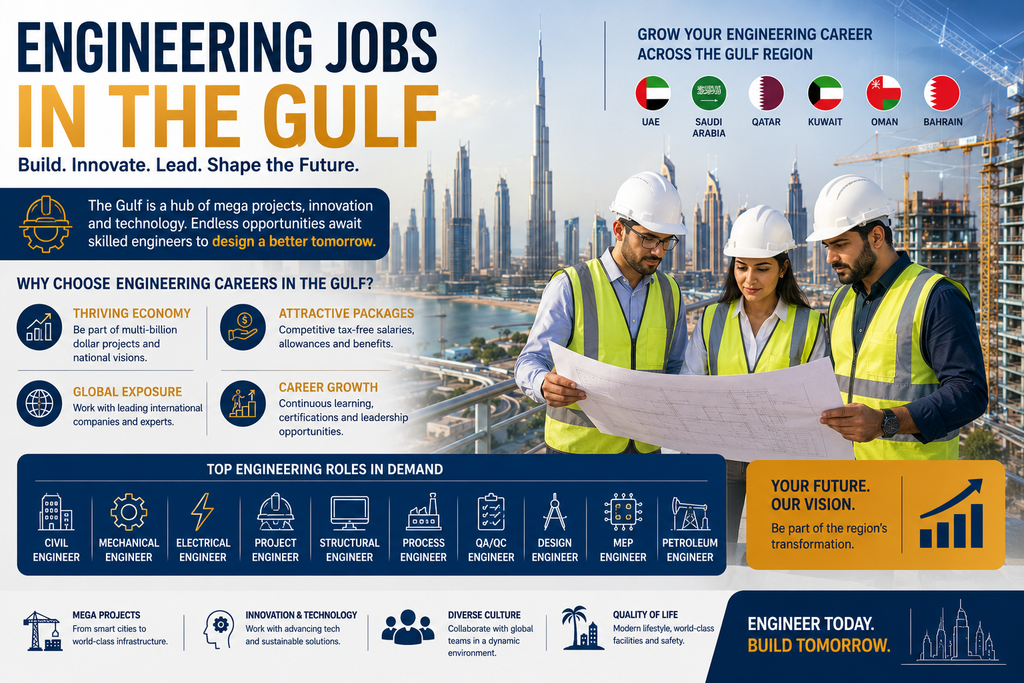
The Gulf has become one of the world’s most important regions for engineers. From high rise developments and transport infrastructure to energy projects, data centres, industrial expansion and smart cities, engineering sits at the centre of many of the GCC’s largest economic ambitions.
- Why Engineering Jobs in Gulf Continue to Grow
- 1. Civil Engineers
- 2. Mechanical Engineers
- 3. Electrical Engineers
- 4. MEP Engineers
- 5. Structural Engineers
- 6. Construction Project Managers
- 7. Oil and Gas Engineers
- 8. LNG and Process Engineers
- 9. Renewable Energy Engineers
- 10. BIM and Digital Engineering Professionals
- 11. Data Centre Engineers
- 12. Industrial and Manufacturing Engineers
- Engineering Jobs in Gulf at a Glance
- Saudi Arabia Is One of the Strongest Engineering Markets
- UAE Offers a More Diversified Engineering Market
- Qatar Remains Important for Energy and Infrastructure
- Oman Offers Engineering Opportunities in Energy and Logistics
- Kuwait Remains Strong in Energy Engineering
- Bahrain Has a Smaller but Specialised Market
- Engineering Salaries in the Gulf
- Total Compensation Matters More Than Basic Salary
- GCC Experience Can Increase Your Value
- Engineering Software Skills Can Improve Employability
- Project Controls Skills Are Growing in Importance
- Professional Certifications Can Strengthen a Profile
- Fresh Graduates Need a Different Strategy
- Experienced Engineers Should Specialise
- How to Find Engineering Jobs in Gulf Countries
- Avoid Fake Gulf Engineering Job Offers
- The Future of Engineering Jobs in Gulf
- Frequently Asked Questions
- Conclusion
For professionals exploring Engineering Jobs in Gulf, 2026 presents a diverse market. Saudi Arabia continues to generate demand through major infrastructure and industrial projects. The UAE is seeing hiring across construction, technology and energy, while Qatar, Oman, Kuwait and Bahrain remain important for specialised engineering roles.
Current hiring reports show particularly strong demand around construction, project management, energy, infrastructure and digital engineering. In the UAE, recruiters identified construction, technology and energy among the leading hiring sectors for 2026, with project managers and civil engineers among the roles employers were expected to prioritise.
Saudi Arabia is another major centre of activity. Its engineering market continues to be influenced by Vision 2030, giga projects, industrial expansion and large scale infrastructure investment.
That combination means engineers with the right technical experience can find opportunities across several very different industries.
Why Engineering Jobs in Gulf Continue to Grow
Engineering demand across the GCC is being supported by several forces at once.
These include:
- Major infrastructure development
- Real estate construction
- Oil and gas investment
- Renewable energy
- Industrial manufacturing
- Smart cities
- Data centres
- Transport
- Water infrastructure
- Digital transformation
The UAE offers a good example of this diversity.
Recruitment activity in 2026 continues across construction, logistics, real estate, technology and energy related sectors.
Abu Dhabi is also supporting major engineering demand through energy investment. ADNOC announced AED 200 billion in planned project awards for 2026 to 2028 across its value chain, creating opportunities for engineering, procurement and construction companies as well as manufacturers and technical professionals.
For job seekers, the important point is that Gulf engineering is no longer limited to traditional building construction.
1. Civil Engineers
Civil engineering remains one of the most important career paths across the region.
Civil engineers can work on:
Roads
Bridges
Residential developments
Commercial buildings
Drainage
Utilities
Transport infrastructure
Saudi Arabia currently offers particularly strong project driven demand.
Major developments linked with NEOM, Qiddiya, Red Sea destinations and other large programmes continue to require civil engineers across design, site supervision and project delivery.
The UAE also continues recruiting civil professionals as construction and infrastructure investment remains active.
Best for: Engineers with experience in construction, infrastructure and site delivery.
2. Mechanical Engineers
Mechanical engineering remains highly versatile in the Gulf.
Professionals can work across:
Building services
HVAC
Oil and gas
Industrial plants
Manufacturing
Facilities management
Energy
Large commercial developments rely heavily on mechanical systems.
In the GCC climate, HVAC is especially important.
Hotels, hospitals, malls, data centres and office towers all need reliable cooling systems.
Mechanical engineers who understand energy efficiency alongside conventional building services can therefore build particularly valuable profiles.
3. Electrical Engineers
Electrical engineering supports almost every major Gulf development.
Career areas can include:
Power distribution
Building systems
Substations
Utilities
Renewable energy
Industrial plants
Data centres
Saudi Arabia’s infrastructure, energy and industrial projects continue to create demand for electrical professionals, while UAE energy and construction investment supports similar opportunities.
Engineers with experience in power systems, controls and mission critical facilities may be especially valuable.
4. MEP Engineers
MEP stands for mechanical, electrical and plumbing.
MEP engineers are central to Gulf construction because modern buildings are technically complex.
A high rise building may require:
Cooling
Power
Water
Fire protection
Ventilation
Building controls
The MEP engineer needs to ensure these systems work together.
This creates career opportunities across design consultancies, contractors, developers and project management companies.
Engineers with large project experience can become particularly valuable because coordination mistakes can become extremely expensive later in construction.
5. Structural Engineers
Structural engineers focus on ensuring buildings and infrastructure remain safe and stable.
Gulf cities contain some of the world’s most ambitious buildings.
This creates demand for professionals experienced in:
Concrete structures
Steel structures
Foundations
High rise design
Structural analysis
Seismic considerations
Structural engineering can be particularly attractive for professionals who prefer technical design over daily site management.
However, strong local code knowledge and consultancy experience can significantly improve employability.
6. Construction Project Managers
Project management is one of the most important engineering related career areas in the GCC.
Saudi Arabia’s project market in particular continues to require experienced programme and project managers.
Current industry reporting shows strong demand for project management and PMC professionals supporting the Kingdom’s major developments.
Project managers may be responsible for:
Budget
Schedule
Contractors
Consultants
Risk
Quality
Client communication
Engineers who move into project management need strong commercial and leadership skills alongside technical knowledge.
A certification such as PMP can support a profile, but actual project delivery experience usually matters more.
7. Oil and Gas Engineers
Energy remains one of the GCC’s most important industries.
Career areas can include:
Petroleum engineering
Reservoir engineering
Process engineering
Mechanical engineering
Pipeline engineering
Drilling engineering
Project engineering
The UAE remains a major energy market.
ADNOC’s AED 200 billion project award programme for 2026 to 2028 shows the continuing scale of investment across its operations.
Saudi Arabia, Kuwait, Qatar and Oman also offer energy related engineering opportunities.
These roles can be highly specialised and may require several years of relevant experience.
8. LNG and Process Engineers
Qatar remains one of the world’s most important LNG markets.
Process engineers, mechanical engineers and project professionals can therefore find specialist opportunities connected with gas processing and energy infrastructure.
However, 2026 has also demonstrated how regional geopolitics can influence the energy market. Qatar has experienced disruptions linked with regional conflict while continuing to pursue long term LNG expansion plans.
For engineers, this illustrates an important reality.
High value energy careers can offer strong opportunities but are also closely connected with global markets and geopolitical conditions.
9. Renewable Energy Engineers
Renewable energy is increasingly important across the GCC.
Career opportunities can include:
Solar power
Battery storage
Grid integration
Energy efficiency
Hydrogen
Electrical design
Sustainability
The UAE and Saudi Arabia are both investing in new energy technologies while maintaining major traditional energy sectors.
For electrical and mechanical engineers, renewable energy can provide a natural extension of existing expertise.
A power systems engineer, for example, can build additional knowledge around solar integration or storage.
10. BIM and Digital Engineering Professionals
Construction is becoming increasingly digital.
Building Information Modelling allows engineers and project teams to coordinate systems before construction.
Roles can include:
BIM Engineer
BIM Coordinator
BIM Manager
Digital Engineering Manager
Revit Specialist
Current GCC hiring data shows construction and engineering recruitment increasingly focused on digital engineering and project controls.
This makes BIM one of the most useful additional skills for younger engineers.
However, software knowledge works best when combined with real engineering understanding.
Knowing Revit does not automatically make someone a strong engineer.
11. Data Centre Engineers
Data centres are becoming increasingly important as cloud computing and artificial intelligence expand.
These facilities require extremely reliable systems.
Engineering roles can involve:
Electrical systems
Cooling
Backup power
Fire protection
Building management systems
Reliability
Recruitment reporting in the UAE has already identified data centre management and related technical capabilities among important areas of 2026 hiring.
For mechanical and electrical engineers, this can become a high value specialisation.
Data centres cannot tolerate normal levels of building downtime.
That increases the importance of engineers who understand mission critical systems.
12. Industrial and Manufacturing Engineers
Manufacturing is also becoming more important across parts of the Gulf.
Saudi Arabia continues expanding its industrial base.
Recent 2026 activity included new industrial licences and factory openings, adding demand for engineers across manufacturing and operations.
Career areas may include:
Industrial engineering
Production engineering
Maintenance
Automation
Quality
Process improvement
The UAE is also encouraging local manufacturing, particularly through major energy and industrial supply chains.
ADNOC’s 2026 investment programme includes a strong focus on local manufacturing and EPC capabilities.
Engineering Jobs in Gulf at a Glance
| Engineering Career | Strong GCC Markets |
|---|---|
| Civil Engineering | Saudi Arabia, UAE, Qatar |
| Mechanical Engineering | UAE, Saudi Arabia, Qatar |
| Electrical Engineering | UAE, Saudi Arabia |
| MEP Engineering | UAE, Saudi Arabia |
| Structural Engineering | UAE, Saudi Arabia |
| Project Management | Saudi Arabia, UAE |
| Oil and Gas Engineering | UAE, Saudi Arabia, Kuwait, Oman |
| LNG Engineering | Qatar |
| Renewable Energy | UAE, Saudi Arabia, Oman |
| BIM and Digital Engineering | UAE, Saudi Arabia |
| Data Centre Engineering | UAE, Saudi Arabia |
| Industrial Engineering | Saudi Arabia, UAE |
Saudi Arabia Is One of the Strongest Engineering Markets
Saudi Arabia deserves particular attention.
Vision 2030 continues to reshape demand.
Current 2026 reporting highlights active engineering opportunities linked with NEOM, Qiddiya, Red Sea projects and other major developments.
Demand can include:
Civil engineers
Project managers
Planners
Quantity surveyors
Mechanical engineers
Electrical engineers
PMC professionals
But job seekers should also understand professional registration.
Engineering professionals in Saudi Arabia may need Saudi Council of Engineers membership or accreditation depending on the position and work activity. Current recruitment guides continue to identify SCE membership as an important requirement in engineering consultancy and project management roles.
UAE Offers a More Diversified Engineering Market
The UAE provides opportunities across several industries.
Dubai is particularly strong in:
Construction
Real estate
Data centres
Logistics
Smart infrastructure
Abu Dhabi offers major opportunities in:
Energy
Infrastructure
Industrial development
Utilities
Technology
Recruiters continue to identify construction, technology and energy among the strongest hiring areas in the UAE during 2026.
This diversity can make the UAE attractive to engineers who want career mobility between sectors.
Qatar Remains Important for Energy and Infrastructure
Qatar has a smaller employment market but remains strategically important.
Energy and LNG are particularly significant.
Engineering opportunities can exist across:
Process engineering
Mechanical engineering
Electrical engineering
Infrastructure
Operations
Project management
However, candidates should always evaluate current conditions as well as long term opportunities.
The disruptions affecting Qatar’s LNG sector in 2026 demonstrate why energy professionals need to understand geopolitical risk alongside technical demand.
Oman Offers Engineering Opportunities in Energy and Logistics
Oman has a smaller engineering market but remains attractive in selected fields.
Career opportunities can exist in:
Oil and gas
Logistics
Ports
Infrastructure
Renewable energy
Industrial operations
Green hydrogen and clean energy investment could also create longer term technical opportunities.
For some professionals, Oman may provide a quieter lifestyle compared with Dubai or Riyadh.
Kuwait Remains Strong in Energy Engineering
Kuwait continues to be an important market for engineers connected with:
Oil
Refining
Petrochemicals
Utilities
Infrastructure
The total number of jobs may be lower than Saudi Arabia or the UAE, but experienced energy specialists can still find valuable opportunities.
Applicants should pay attention to localisation policies and employer specific requirements.
Bahrain Has a Smaller but Specialised Market
Bahrain’s engineering market is more compact.
Opportunities can exist in:
Industrial facilities
Construction
Utilities
Infrastructure
Oil and gas
Manufacturing
The smaller size means job seekers may need a more targeted strategy.
Rather than applying broadly, focus on companies directly connected with your speciality.
Engineering Salaries in the Gulf
There is no single GCC engineering salary.
Compensation varies according to:
Country
Discipline
Experience
Employer
Project scale
Technical specialisation
Responsibility
Current Saudi recruitment benchmarks, for example, show wide salary differences between civil engineers, electrical engineers and project managers depending on experience and project type.
A junior site engineer and a senior programme director cannot be compared meaningfully.
Candidates should therefore research the exact role.
Total Compensation Matters More Than Basic Salary
A Gulf employment package may include:
Basic salary
Housing allowance
Transport
Medical insurance
Annual flights
Performance bonus
End of service benefits
This can dramatically change the real value of the offer.
A slightly lower salary with accommodation provided may generate greater savings than a higher salary in an expensive city with no housing support.
Always compare the complete package.
GCC Experience Can Increase Your Value
Employers often value professionals who already understand regional projects.
GCC experience may suggest familiarity with:
Contractors
Consultants
Regulations
Climate conditions
Local procurement
Client expectations
This does not mean newcomers cannot enter the market.
Strong international experience can still be highly valuable.
But candidates need to explain clearly how their expertise transfers to Gulf projects.
Engineering Software Skills Can Improve Employability
Useful software varies by discipline.
Examples include:
AutoCAD
Revit
Civil 3D
ETABS
SAP2000
Primavera P6
Navisworks
BIM platforms
Engineers should focus on practical proficiency.
Do not list ten programmes if you can use only one confidently.
Employers prefer someone who can immediately contribute to a project.
Project Controls Skills Are Growing in Importance
Large Gulf projects need engineers and specialists who understand schedule, cost and performance.
Roles can include:
Planning Engineer
Cost Engineer
Project Controls Manager
Scheduler
Current GCC hiring reports point toward increased demand around project controls and digital engineering rather than broad volume recruitment alone.
Primavera P6 experience can be especially useful for project planning careers.
Professional Certifications Can Strengthen a Profile
Depending on the role, useful credentials can include:
PMP
LEED
NEBOSH
Chartered Engineer status
BIM certifications
Saudi Council of Engineers accreditation
Certifications should support experience.
A project manager with major project delivery experience and PMP certification is stronger than someone with only the certificate.
Fresh Graduates Need a Different Strategy
Fresh engineering graduates face strong competition.
They should focus on:
Internships
Graduate programmes
Software skills
Site experience
Practical projects
Strong communication
Do not chase only high salary roles.
The first goal should be gaining strong technical exposure.
A junior position with a respected consultancy or contractor can create experience that becomes much more valuable later.
Experienced Engineers Should Specialise
A senior engineer should avoid sounding too general.
Instead of:
Mechanical Engineer with 12 years experience
consider:
Mechanical Engineer with 12 years of GCC experience delivering HVAC systems for hospitals, data centres and high rise developments.
The second description tells employers exactly where the candidate can add value.
Specialisation becomes increasingly important at senior levels.
How to Find Engineering Jobs in Gulf Countries
Job seekers should use several channels.
These include:
Employer career pages
Engineering consultancies
Major contractors
Specialist recruitment agencies
Professional associations
Project networks
Saudi Arabia and the UAE also have extensive networks of global engineering consultancies and project management companies.
Building relationships with recruiters specialising in construction, energy and infrastructure can improve visibility.
Avoid Fake Gulf Engineering Job Offers
Engineering professionals applying internationally can be targeted by scams.
Warning signs include:
Guaranteed jobs
No proper interview
Unusually high salaries
Upfront visa payments
Requests for recruitment fees through personal accounts
Fake documents using major company names
Always verify the vacancy through the employer’s official channels.
Do not resign from your existing position until the offer and employer are properly verified.
The Future of Engineering Jobs in Gulf
Engineering across the Gulf is changing.
Traditional civil, mechanical and electrical skills remain essential.
But new projects increasingly require engineers who understand:
Digital delivery
Automation
Sustainability
Data centres
AI infrastructure
Renewable energy
Project controls
Current GCC hiring trends already show the construction and engineering market moving toward more targeted recruitment around digital engineering and specialised project capabilities.
This shift is important.
The Gulf does not simply need more engineers.
It increasingly needs engineers who can handle more complex systems.
Frequently Asked Questions
Are Engineering Jobs in Gulf in demand in 2026?
Yes. Current hiring activity remains strong across construction, energy, infrastructure and digital engineering, particularly in Saudi Arabia and the UAE.
Which Gulf country is best for engineering jobs?
Saudi Arabia currently offers significant project driven opportunities, while the UAE provides one of the most diversified engineering markets. Qatar remains particularly important for LNG and energy roles.
Which engineering fields are most useful in the GCC?
Civil, mechanical, electrical, MEP, project management, energy, BIM, project controls, data centre and industrial engineering are all important career areas.
Do engineers need Saudi Council of Engineers registration?
Many engineering roles in Saudi Arabia require or strongly value professional registration with the Saudi Council of Engineers, particularly in consultancy and regulated technical positions.
Is the UAE hiring engineers in 2026?
Yes. Recruiters continue to report demand across construction, energy, real estate, logistics and technology related sectors.
Are data centre engineering jobs growing?
Yes. Expansion in cloud and AI infrastructure is increasing the importance of specialised electrical, mechanical and mission critical engineering skills.
Conclusion
Engineering Jobs in Gulf remain closely connected with the region’s long term transformation.
Saudi Arabia is creating demand through infrastructure, industrial expansion and major Vision 2030 projects.
The UAE offers opportunities across construction, energy, utilities, technology and new infrastructure, with major investment plans such as ADNOC’s AED 200 billion project award programme reinforcing demand for technical expertise.
Qatar remains significant in LNG and energy engineering, while Oman, Kuwait and Bahrain provide specialised opportunities across energy, logistics, manufacturing and infrastructure.
But the engineering market is also becoming more selective.
Employers increasingly want professionals who can combine conventional engineering knowledge with digital tools, project controls, sustainability and leadership.
For job seekers, the strongest approach is to build depth rather than chase every vacancy.
Choose a specialisation.
Develop real project experience.
Learn the software relevant to your discipline.
Understand professional registration requirements.
Compare total compensation carefully.
And make sure every job offer is genuine.
The Gulf will continue building ambitious projects.
The engineers most likely to benefit will be those capable of helping turn those ambitions into safe, efficient and technically successful realities.
follow us on Instagram
Read More – Teaching Jobs in Dubai: 12 Amazing Careers for 2026