Amazing Facts About Sea Turtles Depend on Healthy Gulf Coastlines
The coastlines of the Gulf region are home to beautiful beaches, coral reefs, seagrass meadows, mangroves, and many forms of marine life. Among the most fascinating animals living in these waters are sea turtles. These ancient marine reptiles travel through the sea, feed in shallow coastal waters, and return to sandy beaches to lay their eggs.
- 1. Why Gulf Coastlines Matter to Sea Turtles
- 2. Meet the Sea Turtles of the Gulf Region
- 3. Nesting Beaches: Where the Next Generation Begins
- 4. Seagrass Meadows: Natural Feeding Grounds for Green Turtles
- 5. Coral Reefs: A Critical Home for Hawksbill Turtles
- 6. Seven Amazing Facts About Sea Turtles and Healthy Gulf Coastlines
- 7. Five Major Threats to Sea Turtles Along Gulf Coastlines
- 8. How Gulf Countries Are Protecting Sea Turtles
- 9. What Residents, Tourists, and Businesses Can Do
- 10. The Future of Sea Turtles Depends on Healthy Gulf Coastlines
- Conclusion
- Frequently Asked Questions (FAQs)
From the Arabian Gulf to the Gulf of Oman and the Red Sea coast, healthy coastal habitats play an important role in the survival of sea turtles. Countries such as the United Arab Emirates, Oman, Qatar, Saudi Arabia, Bahrain, and Kuwait provide important habitats for different turtle species. Some areas offer nesting beaches, while others provide feeding grounds or places where young turtles can grow.
However, rapid coastal development, marine pollution, fishing activities, artificial lights, and rising sea temperatures can put these habitats under pressure. Protecting sea turtles therefore means protecting the wider coastal environment on which they depend.
So, why are healthy Gulf coastlines so important for sea turtles? How do beaches, seagrass beds, and coral reefs help them survive? And what can governments, businesses, residents, and visitors do to protect them?
This article explores the connection between sea turtles and healthy Gulf coastlines, including seven important facts, five major threats, and practical ways to support marine conservation.
1. Why Gulf Coastlines Matter to Sea Turtles
Sea turtles spend most of their lives in the water, but they cannot complete their life cycle without suitable coastal habitats. Female turtles need safe beaches to lay their eggs, while growing and adult turtles often depend on shallow coastal areas for food and shelter.
The Gulf region contains several kinds of habitat that support these different stages of life.
Sandy beaches provide places where female turtles can come ashore at night, dig nests, and bury their eggs. The sand protects the eggs as they develop.
Seagrass meadows offer feeding grounds for green sea turtles. These underwater plants also provide shelter for fish and other marine animals.
Coral reefs support many marine species and provide important feeding habitats for hawksbill turtles, which eat marine sponges and other reef-associated animals.
Mangroves and coastal lagoons support wider marine ecosystems and can provide shelter or feeding areas for different species.
Clean coastal waters help maintain the conditions needed by turtles and the organisms on which they depend.
These habitats are connected. Damage to one area can affect other parts of the coastal environment. For example, coastal construction may damage a beach, increase sediment in nearby water, and affect seagrass or coral habitats.
The Convention on the Conservation of Migratory Species of Wild Animals identifies the loss of nesting beaches, seagrass beds, coral reefs, and other feeding habitats as major threats to marine turtles.
Protecting Gulf coastlines is therefore not only about saving individual turtles. It is also about keeping the habitats they need healthy and connected.
2. Meet the Sea Turtles of the Gulf Region
Several sea turtle species are found in Gulf-region waters. Their habitats and feeding needs differ, making it important to protect more than one type of coastal environment.
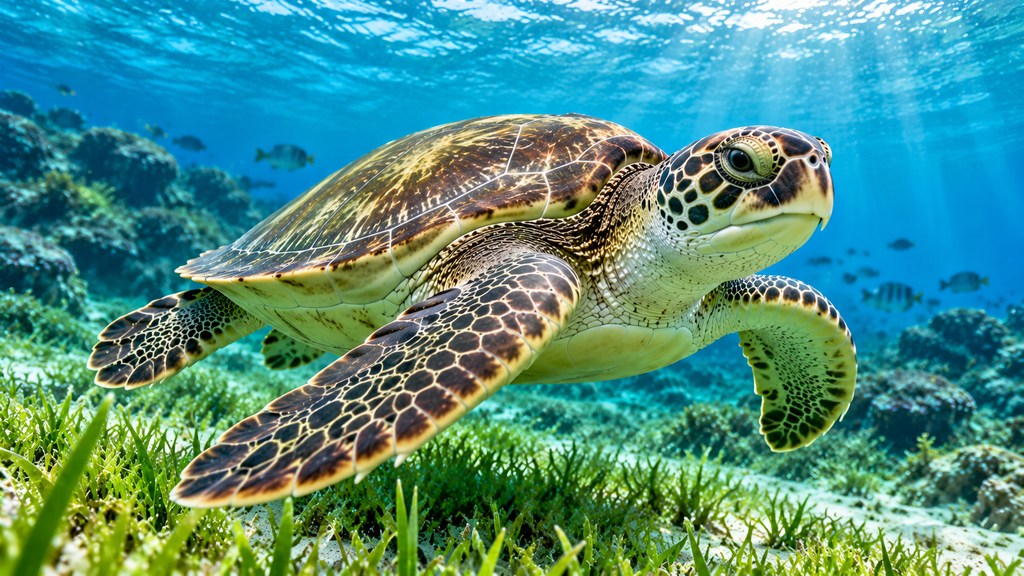
Green sea turtles
Green sea turtles are particularly associated with seagrass meadows and shallow coastal areas. Adult green turtles mainly eat seagrass and algae, making healthy underwater plant beds important feeding grounds.
The Environment Agency – Abu Dhabi identifies green turtles in UAE waters, including the Marawah Marine Biosphere Reserve, where these animals use protected marine habitats. The agency also highlights threats such as coastal development, abandoned fishing nets, marine debris, and vessel strikes.
Key Facts
- Size & Weight: Adults grow to about 3 to 4 feet (0.9 to 1.2 meters) in length and typically weigh between 135 to 190 kg (300 to 400 lbs).
- Diet: Hatchlings are omnivorous, but adults are primarily herbivorous, grazing on seagrasses and algae in shallow coastal waters. This “mowing” action helps keep seagrass beds healthy.
- Lifespan: They are long-lived, with estimated lifespans of 70 to over 100 years.
- Habitat & Range: Found globally in tropical and subtropical oceans across more than 140 countries, favoring shallow bays, lagoons, and coral reefs.
- Nesting: Females travel hundreds or thousands of miles to return to the exact sandy beaches where they hatched decades earlier to lay their eggs.
- Conservation Status: Evaluated as Least Concern globally on the IUCN Red List following conservation progress, though they still face regional threats.
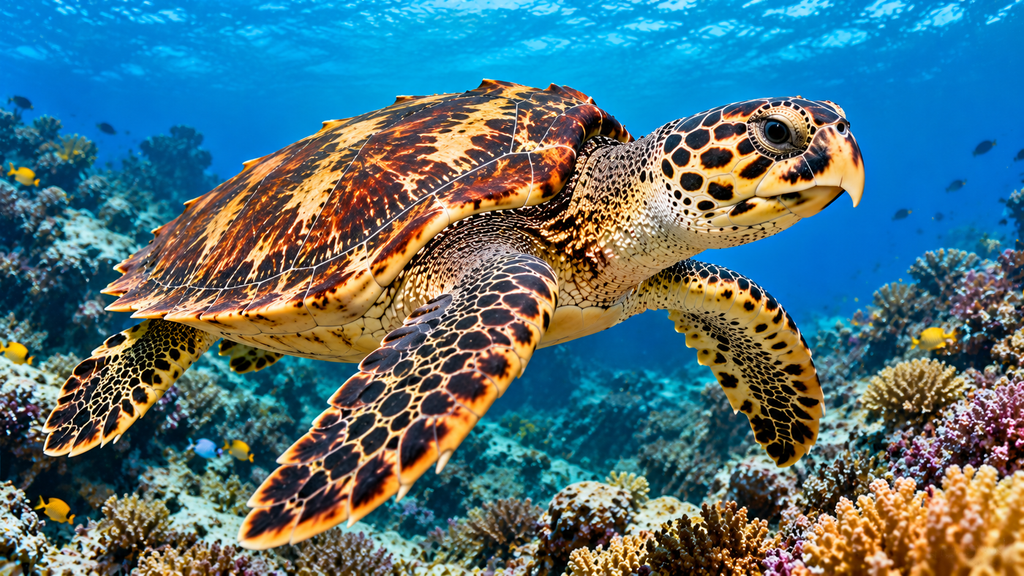
Hawksbill sea turtles
Hawksbill turtles are closely associated with coral reef habitats. Their narrow, pointed beaks help them reach food in reef spaces, particularly marine sponges.
They also use sandy beaches for nesting. Hawksbill turtles are globally classified as Critically Endangered, making the protection of their remaining habitats especially important.
Qatar has established a hawksbill turtle conservation programme that monitors nesting activity and protects nests along selected northern beaches and islands. Fuwairit is one well-known nesting location.
Physical Characteristics
- Size & Weight: Adults grow to about 2 to 3 feet (70 to 90 cm) in shell length and weigh between 100 and 150 pounds (45 to 68 kg).
- Shell (Carapace): Features a distinctive pattern of overlapping scutes (scales) with serrated edges in shades of amber, orange, yellow, brown, and black.
- Beak: Named for its sharp, V-shaped, hawk-like beak, which helps it reach into tiny cracks in coral reefs
Other species in regional waters
Oman supports several sea turtle species, including green, hawksbill, loggerhead, and olive ridley turtles. Leatherback turtles also migrate through Omani waters, although they are not known to nest along the Omani coastline according to the Environment Authority’s species information.
Oman’s beaches include important nesting areas, such as Ras Al Hadd and Masirah Island. Different species use different parts of the coastline and may have different nesting seasons.
Each species has its own needs, but they share one basic requirement: a healthy marine environment that allows them to feed, travel, reproduce, and survive.
3. Nesting Beaches: Where the Next Generation Begins
One of the most important links between sea turtles and Gulf coastlines is the nesting beach.
Female sea turtles return to land to lay eggs, often at night. They select a suitable area of sand, use their flippers to dig a nest chamber, deposit their eggs, cover them with sand, and return to the sea.
The eggs then develop in the nest. After several weeks, the hatchlings emerge and make their way towards the water.
For a successful nesting season, beaches need suitable conditions.
- Soft, suitable sand: Turtles need sand they can dig into without too much difficulty.
- Enough open beach: Buildings, walls, and other barriers can reduce the space available for nesting.
- Natural darkness: Strong artificial lighting can confuse hatchlings and disturb nesting females.
- Limited disturbance: People, vehicles, and heavy activity can damage nests or make nesting more difficult.
- Suitable moisture and temperature: The condition of the sand affects the development of eggs.
- A clear route to the sea: Hatchlings need to reach the water without becoming trapped by obstacles.
Healthy beaches are especially important because sea turtles do not reproduce quickly enough to easily recover from widespread losses. Many species take years or decades to reach maturity, so the survival of eggs and young turtles matters over the long term.
Oman: A major nesting destination
Oman’s coastline contains important nesting sites. Ras Al Hadd, near the eastern tip of the Arabian Peninsula, is well known for green turtle nesting. Masirah Island is another significant location for nesting sea turtles.
Oman’s Environment Authority monitors marine turtles and nesting beaches through conservation programmes and field surveys. Protecting these locations supports wildlife while helping researchers understand population trends.
Qatar: Protecting hawksbill nests
Qatar’s northern beaches provide nesting habitat for hawksbill turtles. The country’s conservation programme includes beach patrols, nest monitoring, and protective measures during the nesting season.
In some cases, conservation teams may relocate nests when they face specific threats, such as high tides. Such decisions require careful handling and expert guidance to avoid harming developing eggs.
These examples show why healthy beaches should be treated as essential wildlife habitat rather than simply open spaces for recreation or construction.
4. Seagrass Meadows: Natural Feeding Grounds for Green Turtles
A healthy Gulf coastline includes much more than the beach that people see from land. Under the surface, seagrass meadows provide valuable feeding and shelter areas for marine life.
Seagrass is a flowering plant that grows underwater in shallow coastal areas. It forms green meadows across the seabed and supports a wide range of animals.
For green sea turtles, these meadows are especially important because adult green turtles mainly feed on seagrass and algae.
How seagrass supports sea turtles
Seagrass provides a reliable source of food where the right species of plants grow. It also forms part of a wider coastal ecosystem that supports the small animals and fish needed by other marine species.
Healthy seagrass meadows can:
- Provide food for green turtles.
- Offer shelter to young fish and small marine animals.
- Help stabilise the seabed.
- Trap sediment and support clearer coastal water.
- Store carbon in marine sediments.
- Support fisheries and wider marine biodiversity.
According to the United Nations Environment Programme, seagrass meadows provide important habitat for thousands of species, including sea turtles, dugongs, fish, and seahorses.
What happens when seagrass disappears?
Seagrass needs suitable light and water conditions to grow. Coastal construction, dredging, pollution, and sediment disturbance can damage meadows or reduce the sunlight reaching them.
When large areas disappear, green turtles may lose important feeding grounds. Other marine animals can also lose shelter and breeding habitat.
Protecting seagrass is therefore an important part of protecting sea turtles. It requires good water quality, careful planning of coastal projects, and responsible management of boat anchors and other activities that damage the seabed.
5. Coral Reefs: A Critical Home for Hawksbill Turtles
Coral reefs are among the most diverse marine habitats in the Gulf region. They provide food and shelter for fish, crustaceans, sponges, and many other organisms.
Hawksbill turtles depend strongly on reef ecosystems because sponges are a major part of their diet. Their narrow beaks help them reach food in small spaces around coral structures.
Healthy coral reefs therefore support hawksbill turtles by providing access to food and suitable foraging habitats.
But coral reefs are sensitive to environmental changes. High sea temperatures can cause coral bleaching, while pollution and sediment can place additional stress on reef systems.
Coastal construction may also affect reefs if it changes water movement or sends large quantities of sediment into the sea.
The impact can extend beyond coral itself. If reef communities change, the organisms that hawksbill turtles feed on may also become less available.
Protecting reefs requires several practical measures:
- Preventing untreated wastewater and harmful pollutants from entering coastal waters.
- Managing dredging and construction near sensitive reef habitats.
- Monitoring coral health and water conditions.
- Reducing damage from careless anchoring or other physical disturbances.
- Establishing and properly managing marine protected areas.
The goal is not simply to preserve attractive underwater scenery. It is to protect an ecosystem that supports sea turtles and many other forms of marine life.
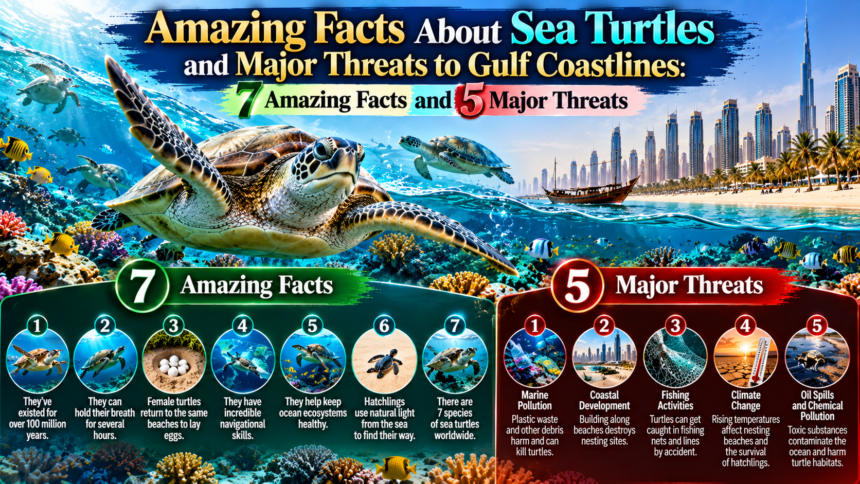
6. Seven Amazing Facts About Sea Turtles and Healthy Gulf Coastlines
The relationship between turtles and coastal habitats is more complex than it may first appear.
Fact 1: Sea turtles need both land and sea. Adults feed and travel in the water, while nesting females must find suitable beaches to lay their eggs.
Fact 2: Different species need different habitats. Green turtles commonly feed in seagrass meadows, while hawksbill turtles are closely connected to coral reef ecosystems.
Fact 3: Nesting beaches can be used repeatedly. Female turtles may return to suitable nesting areas over different breeding seasons, so losing a key beach can have long-term consequences.
Fact 4: Artificial lights can create serious problems. Newly hatched turtles use natural environmental cues to find the sea. Bright lights from buildings, roads, and beachfront facilities can draw them in the wrong direction.
Fact 5: Sea turtles travel across large areas. They may move between nesting beaches and feeding grounds separated by long distances. This means their protection may require cooperation between countries.
Fact 6: Healthy turtle habitats benefit other wildlife. Seagrass meadows, coral reefs, and mangroves support many fish, birds, invertebrates, and other marine species.
Fact 7: Conservation needs more than beach clean-ups. Cleaning litter is useful, but long-term protection also requires habitat management, safer fishing practices, responsible development, monitoring, and public education.
These facts show why a healthy coastline is a connected natural system. Protecting only one species or one beach may not be enough if other essential habitats are damaged.
7. Five Major Threats to Sea Turtles Along Gulf Coastlines
Sea turtles face several pressures across the world, and many also affect the Gulf region. Some threats are easy to see, while others develop slowly and may go unnoticed for years.
Threat 1: Coastal construction and habitat loss
Gulf cities continue to develop residential areas, hotels, marinas, ports, and leisure facilities near the coast. These projects can support economic growth, but poorly planned development can damage important turtle habitats.
Buildings, sea walls, and other structures may reduce the amount of natural beach available for nesting. Dredging and land reclamation can disturb the seabed, affect seagrass meadows, and increase sediment in the water.
Development can also bring more traffic, noise, lighting, and human activity to sensitive areas.
What can help? Coastal projects should include proper environmental assessments, avoid sensitive nesting beaches where possible, and protect important feeding grounds. Conservation must be considered early in the planning process, not only after damage occurs.
Threat 2: Plastic and marine pollution
Plastic bags, packaging, fishing lines, and other rubbish can enter the sea through beaches, drainage systems, and marine activities.
Sea turtles may become entangled in discarded fishing gear or other debris. They may also swallow plastic by mistake, causing injury or digestive problems.
Pollution can harm turtles indirectly as well. Poor water quality may damage seagrass and coral communities, reducing the availability of food and suitable habitat.
What can help? Better waste collection, reduced single-use plastic consumption, responsible fishing practices, and regular shoreline clean-ups can reduce the amount of rubbish entering the sea.
Clean-ups should be carried out carefully, especially on nesting beaches, where poorly planned activities may disturb eggs or hatchlings.
Threat 3: Artificial lighting on nesting beaches
Bright lights from hotels, roads, homes, and beachfront entertainment areas can disturb sea turtles.
Newly hatched turtles generally need to find the sea soon after emerging. Artificial lights can attract them inland or away from the water, increasing the time they spend exposed to heat, exhaustion, vehicles, and predators.
Bright beachfront lighting may also discourage some adult females from nesting.
What can help?
- Use low-intensity, turtle-friendly lighting where appropriate.
- Direct outdoor lights away from the beach.
- Shield lights so they are not visible from nesting areas.
- Turn off unnecessary lights during nesting seasons.
- Follow local conservation guidance before using lighting near protected beaches.
These changes can be practical for hotels, resorts, homeowners, and public authorities.
Threat 4: Fishing gear and boat traffic
Fishing is important to coastal economies, but sea turtles can become caught accidentally in fishing nets, hooks, or lines. This is known as bycatch.
Abandoned fishing gear can continue trapping animals long after it has been lost. Boats can also injure turtles through collisions, especially in areas where turtles regularly surface to breathe or feed.
What can help? Authorities and fishing communities can use suitable fishing methods, follow local rules, recover lost gear when safe, and establish appropriate speed restrictions in sensitive waters. Public awareness can help boat operators recognise that turtles may be difficult to see from the surface.
Threat 5: Climate change and rising temperatures
Climate change creates several risks for sea turtles and their habitats. Rising sea levels and coastal erosion can reduce the size of nesting beaches, while stronger storms or high tides may flood nests.
Sand temperature also affects the development of turtle embryos. For many sea turtle species, warmer nest temperatures tend to produce more female hatchlings, while cooler temperatures tend to produce more males. If temperatures become unusually high, egg development and hatchling survival may also be affected.
Marine heatwaves can place additional stress on coral reefs and other coastal ecosystems.
What can help? Protecting natural beaches, restoring coastal habitats where appropriate, reducing greenhouse gas emissions, and monitoring nest conditions can support long-term conservation. Because the effects differ between species and locations, management plans should rely on local research.
The Convention on Migratory Species and NOAA’s sea turtle resources describe coastal habitat loss, fishing bycatch, artificial lights, pollution, and climate change among the major pressures on marine turtles.
8. How Gulf Countries Are Protecting Sea Turtles
Sea turtle conservation requires cooperation among governments, scientists, local communities, fishing groups, tourism businesses, and environmental organisations.
Across the Gulf region, conservation approaches include protecting nesting beaches, monitoring turtle populations, rescuing injured animals, studying turtle movement, and raising public awareness.
Protected beaches and marine reserves
Protected areas can help limit damaging activities in sensitive habitats. For example, Dubai’s Jebel Ali Wildlife Sanctuary includes nesting beaches for hawksbill turtles, seagrass beds used by green turtles and dugongs, and nearby coral reef habitats.
The Dubai Municipality describes the sanctuary as an important area for wildlife and coastal habitat protection.
Nest monitoring and rescue programmes
Conservation teams may patrol nesting beaches, identify and protect nests, record turtle tracks, and help injured turtles when appropriate.
In Qatar, the Ministry of Environment and Climate Change runs a hawksbill turtle protection programme that monitors nesting beaches and carries out conservation activities. In Saudi Arabia, the Ras Baridi Turtle Conservation Initiative works to protect green and hawksbill turtles along the Red Sea coast.
Research and regional cooperation
Sea turtles migrate between feeding and nesting areas, which may be located in different countries. Data collected in one location can therefore help researchers understand wider population movements.
Regional cooperation makes it easier to share information, improve conservation methods, and identify areas that need protection.
9. What Residents, Tourists, and Businesses Can Do
Protecting sea turtles is not only the responsibility of scientists or government agencies. Small, sensible actions by residents and visitors can also reduce pressure on coastal habitats.
For beach visitors
- Take rubbish with you and dispose of it properly.
- Never touch, chase, feed, or attempt to ride a sea turtle.
- Keep a safe distance from nesting turtles and hatchlings.
- Avoid shining torches or camera lights at turtles.
- Do not dig in suspected nesting areas or disturb marked nests.
- Keep pets under control and follow beach rules.
- Report injured turtles or suspected nests to the relevant local authority.
Never handle eggs or move a nest yourself. Well-intended actions can damage the eggs or interfere with professional conservation work.
For hotels and tourism businesses
Hotels, beach clubs, resorts, and tour operators can help by using suitable outdoor lighting, managing waste, avoiding disturbance near nests, and training employees to respond appropriately when turtles are seen.
Businesses can also share clear information with guests about local wildlife rules and seasonal restrictions.
For residents and local communities
People living near the coast can support clean-up events, reduce litter, avoid dumping waste into drains, and report pollution or abandoned fishing gear.
Community education is especially useful when it reaches children and young people. Learning why beaches, coral reefs, and seagrass meadows matter can encourage long-term respect for the natural environment.
10. The Future of Sea Turtles Depends on Healthy Gulf Coastlines
The future of sea turtles is closely connected to how Gulf countries manage their coastal environments.
Growing cities need homes, transport, tourism, ports, and other infrastructure. These needs are real, but development can be planned in ways that reduce harm to wildlife.
Environmental assessments, well-managed protected areas, safer fishing practices, and improved waste systems can help communities balance economic progress with conservation.
Long-term monitoring is equally important. Researchers need reliable information about nesting activity, hatchling success, turtle movements, feeding habitats, and threats. Without this information, it is difficult to know whether conservation actions are working.
The protection of one nesting beach may help a local population, but it cannot replace damaged feeding grounds elsewhere. Green turtles need healthy seagrass meadows, while hawksbill turtles need suitable reef habitats and safe beaches for nesting. Migratory routes and coastal water quality matter too.
This is why protecting the wider coastline is often more effective than focusing on turtles alone.
A healthy coastline supports turtles, fish, birds, coral reefs, seagrass, coastal communities, and local tourism. In turn, healthy marine ecosystems help maintain the natural beauty and ecological value of the Gulf region.
Conclusion
Sea turtles are an important part of the Gulf’s natural heritage, but their survival depends on more than the presence of seawater. They need safe nesting beaches, healthy seagrass meadows, functioning coral reefs, clean coastal waters, and migration routes free from unnecessary danger.
Coastal construction, marine pollution, artificial lighting, fishing bycatch, and climate change can put these habitats at risk. Fortunately, thoughtful planning, scientific research, protected areas, responsible tourism, and community participation can all help reduce these pressures.
Every beach kept free of harmful disturbance, every piece of fishing gear recovered safely, and every coastal habitat protected can contribute to a healthier marine environment.
Protecting sea turtles means protecting the coastlines that support life across the Gulf. By caring for these habitats today, Gulf communities can help ensure that future generations will continue to share their shores with these remarkable marine animals.
Frequently Asked Questions (FAQs)
1. Why are healthy Gulf coastlines important for sea turtles?
Healthy coastlines provide nesting beaches, feeding areas, shelter, and suitable water conditions. Different turtle species depend on different habitats, including sandy beaches, seagrass meadows, and coral reefs.
2. Which sea turtles are found in the Gulf region?
Green and hawksbill turtles are important species in Gulf waters. Oman also supports nesting populations of loggerhead and olive ridley turtles. Other species may migrate through regional waters.
3. Where do sea turtles lay eggs in the Gulf region?
Important nesting locations include Ras Al Hadd and Masirah Island in Oman, selected beaches and islands in Qatar, and coastal and island habitats in the UAE and Saudi Arabia. Nesting activity varies by species and location.
4. How does coastal development affect sea turtles?
Construction can reduce nesting beach space, disturb turtles, increase artificial lighting, damage seagrass meadows, and affect coral reefs. Poorly planned development may therefore harm several habitats at once.
5. Why are seagrass meadows important for sea turtles?
Seagrass meadows provide important food for adult green turtles. They also support fish and other marine animals, help stabilise the seabed, and contribute to healthy coastal ecosystems.
6. How can tourists help protect sea turtles?
Tourists should avoid touching turtles, keep away from nests, reduce litter, follow local beach restrictions, avoid shining lights at hatchlings, and report injured turtles to local wildlife authorities.
7. Can sea turtle conservation support Gulf communities?
Yes. Healthy coastal ecosystems support marine biodiversity, fisheries, nature education, and responsible wildlife tourism. Protecting turtle habitats can help preserve the natural value of the region’s coastlines.
Do follow us on Instagram
Read More – The Hidden Challanges Behind Everyday Drinking Water in Gulf Cities