


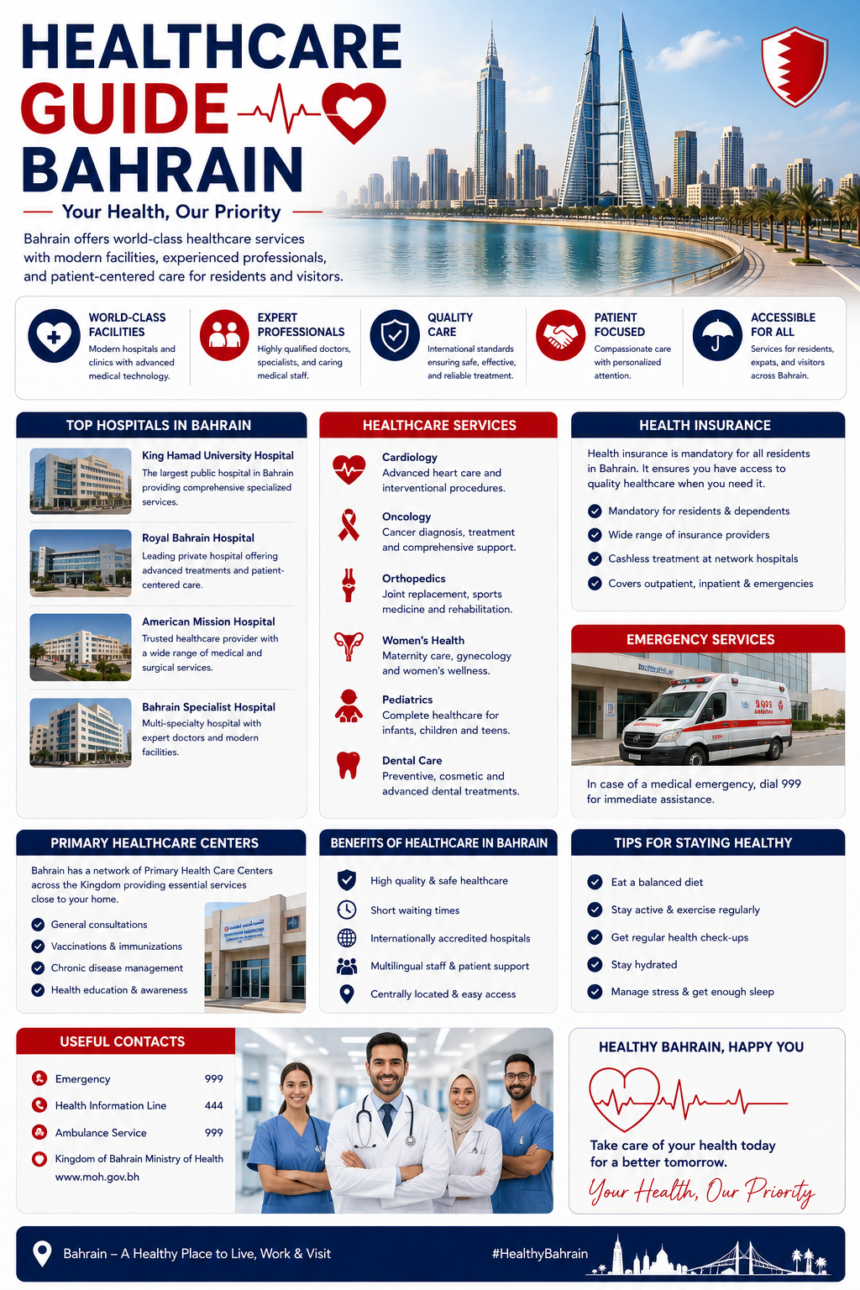
Healthcare Guide Bahrain for Expats and Families
Healthcare Guide Bahrain is useful for expatriates, families and professionals who want to understand how medical care works in the Kingdom. Bahrain has both public and private healthcare services, and the country has invested steadily in hospitals, digital health systems and specialist medical care.
- Healthcare Guide Bahrain for Expats in 2026
- Public Healthcare in Bahrain
- Private Healthcare in Bahrain
- Health Insurance for Expats
- Healthcare Costs in Bahrain
- Emergency Medical Services
- Pharmacies and Medicines
- Maternity and Women’s Healthcare
- Children’s Healthcare
- Dental Care in Bahrain
- Specialist Healthcare
- Medical Fitness and Residency
- Choosing the Right Hospital or Clinic
- Healthcare Guide Bahrain for Families
- Healthcare Guide Bahrain for New Expats
- Common Healthcare Mistakes to Avoid
- How to Reduce Healthcare Costs
- Healthcare Guide Bahrain for Medical Tourists
- How Bahrain Maintains Healthcare Quality and Patient Safety
- Frequently Asked Questions
- Conclusion
For newcomers, the most important questions usually involve insurance, where to seek treatment, what emergency services are available and how much private medical care may cost.
Healthcare Guide Bahrain for Expats in 2026
Healthcare access depends on your residency, insurance policy, employer benefits and the type of treatment you need.
Many expatriates rely on employer-provided private medical insurance for routine appointments, specialist consultations and hospital treatment. Others may use a mix of public and private providers depending on eligibility and personal preference.
Before relocating, it is important to check what your insurance actually covers rather than assuming every treatment is included.
Public Healthcare in Bahrain
Bahrain operates public hospitals and health centres that provide a wide range of medical services.
Public healthcare is particularly important for emergency care, general treatment and major medical services.
Residents should understand which public facilities are closest to their home and workplace in case urgent care is needed.
Private Healthcare in Bahrain
Private hospitals and clinics are widely used by expatriates.
Private healthcare can offer shorter appointment times, greater choice of specialists and more flexible scheduling.
Services can include:
General medicine
Paediatrics
Dermatology
Dentistry
Orthopaedics
Cardiology
Maternity care
Diagnostic imaging
Laboratory testing
Specialist surgery
The quality and cost can vary significantly between providers.
Health Insurance for Expats
Medical insurance is one of the most important parts of living in Bahrain.
Before accepting a job, check whether the employer provides health insurance and whether the policy includes dependants.
Review:
Outpatient consultations
Hospitalisation
Emergency treatment
Prescription medicines
Specialist visits
Maternity
Dental care
Optical care
Pre-existing conditions
International coverage
A policy with low annual limits or large exclusions may leave the employee paying substantial costs personally.
Healthcare Costs in Bahrain
Healthcare costs vary according to hospital, doctor, treatment and insurance coverage.
A simple consultation may be manageable, while specialist treatment, diagnostic procedures or surgery can become expensive without insurance.
For families, maternity, paediatric care and chronic treatment are particularly important areas to review before choosing a policy.
The true cost of healthcare should therefore include both insurance premiums and possible out-of-pocket expenses.
Emergency Medical Services
In an emergency, residents should know the national emergency number and the location of nearby hospitals.
Keep important information easily accessible, including:
Passport copy
CPR or ID details
Insurance card
Emergency contact
Medication list
Allergy information
Medical history
Families should also make sure older children know how to contact emergency services.
Pharmacies and Medicines
Pharmacies are widely available across Bahrain.
Many common medicines are easy to access, but certain drugs may require a prescription.
Travelers and new residents bringing regular medication should check whether the medicine is permitted in Bahrain and whether supporting medical documentation is needed.
Do not carry large quantities of prescription medication without appropriate documentation.
Maternity and Women’s Healthcare
Bahrain offers both public and private maternity services.
Private hospitals can provide antenatal care, delivery packages, specialist obstetrics and postnatal support.
Families should check insurance carefully because maternity coverage may have waiting periods, limits or exclusions.
Women planning pregnancy should review:
Delivery coverage
Prenatal consultations
Scans
Laboratory tests
Emergency Caesarean coverage
Newborn care
Postnatal treatment
Insurance details should be confirmed before pregnancy where possible.
Children’s Healthcare
Paediatric services are available through both public and private providers.
Parents should keep vaccination and medical records organised.
International families may also want to check whether their child’s previous vaccination schedule matches Bahrain requirements and local school documentation needs.
A family health policy should ideally include:
Routine paediatric visits
Emergency care
Vaccinations
Prescription medicines
Hospitalisation
Specialist treatment
Dental Care in Bahrain
Dental care is widely available through private clinics.
Services can range from basic cleaning and fillings to orthodontics, implants and cosmetic dentistry.
Dental coverage is often limited or excluded from standard medical insurance, so expats should check this separately.
If dental treatment is important, compare insurance limits before choosing a policy.
Specialist Healthcare
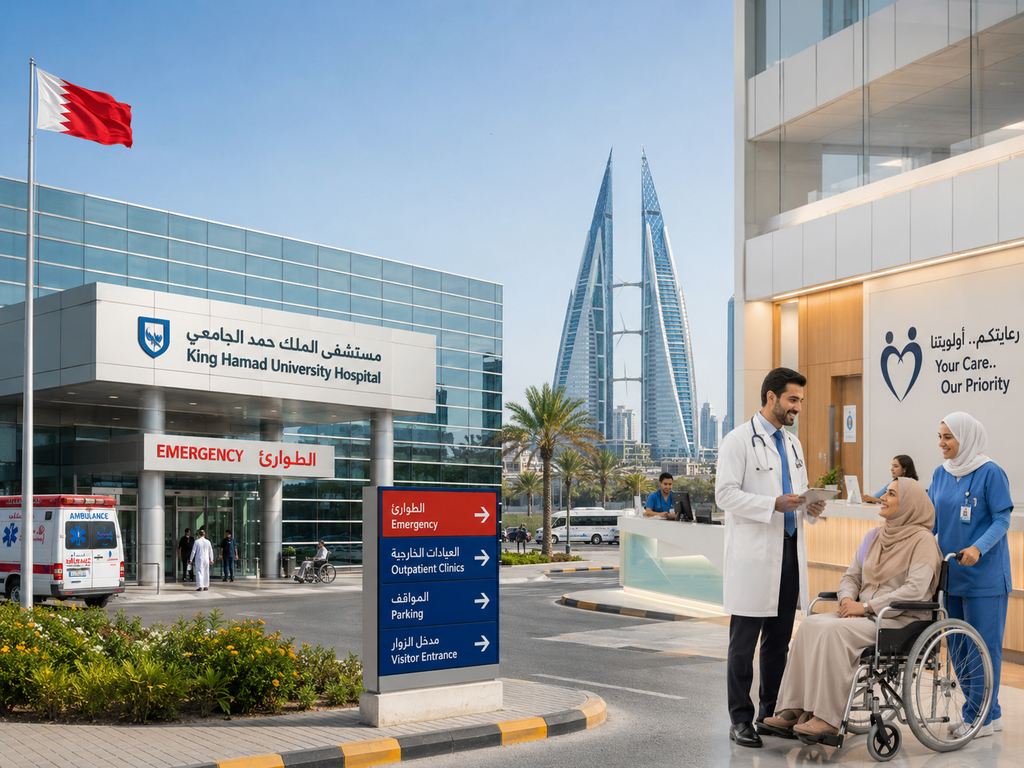
Bahrain has specialist services across multiple medical fields.
Patients may be referred for treatment in areas such as:
Cardiology
Neurology
Orthopaedics
Oncology
Dermatology
ENT
Ophthalmology
Gastroenterology
Endocrinology
Depending on the policy, specialist visits may require a referral or insurer pre-approval.
Always check the insurer’s provider network before booking expensive treatment.
Medical Fitness and Residency
Medical examinations are part of certain employment and residence processes for foreign workers.
Expats should use approved medical facilities and follow the exact requirements linked to their work permit or residence category.
An ordinary check-up from an unrelated clinic may not satisfy immigration requirements.
Choosing the Right Hospital or Clinic
When selecting a healthcare provider, consider:
Location
Insurance network
Specialist availability
Emergency services
Appointment waiting times
Language support
Patient reviews
Diagnostic facilities
Hospital accreditation
Do not choose only based on price.
For serious treatment, specialist expertise and hospital capabilities matter more than small cost differences.
Healthcare Guide Bahrain for Families
Families should think about healthcare before choosing where to live.
Living close to a reliable hospital or clinic can be useful, especially with young children or older family members.
Also consider:
School health requirements
Vaccinations
Maternity care
Paediatric access
Dental services
Emergency facilities
Dependent insurance
A strong family insurance package can make a major difference to the real value of an employment offer.
Healthcare Guide Bahrain for New Expats
New expatriates should complete several practical steps soon after arrival.
Register relevant identification details.
Activate health insurance.
Identify nearby hospitals.
Save emergency numbers.
Find a local pharmacy.
Keep copies of prescriptions.
Choose a general doctor if needed.
Understand insurer approval procedures.
These basic steps can make healthcare much easier when an unexpected medical issue occurs.
Common Healthcare Mistakes to Avoid
New residents should avoid several common problems.
Assuming every hospital accepts their insurance
Ignoring maternity limits
Failing to check prescription rules
Choosing the cheapest insurance policy only
Forgetting to carry the insurance card
Not checking pre-authorisation requirements
Using non-approved medical centres for immigration testing
Delaying emergency treatment because of cost concerns
Preparation is especially important for families and people requiring ongoing treatment.
How to Reduce Healthcare Costs
A few practical choices can help reduce unnecessary spending.
Use hospitals within your insurer’s network.
Choose a primary care doctor for routine issues.
Request pre-approval for expensive procedures.
Compare pharmacy prices where appropriate.
Understand your deductible and co-payment.
Use preventive check-ups when covered.
Keep medical records to avoid unnecessary repeat testing.
The cheapest care is not always the best, but informed use of insurance can prevent avoidable costs.
Healthcare Guide Bahrain for Medical Tourists
Bahrain can also attract regional patients seeking specialist treatment, dental care or private medical services.
Medical tourists should compare hospitals based on:
Doctor qualifications
Procedure experience
Accreditation
Total treatment cost
Follow-up care
Travel requirements
Recovery period
Insurance or payment options
Patients should avoid choosing providers based solely on social media advertising.
How Bahrain Maintains Healthcare Quality and Patient Safety
An important part of any Healthcare Guide Bahrain is understanding how healthcare quality is regulated. Bahrain has a dedicated National Health Regulatory Authority, known as NHRA, which oversees healthcare regulation across both government and private sectors. Its responsibilities include licensing hospitals, medical centres, private clinics, pharmaceutical centres and healthcare professionals.
This regulatory structure can be particularly reassuring for expatriates who are unfamiliar with Bahrain’s medical system. Healthcare professionals practising in the Kingdom are subject to registration and licensing requirements. The NHRA states that it evaluates the credentials, knowledge, clinical skills and professional attributes of healthcare practitioners as part of its regulatory responsibilities.
Healthcare facilities are also subject to standards covering patient care and operational quality. Bahrain’s accreditation framework includes requirements related to patient safety, infection control, medication management, clinical performance, continuity of care and risk management.
For patients, this means choosing a properly licensed healthcare facility should always be a priority. The NHRA maintains information on licensed healthcare facilities, including hospitals and medical centres, as well as approved facilities for certain specialised services.
Expats should still take an active role in making healthcare decisions. Before beginning significant treatment, confirm that the hospital or clinic is covered by your insurance network and understand whether pre-approval is required. For specialist procedures, patients can also ask about the doctor’s qualifications, expected recovery period, possible risks and follow-up treatment.
Keeping personal medical records organised can make healthcare considerably easier. Save copies of laboratory reports, prescriptions, vaccination records, diagnostic scans and previous treatment information. Families should maintain separate records for children, particularly vaccination and allergy information.
Bahrain’s healthcare system provides access to a broad range of medical services, but the best experience comes from combining quality healthcare with preparation. Understanding your insurance, selecting licensed providers and keeping medical information readily available can help residents make faster and more informed decisions when medical care is needed.
Frequently Asked Questions
Is healthcare good in Bahrain?
Bahrain has established public and private healthcare systems with hospitals, clinics and specialist services available across the country.
Do expats need health insurance?
Many expatriates rely on employer or private medical insurance, and insurance requirements can also connect with employment and residence arrangements.
Is private healthcare expensive?
Costs vary. Routine consultations may be manageable, while specialist treatment and hospital procedures can become expensive without sufficient insurance.
Are pharmacies easy to find?
Yes. Pharmacies are widely available, although some medicines require prescriptions.
Is maternity care available?
Yes. Both public and private maternity services are available, but insurance coverage should be checked carefully.
Can expats use public hospitals?
Access depends on residency, eligibility and the service required. Many expatriates also choose private hospitals through insurance.
Conclusion
The Healthcare Guide Bahrain shows that medical care in the Kingdom is relatively accessible when residents understand how insurance, public services and private hospitals work.
For expatriates, the most important step is understanding the healthcare benefits included in the employment package.
Check your insurance network.
Review hospitalisation limits.
Understand maternity and dental coverage.
Identify nearby medical facilities.
Keep emergency information available.
And make sure any employment-related medical testing is completed through approved channels.
For families, healthcare should be considered alongside housing, education and salary when evaluating a move to Bahrain.
A strong medical plan can provide financial protection, easier access to specialists and greater peace of mind throughout your time in the Kingdom.
follow us on Instagram
Read More – Best Restaurants in Bahrain: Top 18 Dining Spots 2026