



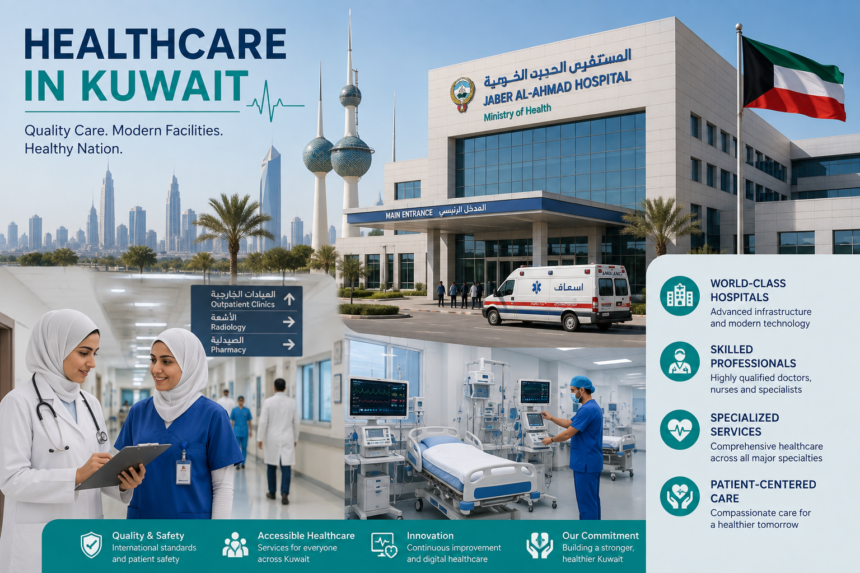
Powerful Guide for Expats and Families in 2026
Healthcare is one of the most important things to understand before moving to another country. Whether you are relocating to Kuwait for work, bringing your family, or planning a longer stay, knowing how the healthcare system works can make everyday life much easier.
- Understanding Healthcare in Kuwait
- Public Healthcare in Kuwait
- Primary Healthcare Centres Are Important
- Government Hospitals Serve Different Areas
- Private Healthcare Provides Another Option
- Health Insurance Is Important for Expatriates
- Health Insurance Cards and Registration
- Employer Provided Medical Insurance Can Add Protection
- Emergency Healthcare in Kuwait
- Expatriate Medical Examinations
- Maternity and Women’s Healthcare
- Healthcare for Children
- Dental Care in Kuwait
- Pharmacies Are Widely Available
- Specialist Healthcare Is Available
- Mental Healthcare Is Part of the System
- Managing Chronic Diseases in Kuwait
- Hospital Admission and Identification
- Healthcare Costs Depend on Your Status
- Digital Healthcare Services Make Access Easier
- Healthcare Tips for New Expats in Kuwait
- Public Versus Private Healthcare in Kuwait
- Future of Healthcare in Kuwait
- Final Thoughts on Healthcare in Kuwait
Healthcare in Kuwait includes a large government health system alongside a growing private medical sector. Residents can find primary healthcare centres, general hospitals, specialist hospitals, dental services, maternity care, pharmacies, diagnostic facilities and private clinics across the country.
Kuwaiti citizens and expatriate residents do not always access healthcare under exactly the same conditions. Health insurance, residency status and the type of medical facility can affect the fees and procedures involved.
For expatriates in particular, understanding health insurance and knowing where to seek treatment before an emergency happens is extremely useful.
This complete guide to Healthcare in Kuwait explains the public and private systems, hospitals, insurance, emergency treatment, medical examinations, maternity care, dental services, pharmacies and practical healthcare tips for residents in 2026.
Understanding Healthcare in Kuwait
Kuwait has developed an extensive healthcare network to serve its citizens and large expatriate population.
The Ministry of Health plays the central role in the public healthcare system.
Government services include primary healthcare, general hospitals, specialist treatment, vaccinations, dental care, maternity services, rehabilitation and several other medical services.
Alongside the government network, Kuwait has a significant private healthcare sector.
Private hospitals and clinics provide another option for residents who may prefer faster appointments, particular doctors or additional comfort.
For many expatriates, healthcare therefore involves understanding how both systems work and deciding which option is appropriate for different situations.
Public Healthcare in Kuwait
Public healthcare forms the foundation of Kuwait’s medical system.
Government facilities are organized around primary healthcare centres, general hospitals and specialist medical institutions.
Primary healthcare centres are usually the first point of contact for routine medical needs.
Patients may visit these facilities for common illnesses, basic consultations, chronic disease monitoring, vaccinations and other general services.
More serious conditions can require treatment at hospitals or specialist centres.
The public system also includes services in areas such as dentistry, maternity care, rehabilitation, infectious diseases and specialist medicine.
For residents, knowing which healthcare centre serves their residential area can make accessing treatment easier.
Primary Healthcare Centres Are Important
Not every medical problem requires a hospital visit.
Primary healthcare centres play an important role in reducing unnecessary pressure on major hospitals.
A patient with a routine illness or ongoing medical concern may begin with a primary healthcare consultation.
Depending on the condition, the doctor may provide treatment directly or refer the patient to a specialist or hospital.
This referral structure helps organize healthcare according to the seriousness and complexity of the condition.
Residents should become familiar with their nearest health centre soon after moving into a new area.
It is much easier to understand the system before becoming sick than to search for medical services while already dealing with an illness.
Government Hospitals Serve Different Areas
Kuwait has several major government hospitals serving different health districts.
The official government healthcare directory includes Al Amiri Hospital, Al Jahra Hospital, Mubarak Al Kabir Hospital, Al Sabah Hospital, Farwaniya Hospital and Adan Hospital among its major facilities.
Different hospitals serve particular geographic areas and medical needs.
Kuwait also has specialist medical facilities.
These include hospitals and centres focused on maternity, infectious diseases, chest diseases, rehabilitation, psychiatric care, orthopaedics and other specialties.
Patients may be referred from primary care or outpatient departments depending on the medical situation.
For residents, carrying appropriate identification and medical documentation can make hospital procedures easier.
Private Healthcare Provides Another Option
Kuwait’s private healthcare sector is an important part of the overall medical landscape.
Private hospitals, medical centres and specialist clinics operate across major residential and commercial areas.
Patients may choose private healthcare for several reasons.
Appointments can sometimes be arranged more quickly.
Patients may want to see a particular specialist.
Some people prefer the facilities or additional service options available in private hospitals.
Private healthcare can include general medicine, cardiology, orthopaedics, dermatology, paediatrics, dentistry, obstetrics, gynaecology, ophthalmology and many other specialties.
However, private treatment can be considerably more expensive than government healthcare.
This makes health insurance particularly important.
Health Insurance Is Important for Expatriates
Health insurance is closely connected with expatriate residency in Kuwait.
Residents in several expatriate categories need to register in the health insurance system and pay the applicable annual premium as part of residency related procedures.
For employees holding commercial residence permits and employees working in government or private sector positions, the official annual health insurance premium is currently KD 50.
Different premiums apply to dependants.
The official fee structure lists KD 40 annually for a dependent wife and KD 30 for children under 18.
Adult dependants in specified categories are generally listed at KD 50.
Domestic workers have a different annual premium.
Residents should check the latest official requirements whenever applying for or renewing residency because fees and procedures can change.
Health Insurance Cards and Registration
Health insurance registration is an important administrative step for residents.
The official system allows eligible residents to register their information and obtain the documentation required for residency procedures.
Depending on the category, documents can include information relating to the sponsor, work permit or visa and personal identification.
The insurance registration is then connected with the residency process.
Expatriates should avoid waiting until the final days of residency renewal before checking their health insurance status.
Missing insurance documentation can delay other administrative procedures.
Employees should also understand whether their employer provides additional private medical insurance beyond the government insurance requirement.
Employer Provided Medical Insurance Can Add Protection
Some companies provide employees with private health insurance as part of their employment package.
The quality of these plans can vary considerably.
One employee may receive basic coverage.
Another may receive a more comprehensive policy covering private hospitals, specialist consultations and additional treatments.
Workers should therefore read their medical insurance policy rather than simply assuming everything is covered.
Important questions include which hospitals are in the network, whether specialist visits require approval, what percentage of treatment costs the patient must pay and whether dental or maternity services are included.
Employees should also understand annual coverage limits and exclusions.
Knowing this information before treatment can prevent unexpected medical bills.
Emergency Healthcare in Kuwait
Medical emergencies require a different approach from routine healthcare.
The emergency number for ambulance services in Kuwait is 112.
The same emergency number is also used for police and fire services.
People should use emergency services when the situation is genuinely urgent, such as a serious accident, severe breathing difficulty, major injury or another potentially life threatening condition.
Residents should save 112 in their phone even though it is an easy number to remember.
The Ministry of Health also lists 151 as its hotline.
Families may find it useful to keep essential medical information easily accessible, particularly where someone has serious allergies, chronic illnesses or takes important medication.
Expatriate Medical Examinations
Healthcare is also connected with immigration and employment procedures.
Expatriates entering Kuwait for certain residency or employment purposes may need to complete an official medical examination.
The government provides an appointment service specifically for expatriate medical examinations.
These examinations are designed to determine whether the applicant meets applicable health requirements.
The exact procedure depends on the individual’s visa or residency category.
New expatriates should follow official instructions rather than relying entirely on information from friends or social media because requirements can change.
Medical certificates may also become part of residency documentation.
Keeping copies of important medical and immigration documents can make future renewals easier.
Maternity and Women’s Healthcare
Kuwait provides maternity and women’s healthcare through both government and private facilities.
Services can include pregnancy monitoring, diagnostic tests, delivery, postnatal care and gynaecological treatment.
The government healthcare network includes dedicated maternity services.
Private hospitals also provide maternity packages and specialist obstetric care.
Expectant parents should research maternity arrangements early in pregnancy.
Questions to consider include which hospital the doctor uses, insurance coverage, delivery costs, room charges and whether additional newborn services are included.
For expatriate families, checking insurance is especially important because maternity benefits can vary significantly between policies.
Waiting until late pregnancy to understand coverage can create unnecessary financial and administrative stress.
Healthcare for Children
Families living in Kuwait have access to paediatric care through public and private healthcare providers.
Children may require routine medical consultations, vaccinations, dental care and specialist treatment as they grow.
Kuwait’s official healthcare services include vaccination schedules and guidance.
Parents should maintain accurate vaccination records, particularly if their children have previously lived in another country.
These records can become important when changing doctors, enrolling in school or travelling internationally.
Parents should also identify a nearby paediatric clinic or healthcare centre before an urgent situation develops.
For children with ongoing medical conditions, continuity of care is particularly important.
Families relocating to Kuwait should bring relevant medical reports and prescriptions from previous doctors.
Dental Care in Kuwait
Dental healthcare is available through both public and private services.
Government services include general dental treatment as well as specialized options.
The official healthcare system lists services relating to primary dental treatment, children’s dentistry, root canal treatment, orthodontics, periodontal treatment and oral surgery.
Private dental clinics are also widely available.
The cost of private dentistry can vary significantly depending on the procedure and clinic.
Basic cleaning and examination may be relatively straightforward, while orthodontics, implants, cosmetic dentistry and complex restorative work can become expensive.
Residents with private health insurance should check whether dental treatment is included because many medical policies either exclude dentistry or provide only limited coverage.
Pharmacies Are Widely Available
Pharmacies form another important part of everyday healthcare in Kuwait.
Private pharmacies can be found throughout major residential areas and shopping districts.
Hospitals and healthcare centres also have systems for dispensing prescribed medicines.
Residents who take regular medication should understand whether their prescription is available locally.
Some medicines that can be purchased easily in another country may be regulated differently in Kuwait.
Travellers and new expatriates should therefore avoid bringing large quantities of medication without checking applicable rules.
For prescription medicines, keeping a copy of the doctor’s prescription and relevant medical documentation is useful.
People should also avoid self medication for serious conditions simply because a medicine appears familiar.
Specialist Healthcare Is Available
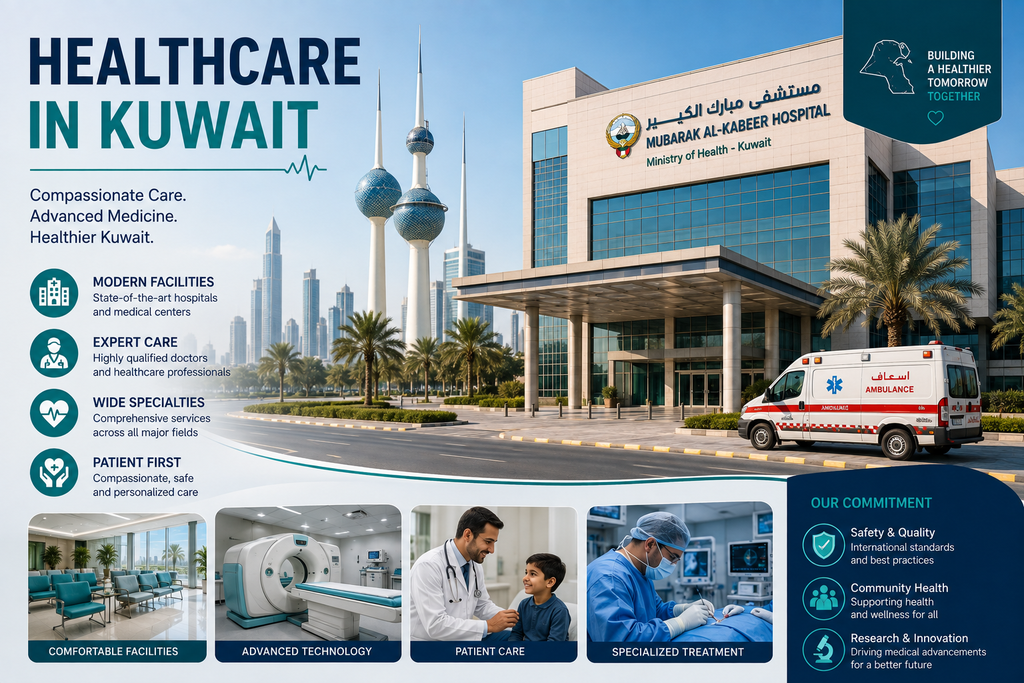
Kuwait provides access to a wide range of medical specialties.
Patients can find services covering areas such as cardiology, orthopaedics, neurology, oncology, dermatology, ophthalmology, endocrinology and rehabilitation.
Specialist hospitals and medical centres form an important part of the government system.
Private hospitals also compete strongly in specialist care.
The best route depends on the patient’s condition, insurance and urgency.
Some government specialist services may require referral.
Private patients may sometimes be able to book directly, depending on the hospital and insurance policy.
When choosing a specialist, patients should focus on proper licensing and professional qualifications rather than relying only on social media popularity.
Mental Healthcare Is Part of the System
Physical health is only one part of healthcare.
Kuwait’s government healthcare network includes psychiatric services, while private providers also offer mental health support.
People experiencing persistent anxiety, depression, severe stress or other mental health concerns should consider seeking qualified professional help.
Expatriate life can sometimes create additional pressures.
Workers may be separated from family, adapting to a different culture or dealing with demanding work schedules.
Professional support can be valuable when these pressures begin affecting everyday life.
Residents looking for care should seek appropriately qualified and licensed professionals.
Mental healthcare should be treated with the same seriousness as other forms of medical care.
Managing Chronic Diseases in Kuwait
People living with diabetes, high blood pressure, cardiovascular disease and other chronic conditions need regular healthcare rather than treatment only during emergencies.
Kuwait’s healthcare system provides ongoing medical services through primary and specialist care.
Patients relocating to Kuwait should bring their previous medical records where possible.
A clear record helps a new doctor understand earlier diagnoses, laboratory results and treatment history.
Medication names can also differ between countries.
Patients should therefore know the generic medical name of important medicines rather than relying only on a particular brand.
Regular follow up appointments are important even when the patient feels healthy.
Chronic diseases are often easier to manage when problems are identified early.
Hospital Admission and Identification
Patients requiring hospital admission should be prepared to provide appropriate identification.
The government’s public hospital admission service lists Civil ID documentation for residents and passports for visitors among its requirements.
The treating doctor determines whether admission is medically necessary.
Administrative and billing procedures then depend on the patient’s category.
Visitors and residents may face different charges.
This distinction is another reason why travellers should have suitable travel medical insurance.
A visitor should not assume that the healthcare arrangements available to a resident will automatically apply to them.
Medical emergencies can become expensive when adequate insurance is missing.
Healthcare Costs Depend on Your Status
There is no single answer to how much healthcare costs in Kuwait.
The amount depends on whether the patient is Kuwaiti, an expatriate resident or a visitor.
It also depends on whether treatment is received through a government or private facility.
Insurance coverage can dramatically change the final cost.
A private consultation may involve a direct payment or insurance copayment.
More complicated treatments may require preapproval from the insurance company.
Government services have their own fee structures depending on patient category and treatment.
Residents should therefore avoid using one person’s medical bill as a universal guide to healthcare costs.
Your residency and insurance situation matter.
Digital Healthcare Services Make Access Easier
Kuwait continues to provide more healthcare services digitally.
Government platforms allow users to access services including healthcare centre appointments, specialized clinic bookings, expatriate medical examination appointments and health insurance services.
Digital access can reduce the need for unnecessary visits simply to arrange administrative procedures.
Residents should keep their Civil ID and contact information updated because these details may be needed when accessing government services.
It is also useful to use official government platforms when making important appointments or checking healthcare requirements.
Unofficial websites may contain outdated information.
Healthcare Tips for New Expats in Kuwait
New residents should organize their healthcare arrangements soon after arriving.
First, understand what medical insurance you have.
Second, identify your nearest government healthcare centre and a convenient private clinic if your insurance allows private treatment.
Third, save emergency numbers.
Fourth, keep digital and physical copies of important medical records.
Anyone taking long term medication should arrange continuity of treatment before existing supplies run out.
Families should organize vaccination records for children and investigate maternity coverage if relevant.
These simple preparations can save considerable stress later.
Public Versus Private Healthcare in Kuwait
Choosing between public and private healthcare depends on the situation.
Government healthcare provides a broad medical network and access to specialist services.
Private healthcare can offer additional choice and convenience, particularly for people with comprehensive insurance.
Many residents use both.
A person may rely on government healthcare for certain services while visiting a private clinic for routine appointments.
There is no universal best choice.
The right option depends on medical needs, insurance, budget, location and urgency.
The important thing is understanding what each system offers before treatment becomes necessary.
Future of Healthcare in Kuwait
Healthcare demand in Kuwait is likely to continue growing as the population, medical needs and expectations of patients evolve.
Digital services, private healthcare investment, insurance development and new medical infrastructure are all important parts of this transformation.
Preventive healthcare is also becoming increasingly important.
Treating disease remains essential, but modern healthcare systems are placing greater attention on early diagnosis, screening, vaccination, healthier lifestyles and chronic disease management.
For residents, this means healthcare should not begin only when something goes wrong.
Regular medical checks and preventive care can play an important role in maintaining long term health.
Final Thoughts on Healthcare in Kuwait
Healthcare in Kuwait offers residents access to an extensive combination of government hospitals, primary healthcare centres, specialist facilities, private hospitals, clinics, dental services and pharmacies.
For expatriates, the most important step is understanding how residency and health insurance connect with healthcare access.
Do not wait until you are sick to learn how the system works.
Know your nearest healthcare centre.
Understand your insurance policy.
Save the emergency number 112.
Keep important medical records available.
Check whether your employer provides additional private insurance.
And make sure your family understands what to do during a medical emergency.
Healthcare systems can initially feel complicated when moving abroad, but preparation makes them much easier to navigate.
For anyone planning to live and work in the country, understanding Healthcare in Kuwait is an essential part of building a safer, healthier and more comfortable life.
Follow us on Instagram
Read More – Public Transport Guide Kuwait: 15 Powerful Tips for Easy Travel