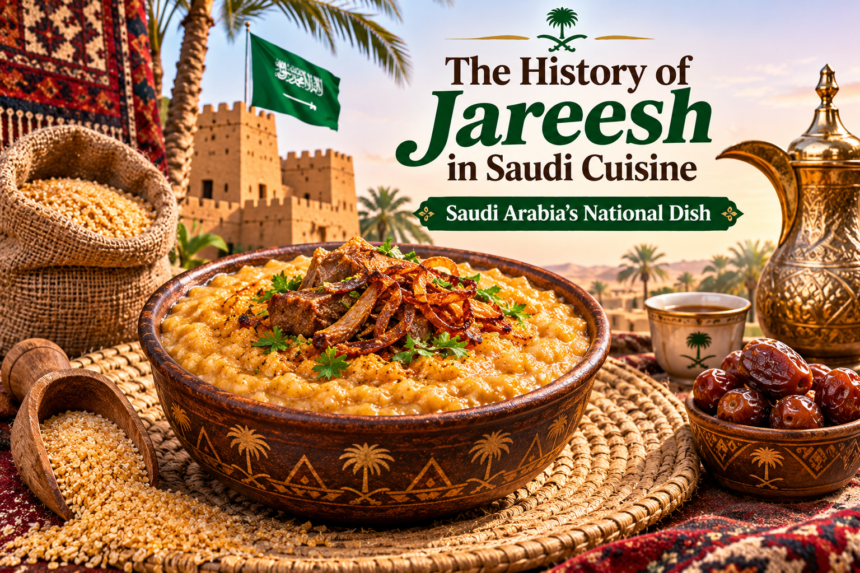
The History of Jareesh in Saudi Cuisine
Saudi Arabia is famous for its rich food culture, where traditional recipes reflect the country’s history, local ingredients, and family customs. From Kabsa and Mandi to dates and Arabic coffee, every dish has a story to tell. One traditional food that holds a special place in the Kingdom is Jareesh, a warm and filling dish made mainly from crushed wheat.
- 1. What Is Jareesh?
- 2. The History and Origins of Jareesh in Saudi Arabia
- 3. Jareesh and Traditional Life in the Central Region
- 4. How Jareesh Was Traditionally Prepared
- 5. Regional Variations of Jareesh Across Saudi Arabia
- 6. Why Jareesh Is Important in Saudi Food Culture
- 7. Jareesh Becomes Saudi Arabia’s National Dish
- 8. Jareesh at Weddings, Ramadan, and Family Gatherings
- 9. The Difference Between Jareesh and Other Saudi Wheat Dishes
- 10. Jareesh in Modern Saudi Cuisine
- Conclusion: Jareesh Is a Living Part of Saudi Food Heritage
- Frequently Asked Questions (FAQs)
Jareesh has been enjoyed in Saudi homes for generations. Its simple ingredients, soft texture, and rich flavour make it a popular meal, especially in the central region. Traditionally, families prepared it using wheat crushed with stone grinders, then slowly cooked with water, milk, or laban. Some recipes also include onions, meat, spices, and ghee.
Although Jareesh may look like a simple wheat porridge, it has a deeper cultural meaning. It reminds people of traditional farming, family cooking, community gatherings, and the food habits of earlier generations.
Its importance was officially recognised in January 2023, when Saudi Arabia’s Culinary Arts Commission selected Jareesh as the Kingdom’s national dish. This decision was part of an initiative to document and celebrate traditional foods from across the country.
Today, Jareesh is served in homes, restaurants, cultural festivals, and special gatherings. It also introduces international visitors to an important part of Saudi culinary heritage.
This article explores the history of Jareesh in Saudi cuisine, its traditional ingredients, regional variations, cooking methods, cultural importance, and place in modern Saudi food culture.
1. What Is Jareesh?
Jareesh is a traditional Saudi dish prepared mainly from coarsely crushed wheat. The wheat is cooked slowly until it becomes soft and develops a thick, creamy texture. Depending on the recipe, it may be prepared with water, milk, or laban (a fermented milk product).
The dish is often topped with fried onions, ghee, or cooked meat. Some versions also include tomatoes, chilli, and spices.
The name Jareesh is connected with the Arabic word jarsh, meaning to crush or grind. This refers to the traditional process of breaking whole wheat grains into smaller pieces before cooking.
It declared National dish in Saudi Arabia in 2023, and it is a staple food across the Arabian Gulf.
Unlike ordinary flour, Jareesh uses wheat that has not been ground into a fine powder. The crushed grains give the finished dish its special texture.
Common ingredients include:
- Coarsely crushed wheat.
- Water, milk, or laban.
- Onions and garlic.
- Ghee or butter.
- Salt and selected spices.
- Meat or meat broth in some recipes.
- Tomatoes or chilli in certain regional versions.
Jareesh is usually served warm as a main meal. It is also known for being filling and comforting, which helps explain why families have enjoyed it for generations.
2. The History and Origins of Jareesh in Saudi Arabia
The history of Jareesh is closely connected with wheat farming and traditional food preparation in the Arabian Peninsula.
Before modern flour mills and electric kitchen appliances became common, families prepared many foods using simple tools. Wheat was an important crop, and people used stone grinders to crush its grains for different dishes.
Traditional Arabic heritage books mention women manually grinding wheat with coarse grinders to prepare Jareesh. The process required physical effort and time, but it helped turn whole grains into a useful ingredient for everyday meals.
Jareesh was especially important in communities where wheat was a regular part of local agriculture and food supply. Families used ingredients that were available in their surroundings, including wheat, milk, laban, onions, and ghee.
Jareesh was the original go to substance for the travellers because the grinde wheat and dried meat punishing well in the desert conditions, That’s why it the best meal for merchants and nomads for the long camel journey across the dunes.
An article published by Arab News in February 2023 explains that Jareesh was eaten at different times of the day in earlier Saudi communities. It was made with crushed wheat, water, and laban, then slowly cooked with onions and spices before being finished with ghee.
There is no single recorded date for the invention of Jareesh. Instead, it developed through generations of home cooking and became an important part of Saudi food traditions.
3. Jareesh and Traditional Life in the Central Region
The central region of Saudi Arabia, particularly Najd, has a strong connection with Jareesh.
In traditional households, wheat was a valuable food ingredient. People used it to prepare bread and several main dishes, including Jareesh. Because the recipe used simple local ingredients, it could be prepared for ordinary family meals as well as special occasions.
The traditional central Saudi version is often prepared with crushed wheat, laban or milk, onions, and water. It is cooked over low heat until the grains become soft and the mixture develops a thick consistency.
Ghee or butter may be added before serving, sometimes with fried onions on top.
Jareesh has also been associated with wedding celebrations. In parts of the central region, it has traditionally been served as a breakfast meal during wedding gatherings. It is often prepared in large quantities so that family members and guests can share it.
This connection with celebrations shows that Jareesh is not simply an everyday food. It also has a social role in bringing people together.
4. How Jareesh Was Traditionally Prepared
Preparing Jareesh was once a time-consuming activity because the wheat had to be crushed by hand before cooking.
Families used traditional stone grinders called raha in some areas. The grinder generally consisted of two stones, with the upper stone moving over the lower one to break the grains into smaller pieces.
This process was particularly important in places where households prepared their own ingredients rather than purchasing ready-made products.
After crushing the wheat, the grains were cooked slowly with liquid and other ingredients.
Traditional preparation often involved:
- Cleaning the wheat: Removing unwanted material from the whole grains.
- Crushing the wheat: Breaking the grains into coarse pieces using a traditional grinder.
- Preparing the base: Cooking onions with water or another liquid.
- Adding the wheat: Mixing the crushed grains into the cooking liquid.
- Slow cooking: Allowing the mixture to cook until the wheat becomes soft.
- Adding milk or laban: Including dairy ingredients according to the family recipe.
- Finishing the dish: Adding ghee, butter, or fried onions before serving.
Slow cooking is important because it gives Jareesh its smooth and thick texture.
Today, many families buy ready-crushed wheat or use modern food processors. However, traditional cooking methods remain meaningful for people who want to preserve the original preparation style.
5. Regional Variations of Jareesh Across Saudi Arabia
Although Jareesh is recognised as a national dish, its preparation is not exactly the same everywhere. Different regions and families use different ingredients and cooking methods.
These variations make the dish an interesting example of Saudi Arabia’s regional food diversity.
Central region: The traditional version commonly uses crushed wheat, water, onions, and laban or milk. It is often served with ghee or fried onions.
Tabuk region: Jareesh may be prepared using wheat crushed with a traditional stone grinder. Some local methods include milk and a little wild ghee, while other versions use meat, milk, or tomatoes. It is commonly prepared during Ramadan.
Northern areas: Some versions use tomatoes and hot peppers, giving the dish a different colour and stronger flavour.
Family recipes: Some households add meat or broth, while others prefer a simpler preparation with milk or laban. The thickness, amount of ghee, and toppings can also differ.
These variations show how one traditional dish can represent different local tastes while keeping its main ingredient and identity.
6. Why Jareesh Is Important in Saudi Food Culture
Jareesh is important because it connects the Kingdom’s food heritage with everyday life, family traditions, and the history of agriculture.
In earlier communities, meals were largely based on what people could grow or obtain locally. Wheat was an important source of food, and dishes such as Jareesh helped families make use of it in a filling and practical way.
Its cultural importance can be understood through several traditions:
- Family cooking: Recipes were passed from older family members to younger generations.
- Community support: Relatives and neighbours sometimes helped prepare large meals for celebrations.
- Traditional ingredients: Wheat, milk, laban, and ghee reflect the food resources available in earlier communities.
- Special occasions: Jareesh has been served during weddings and family gatherings.
- Regional identity: Different preparation styles reflect local food traditions.
The preparation of food was also a shared activity. In historical accounts of life in central Saudi Arabia, women played an important role in preparing traditional dishes, with relatives and neighbours helping during large celebrations.
Jareesh therefore represents more than a recipe. It reflects the cooperation, skills, and everyday experiences of earlier Saudi families.
7. Jareesh Becomes Saudi Arabia’s National Dish
One of the most important moments in the modern history of Jareesh came in January 2023.
Saudi Arabia’s Culinary Arts Commission announced Jareesh as the national dish of the Kingdom and Maqshush as the national dessert. The announcement was part of the National and Regional Dishes Narratives Initiative.
The initiative was developed to identify, document, and promote traditional foods connected with Saudi identity. It covers all thirteen regions of the Kingdom and aims to preserve the stories, ingredients, and preparation methods behind local dishes.
Jareesh was selected after considering several factors, including:
- Its historical and cultural importance.
- Its connection with Saudi communities.
- Its wide geographical presence.
- Its traditional preparation methods.
- Its local popularity.
- Its potential to support food-related businesses.
The recognition has helped bring greater attention to Jareesh among younger generations, food lovers, restaurants, and international visitors.
It also provides an opportunity to document traditional recipes and encourage the use of local ingredients.
8. Jareesh at Weddings, Ramadan, and Family Gatherings
Food is closely connected with social and family life in Saudi Arabia, and Jareesh has an important place in some traditional gatherings.
In parts of central Saudi Arabia, it has been served as a wedding breakfast. Preparing a large quantity allows relatives and guests to share the meal as part of the celebration.
In Tabuk, Jareesh is also commonly prepared during Ramadan. Its warm texture and simple ingredients make it a familiar choice for family meals during the holy month.
The dish may also be enjoyed during:
- Family visits and weekend gatherings.
- Traditional food festivals.
- Seasonal celebrations.
- Meals shared with relatives.
- Cultural and heritage events.
These occasions help maintain a connection between food and community life. Even when families use modern kitchens and cooking equipment, the traditional recipe continues to bring familiar flavours to the table.
9. The Difference Between Jareesh and Other Saudi Wheat Dishes
Jareesh is sometimes confused with other traditional dishes because several Saudi recipes use wheat as their main ingredient.
However, the cooking method and final texture are different.
| Dish | Main ingredients and preparation |
|---|---|
| Jareesh | Crushed wheat slowly cooked with water, laban, or milk to form a thick dish. |
| Harees | Wheat cooked for a long time with meat until it becomes very soft and smooth. |
| Qursan | Thin pieces of traditional bread cooked with meat broth and vegetables. |
| Marqooq | Thin wheat dough pieces cooked in a sauce with vegetables and sometimes meat. |
| Aseeda | A thick preparation generally made by cooking flour with water. |
The main difference is that Jareesh uses coarsely crushed wheat, giving it a texture that is different from dishes prepared with whole flour or flatbread.
Understanding these differences helps visitors appreciate the variety of traditional Saudi cooking.
10. Jareesh in Modern Saudi Cuisine
Although Jareesh has a long history, it continues to have a place in modern Saudi food culture.
Traditional restaurants serve it alongside other well-known dishes, while some modern restaurants present it with updated toppings and arrangements. Families also prepare it at home using packaged crushed wheat and modern cooking equipment.
Food festivals and cultural programmes provide further opportunities to introduce Jareesh to new audiences.
The government’s efforts to document regional cuisine are also helping protect traditional food knowledge. The National and Regional Dishes Narratives Initiative encourages people to learn about the dishes associated with different parts of Saudi Arabia.
For international visitors, trying Jareesh can be an interesting way to discover Saudi food beyond better-known dishes such as Kabsa and Mandi.
Its simple ingredients also tell an important story about how earlier communities adapted their meals to local resources.
Conclusion: Jareesh Is a Living Part of Saudi Food Heritage
The history of Jareesh reflects the everyday lives, agricultural traditions, and family customs of Saudi Arabia. Made from crushed wheat and slowly cooked with simple ingredients, it developed into a popular dish that has been enjoyed across generations.
Its connection with traditional wheat grinding, family cooking, wedding gatherings, and regional recipes makes it an important part of the Kingdom’s cultural identity.
The selection of Jareesh as Saudi Arabia’s national dish in 2023 gave this traditional meal even greater recognition. It also highlighted the importance of protecting local recipes and sharing their stories with future generations.
Today, Jareesh continues to appear in homes, restaurants, food festivals, and cultural events. Although modern cooking methods have made preparation easier, its traditional flavours and cultural meaning remain valuable.
Jareesh is more than a wheat dish. It is a reminder of Saudi Arabia’s history, the resourcefulness of earlier generations, and the traditions that continue to bring families and communities together.
Frequently Asked Questions (FAQs)
1. What is Jareesh in Saudi Arabia?
Jareesh is a traditional Saudi dish made mainly from coarsely crushed wheat. It is slowly cooked with water, milk, or laban and may include onions, meat, spices, and ghee.
2. What is the history of Jareesh in Saudi Cuisine?
Jareesh has roots in the traditional food practices of the Arabian Peninsula. It was prepared in households where wheat was crushed using stone grinders and cooked into a filling meal.
3. Why is Jareesh important in Saudi culture?
Jareesh represents traditional farming, family cooking, hospitality, and community gatherings. It has been enjoyed during everyday meals, weddings, and other special occasions.
4. Is Jareesh the national dish of Saudi Arabia?
Yes. Saudi Arabia’s Culinary Arts Commission officially selected Jareesh as the national dish in January 2023 as part of the National and Regional Dishes Narratives Initiative.
5. What are the main ingredients of Jareesh?
The main ingredient is crushed wheat. Other ingredients may include water, milk, laban, onions, ghee, meat, tomatoes, and spices, depending on the regional recipe.
6. Which region of Saudi Arabia is famous for Jareesh?
Jareesh is particularly associated with the central region and Najd. However, it is also prepared in other parts of the Kingdom, including Tabuk.
Do follow us on Instagram
Read More – The History and Cultural Importance of Kabsa