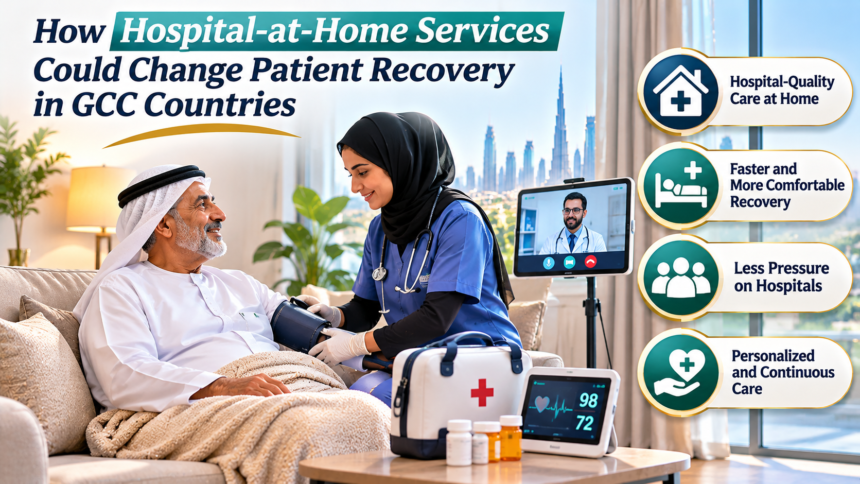
The Benefits and Challenges of Hospital-Level Care at Home
Healthcare systems across the Gulf Cooperation Council (GCC) are undergoing significant transformation as countries invest in advanced hospitals, digital medical technologies and more patient-centred healthcare services. The United Arab Emirates, Saudi Arabia, Qatar, Kuwait, Oman and Bahrain are exploring ways to improve treatment accessibility while managing growing healthcare demand.
- 1. What Are Hospital-at-Home Services and How Do They Work?
- 2. Why Hospital-at-Home Could Improve Patient Recovery and Comfort
- 3. How GCC Countries Are Expanding Home-Based Medical Services
- 4. The Role of Remote Monitoring and Digital Technology in Home-Based Recovery
- 5. How Hospital-at-Home Could Improve Healthcare Capacity and Costs
- 6. Which Patients May Benefit and What Safety Challenges Must Be Addressed?
- 7. Why Hospital-at-Home Could Support More Personalised Healthcare in the GCC
- 8. The Future of Hospital-at-Home Services Across GCC Healthcare Systems
- Conclusion
Traditionally, patients requiring intensive medical supervision or hospital-level treatment have remained in healthcare facilities until doctors determine that they can be safely discharged. However, developments in remote monitoring, medical equipment and home-based clinical services are creating opportunities to deliver selected treatments outside conventional hospital environments.
This is where hospital-at-home services in GCC countries could play an increasingly important role.
Hospital-at-home is a healthcare delivery model that allows carefully selected patients to receive hospital-level treatment in their own homes under professional medical supervision. Depending on the programme, services may include nursing care, doctor consultations, prescribed intravenous treatments, diagnostic testing, rehabilitation and continuous or scheduled monitoring.
Unlike ordinary home healthcare, hospital-at-home programmes are designed to provide a level of clinical care that would otherwise require hospital admission or an extended inpatient stay.
For patients, this approach may offer greater comfort, familiar surroundings and increased family involvement. For healthcare providers, it may create opportunities to improve hospital capacity management and coordinate treatment more effectively.
A 2024 Cochrane review found that hospital-at-home care intended to avoid admission can produce outcomes comparable to inpatient care for selected older patients, although results vary according to the programme and patient population. DOI
Several GCC healthcare organisations are already developing services that bring more advanced care into patients’ homes. Qatar’s Hamad Medical Corporation has established a Hospital at Home programme, while Saudi Arabia is expanding virtual care and organised home healthcare services. Hamad+1
However, home-based hospital care is not suitable for every patient. Successful programmes require careful eligibility assessment, trained clinical teams, reliable technology, emergency response arrangements and clear medical accountability.
As Gulf countries continue modernising their healthcare systems, hospital-at-home services could become an important part of patient recovery and healthcare delivery.
1. What Are Hospital-at-Home Services and How Do They Work?
Hospital-at-home is a structured healthcare model that provides selected hospital-level treatments in a patient’s residence instead of requiring care to take place entirely within a hospital.
The model is designed for patients whose medical conditions require professional monitoring or treatment but who can receive that care safely outside a conventional inpatient ward.
A clinical team assesses the patient’s medical condition, home environment and available support before determining whether the service is appropriate.
If the patient qualifies, healthcare professionals develop an individual treatment plan covering clinical visits, medicines, monitoring, communication and emergency procedures.
Understanding different home-based healthcare models
It is important to distinguish hospital-at-home services from other forms of healthcare delivered at home.
Traditional home healthcare may involve nursing assistance, wound care, physiotherapy, medication support or help managing chronic conditions.
Telemedicine generally focuses on consultations and follow-up through digital communication.
Hospital-at-home combines appropriate in-person medical services with remote clinical supervision to deliver selected care that would otherwise take place in a hospital.
The distinction is important because a video consultation alone does not constitute hospital-level care.
Two common hospital-at-home approaches
The first approach is admission avoidance.
Under this model, a patient who would otherwise require hospital admission receives appropriate treatment at home after a medical assessment confirms that it is safe.
The second approach is early supported discharge.
Here, a patient begins treatment in hospital but returns home earlier than usual while continuing to receive coordinated clinical care.
Both approaches require structured monitoring and arrangements for escalation if the patient’s condition deteriorates.
Services that may be included
Depending on the provider, hospital-at-home care may involve:
- Scheduled visits from doctors and registered nurses.
- Administration of prescribed medicines and selected intravenous therapies.
- Monitoring of temperature, blood pressure, oxygen saturation and other vital signs.
- Blood sampling and appropriate diagnostic testing.
- Wound management and post-treatment observation.
- Physiotherapy and rehabilitation.
- Remote consultations with medical specialists.
- Clinical coordination and emergency escalation.
These services are not automatically available in every programme, and the exact treatment depends on medical requirements and provider capabilities.
Comparison of healthcare delivery models
| Feature | Traditional hospital | Hospital-at-home | Routine home healthcare |
|---|---|---|---|
| Main location | Hospital facility | Patient’s residence | Patient’s residence |
| Level of care | Inpatient medical care | Selected hospital-level care | Varies from supportive to skilled care |
| Clinical supervision | On-site hospital teams | Home visits and remote monitoring | Scheduled services according to need |
| Emergency support | Hospital resources immediately available | Requires rapid escalation arrangements | Usually refers emergencies to hospital services |
| Patient eligibility | Based on hospital admission criteria | Strict clinical and home suitability assessment | Based on service requirements |
| Technology | Hospital-based equipment | Portable devices and connected monitoring | Technology varies by service |
The objective is not to replace hospitals but to expand the settings in which appropriate medical treatment can be delivered safely.
2. Why Hospital-at-Home Could Improve Patient Recovery and Comfort
Recovery involves more than receiving medicines or undergoing medical procedures.
A patient’s physical comfort, emotional wellbeing, sleep, mobility and family support can also influence their experience of treatment.
For selected patients, receiving appropriate care at home may offer advantages that complement clinical treatment.
Recovering in familiar surroundings
Hospitals are designed to provide professional medical services, but they can also feel unfamiliar and stressful.
Patients may experience interrupted sleep, limited privacy and changes in their everyday routines.
Home-based treatment allows suitable patients to remain in a familiar environment while continuing to receive professional care.
This may improve comfort and satisfaction for individuals who prefer being close to family members.
However, home environments must be suitable for treatment, and some patients may feel more secure in hospital.
Supporting patient independence
Hospital-at-home programmes can sometimes allow patients to maintain more of their ordinary routines.
Where medically appropriate, patients may move around familiar spaces, participate in daily activities and practise independence during recovery.
This can be relevant to selected older adults who may experience functional decline during prolonged hospitalisation.
A systematic review of hospital-at-home programmes found that certain models may offer comparable clinical outcomes to inpatient care for suitable patients, although findings differ by model and outcome. PubMed
Reducing selected hospital-related risks
Hospital environments can expose patients to risks such as healthcare-associated infections and reduced mobility.
Home-based care may reduce exposure to some hospital-specific hazards.
However, treatment at home introduces its own risks, including delayed recognition of deterioration, difficulties maintaining equipment and problems with medication administration.
A hospital-at-home service should therefore provide appropriate infection prevention, monitoring and clinical support.
Greater family involvement
Families often play an important role in patient recovery across GCC societies.
Home-based treatment may allow relatives to participate more easily in appropriate aspects of care.
Family members can help with communication, provide emotional support and understand the recovery process.
Nevertheless, professional healthcare responsibilities should not be transferred to relatives without appropriate training and consent.
Caregivers must also have realistic expectations about the time and assistance required.
Potential recovery benefits
| Patient consideration | Possible hospital-at-home benefit | Important condition |
|---|---|---|
| Comfort | Familiar surroundings | Suitable home environment |
| Emotional wellbeing | More contact with family | Patient preferences respected |
| Mobility | Opportunities for normal daily movement | Clinically approved activity |
| Continuity of treatment | Coordinated care at home | Reliable clinical follow-up |
| Patient participation | Greater involvement in recovery routines | Clear instructions |
| Family communication | Easier involvement of caregivers | Consent and appropriate training |
The strongest programmes combine personal comfort with clinical standards rather than assuming that home is automatically the best recovery environment.
3. How GCC Countries Are Expanding Home-Based Medical Services

The Gulf region is increasingly exploring healthcare models that extend beyond conventional hospital buildings.
While implementation differs across countries, developments in Qatar, Saudi Arabia and the UAE provide useful examples of this shift.
Qatar: Developing a dedicated Hospital at Home programme
Qatar offers one of the clearest regional examples.
In April 2025, Hamad Medical Corporation (HMC) highlighted its Hospital at Home programme, led by its Home Healthcare Service.
The programme delivers advanced medical care to eligible patients in their own homes, including people with complex needs who can receive appropriate treatment outside hospital facilities. Hamad
HMC also operates an Early Supported Discharge programme, allowing eligible patients to continue receiving clinical care at home following hospital discharge. Hamad
These services illustrate how home-based care can form part of a coordinated hospital network rather than operate as an isolated service.
Saudi Arabia: Connecting home healthcare with virtual medicine
Saudi Arabia is investing in digital healthcare and remote medical services as part of its health sector transformation.
Its Ministry of Health provides home healthcare services that may include medical treatment, nursing, rehabilitation, respiratory care, nutrition, medication management and virtual support.
The Ministry’s electronic service allows eligible patients to arrange home healthcare appointments according to their treatment plans. Home Healthcare
Saudi Arabia has also developed Seha Virtual Hospital, which supports remote specialist consultations and various virtual care services.
The initiative includes virtual home care, although not every virtual consultation should be classified as hospital-at-home treatment. Seha Virtual Hospital
These developments could help support more integrated home-based clinical services.
United Arab Emirates: Regulated home healthcare services
The UAE has a growing market for professional healthcare delivered at home.
In Dubai, the Dubai Health Authority establishes standards and licensing requirements for home healthcare services.
These requirements cover important aspects of service provision, including clinical operations, patient care and organisational responsibilities. Dubai Health Authority
Healthcare providers such as Mediclinic Middle East offer home-based medical and nursing services under applicable UAE healthcare regulations. Mediclinic Middle East
Some private providers also advertise hospital-at-home models, but the scope of each programme must be evaluated individually.
Opportunities for Kuwait, Oman and Bahrain
Kuwait, Oman and Bahrain may also benefit from strengthening organised home healthcare and digital patient monitoring.
Potential opportunities include post-discharge support, rehabilitation and selected treatments suitable for supervised home delivery.
However, the existence of conventional home nursing or telemedicine services should not be interpreted as evidence of a fully established hospital-at-home programme.
Each country would need to evaluate clinical requirements, licensing, infrastructure and funding arrangements.
Regional overview
| GCC country | Relevant healthcare development | Potential direction |
|---|---|---|
| Qatar | HMC Hospital at Home and early supported discharge | Expanded home-based hospital-level care |
| Saudi Arabia | Home healthcare and Seha Virtual Hospital | Integrated physical and virtual care |
| UAE | Licensed home healthcare and private clinical services | Development of suitable hospital-at-home pathways |
| Kuwait | Home healthcare and digital health opportunities | More coordinated post-discharge support |
| Oman | Community and home healthcare opportunities | Improved access for eligible patients |
| Bahrain | Home medical services and digital healthcare opportunities | Coordinated recovery and monitoring models |
For the GCC, the most important opportunity is to connect hospitals, home healthcare teams and digital platforms through reliable clinical pathways.
4. The Role of Remote Monitoring and Digital Technology in Home-Based Recovery
Technology is an important part of many hospital-at-home programmes because healthcare professionals need reliable information about patients receiving treatment outside hospital facilities.
Connected medical devices, digital records and communication platforms can support clinical supervision between in-person visits.
However, technology cannot replace all forms of medical assessment or emergency intervention.
Remote patient monitoring
Remote monitoring devices can collect selected health measurements and communicate them to clinical teams.
Depending on the treatment plan, these may include blood pressure, pulse, temperature, oxygen saturation and other relevant observations.
Monitoring systems can help clinicians identify changes that require further assessment.
For example, an unexpected change in a patient’s observations may trigger a review by the responsible medical team.
However, measurements must be interpreted within the patient’s clinical context.
A reading outside a predefined range does not always indicate an emergency, while normal readings do not guarantee that a patient is stable.
Virtual consultations
Video consultations allow patients to communicate with doctors and other healthcare professionals without travelling to a medical facility.
These consultations can support treatment reviews, patient education and selected follow-up assessments.
However, patients may still require physical examinations, laboratory testing or in-person interventions.
Successful programmes therefore combine virtual care with appropriate home visits.
Electronic medical records
Digital records can help hospital-at-home teams access prescriptions, treatment plans and clinical observations.
Accurate information sharing is essential when several professionals participate in a patient’s care.
For example, a visiting nurse should be able to identify changes made by the responsible physician.
Healthcare organisations must also establish procedures for protecting patient information.
Artificial intelligence in monitoring
Artificial intelligence may eventually help clinical teams identify patterns suggesting deterioration or increased care needs.
Potential applications include analysing monitoring data and prioritising alerts for professional review.
However, algorithms must be clinically validated before they are used to influence treatment decisions.
Digital care technologies
| Technology | Main application | Potential benefit |
|---|---|---|
| Connected vital-sign monitors | Recording selected observations | More consistent monitoring |
| Video consultations | Communication with clinicians | Convenient clinical follow-up |
| Electronic health records | Sharing treatment information | Better care coordination |
| Electronic medication systems | Recording prescriptions and administration | Improved medication oversight |
| Mobile clinical applications | Patient communication and instructions | Easier access to care information |
| AI-assisted alerts | Identifying unusual patterns | Supports professional review |
A 2024 systematic review of virtual wards and hospital-at-home programmes found that technology-supported inpatient-level care may be feasible for suitable patients, while emphasising the need for stronger evidence and careful implementation. PubMed
The central lesson is that digital innovation should strengthen clinical relationships, not replace essential medical supervision.
5. How Hospital-at-Home Could Improve Healthcare Capacity and Costs
Hospital-at-home programmes may offer financial and operational advantages by reducing the need for some patients to occupy conventional inpatient beds.
However, lower costs are not guaranteed.
Delivering hospital-level care at home still requires qualified professionals, medical equipment, transportation, monitoring systems and emergency support.
Managing hospital capacity
Hospitals must maintain sufficient beds and clinical resources for patients requiring inpatient treatment.
Where clinically appropriate, hospital-at-home programmes may allow selected patients to receive equivalent levels of care without occupying a hospital bed.
This could help hospitals manage demand during busy periods.
However, home-based services require their own staffing capacity, and patients must meet strict eligibility criteria.
Supporting earlier discharge
Some patients no longer need the full infrastructure of a hospital ward but still require supervised treatment.
Early supported discharge programmes can help these patients continue recovery at home while receiving necessary clinical services.
This may improve the availability of hospital beds for patients requiring facility-based care.
Understanding the economic evidence
A 2024 Cochrane review found that admission-avoidance hospital-at-home care can be a cost-effective alternative for some older patients, although economic results depend on the healthcare system and programme design. DOI
A systematic review published in 2026 examining Asian hospital-at-home programmes found promising cost outcomes in some settings but identified only a small number of eligible studies.
The researchers emphasised that regional economic evidence remains limited and heterogeneous. PubMed Central (PMC)
These findings suggest that GCC policymakers should conduct local cost evaluations rather than assume that results from other healthcare systems will apply directly.
Costs that must be considered
Hospital-at-home programmes may require spending on medical staff, home visits, connected devices, diagnostic services, transportation and emergency escalation.
Family caregivers may also experience additional time commitments or expenses.
These costs should be included when evaluating the financial performance of a programme.
Economic comparison
| Cost consideration | Traditional hospital care | Hospital-at-home care |
|---|---|---|
| Inpatient facilities | Requires hospital accommodation and infrastructure | Reduces dependence on physical beds for eligible patients |
| Clinical staff | Hospital-based teams | Home visits and remote clinical teams |
| Medical equipment | Centralised hospital equipment | Portable and connected equipment |
| Patient transport | Travel for admission and discharge | Staff travel and possible emergency transfers |
| Monitoring | Continuous or scheduled on-site monitoring | Remote monitoring and scheduled visits |
| Family involvement | Varies by hospital arrangements | May require greater caregiver participation |
| Overall cost | Depends on treatment and hospital resources | Depends on patient selection and programme efficiency |
The goal should be better value and safer care rather than simply transferring expenses from healthcare organisations to patients and their families.
6. Which Patients May Benefit and What Safety Challenges Must Be Addressed?
Hospital-at-home programmes cannot safely replace conventional hospital admission for every medical condition.
Patient eligibility is one of the most important factors influencing outcomes.
A medical team must determine whether the patient’s condition, home environment and available services support safe treatment.
Potentially suitable patients
Depending on clinical criteria and the provider’s capabilities, programmes may support selected patients recovering from infections, receiving prescribed intravenous therapies or requiring post-discharge medical observation.
Certain patients with stable medical conditions may also benefit from structured home monitoring and rehabilitation.
However, suitability depends on individual medical assessment rather than diagnosis alone.
Patients who require hospital-based care
Patients experiencing severe or rapidly changing medical conditions may require immediate access to emergency equipment, intensive monitoring or specialised procedures.
Such patients may be unsuitable for hospital-at-home treatment.
The decision must remain with appropriately qualified healthcare professionals.
Emergency response planning
Hospital-at-home services require clear procedures for responding to deterioration.
These should include emergency contact arrangements, clinical escalation criteria and access to ambulance or hospital transfer services.
A programme without reliable escalation arrangements cannot safely provide hospital-level care.
The importance of the home environment
Not every residence is appropriate for medical treatment.
Healthcare teams may need to evaluate cleanliness, electricity, communication connectivity, access for visiting professionals and space for necessary equipment.
The patient’s preferences and the availability of appropriate support also matter.
Medication safety and infection control
Medicines administered at home must be stored, prepared and used safely.
Clinical teams should maintain appropriate documentation and follow infection-prevention procedures.
Patients and caregivers should receive clear instructions about whom to contact if problems occur.
Patient safety checklist
| Requirement | Why it matters |
|---|---|
| Clinical eligibility assessment | Confirms whether home treatment is appropriate |
| Individual treatment plan | Defines care and monitoring responsibilities |
| Suitable home conditions | Supports safe equipment and clinical care |
| Qualified healthcare professionals | Maintains professional treatment standards |
| Reliable communication | Enables timely clinical consultation |
| Emergency escalation process | Supports rapid response to deterioration |
| Medication management | Reduces preventable treatment errors |
| Patient consent | Respects individual preferences and understanding |
The 2025 BMJ Open scoping review of randomised trials concluded that hospital-at-home care can be effective for selected patients but also identified implementation challenges and the need for further research. PubMed Central (PMC)
Patient selection and clinical governance should therefore remain central to programme development.
7. Why Hospital-at-Home Could Support More Personalised Healthcare in the GCC
Hospital-at-home offers opportunities to organise treatment around individual patient needs rather than requiring every suitable episode of care to take place within a hospital building.
For GCC healthcare systems, this could complement broader developments in digital health, rehabilitation and patient-centred services.
Care that reflects patient circumstances
Patients differ in their living arrangements, mobility, family support and personal preferences.
Home-based care can allow clinical teams to understand some of these circumstances directly.
For example, a rehabilitation professional visiting a patient at home may identify practical difficulties involving movement, furniture or daily activities.
This information can support more realistic recovery plans.
Supporting older adults
Selected older patients may benefit from receiving appropriate treatment in familiar surroundings.
However, older age does not automatically make a person suitable for hospital-at-home care.
Clinical complexity, cognition, mobility and caregiver availability must be considered.
Improving post-discharge coordination
Hospital-at-home services can help bridge the period between inpatient treatment and routine outpatient follow-up.
This may be particularly relevant for patients who need temporary professional supervision after leaving hospital.
Clear coordination can reduce confusion about medicines, appointments and ongoing care responsibilities.
Improving healthcare access
In some areas, travelling to specialist medical facilities can be difficult.
Combining local clinical teams with remote consultations may improve access to certain services.
However, home-based hospital care depends on geographic coverage and reliable access to emergency services.
Remote locations should not be included without considering response times and available clinical resources.
Respecting patient preferences
Some patients may prefer home-based care, while others may feel more comfortable in a hospital.
A patient-centred programme should explain available options, expected responsibilities and possible limitations.
Where clinically appropriate, patients should participate in decisions about the setting of their treatment.
For Gulf healthcare providers, the long-term opportunity is to offer greater flexibility while maintaining consistent clinical standards.
8. The Future of Hospital-at-Home Services Across GCC Healthcare Systems
The future of hospital-at-home services in the GCC will depend on effective regulation, workforce development, technology integration and reliable clinical outcomes.
Although existing regional initiatives provide useful foundations, expanding services safely will require careful planning.
Developing clear clinical standards
Healthcare authorities should establish appropriate requirements for patient eligibility, staffing, monitoring and emergency escalation.
These standards can help distinguish genuine hospital-level services from conventional home nursing or basic telemedicine.
Building multidisciplinary teams
Hospital-at-home care requires coordination between physicians, nurses, pharmacists, rehabilitation professionals and other relevant specialists.
Teams should have clearly defined responsibilities and access to necessary clinical information.
Investing in workforce training
Healthcare professionals delivering home-based care may encounter situations that differ from hospital environments.
Training should address equipment use, patient assessment, emergency procedures, communication and infection prevention.
Evaluating insurance and payment models
Healthcare financing arrangements must support appropriate care without encouraging unnecessary home treatment or premature discharge.
Coverage, reimbursement and patient expenses should be clearly explained.
Using pilot programmes to assess outcomes
Before expanding services, healthcare providers should evaluate selected patient groups under carefully monitored conditions.
Important measures include clinical outcomes, unplanned hospital transfers, readmissions, patient experience and total care costs.
A practical implementation roadmap
| Stage | Recommended action | Expected outcome |
|---|---|---|
| 1. Needs assessment | Identify suitable patient groups and service gaps | Clear programme objectives |
| 2. Clinical planning | Establish eligibility and care protocols | Safer treatment pathways |
| 3. Workforce development | Train multidisciplinary teams | Consistent clinical delivery |
| 4. Technology integration | Introduce appropriate monitoring and records | Better care coordination |
| 5. Emergency planning | Establish transfer and escalation procedures | Improved patient protection |
| 6. Pilot evaluation | Measure safety, experience and costs | Evidence-based improvements |
| 7. Gradual expansion | Scale successful models | More sustainable service delivery |
How should success be measured?
Hospital-at-home programmes should be evaluated through patient outcomes rather than the number of home visits or devices installed.
Useful indicators include treatment complications, emergency transfers, readmissions, mortality where appropriate, patient satisfaction and caregiver burden.
Cost assessments should include both healthcare expenditure and expenses transferred to households.
A 2026 policy analysis of Saudi Arabia’s Seha Virtual Hospital emphasised that large-scale virtual healthcare requires clear governance, accountability and evaluation frameworks. JMIR
These principles are equally relevant when expanding hospital-at-home programmes.
Conclusion
Hospital-at-home services could become an important part of healthcare transformation across GCC countries.
By allowing carefully selected patients to receive hospital-level treatment in their own homes, these programmes may improve comfort, support recovery and provide additional flexibility in healthcare delivery.
Qatar’s Hospital at Home programme, Saudi Arabia’s home healthcare and virtual care initiatives, and the UAE’s regulated home medical services demonstrate growing regional interest in care beyond traditional hospital facilities.
However, the model should not be viewed as a replacement for hospitals.
Patients requiring intensive interventions, immediate emergency resources or continuous specialised supervision will continue to need appropriate facility-based treatment.
Successful hospital-at-home programmes must combine professional clinical teams, reliable monitoring, clear treatment plans and effective emergency procedures.
For GCC healthcare systems, the most promising approach is to introduce home-based hospital care where it can deliver safe, measurable benefits.
Ultimately, hospital-at-home services could change patient recovery in GCC countries by making suitable medical treatment more personalised, accessible and closely connected to everyday life without compromising essential clinical standards.
Do follow us on Instagram
Read More – Why Medication Safety Deserves Greater Attention in the Gulf’s Healthcare Systems