




Creative Life Shaped Early
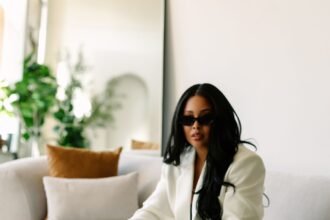
For Karma Charafeddine, design was never something she suddenly discovered. It was simply part of the world she grew up in.
Her mother was an interior designer and her father an architect, so conversations around spaces, materials and architecture were part of everyday life.
“Design was always around me growing up, so choosing interior design felt quite natural. But finding my own way of doing things came later, through working and being exposed to very different projects.”
After studying at the Lebanese Academy of Fine Arts, Karma began her professional career in 2010. Since then, her work has taken her across Europe, the GCC and Africa, with projects ranging from private homes and restaurants to hotels, retail spaces and buildings developed from the ground up.
That variety has become an important part of how she works.
What followed was a journey of creating a design identity that could stand independently from the influences of her childhood.
Different Spaces, Different Stories
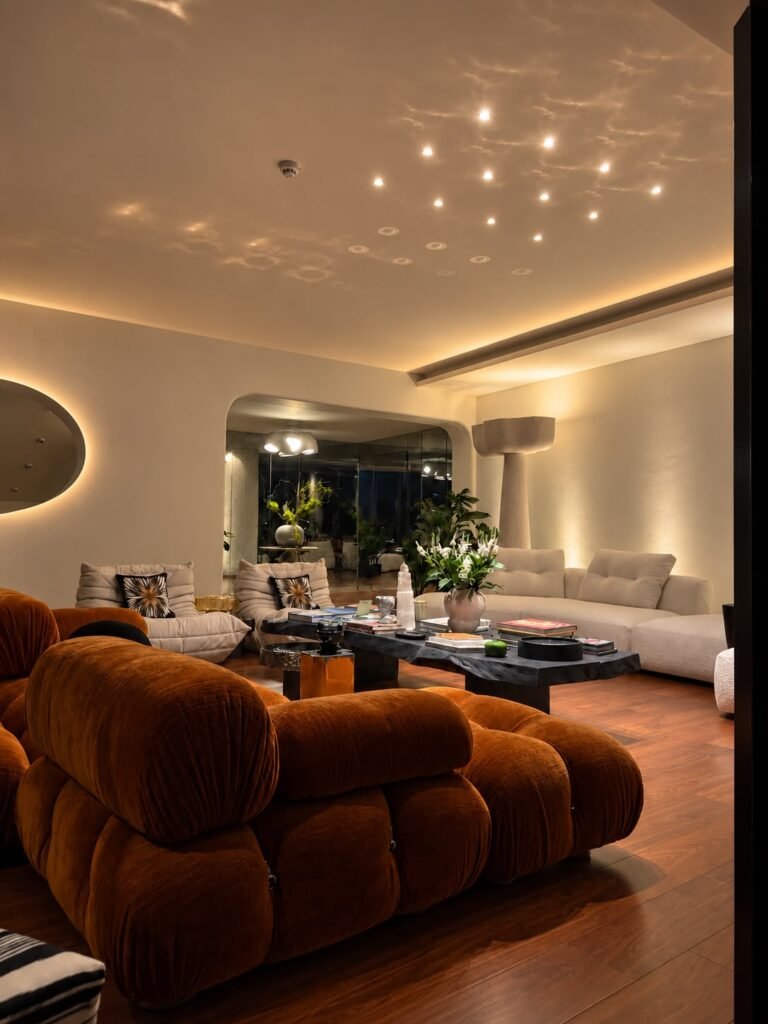
“I actually like that the projects are so different. You approach a home very differently from a restaurant or a hotel, and I think that keeps the work interesting.”
For Karma, there is no formula that can simply be carried from one project to the next. A home begins with the people who live there. A restaurant needs to create an atmosphere that becomes part of the experience. A hotel has to be memorable while still functioning effortlessly.
The starting point is always the context: the architecture, the location, the client and the people who will eventually use the space.
“Every project comes with a completely different context and a different way people experience the space. I don’t think you can impose the same design language everywhere.”
Working across different countries and cultures has reinforced that instinct. Rather than developing a recognisable look and repeating it, Karma prefers to allow each project to find its own character.
Luxury That Feels Lived In
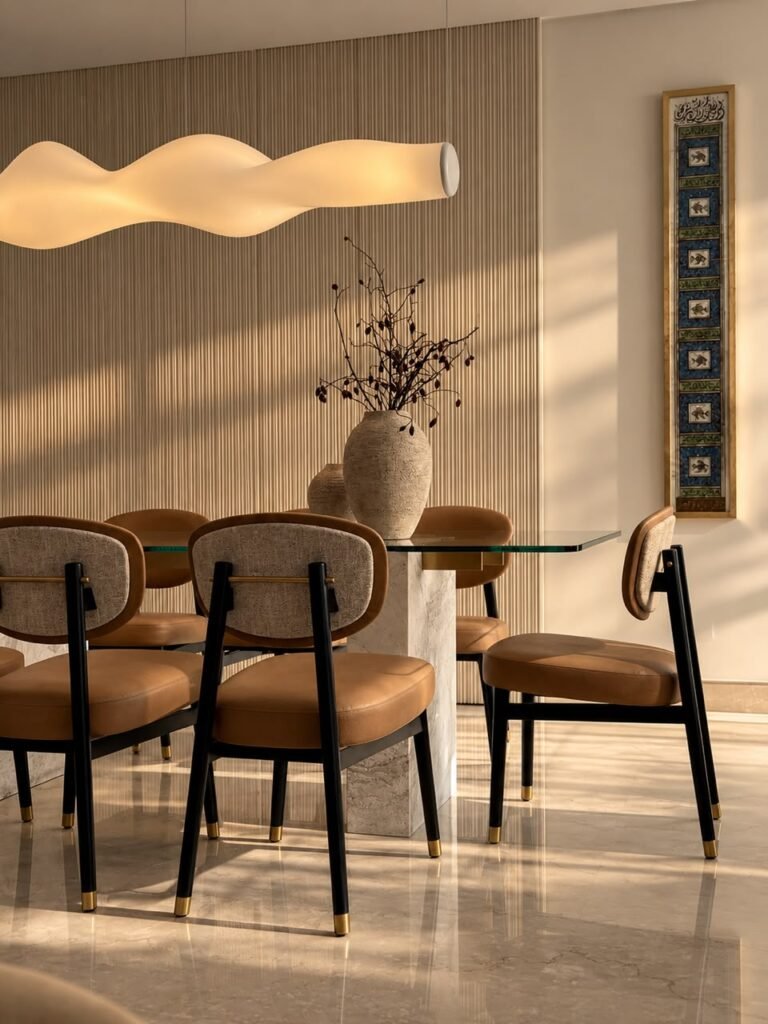
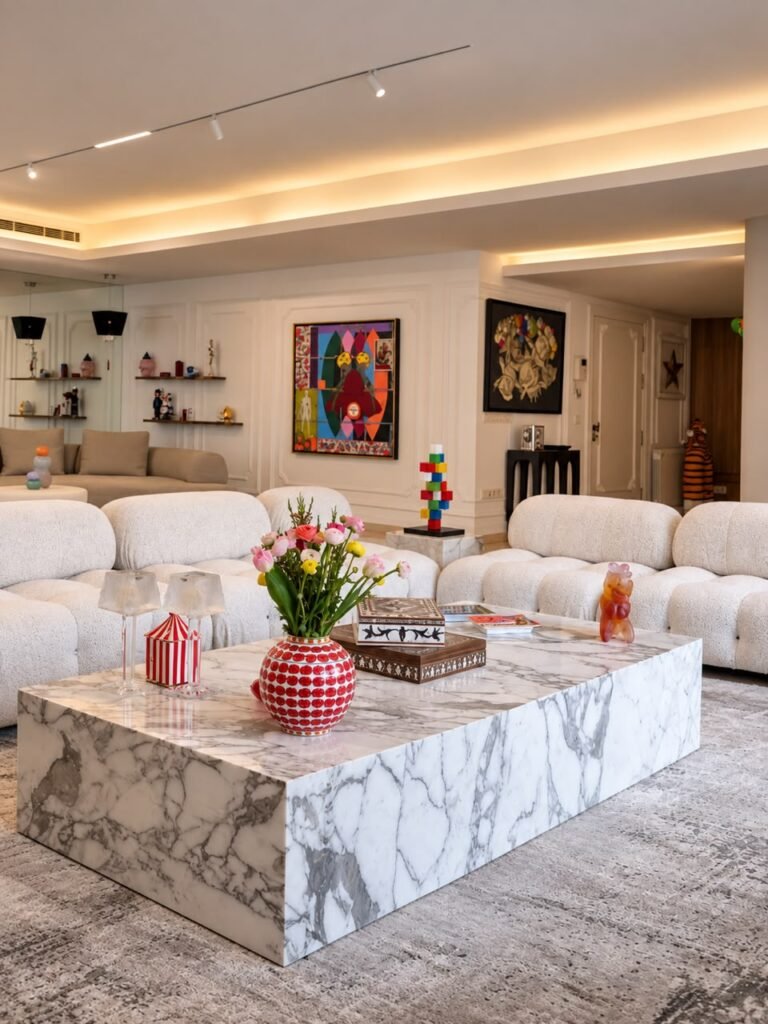
There is, however, a quality that runs through much of her work: a preference for spaces that feel sophisticated without becoming overly formal.
“I like beautiful things, obviously, but I never want a space to feel like you’re afraid to sit down in it. For me, luxury can still feel comfortable and very natural.”
It is a distinction that shapes the way she works with proportion, light, texture, materiality and furniture.
A recent penthouse project overlooking Palm Jumeirah in Dubai captures that balance particularly well. The interior brings together sculptural furniture, art and carefully selected pieces to create a setting that feels eclectic and well-travelled, reflecting the client’s lifestyle and lived experiences. There is a sense that the space has been collected rather than simply decorated. Yet despite its layered character, it remains warm, livable and entirely its own.
One of Karma’s favorite pieces in that project is the Anthea console/sculpture by MainGUILTY. Inspired by classical Greek art and the proverb of the three wise monkeys, the piece feels almost like a meditation on silence, perception and strength. It sits somewhere between furniture and sculpture, giving it a presence that goes beyond its function.
“I love pieces like Anthea because they bring something more to a space. It’s not just about whether an object is beautiful; I like when there is an idea or a story behind it. Those are often the pieces that give an interior its personality.”
“I think I’ve always worked this way, even from the beginning of my career. I used to bring a piece by Bokja , Nada Debs or even the Flee market into almost every project. It was my way of adding something that connected the space to our culture and traditions, especially when it was sitting alongside more established Italian or international furniture. It gave the interior another layer and a story that felt more personal. I always thought of it as the little cherry on top.”
For Karma, this way of mixing pieces has been part of her approach from the beginning. Furniture is never simply something placed into a finished room. A piece might be chosen for its design, but also for where it comes from, what it represents, or the story it brings with it. The most interesting interiors, for her, often come from bringing together objects with very different origins and allowing them to sit naturally beside one another.
And while the finished image matters, it is what happens afterwards that interests her more.
“A beautifully designed home still has to feel like a home. People have to live in it. The same goes for a restaurant or a hotel—the way you feel in the space is just as important as the way it looks.”
That thinking keeps her interiors considered without becoming overly staged.
Karma Charafeddine Looking Beyond the Obvious
Much of Karma’s creative input comes from outside the studio.
Travel, architecture, art, exhibitions, objects and the everyday details of different cities all feed into how she sees design. International fairs and exhibitions—from Salone del Mobile and Maison&Objet to Art Basel, Cologne,FIAC and even the Canton fair in china—have also been a constant source of exposure to new materials, designers and ideas.
But inspiration, for her, is very different from imitation.
“I love seeing what’s happening and discovering new designers or materials, but I don’t think you should come back from a fair and suddenly put everything you saw into a project.”
She laughs at the idea, but the point is an important one.
“I think you absorb things. Maybe something stays with you and comes back later in a completely different way. That’s much more interesting to me than following a trend.”
It is this curiosity, rather than allegiance to a particular aesthetic, that allows her work to keep changing.
A Different Perspective on Success
Motherhood brought another change—not to Karma’s interest in design, but to the rhythm surrounding it.
For a period, family naturally became the priority and work occupied a different place in her life. Today, she looks at that period less as an interruption and more as another experience that changed her perspective.
“Becoming a mother definitely changed my priorities for a while. Now I feel ready to give my career more energy again, but I don’t necessarily want to go back to exactly how things were before.”
The ambition is still there, but her definition of it has become broader.
“I want to bring that momentum back, but in a way that makes sense with the life I have now. I think success means something a little different to me today.”
It is a more personal side of her story, but one that also connects naturally to the way she thinks about interiors. Homes, after all, are not static compositions. They change with the people living inside them.
What Comes Next
Interiors remain central to Karma’s work, but she is increasingly interested in exploring furniture, objects, hospitality and collaborations that allow her to approach design from different angles.
“I don’t really want to put too many rules around what comes next. I’d like to keep doing interiors, of course, but also explore furniture, objects, hospitality and collaborations when the right opportunities come along.”
Rather than a reinvention, the next chapter feels like a natural expansion of what has always been there: curiosity, an openness to different scales and disciplines, and a desire to create work with a story behind it.
“I think I just want to keep creating and stay curious. The scale can change, the project can change, but if it’s something that interests me and there’s a good story behind it, I’m open to it.”
At the heart of it all remains a simple desire to create—environments that people connect with and objects that carry meaning.
“I think the things we remember are usually the ones that make us feel something. Trends change, but when a space feels personal and has a story behind it, it stays with you.”
And perhaps that is what defines Karma’s work best: creating spaces that are not simply designed to be seen, but to be felt, lived in and remembered.
Follow Karma Charafeddine on Instagram
Read More – Geechie Dan “The Tape God” – Turns a Lifelong Hip Hop Passion Into Legacy