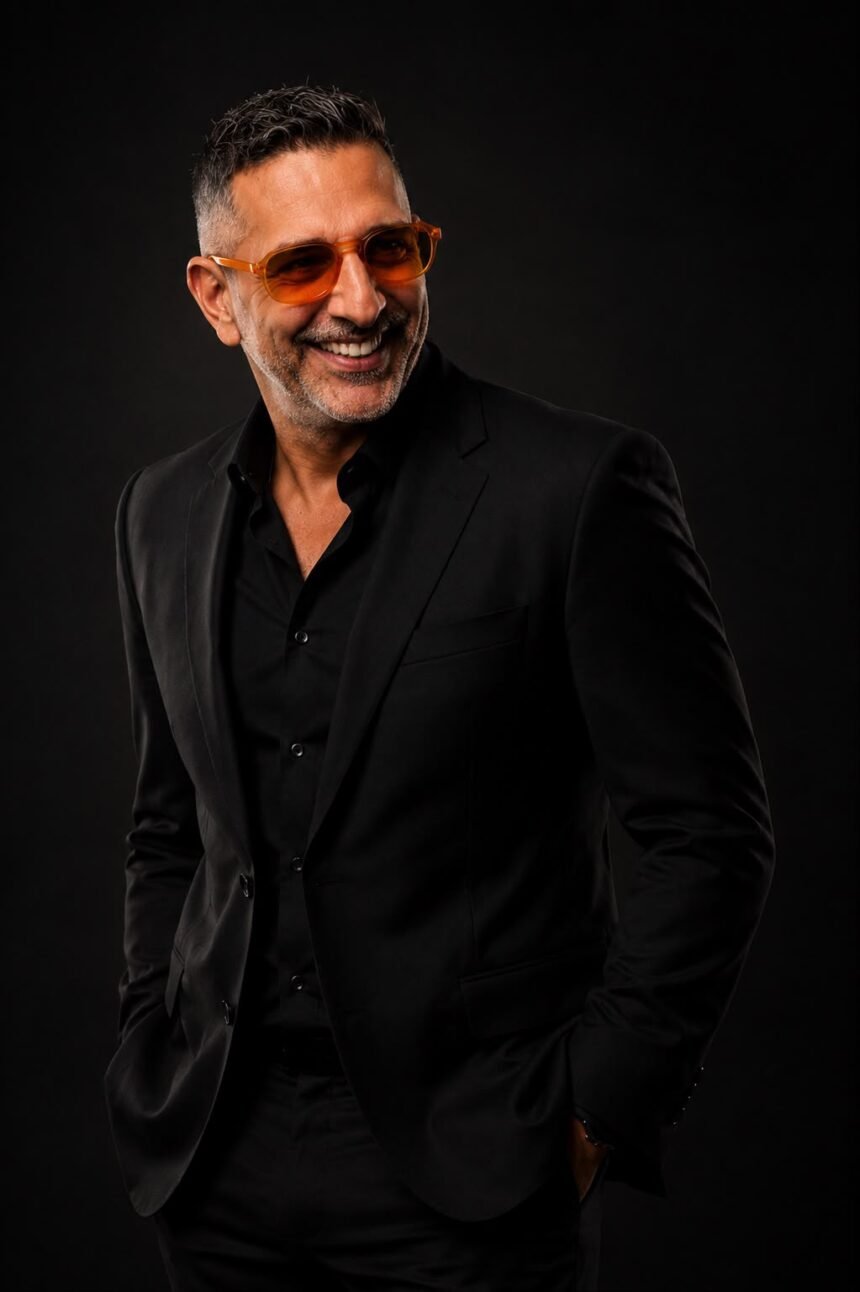
Turning Risk Into a Growing Business Empire
Building businesses, navigating uncertainty, and learning that leadership is ultimately about people.
- From Technical Experience to Entrepreneurial Thinking
- The Vision Behind IKON Enterprises
- RoadTec and the Business of Infrastructure
- Michael Ramzy Building Beyond a Single Industry
- The Struggles Behind the Success
- A Lifestyle That Reflects His Personality
- Leadership Through People and Execution
- Looking Toward a Bigger Future
- The Bigger Lesson Behind Michael’s Journey
For most of his life, Michael believed that being prepared meant being in control.
He liked the details. The plan. The backup plan. The option behind the backup plan.
It was a mindset that served him well in the early years of his career. It taught him discipline, anticipation, responsibility and the habit of solving problems before they became bigger problems.
But entrepreneurship has a way of exposing the limits of control.
After more than two decades of professional experience, building businesses and navigating uncertainty, Michael came to understand a lesson that changed the way he works and leads:
There is a difference between taking responsibility and trying to control everything.
Learning that difference has become one of the defining chapters of his journey.
The Builder
Michael has always been drawn to building.
His professional foundation was shaped in engineering and industrial environments, including experience with organizations such as Orascom Construction Industries, SGS and Lafarge.
Those years gave him more than technical experience. They taught him how organizations function, how systems create consistency, and how the difference between an idea and a successful project is ultimately execution.
But over time, he wanted to build something of his own.
Entrepreneurship offered that opportunity, along with something else: uncertainty.
Building a business is rarely a straight line. It is a constant sequence of decisions, negotiations, setbacks, opportunities and moments when there is no perfect answer.
And as a business grows, the responsibility grows with it.
Decisions begin affecting employees, clients, partners, suppliers and families whose livelihoods are connected to the business.
That responsibility can be motivating.
It can also create a dangerous illusion: that enough planning, effort and preparation can guarantee the outcome.
They cannot.
You can control your preparation.
You can control your effort.
You can control the quality of your decisions and the integrity with which you make them.
You cannot control the market, another person’s decision, the timing of a deal, an unexpected crisis or what tomorrow will bring.
For Michael, accepting that reality did not make him less ambitious.
It made his ambition more grounded.
From a Company to an Ecosystem
Today, Michael’s entrepreneurial interests extend across sports and landscape development, infrastructure, international trade and business development.
The businesses he has built operate in different areas, but they are connected by a common philosophy.
Michael does not see business as a collection of isolated companies.
He sees it as an ecosystem.
Different businesses can develop different capabilities, share knowledge, create opportunities for one another and become stronger together.
At the center of that ecosystem are principles that remain consistent regardless of the industry: people, execution, relationships, adaptability and trust.
That perspective has shaped the evolution of his businesses and his broader approach to entrepreneurship.
For Michael, growth is not simply about adding another company or entering another market.
It is about building organizations that can create value, develop capabilities and continue to evolve.
When Strength Becomes a Weakness
One of the most personal lessons Michael has had to confront is his relationship with control.
The qualities that make an entrepreneur decisive, strategic and resilient can become a source of pressure when taken too far.
When the numbers make sense and the plan is working, control feels reassuring.
But entrepreneurship constantly introduces variables that cannot be predicted.
A payment can be delayed.
Funding can take longer than expected.
A project can change.
A market can move.
A plan that made perfect sense yesterday can become irrelevant tomorrow.
The instinct is often to respond by trying harder to regain control.
More planning.
More scenarios.
More calculations.
More contingency plans.
Until you realize you are no longer solving the problem.
You are trying to eliminate uncertainty itself.
And uncertainty is part of the price of building something meaningful.
From Control to Trust
This realization changed the way Michael thinks about leadership.
For him, leadership is not about having every answer.
It is about knowing what you are responsible for.
A leader has to make decisions, take calculated risks, prepare for difficult scenarios and protect the people around the business.
But leadership also requires the humility to recognize what lies outside your control.
That is not weakness.
It is another form of strength.
Real strength is not saying:
“Nothing will ever go wrong.”
It is being able to say:
“Something may go wrong, and I will still know how to respond.”
That mindset has allowed Michael to become more comfortable with uncertainty without becoming less driven.
Faith and the Limits of Responsibility
Michael’s relationship with God has played an important role in that evolution.
For him, faith is not about becoming less ambitious or less responsible.
It is about understanding the limits of his responsibility.
He still plans.
He still works hard.
He still pursues growth.
He still cares deeply about financial stability and the future of the businesses he builds.
But he has learned that preparation is not the same as control.
He can do everything within his responsibility and still accept that the final outcome is not his to command.
At the heart of that belief is a verse that Michael considers his life motto:
“Commit your way to the Lord; trust in Him, and He will act.”
For him, the message is simple but powerful. Do your part. Take responsibility. Prepare carefully. Work with discipline and integrity. Then place your trust in God rather than believing that every outcome must be controlled by you.
That requires something that does not always come naturally to an entrepreneur:
Trust.
Trust that not every unanswered question needs an immediate answer.
Trust that not everything has to be solved today.
Trust that sometimes the right decision is simply to take the next step without knowing exactly where the entire road will lead.
Money Is a Tool
Money has been another part of that lesson.
For an entrepreneur, money is practical. Cash flow matters. Payroll matters. Growth requires capital. Financial discipline is essential.
But money can also become psychological.
If there is enough liquidity, perhaps everything will finally feel safe.
If the next contract closes, perhaps the pressure will disappear.
Then the milestone arrives, and another concern appears behind it.
Michael’s conclusion is straightforward:
Financial discipline is healthy. Financial dependence for emotional security is not.
He wants to build wealth, grow companies and create opportunities.
But he does not want money to become the thing that determines whether he has peace.
Money should remain a tool, not a master.
The People Behind the Business
Perhaps the biggest shift in Michael’s thinking has been his understanding of people.
A founder can create a vision, but people turn that vision into reality.
Businesses are ultimately built by the people who design, execute, solve problems, serve clients, manage operations and carry responsibility when things become difficult.
That is why Michael places increasing importance on ownership, accountability, development and trust.
He does not believe people should be treated simply as resources.
They should be developed.
They should be trusted.
And they should know that their leader has their back, not only when a project succeeds, but when things become difficult.
For Michael, loyalty cannot be purchased and commitment cannot be forced.
Both are earned through consistency, integrity and genuine care.
This has also changed how he measures success.
He wants the people who work with him to become stronger, more confident and more capable because they were part of the journey.
In the long run, that may matter more than any individual project.
The Person Behind the Entrepreneur
Entrepreneurship has changed Michael as much as he has changed the businesses he built.
When he was younger, he was more focused on getting the outcome he wanted. He could be highly calculated, determined to find a way forward and reluctant to leave important variables unresolved.
Growing older brought a different understanding.
You do not always need to win every situation.
You do not always need to prove that your way is right.
You do not always need to have the final word.
And you certainly do not need to control every variable.
Sometimes wisdom is knowing when to push.
Sometimes it is knowing when to wait.
Sometimes it is knowing when to change direction.
And sometimes it is knowing when to let go.
Outside business, Michael’s interests in performance cars, diving, travel and discovering new places reveal another side of the same personality: curiosity, exploration and a willingness to move beyond what is familiar.
Perhaps that is why uncertainty, while still uncomfortable, has become less threatening.
Not every road needs to be mapped before you begin driving.
Building Beyond the Founder
Michael believes businesses should ultimately become bigger than their founders.
A company should create value for clients, opportunities for its people, relationships that last and capabilities that can continue growing beyond the individual who started it.
That is the kind of legacy he wants to build.
Not simply a collection of companies.
Not simply financial success.
But organizations built on trust, integrity, competence and long-term thinking.
For Michael, sustainable growth is not about how quickly something becomes bigger.
It is about whether it becomes stronger.
Still Learning
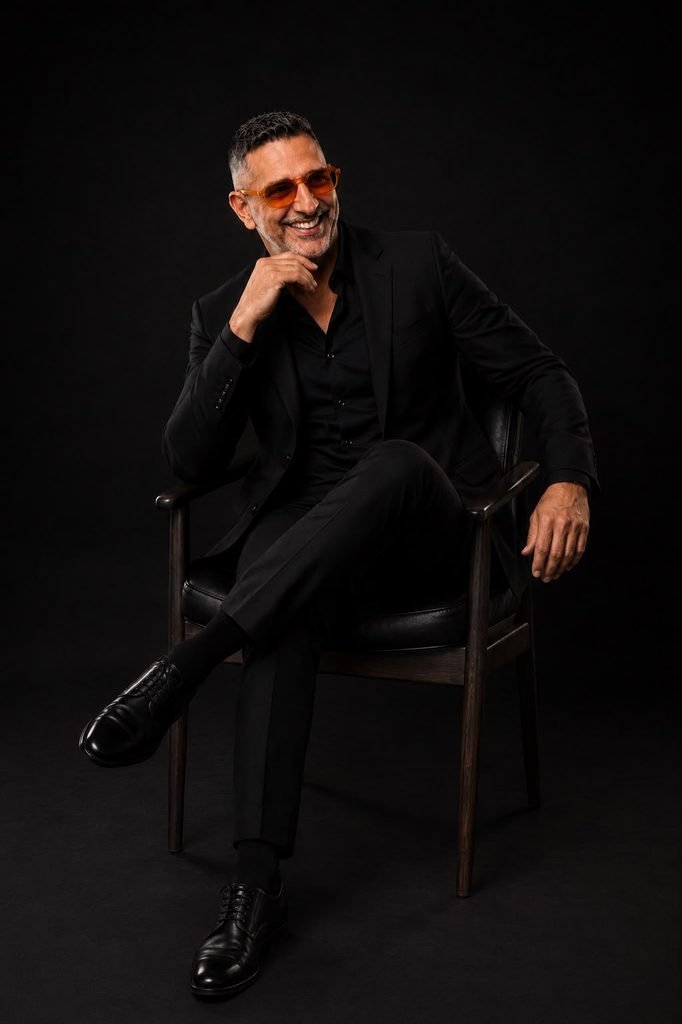
Michael does not consider these lessons finished.
He still overthinks.
He still finds himself trying to control things that cannot be controlled.
He still wants to know how something will end before beginning it.
The difference is that he recognizes it now.
And when he does, he returns to a simpler principle:
Do your part exceptionally well.
Be honest about what is in your hands.
Take responsibility for your decisions.
Prepare as well as you can.
Then let go of what was never yours to control.
That is where his faith and his approach to business meet.
We are builders.
We are stewards.
We are decision-makers.
But we are not in control of the entire story.
And there is freedom in accepting that.
The Next Chapter
Michael is still ambitious.
There are businesses to build, ideas to pursue, people to develop and opportunities to create.
He still wants to think bigger.
He still wants to take risks.
He still wants to discover what is possible.
But he no longer wants ambition to be driven by fear.
He does not want to build because he is afraid of not having enough.
He wants to build because he believes there is something worth building.
He does not want to chase certainty.
He wants to become comfortable with uncertainty while remaining disciplined enough to navigate it.
Perhaps the most important lesson he carries into the next chapter is also the simplest:
He can control his preparation without trying to control the outcome.
He can build with discipline.
He can lead with integrity.
He can pursue growth with ambition.
He can manage wealth with responsibility.
And he can trust that not knowing exactly how everything will unfold does not mean he has lost his direction.
Sometimes, the next step is all you are meant to see.
So you take it. And you keep building.
His story is not simply about reaching a position of leadership. It is about learning how businesses work from the ground up and using those lessons to build something larger.
From Technical Experience to Entrepreneurial Thinking
Michael’s professional foundation was built through engineering and industrial environments, where precision, discipline and responsibility were not optional. His early career included experience with organizations such as Orascom Construction Industries, SGS and Lafarge, giving him exposure to construction, inspection, materials and project execution.
These experiences became an important part of his entrepreneurial mindset. Working within structured corporate environments taught him the value of systems, processes and accountability, while exposure to real projects showed him the difference between an idea on paper and something that actually works in the field.
Over time, Michael began to see entrepreneurship differently. Instead of viewing a company simply as a vehicle for generating revenue, he became increasingly interested in creating organizations that could develop people, solve practical problems and grow sustainably.
That shift would eventually become central to his business philosophy.
The Vision Behind IKON Enterprises
One of the most important chapters of Michael’s journey is connected to IKON Sports and Landscape Development, a venture focused on sports facilities, landscaping and outdoor development.
The company reflects an important part of Michael’s wider vision. Sports infrastructure is not only about constructing a court or playing field. It is about creating environments where people can train, compete, connect and experience something meaningful.
Recent projects associated with IKON include sports facilities and padel courts, demonstrating the company’s focus on combining construction expertise with user experience.
For Michael, this approach represents a broader entrepreneurial principle. A successful business should not simply complete projects. It should create something that continues to have value after the project is finished.
That philosophy has helped shape IKON into one part of a larger entrepreneurial ecosystem.
RoadTec and the Business of Infrastructure
Michael’s entrepreneurial interests also extend into infrastructure through RoadTec, a company working across road construction, paving, concrete, coatings and related engineering solutions.
The nature of this work is very different from the glamorous side of entrepreneurship often displayed on social media. Infrastructure depends on planning, technical knowledge, coordination and consistency.
Recent RoadTec projects have included large scale flooring and asphalt work, including a 15,000 square meter fiber reinforced concrete flooring project for an underground parking complex in Sheikh Zayed.
Projects such as these highlight an important aspect of Michael’s leadership journey. His businesses are connected to industries where results are measured through physical outcomes. Roads need to perform. Surfaces need to last. Sports facilities need to withstand constant use.
There is little room for shortcuts.
Michael Ramzy Building Beyond a Single Industry
What makes Michael’s entrepreneurial story particularly interesting is the decision to operate across multiple sectors rather than remain focused on one traditional business.
His ventures have expanded into areas including sports development, infrastructure, international trading and business development. MERIDEX, for example, operates in export, international trading and sourcing, with a presence connected to both Egypt and Oman.
EVOLVIA is another part of the wider business vision, contributing to Michael’s interest in developing businesses and opportunities beyond conventional construction activities.
The result is an interconnected business model rather than a single company story.
This strategy also reflects the lessons Michael gained from his corporate years. Different industries may operate differently, but strong organizations often depend on the same fundamentals: people, systems, execution, relationships and the ability to adapt.
The Struggles Behind the Success
Entrepreneurship often looks attractive from the outside. The photographs show cars, travel, restaurants, business meetings and successful projects. What they rarely show are the difficult decisions that happen behind the scenes.
Michael has openly described his journey as one involving challenges, pressure and moments that tested his ability to continue moving forward. His professional story includes navigating economic uncertainty, changing markets and the disruption caused by the pandemic.
Those experiences helped reinforce a belief that entrepreneurship is not about avoiding risk. It is about understanding risk and having the courage to move when the opportunity is worth pursuing.
His personal philosophy is reflected in the attitude displayed across his public profile. Cars, coffee, diving and travel are part of his lifestyle, but they also reveal something about his personality. Michael appears comfortable with movement, exploration and experiences outside his professional environment.
That mindset naturally connects with entrepreneurship, where uncertainty is often part of the journey.
A Lifestyle That Reflects His Personality
Michael’s social presence offers a different perspective on the person behind the businesses.
His interest in performance cars and automotive culture is a visible part of his identity. So is his passion for diving, travel and discovering different places around the world.
With connections and experiences spanning countries including Egypt, Oman, Cyprus, Italy, Syria, Brazil, Greece, France, Hungary, Thailand, Indonesia, Turkey, the United Arab Emirates and Lebanon, his lifestyle reflects a broad international outlook.
For readers, this creates an interesting contrast.
On one side is the entrepreneur focused on contracts, projects, teams and business strategy. On the other is someone who enjoys the freedom of the road, the challenge of diving and the excitement of exploring unfamiliar places.
That balance helps make Michael’s story more relatable. Success does not necessarily mean abandoning personal interests. It can mean building a career that gives those interests greater meaning.
Leadership Through People and Execution
As Michael’s businesses have grown, his leadership philosophy has increasingly focused on people.
Building a multi sector organization requires more than a founder with a strong vision. It requires teams capable of turning that vision into reality.
Michael has emphasized ownership, accountability and continuous development as important elements of his approach. This is particularly relevant in industries where projects depend on coordination between engineers, technicians, contractors, suppliers, clients and management teams.
The entrepreneur may define the direction, but execution belongs to the entire organization.
That understanding is one of the lessons that appears repeatedly throughout Michael’s journey. A business can have an ambitious idea, but sustainable growth depends on creating the structure and culture necessary to deliver it.
Looking Toward a Bigger Future
Michael’s current journey suggests that his ambitions extend beyond individual companies.
The development of IKON, RoadTec, MERIDEX and EVOLVIA points toward a larger vision of building a connected entrepreneurial platform with capabilities across multiple industries and markets.
Regional expansion is also becoming increasingly important. Egypt remains an important foundation, while markets such as Oman and the wider Gulf offer opportunities for further development and collaboration.
For Michael, the objective appears to be long term rather than temporary. Instead of chasing quick recognition, the focus is on building organizations capable of adapting to changing markets.
That approach may ultimately become one of the defining elements of his entrepreneurial legacy.
The Bigger Lesson Behind Michael’s Journey
Perhaps the most inspiring part of Michael’s story is that his success did not come from following a perfectly predictable path.
It developed through experience, mistakes, corporate learning, difficult decisions and the courage to build something of his own.
His journey demonstrates that entrepreneurship can begin with technical knowledge and eventually evolve into something much larger. The skills learned on construction sites can influence boardroom decisions. Corporate experience can become the foundation for independent business building. Personal passions can coexist with professional ambition.
Michael continues to present himself as someone who is still building, still learning and still looking for the next opportunity.
That may be the most important message behind his journey.
The goal is not simply to become successful once. It is to keep creating, adapting and moving forward.
For an entrepreneur who embraces risk, exploration and new challenges, the next chapter may prove just as significant as everything that came before it. Be
Follow Michael Ramzy on Instagram
Read More – Why Chef Mohamed Hamed Continues Inspiring Future Chefs Worldwide ?