


Museum Planning: The Story of a Little-Known Profession.
Long before digital technology transformed the way knowledge was created and shared, Pier Paolo Raffa had already begun building his professional career through research, travel, and the direct observation of museums. During the 1990s and early 2000s, he visited, documented, and studied hundreds of museums and cultural institutions across Europe, developing a unique body of knowledge at a time when the internet, digital archives, and online databases simply did not exist.
Today, with more than three decades of international experience, Raffa works in Saudi Arabia, supporting the Royal Commission for AlUla in the development of some of the Kingdom’s most significant museum projects. His work spans museum strategies, design development, and multidisciplinary project oversight, contributing to cultural institutions that aim to preserve history while shaping future generations.
His career also highlights a profession that remains largely unfamiliar outside specialist circles: Museum Planning. Positioned at the intersection of architecture, museology, conservation, interpretation, operations, and management, Museum Planning transforms a cultural vision into an institution capable of serving both its collections and its communities for decades to come.
For Pier Paolo Raffa, a museum is never simply a building. It is a living institution where architecture, collections, conservation, education, operations, and visitor experience come together to create a meaningful cultural legacy.
The Turning Point
Raffa’s interest in museums began in 1992 during an academic year in Paris, when one of his university professors entrusted him with a field research project focused on the museums of Paris and London.
At a time before digital research tools, studying museums required determination and patience. Information had to be gathered through libraries and archives, books had to be sourced individually, photographs were captured on film, and language skills were essential for accessing international resources.
Rather than seeing these limitations as obstacles, he viewed them as opportunities to develop a deeper understanding of museums and their cultural significance.
That experience established a philosophy that continues to guide his work today: understanding a museum means understanding its history, the society that created it, and the relationship it builds with its visitors.
Building an International Career
When Raffa chose to dedicate his professional life to museums, Museum Planning was still a relatively unknown discipline. Instead of following a conventional architectural career, he gradually developed a specialized expertise, building credibility through international projects and long-term collaboration with cultural institutions.
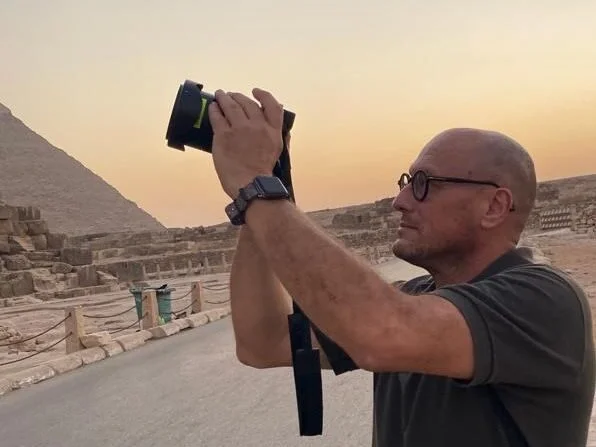
To remain focused on the museum sector during the early stages of his career, he also worked in commercial photography and the yachting industry. Far from being unrelated professions, both contributed valuable perspectives.
Photography strengthened his understanding of visual storytelling, composition, and interpretation, while the yachting industry reinforced technical precision, engineering coordination, and multidisciplinary project management.
Over the years, he has lived, studied, conducted research, and worked across Italy, France, the United Kingdom, Europe, North Africa, and the Middle East. This international experience has enabled him to collaborate with architects, engineers, curators, historians, conservators, exhibition designers, and institutional stakeholders from diverse cultural and professional backgrounds.
Among the most significant milestones in his career are his contributions to the Grand Egyptian Museum, one of the world’s largest museum developments, the Red Sea Museum in Jeddah, and the museum programmes currently being developed by the Royal Commission for AlUla.
Helping Shape Saudi Arabia’s Cultural Future
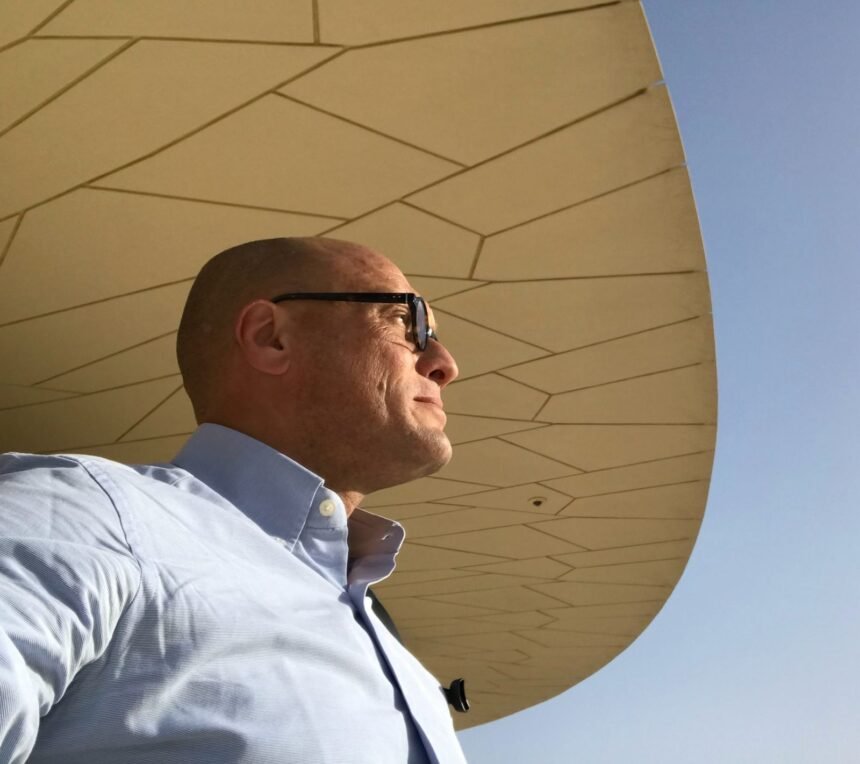
For the past six years, Saudi Arabia has become the centre of Raffa’s professional activity.
Working with the Royal Commission for AlUla, he has contributed to museum planning, design supervision, and the development of cultural infrastructure supporting the Kingdom’s ambitious transformation programme. His responsibilities have expanded beyond museum buildings to include heritage initiatives, cultural landscapes, conservation facilities, and integrated cultural projects.
For Raffa, however, successful museum development depends on far more than technical expertise.
It requires cultural immersion.
Understanding local traditions, historical context, social values, and the identity of each place is essential for creating museums that are internationally respected while remaining authentically rooted in their communities.
This belief has become one of the defining principles of his work throughout Saudi Arabia.
What Designing a Museum Means Today
Looking back on more than thirty years of international experience, Raffa believes that the success of any museum project begins long before architectural drawings are produced.
Throughout his career, he has developed a philosophy based on what he describes as strategic patience. Rather than searching immediately for solutions, he believes professionals should first understand the cultural, operational, institutional, and financial challenges that define every museum project.
Only then can architecture genuinely respond to the needs of its collections, audiences, and long-term mission.
Designing a museum therefore involves much more than creating exhibition galleries.
It requires balancing architecture, conservation, interpretation, visitor experience, governance, operations, financial sustainability, education, and public engagement within one coherent institutional vision.
This is precisely where Museum Planning demonstrates its importance.
Although it remains relatively unknown outside specialist circles, it has become one of the key disciplines behind successful museums around the world. Its purpose is not merely to coordinate design but to ensure that every aspect of a museum functions together, allowing the institution to fulfil its cultural mission while remaining operationally effective and sustainable for generations.
Passing Knowledge Forward
Alongside his professional practice, education has always remained an important part of Raffa’s career.
Having previously taught museography and museum design at university level in Italy, he believes that investing in people is just as important as investing in cultural infrastructure.
For him, the knowledge accumulated through decades of international experience carries a responsibility to be shared.
Preparing the next generation of architects, museum planners, designers, and cultural leaders is an essential part of building the museums of tomorrow.
He hopes to continue contributing to higher education across the Gulf region, supporting institutions that are training future professionals to lead museums with technical excellence, cultural awareness, and strategic vision.
Looking Ahead
Raffa believes the Gulf region represents one of the most significant cultural opportunities of the twenty-first century.
Saudi Arabia’s investment in museums, heritage, archaeology, and cultural infrastructure is creating institutions that will preserve history while encouraging education, innovation, and international dialogue.
For professionals dedicated to Museum Planning, participating in this transformation represents both a remarkable responsibility and a genuine privilege.
Ultimately, every museum is a long-term commitment.
It is a place designed not only to preserve the past but also to interpret the present and help future generations understand their history, culture, and identity.
Perhaps this is the clearest definition of Museum Planning itself: not simply designing buildings, but creating the conditions for museums to educate, inspire, and endure.
Follow Pier Paolo Raffa on Instagram
Read More – Discover the Most Beautiful Ladies Only Beaches in Dubai